Category Archives: Microbiology

USA- Recalled: Meow Mix Original Choice Dry Cat Food -Salmonella

Petful

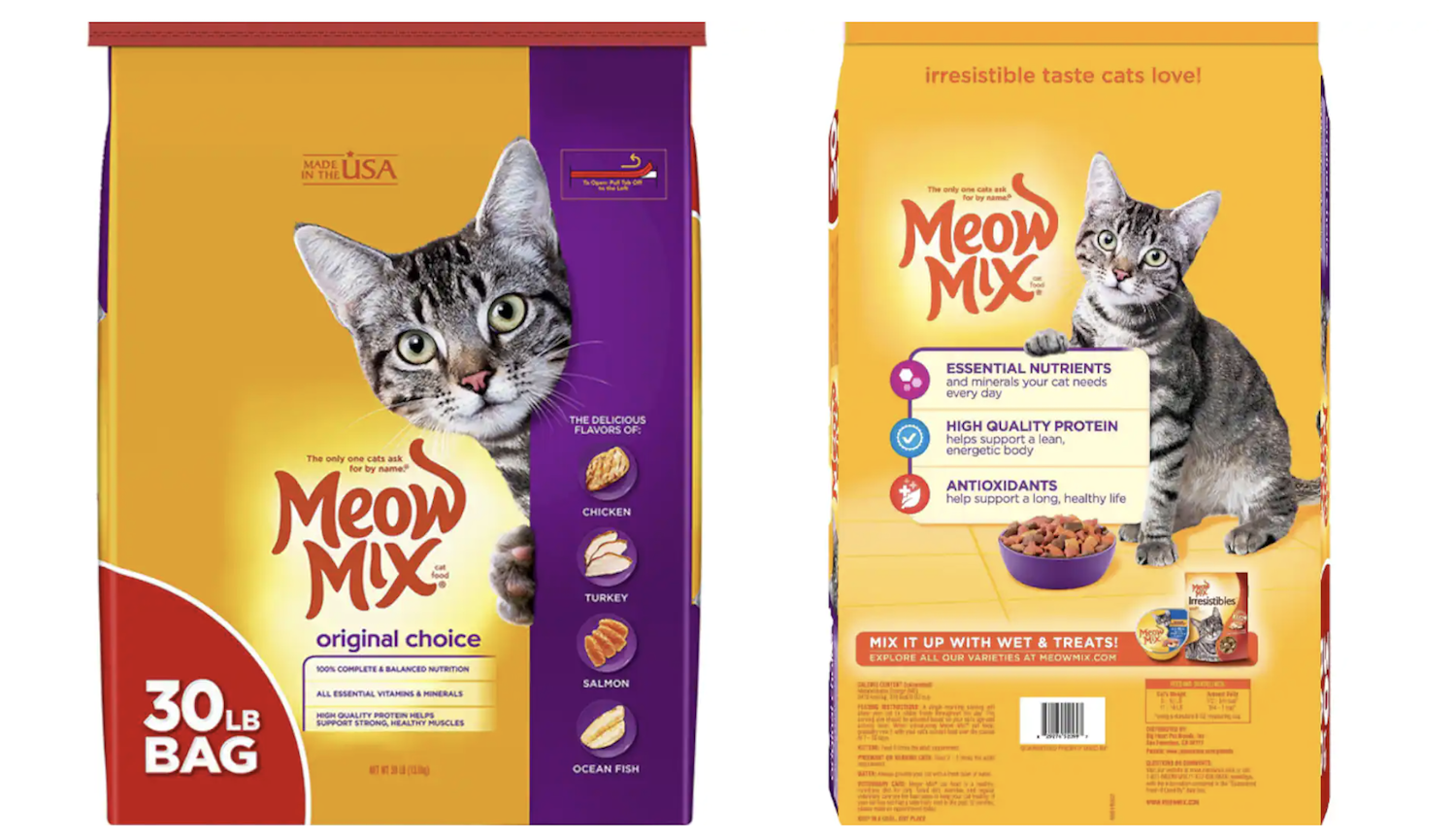
Photo of front and back of Meow Mix packages

Maker: J.M. Smucker Co.
Cause: Potential for salmonella
Announcement: News release dated April 9, 2021 (archived here)
What was recalled: The following 2 specific lots of dry cat food under the Meow Mix brand:

  • Meow Mix Original Choice Dry Cat Food, 30 lb. bag, Lot #1081804, UPC #2927452099, best by Sept. 14, 2022
  • Meow Mix Original Choice Dry Cat Food, 30 lb. bag, Lot #1082804, UPC #2927452099, best by Sept. 15, 2022

This is the first-ever Meow Mix recall we are aware of — which is quite impressive given the brand’s 47-year history.

The recall was announced in a news release by the parent company, J.M. Smucker Co., and it is limited to only the 2 specific lots of dry cat food listed above. No other Meow Mix products are affected.

The company says the bags of food listed above may be at risk of contamination with salmonella, a type of bacteria that can cause illness in pets and humans. So far, according to the company, there have been no reports of illness stemming from the Meow Mix.

The affected Meow Mix cat food was sold in select Walmart stores in Illinois, Missouri, Nebraska, New Mexico, Oklahoma, Utah, Wisconsin and Wyoming.

If you have either of the specific packages listed above, do not feed it to your cats. Instead, throw the cat food away and request a refund from the store you purchased it from.

If you need more information or would like to report adverse reactions, call the company at 1-888-569-6728.
Research – Evaluation of ceftazidime as an antibiotic supplement of mannitol-yolk-polymyxin B agar used for the enumeration of Bacillus cereus in ready-to-eat vegetables

Journal of Food Protection

bacillus

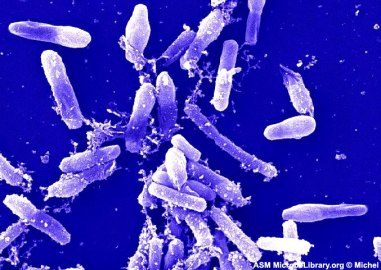
Bacillus cereus, which causes foodborne disease, is detected using selective media. However, competing flora is the most common factor preventing the correct enumeration of B. cereus on selective agars. In this study, we aimed to improve the selectivity of mannitol-yolk-polymyxin B agar (MYPA) and its modified version containing trimethoprim (mMYPA) developed in our previous study by supplementation with ceftazidime (16 μg/mL). Ceftazidime-supplemented MYPA (C-MYPA16) and mMYPA (C-mMYPA16) were evaluated for bacteria recoverability and selectivity using three types of ready-to-eat vegetables. Four B. cereus and one B. thuringiensis strains were mixed and artificially inoculated into vegetable salad, radish sprouts, and sprout mix, and then recovered using MYPA, mMYPA, C-MYPA16, and C-mMYPA16. In all tested vegetables, mMYPA, C-MYPA16, and C-mMYPA16 exhibited similar recoverability of B. cereus / thuringiensis ( p > 0.05), whereas MYPA showed undistinguishable colonies in case of radish sprouts and sprout mix. At the same time, C-mMYPA16 provided the best selectivity compared with the other agars because it eliminated most of competing flora in the tested vegetables, especially in sprouts, without negatively affecting the recovery of B. cereus / thuringiensis . Our results indicate that the supplementation of mMYPA with ceftazidime may improve medium selectivity for B. cereus / thuringiensis in food testing.

Research – Staphylococcal (Staph) Food Poisoning

CDC

MRSA Staphylococcus KSW Food World

Staph food poisoning is a gastrointestinal illness caused by eating foods contaminated with toxins produced by the bacterium Staphylococcus aureus (Staph) bacteria.

About 25% of people and animals have Staph on their skin and in their nose. It usually does not cause illness in healthy people, but Staph has the ability to make toxins that can cause food poisoning.

People who carry Staph can contaminate food if they don’t wash their hands before touching it. If food is contaminated with Staph, the bacteria can multiply in the food and produce toxins that can make people ill. Staph bacteria are killed by cooking, but the toxins are not destroyed and will still be able to cause illness.

Foods that are not cooked after handling, such as sliced meats, puddings, pastries, and sandwiches, are especially risky if contaminated with Staph.

Food contaminated with Staph toxin may not smell bad or look spoiled.

What are the symptoms of Staph food poisoning?

  • Staph food poisoning is characterized by a sudden start of nausea, vomiting, and stomach cramps. Most people also have diarrhea.
  • Symptoms usually develop within 30 minutes to 8 hours after eating or drinking an item containing Staph toxin, and last no longer than 1 day. Severe illness is rare.
  • The illness cannot be passed from one person to another.

How do I know if I have Staph food poisoning?

You can suspect Staph food poisoning based on the type of symptoms and their fast resolution. Although laboratory tests can detect toxin-producing Staph in stool, vomit, and foods, these tests are usually not ordered except during an outbreak. If you think you might have Staph food poisoning and are experiencing severe symptoms, contact your health care provider.

Research – Resistance levels still high in bacteria causing foodborne infections

EFSA

A sizeable proportion of Salmonella and Campylobacter bacteria is still resistant to antibiotics commonly used in humans and animals, as in previous years, says a report released today by the European Centre for Disease Prevention and Control (ECDC) and the European Food Safety Authority (EFSA).

In humans, high proportions of resistance to ciprofloxacin, an antibiotic commonly used to treat several types of infections, were reported in a specific Salmonella type known as S. Kentucky (82.1%). In recent years, S. Enteritidis resistant to nalidixic acid and/or ciprofloxacin has been increasingly reported in several countries. The increasing occurrence of fluoroquinolone and/or quinolone resistance in these types of Salmonella probably reflects the spread of particularly resistant strains.

In Campylobacter, resistance to ciprofloxacin is now so common in most countries that this antimicrobial has limited use in treatment of Campylobacter infections in humans.

However, the report also includes some positive findings. Over the period 2015-2019, a decline in resistance to ampicillin and tetracyclines has been observed in Salmonella isolates from humans in eight and eleven Member States respectively.

A decreasing trend has also been observed in the prevalence of extended-spectrum β-lactamase (ESBL)- producing E. coli in samples from food producing animals from 13 Member States between 2015 and 2019. This is an important finding as particular strains of ESBL-producing E. coli are responsible for serious infections in humans.

Combined resistance to two critically important antimicrobials – fluoroquinolones and third generation cephalosporines in Salmonella and fluoroquinolones and macrolides in Campylobacter – remains low. These critically important antimicrobials are commonly used to treat serious infections from Salmonella and Campylobacter in humans.

The rate of E. coli bacteria in samples from food producing animals that respond to all antimicrobials tested also increased. This was observed in nine Member States over the period 2014-2019.

The report was based on antimicrobial resistance monitoring data collected by Member States as part of their EU regulatory obligations and jointly analysed by EFSA and ECDC with the assistance of external contractors.

Research – A cross-border outbreak of Salmonella Bareilly cases confirmed by whole genome sequencing, Czech Republic and Slovakia, 2017 to 2018

Eurosurveillance

spp. are the third most common cause of bacterial food-borne illnesses worldwide and the second most commonly reported zoonotic agents in the European Union (EU). The bacterial genus  consists of  and  species. More than 2,500 serotypes of  have been identified so far , many of them commonly infecting animals (e.g. poultry, pigs, cattle) and humans. The distribution of predominant serovars in each country are affected by changes in the global food and livestock trade, international travel, and human migration.

 subsp.  serovar Bareilly ( Bareilly) belongs to the C1 serogroup (antigenic formula 6, 7, 14: y: 1,5) and was first identified in India in 1928. In the United Kingdom (UK), 31% of all  Bareilly human cases identified between 2005 and 2009 were attributed to travel from India. Since 2004,  Bareilly has most commonly been isolated from spices. Contaminated mung bean seeds were the likely source of a  Bareilly outbreak in the UK in 2010, with total of 231 cases. In an outbreak of salmonellosis in the United States, which comprised 410 cases of  Bareilly across 28 states and the District of Columbia, tuna scrape imported from India was identified to be the source using whole genome sequencing (WGS)-based methods.

Since 2016,  Bareilly has been among the top 20  serotypes associated with human diseases in the European Union/European Economic Area (EU/EEA) . Between 2006 and 2016,  Bareilly was among the top 25 serotypes detected in humans in the Czech Republic, with the annual incidence ranging from 0.04 to 0.23 per 100,000 inhabitants (data from the Czech national electronic communicable diseases notification system). According to data from the Czech national control programme for  in poultry,  Bareilly was identified in broiler flocks with a prevalence of up to 0.06%.

Salmonellosis has been a mandatory notifiable disease in both the Czech Republic and Slovakia since 1951. Regional public health officers notify case-based data to the national electronic communicable diseases notification system (EpiDat/ISIN in the Czech Republic and the Epidemic Intelligence Information System (EPIS) in Slovakia). Both systems record data on all cases that meet the definition of a confirmed case in accordance with the European Commission Implementing Decision 2119/98/EC. The information on  serovar, which is provided by routine microbiological laboratories handling human samples, is included in the reporting systems. These laboratories typically test for a limited spectrum of serovars only, and  Bareilly is usually not included. The Czech and Slovak National Reference Laboratories (NRLs) (the Czech NRL is a part of the National Institute of Public Health in Prague, the Slovak NRL is part of the Public Health Authority in Bratislava) provide serotyping of less common serovars and confirm results from routine microbiological laboratories on request.

There are several options to confirm the relatedness of  isolates in laboratories. Macro-restriction analysis followed by pulsed-field gel electrophoresis (PFGE) is usually a suitable method for the detection and investigation of  outbreaks. However, in some cases, it does not provide sufficient discriminatory power to distinguish outbreak isolates. Therefore, WGS-based typing methods are now increasingly applied as molecular epidemiology tools to assist in outbreak investigations.

Switzerland – Early detection for food safety

FFSVO

For sustainable assurance of food safety and the prevention of fraud, the FSVO identifies newly emerging risks to the health of Switzerland’s population. Early detection of this kind allows appropriate action to be taken in real time.

News

The FSVO compiles the most important food safety information every month.

Monitoring developments in the field of food safety is an essential task of early detection. This is why the FSVO summarises and evaluates the main information in Seismo Info. The publication is sent out by newsletter.

The aim of early detection for food safety is to identify and assess potential risks of food to the health of consumers.

The FSVO distinguishes between different types of risk:

  • Microbiological risks in foodstuffs and food fraud and deception
  • Chemical risks in foodstuffs and commodities
  • Nutrition-related risks

Monitoring system

The detection of newly emerging risks requires vigilant monitoring of societal and ecological changes, technological developments, economic trends and political conditions.

To perform these tasks, the FSVO manages an early detection system for food safety. This system considers information from a variety of sources, as well as the opinion of experts from the federal government, the cantons, industry and universities. The FSVO is also part of an international network that regularly shares information on new risks, assesses these risks and discusses the action to be taken.

Information and communication

The information gathered is compiled in the ADURA database, which can be accessed by federal and cantonal experts and to some extent also by the public.

The FSVO summarises and evaluates the main information every month in Seismo Info. The publication is communicated via the «Food safety and nutrition» newsletter (Subscription in French, German or Italian).

«Briefing letters» are short summaries of issues. They are characterised by in-depth research on a specific topic. Their purpose is to draw attention to hazards or risks that could endanger food safety in the medium to long term.

Anyone can contribute to early detection by submitting information to seismo@blv.admin.ch. Specialists check the information and incorporate it into the ADURA database or Seismo Info as appropriate.

Legionella risks during the coronavirus pandemic

HSE

Legionella_Plate_01

Employers, the self-employed and people in control of premises, such as landlords, have a duty to protect people by identifying and controlling risks associated with legionella.

If your building was closed or has reduced occupancy during the coronavirus (COVID-19) pandemic, water system stagnation can occur due to lack of use, increasing the risks of Legionnaires’ disease.

You should review your risk assessment and and manage the legionella risks when you:

If the water system is still used regularly, maintain the appropriate measures to prevent legionella growth.

You can find out what Legionnaires’ disease is, where it comes from, how people get it and symptoms and treatment by reading our guidance What is Legionnaires’ disease?.

RASFF Alerts – Salmonella – Potato Seasoning – Polish Chicken – Boar Salami – Black Pepper – Ground Onions

European Food Alerts

RASFF

Salmonella enterica ser. Bredeney (presence /25g) and Salmonella enterica ser. Montevideo (presence /25g) in potato seasoning from Turkey in Finland

RASFF

Salmonella enterica ser. Enteritidis (in 4 out of 5 samples /25g) in chilled chicken elements from Poland in Poland

RASFF

Salmonella enterica ser. Enteritidis (phagetype 6D /25g) in frozen chicken leg meat from Poland in Bulgaria

RASFF

Salmonella enterica ser. Enteritidis (in 3 out of 5 samples /25g) in chilled chicken fillets from Poland in Poland

RASFF

Salmonella group C1 (detected /25g) in boar salami from Italy in Austria

RASFF

Salmonella (presence /25g) in black pepper from Brazil in Spain

RASFF

Salmonella (in 1 out of 5 samples; O:8 /25g) in frozen chicken products from Poland in Poland

RASFF

Salmonella (in 2 out of 5 samples, O:7 O:8 /25g) in frozen chicken products from Poland in Poland

RASFF

Salmonella (presence /25g) in ground onions from India in Germany

RASFF Alerts – Animal Feed – Organic Rapeseed Expeller – Whey Powder – Toasted Soya Bean

European Food Alerts

RASFF

Salmonella enterica ser. Cubana (presence /25g) in organic rapeseed expeller from Belgium in Finland

RASFF

Salmonella enterica ser. Senftenberg (presence /25g) in whey powder from Poland, via the Netherlands in Belgium

RASFF

Salmonella enterica ser. Senftenberg (presence /25g) in toasted soy bean from the Netherlands in Belgium

Lithuania – Investigation into Gastroenteritis Outbreak in a Kindergarten

VMVT

The State Food and Veterinary Service (SFVS) informs that it is conducting an investigation into the increased incidence of children in the Kelmė pre-school education institution. It is suspected that it may have been caused by poorly organized feeding of children or non-compliance with hygiene requirements.

The SFVS inspectors received the initial information about the suspicions of children attending the Ąžuoliukas kindergarten from the Šiauliai Department of the National Center for Public Health on 2 April. about 1 p.m. The primary diagnosis was made in children with gastroenteritis of unknown origin, colitis.

On the same day, the SFVS inspectors inspected the food handling premises of this nursery, assessed the safety, quality, shelf life, storage conditions and traceability of food for children. Checked the implementation of the self-monitoring system, the hygiene of the premises and staff, and the proper use of biocidal products.

Although preliminary inspection data did not reveal any significant discrepancies in food quality, product labeling, shelf life, storage conditions, traceability, self-monitoring or staff hygiene, discrepancies were found in the layout of cooking flows, incomplete hand hygiene measures, etc. A protracted problem was also identified – repairs to the cooking premises were required immediately. During the inspection, the windows were found to be in a particularly bad condition, they were covered with mold, the floor had to be repaired, and the production inventory had to be updated.

In the food preparation premises, the inspectors took samples of the surface of the detergents from the production inventory and selected samples of frozen poultry.

In order to carefully examine and evaluate the work of the power supply of this educational institution, during the outbreak investigation it was additionally decided to investigate more and larger spectrum of safety-sensitive foods and their raw materials in the laboratory, suppliers and raw materials will be evaluated. The control also assesses the technological descriptions of the institution’s menu for the preparation of dishes, for which certain corrective actions have been proposed.

At present, the Ąžuoliukas kindergarten does not carry out educational activities and, to the knowledge of the SFVS, will not accept children until 12 April. The premises of the nursery power supply unit are cleaned and disinfected, and the results of sample tests are expected this week to evaluate the effectiveness of the performed disinfection.