Category Archives: Microbiology

Quebec – Notice not to consume products packaged in glass jars and sold by the company Petits pots et gourmandises (Le Locker Distillerie inc.)

Quebec

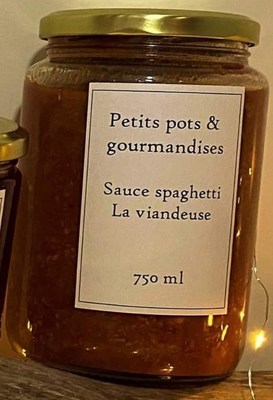
"LA MEAT SPAGHETTI SAUCE" (CNW Group/Ministry of Agriculture, Fisheries and Food)

he Ministry of Agriculture, Fisheries and Food (MAPAQ), in collaboration with the company Petits pots et gourmandises (Le Locker Distillerie inc.) located at 9302, boulevard Sainte-Anne in Sainte-Anne -de-Beaupré, warns the population not to consume the products indicated in the table below, because they have not been packaged in such a way as to ensure their safety.

Product name

Format

Affected batch

“THE MEATY SPAGHETTI SAUCE”

750ml

Units sold until May 12, 2022

” BUTTER CHICKEN “

” VEGETABLE SOUP “

The products that are the subject of this warning were offered for sale until May 12, 2022 at the establishment designated above as well as at the Fromagerie Le Mouton Blanc, located at 176, route 230 Ouest in La Pocatière, and at the Fromagerie Boulangerie Médard, located at 10, rue De Quen in Saint-Gédéon. They were packaged in glass jars with a gold lid and sold at room temperature. The label of the products includes, in addition to their name, the mention “Small pots and delicacies”.

The operator is voluntarily recalling the products in question. It has agreed with MAPAQ to issue this warning as a precautionary measure. Also, people who have any of these products in their possession are advised not to consume it. They must return it to the establishment where they bought it or throw it away. Even if the affected products show no signs of tampering or suspicious odors, their consumption may represent a health risk. No case of illness associated with the consumption of these foods has been reported to MAPAQ to date.
Quebec – Absence of information necessary for the safe consumption of cheeses packaged and sold by Gourmet Laurier – Raw Milk

Quebec

The Ministry of Agriculture, Fisheries and Food (MAPAQ), in collaboration with the Food Inspection Division of the City of Montreal and the company Gourmet Laurier inc. located at 1042, avenue Laurier Ouest in Montreal, advises people considered vulnerable (pregnant women, people with weakened immune systems, children and the elderly) not to consume the products indicated in the table below , because they do not include the statement “made from raw milk” which is required.

Product name

Format

Affected batch

“COMTOMME”

Variable

Units sold until May 12, 2022

“HIGH MOUNTAIN SUMMER BEAUFORT”

“OSSAU-IRATY”

“GRUYERE KALTBACH AOP KING”

“COUNTY LE POLIGNY”

The products that are the subject of this warning were offered for sale until May 12, 2022 inclusive, only at the establishment designated above. They were wrapped in clear plastic wrap and cut to order.

The retailer is voluntarily recalling the products in question. It has agreed with MAPAQ and the Food Inspection Division of the City of Montreal to distribute this warning as a precautionary measure. In addition, people deemed vulnerable (designated above) who have one of these products in their possession are advised not to consume it. They should return it to the establishment where they bought it, use it in a cooked dish that will be cooked until it reaches a safe cooking temperature of 74°C or throw it away. However, no case of disease associated with the consumption of this food has been reported to MAPAQ to date.

USA- Staph food poisoning linked to illnesses among Coachella bus drivers

Outbreak News Today

MRSA Staphylococcus KSW Food World

According to the Riverside County Health Department, tests conducted on food collected after dozens of employees of a shuttle bus company became ill last month detected a bacterial toxin that can cause the symptoms described by those who became sick.

A state health department laboratory reported this week that Staphylococcal aureus (Staph) enterotoxin was detected in the food sample collected by a Los Angeles County resident who became ill shortly after eating a dinner catered for employees of a shuttle bus company on April 24. The company had provided shuttle service for the Coachella Music Festival.

Research – Penn State microbiologists receive USDA grant to study biofilms guarding Listeria

Food Safety News

The U.S. Department of Agriculture has awarded a $605,000 grant to microbiologists in Penn State’s College of Agricultural Sciences to study how microbial biofilms protect Listeria monocytogenes.

“Microorganisms enclosed in a biofilm produce slimy substances that protect them from the antimicrobial activity of sanitizing chemicals by slowing down their penetration into the core of a biofilm,” Jasna Kovac, Lester Earl and Veronica Casida Career Development Professor of Food Safety and Assistant Professor of Food Science said.

“Biofilm formation can therefore result in reduced efficacy of antimicrobial sanitizers used to inactivate Listeria. This project will investigate the interactions between microorganisms found in fruit-packing environments and Listeria monocytogenes.”

Along with Kovac, Luke LaBorde, professor of Food Science, will use the funding from USDA’s National Institute of Food and Agriculture to conduct research on the interactions between microorganisms found in fruit-packing environments and Listeria monocytogenes.

According to LaBorde, because the role of the food-processing environment microbiota on Listeria monocytogenes survival within a biofilm under sanitizer pressure is poorly understood, the researchers will evaluate the ability of the most relevant environmental microbiota found in produce-packing environments to form single- and multi-species biofilms with Listeria monocytogenes.

Research – IAFNS presents new research on pathogens and low-moisture foods

Food Safety News

New research on hazards in low-moisture foods fills critical knowledge gaps and identifies cutting-edge decontamination tools. The Institute for the Advancement of Food and Nutrition Sciences hopes the study will empower food safety professionals to reduce risks in the foods and prevent foodborne illness outbreaks.

Because the persistence of pathogens and viruses in ingredients and ready-to-eat foods has wide-ranging impacts on our food supply, the Institute for the Advancement of Food and Nutrition Sciences (IAFNS) is supporting a body of research on this topic. The studies focus on low-moisture foods such as nuts, dried fruits, cereal products and chocolate. These foods are often ingrediates in other foods, so they can potentially amplify outbreaks and recalls over a wide variety of products, according to researchers.

These studies were performed as part of a multi-center research collaboration between the University of Guelph, Health Canada and North Carolina State University. This collaboration enabled the investigators’ diverse perspectives and expertise to strengthen this line of research.

According to Jeff Farber of the University of Guelph, “the increased awareness of the importance of low-moisture foods (LMF) as a possible vehicle for foodborne illness has already led to better approaches toward prevention and control and will continue to do so in the future.”

Read More at the link above.

Research – Recent Developments in Botulinum Neurotoxins Detection

MDPI

kswfoodworld

Botulinum neurotoxins (BoNTs) are produced as protein complexes by bacteria of the genus Clostridium that are Gram-positive, anaerobic and spore forming (Clostridium botulinumC. butyricumC. baratii and C. argentinense spp.). BoNTs show a high immunological and genetic diversity. Therefore, fast, precise, and more reliable detection methods are still required to monitor outbreaks and ensure surveillance of botulism. The botulinum toxin field also comprises therapeutic uses, basic research studies and biodefense issues. This review presents currently available detection methods, and new methods offering the potential of enhanced precision and reproducibility. While the immunological methods offer a range of benefits, such as rapid analysis time, reproducibility and high sensitivity, their implementation is subject to the availability of suitable tools and reagents, such as specific antibodies. Currently, the mass spectrometry approach is the most sensitive in vitro method for a rapid detection of active or inactive forms of BoNTs. However, these methods require inter-laboratory validation before they can be more widely implemented in reference laboratories. In addition, these surrogate in vitro models also require full validation before they can be used as replacement bioassays of potency. Cell-based assays using neuronal cells in culture recapitulate all functional steps of toxin activity, but are still at various stages of development; they are not yet sufficiently robust, due to high batch-to-batch cell variability. Cell-based assays have a strong potential to replace the mouse bioassay (MBA) in terms of BoNT potency determination in pharmaceutical formulations; they can also help to identify suitable inhibitors while reducing the number of animals used. However, the development of safe countermeasures still requires the use of in vivo studies to complement in vitro immunological or cell-based approaches. View Full-Text

Research – Inactivation of Foodborne Pathogens on Inshell Walnuts by UV-C Radiation

Journal of Food Protection

Inshell walnuts could be contaminated with pathogens through direct contact or cross-contamination during harvesting and postharvest hulling, drying, or storage. This study aimed to assess the efficacy of ultraviolet–C (UV–C) radiation in inactivating foodborne pathogens on inshell walnut surfaces. Intact inshell walnut surfaces were inoculated separately with Salmonella spp., Escherichia coli O157:H7, Listeria monocytogenes , and Staphylococcus aureus , and then subjected to UV–C radiation at doses of 29.4, 147.0, 294.0, 588.0, and 882.0 mJ/cm 2 . UV–C radiation inactivated the inoculated pathogens in a dose-dependent manner, and a tailing effect was observed for the inactivation of pathogens. UV–C radiation at 29.4 mJ/cm 2 and 882.0 mJ/cm 2 reduced the populations of  S . Enteritidis PT 30, S . Typhimurium, E. coli O157:H7, L. monocytogenes , and S. aureus on inshell walnut surfaces by 0.82–1.25 and 1.76–2.41 log CFU/walnut, respectively. Scanning electron photomicrographs showed pathogenic bacterial cells in the cracks and crevices of the inshell walnut surface, and the shielding of microorganisms by the cracks and crevices may have contributed to the tailing effect observed during UV–C inactivation. No significant changes ( p  > 0.05) were found in walnut lipid oxidation following UV–C radiation at doses up to 882.0 mJ/cm 2 . Together, the results indicate that UV–C radiation could be a potential technology for reducing the populations of various foodborne pathogens on inshell walnut surfaces while maintaining the quality of walnuts.

Research – Dutch survey finds a quarter of people wash chicken, despite expert advice

Food Safety News

A survey in the Netherlands has found more than a quarter of people wash raw chicken, which public health officials say increases the chances of spreading bacteria.

Results come from two surveys by the Netherlands Nutrition Centre (Voedingscentrum) with the Dutch population about safe food handling.

The first survey in May 2021 with 2,000 participants asked Dutch consumers about general food safety handling in the domestic kitchen. One of the questions was if they washed their chicken.

A second survey in November 2021 with 1,000 respondents was focused on safe handling of chicken. People were asked if they washed their chicken and more details about why and how. Both surveys revealed that more than 25 percent of consumers washed their chicken often or almost always.

Bacteria on chicken can cause food poisoning. Usually it is because of Campylobacter or Salmonella.

Washing raw poultry is not recommended, because of concerns about contaminating other foods and surfaces and increasing the risk of foodborne illness.

Research – Attachment and survival of Salmonella enterica and Listeria monocytogenes on tomatoes (Solanum lycopersicum) as affected by relative humidity, temperature and time of storage 

Journal of Food Protection

Tomatoes (Solanum lycopersicum) are one of the most consumed fruits worldwide. The fruit can become contaminated with Salmonella and Listeria monocytogenes at different stages of the production and supply chain, and these pathogens may survive under different storage conditions. The effect of relative humidity, temperature and time of storage on the attachment and survival characteristics of both pathogens on the surface of tomatoes was investigated. Fresh whole Roma tomatoes were inoculated with a cocktail of Salmonella or L. monocytogenes and stored at 5, 12, 25, 30, or 35 ºC for 10 days. Every day during storage, relative humidity and temperature were measured and tomatoes were removed to enumerate cells of these pathogens that were loosely attached (LA, cells detached from the tomato surface by simple rinse) and strongly attached (SA, cells that required sonication to detach. Enumeration was achieved by spread-plate method. Surviving populations of LA and SA cells were obtained and the attachment strength (SR) was calculated to express the proportion of SA cells on the tomato surface. The LA initial counts of Salmonella and L. monocytogenes on the surface of the fruit after inoculation were 6.6 and 6.5 log CFU/tomato, and for SA were 5.1 and 5.6 log CFU/tomato, respectively. For both pathogens, the LA counts were higher (p < 0.05) than the SA counts. Also, the LA and SA counts varied significantly as a function of temperature, relative humidity and time of storage. The S R for Salmonella was affected by the time but not the temperature of storage, while the S R for L. monocytogenes was affected by the temperature, relative humidity and time of storage (p < 0.05). Understanding the attachment and survival of Salmonella and L. monocytogenes on tomatoes stored at different temperature conditions may be useful in determining ways to prevent/reduce the establishment of pathogens and designing improved decontamination methods for tomatoes.

Research – Evaluation of the safety and efficacy of lactic acid to reduce microbiological surface contamination on carcases from kangaroos, wild pigs, goats and sheep

EFSA

Studies evaluating the safety and efficacy of lactic acid to reduce microbiological surface contamination from carcases of wild game (i.e. kangaroos and wild pigs) and small stock (i.e. goats and sheep) before chilling at the slaughterhouse were assessed. Wild pig and kangaroo hide‐on carcases may have been chilled before they arrive at the slaughterhouse and are treated after removal of the hides. Lactic acid solutions (2–5%) are applied to the carcases at temperatures of up to 55°C by spraying or misting. The treatment lasts 6–7 s per carcass side. The Panel concluded that: [1] the treatment is of no safety concern, provided that the lactic acid complies with the European Union specifications for food additives; [2] based on the available evidence, it was not possible to conclude on the efficacy of spraying or misting lactic acid on kangaroo, wild pig, goats and sheep carcases; [3] treatment of the above‐mentioned carcases with lactic acid may induce reduced susceptibility to the same substance, but this can be minimised; there is currently no evidence that prior exposure of food‐borne pathogens to lactic acid leads to the occurrence of resistance levels that compromise antimicrobial therapy; and [4] the release of lactic acid is not of concern for the environment, assuming that wastewaters released by the slaughterhouses are treated on‐site, if necessary, to counter the potentially low pH caused by lactic acid, in compliance with local rules.