Category Archives: Microbiology

RASFF Alert – Animal Feed – Salmonella – Frozen Fish

RASFF

Salmonella in frozen fish for pet food from Spain in Italy

RASFF Alert – Animal Feed – Enterobacteriaceae – Dog Chews

RASFF

High count of Enterobacteriaceae in dog chews from China in Sweden

Research – Increase in food outbreaks by Escherichia coli. How to prevent them

ACSA

In recent months, outbreaks caused by Escherichia coli have increased (Ireland, Scotland, etc.). Recently, in France, pizzas contaminated by this bacterium affected 56 people─ including 55 small children─ and caused two deaths.

This bacterium is naturally present in our digestive microflora. Although most strains of E. coli  are harmless to humans, others can cause infections or carry antibiotic resistance genes. Among the pathogenic strains, shigatoxigenic E. coli is responsible for serious infections in children and the elderly.

Ruminants, especially cattle, are healthy carriers of these bacteria. Therefore, the bacteria present in their excrement can contaminate animal products (meat and dairy) and the environment (soil and water). Contamination occurs, for example, in the meat slaughterhouse (through the remains or after the evisceration of the animals) or at the time of milking the milk of cattle, sheep or goats.

With regard to plants, this contamination can occur during the spreading of manure or livestock effluents on farmland, or during the use of contaminated irrigation water.

The main foods implicated in outbreaks of shigatoxigenic E. coli infections are undercooked minced beef, non-pasteurized dairy products (raw milk and raw milk cheeses), raw vegetables (salad, young shoots, sprouts), unpasteurized fruits or vegetables and contaminated drinking water .

Throughout the food chain, the management of this risk is based on the application of effective self-controls and the verification of the effectiveness of the measures implemented.

With regard to the consumer, the prevention of infections through food is based on the application of the following measures:

  • Wash hands with soap and water when leaving the toilet, before preparing and eating food, and after handling raw or non-raw food.
  • Wash and peel the vegetables, if possible; and also fruits and aromatic herbs, especially those that are eaten raw.
  • For sensitive populations (young children and the elderly), thoroughly cook ground meat and ground meat products (70°C), avoid consumption of raw milk and raw milk products (except for cooked pressed cheeses), and of raw or undercooked flour.

Research – Salmonella in animals and feed in Great Britain 2021

Gov UK

This publication presents data on Salmonella reports from livestock species in Great Britain (England, Wales and Scotland) collected and collated by the Animal and Plant Health Agency (APHA) during 2021 and also provides data from previous years for comparative purposes.
The data in the first 12 chapters cover reports of Salmonella in animals, with separate chapters for the main livestock species, reports of Salmonella in dogs, reports of Salmonella in wildlife and reports of Salmonella in animal feeding stuffs.
The 13th chapter covers antimicrobial resistance data for Salmonella (England and Wales only).Since 1993, the date of a Salmonella incident has been recorded as the date it was reported to an Officer of the Minister. Under the present system, any Salmonella reports that are confirmed or identified after the publication of the annual report will be incorporated into the revised tables that appear in the following year’s publication. This may result in the number of incidents and/ or isolations differing from that previously given for a particular year.
The most recent version of the report should therefore always be used when comparing data from year to year. Revisions in the way that data have been compiled and presented since 1993 mean that, with the exception of the tables on Salmonella in animal feeding stuffs, data in this report cannot be compared directly with information published prior to 1993. A more detailed comparison can be generated, if required, for any Salmonella serovar, or phage type in the case of S.Enteritidis and S. Typhimurium. Requests for such data should be made to the Department of Epidemiological Sciences, APHA Weybridge who will be happy to assist with requests at Foodbornezoonoses@apha.gov.uk. Care should be taken when comparing data from one year to another as an increase or decrease in the number of isolations and incidents does not necessarily indicate a similar change in prevalence. This is because the total number of samples examined and their distribution are often not known.

Research-Sources and trends of human Salmonellosis in Europe, 2015-2019: an analysis of outbreak data

asca

Study published in the International Journal of Food Microbiology. The aim of this study was to determine the main food sources and recent trends of  Salmonella outbreaks in Europe. Data from outbreaks in 34 European countries during the 2015-2019 period are taken into account. 

In general, the most important food source of the salmonellosis outbreaks were eggs, pork series and meat products in general. While eggs were the most important source of infection in all regions, pork was the second most common source in Northern and Western Europe, and meat products (in general) in Eastern and Southern Europe. 

There were 939 outbreaks caused by Salmonella enteritidis , 130 by Salmonella typhimurium and its monophasic variant, 107 by other known serotypes, and 332 by other unknown types.

Complex food categories such as baked goods, buffet meals, mixed foods, sweets and chocolate, canned food products, and beverages were grouped as unknown sources in the analysis because it was not possible to identify the exact components responsible for the infection.

In total, 1,508 salmonella outbreaks were included in the analysis. Of these, 1,040 were caused by simple foods and 468 by unknown food sources. Most of the outbreaks were reported in Eastern Europe, followed by Southern, Western and Northern Europe.

Outbreaks caused by S. enteritidis (SE) and other known serotypes (other than SE and S. typhimurium and its monophasic variant [STM]) were attributed primarily to eggs, whereas outbreaks caused by STM were primarily attributed to the Pork Meat. In general, there was a significant increase in the number of reported outbreaks between 2015 and 2019, mainly due to the increase in outbreaks in Eastern Europe while, in Northern and Southern Europe, outbreaks caused by SE decreased significantly between the years 2015 and 2019. Outbreaks related to the consumption of cheese and fish are steadily declining.

Research – Summary of FDA’s Strategy to Help Prevent Salmonellosis Outbreaks Associated with Bulb Onions

FDA

Background

Onions are one of the most commonly consumed vegetables in the United States. Grown in more than 170 countries, they are also one of the most important horticultural crops worldwide. Bulb onions are characterized by having hollow, tubular, blue-green leaves and can be purchased fresh or frozen to use in cooked dishes or consumed raw as an ingredient or garnish. Bulb onions are typically dried or cured to reduce decay and increase shelf life.

In 2020 and 2021Salmonella outbreaks associated with the consumption of bulb onions produced in the U.S. and Mexico caused more than 2,100 confirmed cases of foodborne illness in the United States. The 2020 outbreak in the U.S. cost an estimated $203 million in consumer health-related losses. The 2021 outbreak in the U.S. cost an estimated $188 million in consumer health-related losses. [1]

Overview of Salmonellosis Outbreaks Associated with Bulb Onions

In 2020, the FDA’s Coordinated Outbreak Response & Evaluation (CORE) Network, in collaboration with the Centers for Disease Control and Prevention (CDC) and state and local partners, investigated a multistate outbreak of Salmonella Newport infections linked to the consumption of domestically grown red bulb onions. While no conclusive root cause could be identified, the agency’s investigation report identified several plausible opportunities for contamination including irrigation water, sheep grazing on adjacent land, and signs of animal intrusion, such as scat and large flocks of birds that may spread contamination.

In 2021, the FDA led investigations of a multistate outbreak of Salmonella Oranienberg infections linked to the consumption of red, white, and yellow bulb onions imported from the State of Chihuahua, Mexico. The FDA worked closely with Mexican competent authorities through the established Food Safety Partnership to investigate potential source(s) of contamination within the implicated region.  However, the agency was unable to conduct an on-farm investigation at the time, and no conclusive root-cause was determined.

Summary of FDA’s Strategy to Help Prevent Future Outbreaks of Salmonellosis linked to Bulb Onions[2]

Food safety is a shared responsibility. The bulb onion industry is responsible for meeting applicable food safety requirements. In addition, the FDA believes it is imperative that we share data, knowledge, and information and work collaboratively with industry and state regulators to enhance food safety and advance the goals and objectives of FDA’s Strategy for the Safety of Imported Food. Based on review of the outbreak investigational findings, historical data, and engagements with industry and other stakeholders, the agency has identified several measures that can be taken to reduce future incidences of foodborne illness related to bulb onions, including:

  • Engaging domestic and foreign industry and government partners to promote a broad understanding of the outbreak investigation findings, applicable Produce Safety Rule requirements, and the importance of root cause analysis after outbreaks.
  • Prioritizing inspections of bulb onion farms in the United States and Mexico that are covered by the FDA’s Produce Safety Rule.
  • Identifying and assessing practices and conditions associated with onion curing.
  • Supporting research efforts to better understand bulb onion production practices, including the impact of different soil conditions and curing practices on the safety of bulb onions.
  • Supporting industry-led efforts to develop and implement best practices for bulb onion production.

The agency has also identified the following additional actions specific to imported bulb onions:

  • Prioritizing Foreign Supplier Verification Program inspections of bulb onion importers to ensure that onion importers are verifying that foreign suppliers follow processes and procedures that provide the same level of public health protection as U.S. food safety requirements.
  • Increasing strategic and targeted sample collection and testing of imported bulb onions from the State of Chihuahua, Mexico.
  • Continuing to collaborate with Mexican competent authorities through the established Food Safety Partnership to help ensure the safe production of bulb onions in the State of Chihuahua, Mexico.

By implementing these activities, the FDA seeks to:

  • Encourage high rates of compliance with the applicable FDA food safety requirements across the bulb onion supply chain through education, outreach, and technical assistance to the growers, distributers, and importers of bulb onions.
  • Verify and measure the rate of industry compliance through inspections and sampling.
  • Broaden scientific knowledge about production methods that can reduce future incidences of foodborne illness related to bulb onions.

USA – Could the Wendy’s E. coli Outbreak have sickened over 2,600?

Food Poison Journal

According to the CDC, as of September 1, 2022, a total of 97 people infected with the outbreak strain of E. coli O157:H7 have been reported from six states – Indiana 11, Kentucky 1, Michigan 58, New York 1, Ohio 24, and Pennsylvania 2.  It is expected, according to the NCBI database, that the actual numbers of ill will be 115 or more shortly.  Interestingly, according to the CDC, for E. coli O157:H7, there is an underreporting rate of 26.1 – meaning for everyone 1 person counted by the CDC another 26.1 were actually sickened.

USA – FDA Core Outbreak Investigation Table

FDA

What’s New

  • For the Cyclospora outbreak in a not yet identified food (reference #1080), sample collection and analysis has been initiated and an on-site inspection has been initiated.
  • For the Salmonella Mississippi outbreak in a not identified food (reference #1097), the investigation is closed, and the outbreak has ended.
  • A new outbreak has been added to the table: Salmonella Litchfield (reference #1105) in a not yet identified food. Traceback has been initiated.
  • For the Salmonella Typhimurium outbreak in a not yet identified food (reference #1095), the case count has increased from 84 cases to 86 cases.

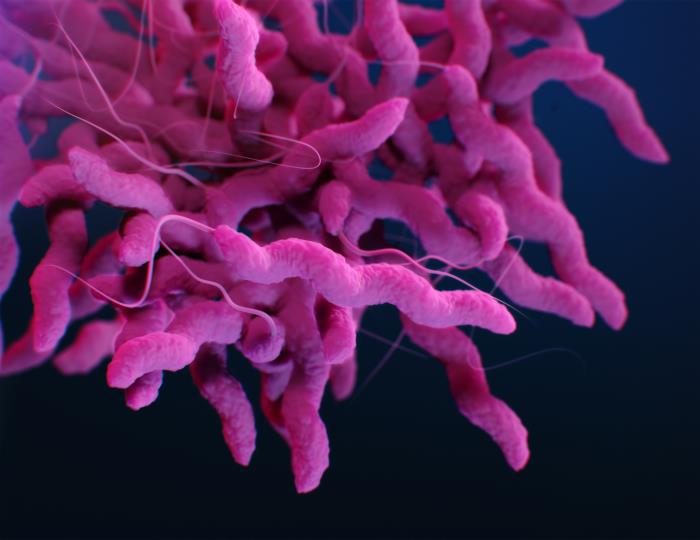
UK – AMR in Campylobacter in UK chicken over the last 20 years

FSA

Campylobacter kswfoodworld

The Food Standards Agency (FSA) has published a report analysing 20 years of data on antimicrobial resistance (AMR) in Campylobacter from retail chicken in the UK.

The study aimed to assess any trends during this 20-year period and provides a baseline against which to evaluate future, hoped-for reductions in AMR.

AMR is when bacteria adapt to become resistant to the killing effects of antimicrobials, such as antibiotics. This resistance subsequently makes such infections in humans more difficult to treat using drugs.  AMR can develop in any bacteria, including Campylobacter. Campylobacter is the main cause of bacterial food poisoning in the developed world and it is estimated that there are in excess of half a million cases annually in the UK.

The FSA’s Science lead in Microbiological Risk Assessment, Dr Paul Cook, said:

“While the data shows a marked increase in AMR in Campylobacter to certain antimicrobials, it is encouraging that there has been no significant increase in resistance since 2014.

“Any increase of AMR in Campylobacter is a concern and continued surveillance is essential. We will continue to carry out AMR surveillance in chicken and other meats and to monitor any long-term trends in resistance, while promoting good food hygiene practice to reduce exposure to AMR bacteria and protect consumer safety.”

Since its formation in 2000, the FSA has commissioned several UK-wide retail surveys and sampling studies that involved testing for Campylobacter in chicken. A significant proportion of the Campylobacter isolates detected were further tested to assess resistance to a range of antimicrobials.

Key findings from this report vary between the five main types of antimicrobial drugs included in the study. Resistance to quinolones (ciprofloxacin and nalidixic acid) and tetracycline was common in the most prevalent types of Campylobacter from chicken (Campylobacter jejuni and Campylobacter coli). In comparison, resistance to erythromycin and streptomycin was much rarer in the Campylobacter isolates examined.  Gentamicin resistance was very rare.

There are effective ways for consumers to reduce exposure to AMR bacteria. This includes cleaning surfaces properly, cooking food thoroughly, chilling food at the correct temperature and handling food hygienically so it doesn’t cross contaminate other foods or surfaces. For any fruit or vegetables consumed raw, make sure they are washed thoroughly or peeled as this will help to remove any visible dirt or bacterial contamination.

For more information on AMR, including an ‘FSA Explains’ video, visit our dedicated AMR webpage. The research report is available on our research pages.

Research – Fighting Foodborne Pathogens with Natural Antimicrobials

Mirage News

The food industry has now started exploring natural alternatives for preserving food to reduce the dependency on chemical preservatives, some of which are linked to obesity and metabolic syndrome. Specifically, natural antimicrobials produced by plants and microorganisms like bacteria and fungi can kill food-borne pathogens like Salmonella Typhimurium, Escherichia coliListeria monocytogenes and Clostridium botulinum and also food spoilage bacteria like Brochothrix thermosphactaLactobacillus spp., Bacillus spp. and Weissella spp., among others. Foodborne pathogens and spoilage microbes pose a serious health concern for consumers and destroy the appearance, texture and sensory characteristics of the food, affecting the food industry and consumers alike.