Category Archives: Microbiology

FDA Works to Protect Consumers from Foodborne Illness and other Adverse Events

FDA

A Conversation with Stic Harris, Conrad Choiniere, and Michael Rogers on Foodborne Illness and other Adverse Events 

Each year, the FDA receives approximately 9,600 reports of foodborne illness or other adverse events related to FDA-regulated human food and dietary supplement products submitted by individual consumers, public health professionals, or industry.[1] In addition, the FDA’s Coordinated Outbreak Response & Evaluation (CORE) Network evaluates an average of 75 incidents annually that may potentially constitute a national, multi-state outbreak. 

The FDA takes its responsibility to safeguard the food supply very seriously and is committed to being transparent about how FDA approaches its food safety mission, particularly about how the agency responds when it receives reports of foodborne illness and other adverse events.   

That is what three foods program leaders will discuss in this conversation about challenges and opportunities they face every day in working to protect consumers from potential hazards in the complex, global food system.

Stic Harris, DVM, MPH, is the director of FDA’s Coordinated Outbreak Response & Evaluation (CORE) Network, which is on the frontline of foodborne illness outbreak investigations.

Conrad Choiniere, Ph.D., is the director of the Office of Analytics and Outreach at FDA’s Center for Food Safety and Applied Nutrition (CFSAN). His office evaluates consumer complaints and reports of potential hazards associated with FDA-regulated food, dietary supplements and cosmetic products.

Michael Rogers, MS, is the Assistant Commissioner for Human and Animal Food Operations in FDA’s Office of Regulatory Affairs (ORA), the inspection and enforcement arm of the FDA. In his role he works with ORA’s consumer complaint coordinators and investigators in the field, who are the agency’s boots on the ground in this work to keep foods safe.

These three leaders represent different aspects of the agency’s food safety work and, together, they will provide an overview of how FDA is doing its job and what it can, and will, do to continually improve in this space.

Research – Illnesses Linked to Harmful Algal Blooms

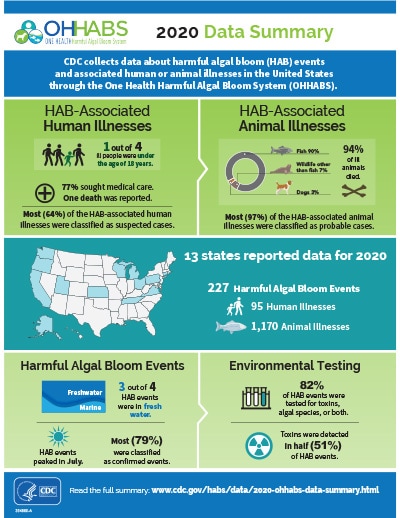
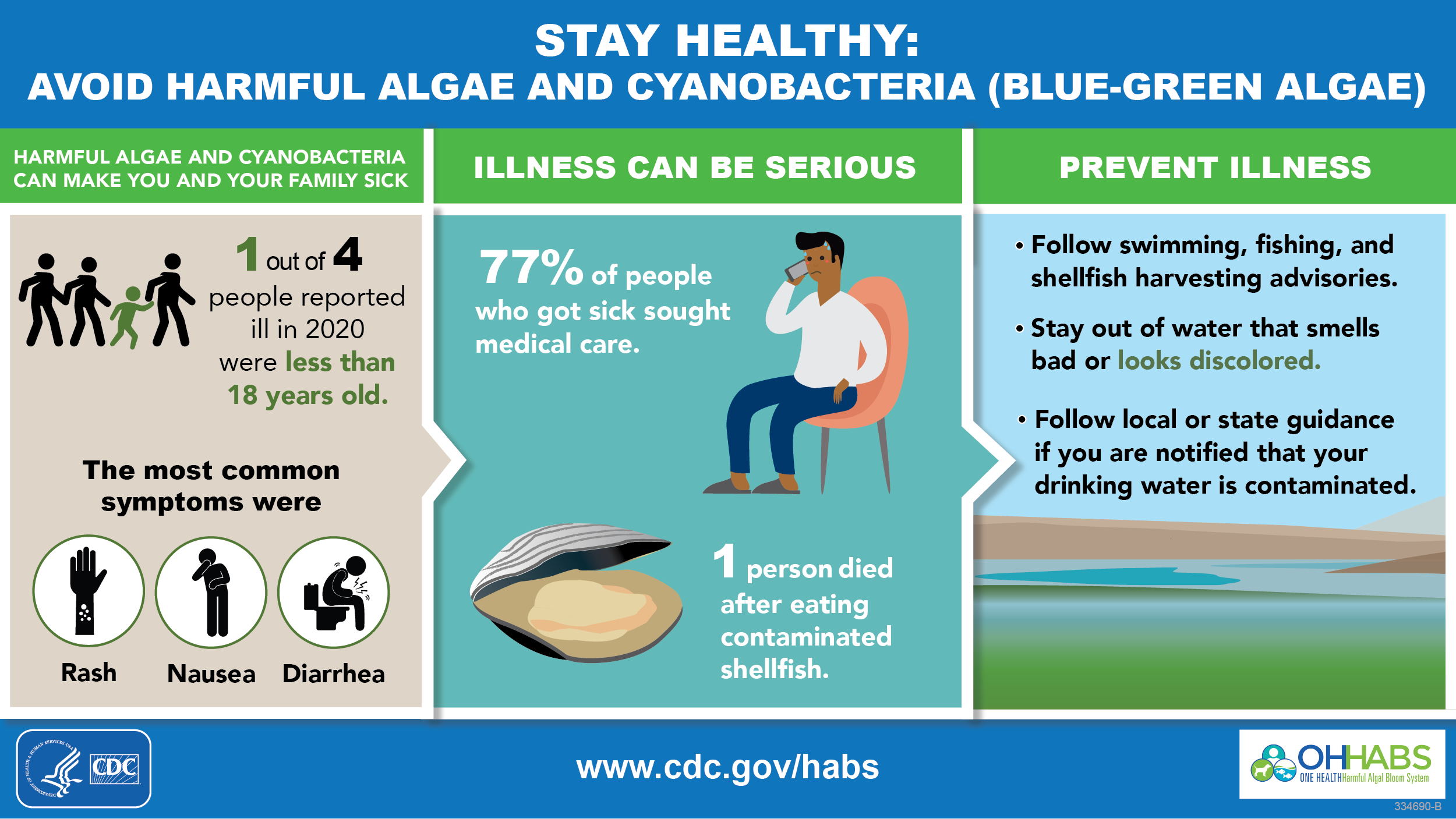
Graphic showing 2020 data about illnesses in people caused by harmful algal blooms

Highlight

  • Thirteen states reported 227 harmful algal blooms (HABs) that resulted in a total of 95 human illnesses and at least 1,170 animal illnesses.
  • The first human death reported in OHHABS was associated with paralytic shellfish poisoning.
  • A HAB event in September killed at least 1,000 fish (carp).
  • 22 human illnesses (23%) were associated with national parks, with 21 illnesses attributed to a single HAB event.

Background

Harmful algal blooms (HABs) that result from the rapid growth of algae or cyanobacteria (sometimes referred to as blue-green algae) in natural waterbodies can harm people, animals, or the environment. HAB events of public health concern are primarily caused by microalgae called diatoms and dinoflagellates, cyanobacteria, and the toxins they can produce. HAB events, which can be intensified by factors such as nutrient pollution and warmer water temperature, can have public health, environmental, and economic impacts.

HABs are a One Health issue—they affect the health of people, animals, and our shared environment. One Health is a collaborative and multi-sectoral approach that involves engagement across disciplines including public health, animal health, and environmental health. Using a One Health approach, CDC collects data about HAB events and associated human or animal illnesses through the One Health Harmful Algal Bloom System (OHHABS) to inform public health prevention efforts.

Within the context of OHHABS, the term HAB event describes the identification of a bloom or the detection of HAB toxins in water or food (i.e., absent a visual bloom). Human illnesses are reported individually. Animal illnesses are reported as single cases of illness or in groups, such as flocks of birds. The reporting system can link HAB event data with human or animal illness data. OHHABS uses standard definitions [PDF – 3 pages] to classify HAB events as suspected or confirmed and human or animal illness as suspected, probable, or confirmed.

OHHABS is available for voluntary reporting by public health agencies and their designated environmental health or animal health partners in the United States, District of Columbia, Federated States of Micronesia, Guam, Marshall Islands, Northern Mariana Islands, Palau, Puerto Rico, and U.S. Virgin Islands. Public health agencies use standard forms to report HAB events, human cases of illness, and animal cases of illness to OHHABS. Public health agencies do not need to submit all three types of forms to participate.

Data collected for HAB events include general information (e.g., observation date), geographic information, water body characteristics (e.g., salinity), observational characteristics (e.g., water color, scum), and laboratory testing. Data collected for cases of illness include general demographic characteristics, exposure information, signs and symptoms, medical care, and health outcomes. OHHABS is a dynamic electronic reporting system; data within individual reports are subject to change over time. Data included in this report are from a specific point in time.

New Zealand – Hepatitis A Outbreak linked to frozen berries jumps to 18.

Food Poison Journal

The Ministry of Health said on Thursday afternoon that the number of confirmed cases linked to the outbreak had grown to 18 in total. Of these, nine (50%) have been hospitalized.

As of Thursday, 14 of the 18 cases have been sequenced to date – all 14 have an identical sequence profile, indicating they likely came from the same source.

Hepatitis A is spread by contact with feces of an infected person. It can be passed on through poor personal hygiene (such as when people don’t wash their hands properly), contaminated food and close personal contact.

All 18 cases reported “significant” consumption of uncooked, imported frozen berries.

Food safety officials have advised that Pams – a New Zealand division of supermarket giant Foodstuffs – was recalling various imported frozen berry products as a precaution, over a possible link to recent cases of the contagious virus in fruit from Serbia.

Research – What to Know About the Risk of Cronobacter in Powdered Infant Formula

FDA

The U.S. Food and Drug Administration continues to help ensure the safety of powdered infant formula in the wake of reports of Cronobacter sakazakii infections in four infants that may have contributed to death in two patients.

Those reports led to an FDA investigation of Abbott Nutrition in Sturgis, Michigan. Insanitary conditions found at the facility led to the February 2022 voluntary recall of specific lots of powdered infant formula manufactured at the facility and brought attention to a type of bacteria that many parents may not have heard about before and scientists continue to work to better understand.

While Cronobacter contamination and infections are rare, it is still important to know the risks and what you can do to minimize them.

What Is Cronobacter?

Cronobacter is a germ (bacteria) that is naturally found in the environment. Cronobacter can exist on almost any surface and is especially good at surviving in dry foods, like powdered infant formula, powdered milk, herbal teas, and starches.

Cronobacter is harmless for most people and infections are rare. When they do occur, they can be life threatening in infants, particularly those who are younger than two months old, premature, immunocompromised, or of low birthweight.

How Does Powdered Infant Formula Become Contaminated with Cronobacter?

Parents may not know that while powdered infant formula manufacturers are required to produce formula that is safe from harmful bacteria like Cronobacter, powdered formulas — unlike liquid formulas — do not receive certain processing treatments that would render them sterile.

Cronobacter has the potential to come into factories, homes, and hospitals on the soles of shoes or on hands and can then live on surfaces like counters or bottles.

At the factory, Cronobacter could get into formula powder if:

  • Contaminated ingredients are used to make the formula.
  • The formula powder touches a contaminated surface.

In the home, infants can get infected by Cronobacter through multiple pathways including:

  • Inadequately sanitized breast-pump accessories, bottles, and other utensils used for feeding.
  • Inadequate handwashing prior to infant formula preparation.
  • Formula lids or scoops placed on contaminated surfaces, like countertops or sinks, that then later touch the formula.
  • Contaminated water used to mix formula.

Why Is it Difficult to Find the Source of Cronobacter Contamination?

Cronobacter sakazakii and its cousins in the broader Cronobacter species category are part of a large family of bacteria that are common in the environment — like in our yards, kitchens, and living rooms — so identifying the specific source of an illness or outbreak can be challenging.

Importantly, only one state in the U.S., Minnesota, currently requires that cases of Cronobacter sakazakii be reported to state public health authorities. As a result, many cases are unreported, and scientists have limited information about the genetic makeup of the bacteria found in cases that are reported. To provide some perspective, the National Center for Biotechnology Informatics (NCBI) database that tracks these pathogens has received roughly 480,000 submissions of genomic information for strains of Salmonella enterica compared to only 1086 submissions for strains of Cronobacter.

What Can You Do to Minimize the Risk of Cronobacter Contamination?

Safely Preparing and Storing Powdered Infant Formula

In most cases, it is safe to mix powdered infant formula following manufacturer’s instructions. If your baby is less than 2 months old, was born prematurely, or has a weakened immune system the Centers for Disease Control and Prevention (CDC) recommends using ready-to-feed infant formula. Liquid infant formula is made to be sterile (without germs) and is the safest option for infants not receiving breast milk. However, you can also take extra steps to prepare powdered formula for these infant groups by using hot water (at least 158°F/70°C) to help protect against Cronobacter and then cooling the formula before feeding your infant.

However, certain metabolic and specialty products include statements on their packaging warning consumers against heating because heating the particular product above 100°F could result in a loss of vitamins and nutrients. Therefore, caregivers should be especially mindful of the manufacturer’s instructions included on the packaging for specialty metabolic formulas. If the instructions prevent a consumer from heating their formula to at least 158°F, then caregivers should instead bring the water used to mix the formula to body temperature and follow the instructions in this printable infographic to prepare and store powdered infant formula safely.

Parents who suspect their infant became ill due to infant formula may call the FDA’s consumer hotline at 1-800-FDA-1088.

Other Tips to Minimize the Risk of Cronobacter Contamination

Infants could also be exposed to Cronobacter from unclean breast pumps or unclean bottles. To help keep your baby safe, you can help prevent Cronobacter from growing on these items. Keep your baby’s food, whether breast milk or formula, safe by carefully cleaning, sanitizing, and storing bottles and breast pump parts.

It is also important to wash your hands with soap and water, especially before preparing bottles and feeding. The CDC says that alcohol-based hand sanitizer with at least 60% alcohol can also be used.

What Are the Symptoms of Cronobacter infection?

Symptoms of infection in infants may start with fever, poor feeding, excessive crying, and/or very low energy. Some infants may also have seizures. Babies with these symptoms should be taken to a medical provider as soon as possible.

USA – Kerry’s former quality assurance director pleads guilty to Honey Smack outbreak – Salmonella

Food Safety News

A fast-moving, but somewhat secretive federal prosecution has extracted guilty pleas for three misdemeanors from the quality assurance director for a food manufacturer working for the Kellogg Company.

The former quality assurance director pleaded guilty on Oct. 21 to three misdemeanor counts of Introducing adulterated food into Interstate Commerce. It was part of a plea deal that is among a half dozen documents in the case that are sealed, and therefore not available for public viewing. The federal Magistrate for the Central District of Illinois, Jonathan P. Hawley, has scheduled sentencing for Jan. 30. 2023.

The charges stem from the multistate outbreak of Salmonella Mbandaka infections from Kellogg’s Honey Smacks cereal, which sickened 135 people in 35 states in 2018. The infections required hospitalizations for 34 patients. The Kellogg Company recalled Honey Smacks cereal on June 14, 2018.

Czech Republic – STEAMED HAM, SLICED – Microbial Activity

Potravinynapranyri

Illustrative photo #1

Place of inspection:
Vřesina ( Sportovní 326/6, 747 20 Vřesina )
ID: 01738950
Food group: Meat and meat products Heat-treated perishable products

STEAMED HAM, SLICED
Category: Dangerous foods
Invalid parameter:

changes caused by microbial activity

The product had a sticky surface, rough edges and smelled of spoilage. Food is not considered safe if it shows signs of spoilage.

The food was more than a month past its use-by date. 

Batch: 940030
Expiration date: 16/06/2022
Date of sample collection: 21/07/2022
Reference number: 22-000499-SZPI-CZ
The sample was detected by the official control of the State Agricultural and Food Inspection.

Research – Bacterial Infections and Ice Cream – a Risky Mix

Food Poison Journal

Great article to read at the above link, the table below is edited there is more information in the article.

Year State Agent Brand
2014 Washington Listeria Snoqualmie Ice Cream
2010-2015 Multistate Listeria Blue Bell
2008 Vermont E. coli O157 Homemade ice cream, unpasteurized milk
2008 Minnesota Salmonella  Homemade ice cream
2008 California E. coli O157 Consumed at a restaurant; brand or pasteurization unknown
2007 California Norovirus Ice cream with berries; berries were likely the contaminated ingredient
2007 Pennsylvania Campylobacter Homemade ice cream
2007 Minnesota Hepatitis A Ice cream or yogurt at a restaurant
2007 West Virginia Salmonella Homemade ice cream
2006 Belgium E. coli O145 Ice cream at a farm
2006 California Salmonella Homemade ice cream
2005 Multistate Salmonella  Cold Stone Creamery (cake batter was the contaminated ingredient)
1994 Multistate Salmonella Schwan’s Ice Cream – the estimated # of ill cases is 224,000!
1993 Florida Salmonella  Homemade ice cream

Belgium – Barry Callebaut site back to normal after Salmonella scare

Food Safety News

A Barry Callebaut chocolate factory in Belgium is back operating at full capacity after a Salmonella contamination scare earlier this year.

Cleaning of the factory in Wieze is nearing completion so it has returned to running at normal levels after operations were stopped in late June.

“I would like to express my deepest gratitude to our customers for their understanding during this difficult period, and to all our employees who worked tirelessly for weeks to get the Wieze factory up and running again,” said Peter Boone, CEO of Barry Callebaut.

The company previously warned the incident is expected to have a significant financial impact when the full year result figures are published in November.

Mondelez was one of several companies impacted, as it is supplied by Barry Callebaut. The alert meant it had to limit the retail availability of several ranges of biscuits.

Research – France – Haemolytic-uremic syndrome surveillance data in 2021

Sante Publique

In 2021, the overall annual incidence of pediatric HUS was lower than that observed for the past four years.

Even if this decrease in annual incidence is observed in children under three years of age, the incidence in this age group remains high and much higher than that observed in older children. As every year, regional heterogeneity is observed. In 2021, the Bourgogne-France-Compté and Auvergne-Rhône-Alpes regions were particularly affected.

In 2021, serogroup O26 remains the majority, followed by serogroup O80. After several years of decrease in the share of cases due to O157, a slight increase in the number of O157 strains is observed in 2021.

Sweden – Sweden searches for the source of Crypto and Salmonella outbreaks

Food Safety News

Swedish officials are investigating a recent increase in reported cases of Cryptosporidium.

A total of 61 people have been confirmed as being infected by the same certain type of Cryptosporidium parvum. These people fell ill from Sept. 25 to Oct. 10 and live in 10 different regions of the country.

Of confirmed cases, 41 are women and 20 are men. They are aged between 11 and 86 years old with an average age of 44.

There are another 98 possible infections that have been reported within the same period and some of these may also belong to the outbreak.

The Public Health Agency of Sweden (Folkhälsomyndigheten) said the increase is under investigation but could be caused by food with wide distribution in the country.

Local infection control units, the Swedish Food Agency (Livsmedelsverket) and Folkhälsomyndigheten are investigating the outbreak to identify the source of infection.

Cryptosporidium is a parasite that, if ingested, can cause cryptosporidiosis. Transmission occurs mainly through contact with contaminated water but can be via food or exposure to infected animals or water contaminated by the feces of infected animals.

The main symptom is watery diarrhea, which can range from mild to severe. It is often accompanied by stomach pain, nausea or vomiting, fever, and sometimes dehydration and weight loss. Symptoms usually appear two to 10 days after infection and last one to two weeks.