Category Archives: Microbiological Risk Assessment

Research – “Aquaponics offers solutions to foodborne illness outbreaks”

Horti Daily

Soilless growing offers a viable alternative to growing crops in a low-risk environment for many microbial sources. Aquaponics, which is often greenhouse-grown, is an innovative way of growing fish and plants in rural or urban settings. For years, commercial aquaponic farms have obtained food safety certifications from Global GAP, USDA Harmonized GAP, Primus GFS, and the SWF Food Safety Program, in addition to being certified USDA organic (Aquaponic Association, 2019) and sold commercially across North America.

In an aquaponic system, the healthy microbes actually serve as biological control agents against pathogenic bacteria making their survival minimal (Fox, 2012). While aquaponics produce is not immune to all pathogenic contamination, it is one of the safest agriculture methods against pathogenic risk.

NEW FOOD SAFETY GUIDE – Ensuring Food Safety in the Cold Chain

Cold Chain Federation

The Cold Chain Federation has published the first ever handbook on managing food safety specifically for temperature-controlled storage and distribution.

The handbook, Ensuring Food Safety in the Cold Chain, brings together the latest information on compliance, best practice and recommendations for managing the key food safety risks in the cold chain and insights into likely future considerations, the new guide meets the industry’s need for a holistic, comprehensive and up-to-date cold chain food safety reference guide.

For a copy of the guide e-mail: compliance@coldchainfed.org.uk.

Italy – Genoese pesto without garlic – Microbial Risk

Salute

Brand : Pastificio Novella Sas

Name : Genoese pesto without garlic

Reason for reporting : Recall due to microbiological risk

Publication date : June 16, 2021

Documentation

Documentation

Hong Kong – Food Safety Information

Click to access borne_diseases.pdf

Ireland – Further Recall of all Dairy Products from Dunlavin Dairy as they were Produced in an Unapproved Establishment

FSAI

Wednesday, 16 June 2021

Summary
Category 1: For Action
Alert Notification: 2021.45
Product: All Dunlavin Dairy products.

Please see photos below of some examples of these products.

Batch Code: All batch codes, all use-by dates.
Country Of Origin: Ireland

Message:

Further to FSAI Food Alert 2020.81, all Dunlavin Dairy products including those bearing approval number IE 1989 EC or raw milk registration number RM02 are being recalled as the products were produced in an unapproved establishment. Products implicated include raw and pasteurised milk, semi-skimmed milk, buttermilk, cream and butter.

Action Required:

Inspectors:

EHOs are requested as part of their routine checks to verify that the implicated batches are recalled from sale.

Manufacturers, wholesalers, distributors, caterers & retailers:

Retailers are requested to remove the implicated batches from sale and to display a point-of-sale recall notice in stores where the affected batches were sold.

Caterers should not use the implicated batches.

Consumers:

Consumers are advised not to eat or drink the implicated batches.

Dunlavin Pictures 1
Dunlavin Pictures 2
Dunlavin Pictures 3

Research – Poultry study points to genes linked to food bug – Campylobacter.

Roslin

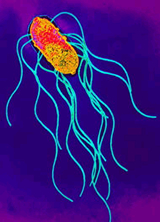
Campylobacter kswfoodworld

Variation in the response of chickens to Campylobacter helps identify key genes that may provide resistance to infection.

Research has identified genes in chickens that could offer resistance to harmful bacteria commonly found in poultry and could inform ways to limit the risk of associated food poisoning in people.

The study, led by a team from the Roslin institute, has identified a large number of genes in chicken guts that may determine whether the birds are resistant to Campylobacter.

The insights could inform research towards breeding chickens that are less likely to carry Campylobacter bacteria, and so limit the risk to poultry consumers.

Research – Escherichia coli Survival on Strawberries and Unpacked Romaine Lettuce Washed Using Contaminated Water

MDPI

A number of foodborne outbreaks have occurred in the past decade, with higher incidences associated with romaine lettuce and strawberries. Contaminated agricultural water has been reported as the source of microbial contamination in most of these outbreaks. Maintaining the adequate and sanitary quality (0 E. coli/100 mL) of agricultural water can be challenging during post-harvest operations such as washing. The study focused on the attachment of generic E. coli (Rifampicin resistant) onto romaine lettuce and strawberries, mimicking the produce wash step. The produce was washed with contaminated water, air-dried, and stored in display units for 7 days. The produce was sampled randomly each day and analyzed for the surviving E. coli count. The results indicated that E. coli can survive in both lettuce and strawberries over extended periods. A survival population of 2.3 log CFU/cm2 (day 8) was observed on lettuce with an initial population of 2.8 log CFU/cm2 (day 0). On strawberries, the population reduced from 3.0 (day 0) to 1.7 log CFU/cm2 (day 7), with an initial E. coli concentration of approx. 6 log CFU/mL in the wash water. Strawberry leaves had a higher attachment of E. coli than the fruit (p < 0.05). In conclusion, romaine lettuce and strawberries washed with contaminated water can cause an outbreak affecting consumers and public health. View Full-Text

Research – Prevalence, Antibiogram and Genetic Characterization of Listeria monocytogenes from Food Products in Egypt

MDPI

World Health Organization classified Listeria monocytogenes as a major notable foodborne pathogen associated with high mortality and hospitalization. The study reports the prevalence, antibiogram, virulence determination and genetic characterization of L. monocytogenes from different food products. A total of 250 food samples, fifty samples each from raw milk, ice cream, minced meat, fish fillet and sausage were collected from the Menoufiya governorate in Egypt. L. monocytogenes was detected in 17 (6.8%) of the tested food samples including minced meat (14%), fish fillet (8%), sausage (6%) and raw milk (6%). The antimicrobial susceptibility assay of 17 L. monocytogenes isolates against seventeen antibiotics belonging to eight antibiotics classes revealed a high susceptibility to norfloxacin (82.3%), amoxicillin-clavulanic acid (76.4%), cefotaxime (70.5%), erythromycin (64.6%), amoxicillin (64.6%), gentamicin (58.7%) and vancomycin (58.7%). While, high resistance was observed against oxytetracycline (76.4%), trimethoprim-sulfamethoxazole (76.4%), chloramphenicol (70.5%), doxycycline (64.6%), levofloxacin (41.2%) and azithromycin (41.2%). Of note, all L. monocytogenes isolates were multidrug-resistant. The multiplex PCR successfully amplified L. monocytogenes in all tested isolates. Screening of the five virulence-related genes revealed the hlyA and iap as the most prevalent genes followed by actA gene, however, the inlA and prfA genes were not detected in any of the studied isolates. The partial 16S rRNA gene sequencing of three L. monocytogenes isolates showed a high nucleotide similarity (99.1–99.8%) between the study isolates and various global clones, and phylogenetic analysis clustered these L. monocytogenes strains with other Listeria species including L. welshimeriL. seeligeri and L. innocua. This study demonstrates the impact of L. monocytogenes as a major contaminant of various food products and suggests more attention to the awareness and hygienic measures in the food industry. View Full-Text

Research – Antimicrobial effect of tea polyphenols against foodborne pathogens

Journal of Food Protection

In recent years, science and technology have developed to a considerable level. However, food contamination by food-borne pathogens is still widespread in many countries around the world, and food safety is a major global public health issue. Therefore, novel preservatives that can guarantee safer food are high in demand. Contrary to artificial food preservatives, tea polyphenols (TP) are getting wide attention as food additives for being “green”, “safe” and “healthy”. The sources of TP are wide, and the purification technology is sophisticated. Compared with other natural antibacterial agents, its antibacterial effect is more stable. It is an excellent natural antibacterial agent. Here, this review systematically summarizes the important chemical components of TP and discusses their antibacterial mechanisms against various foodborne pathogens. In addition, the potential application areas of TP are also discussed. It can provide a theoretical basis for the in-depth study of TP.

Research- Monte Carlo Simulation Model for Predicting Salmonella Contamination of Chicken Liver as a Function of Serving Size for Use in Quantitative Microbial Risk Assessment

Journal of Food Protection

Salmonella kswfoodworld

The first step in quantitative microbial risk assessment (QMRA) is to determine distribution of pathogen contamination among servings of the food at some point in the farm-to-table chain. In the present study, distribution of Salmonella contamination among servings of chicken liver for use in QMRA was determined at meal preparation. A combination of five methods: 1) whole sample enrichment; 2) quantitative polymerase chain reaction; 3) cultural isolation; 4) serotyping; and 5) Monte Carlo simulation were used to determine Salmonella prevalence (P), number (N), and serotype for different serving sizes. In addition, epidemiological data were used to convert serotype data to virulence (V) values for use in QMRA. A Monte Carlo simulation model based in Excel and simulated with @Risk predicted Salmonella P, N, serotype, and V as a function of serving size from one (58 g) to eight (464 g) chicken livers. Salmonella P of chicken livers was 72.5% (58/80) per 58 g. Four serotypes were isolated from chicken livers: 1) Infantis (P = 28%, V = 4.5); 2) Enteritidis (P = 15%, V = 5); 3) Typhimirium (P = 15%, V = 4.8); and 4) Kentucky (P = 15%, V = 0.8). Median Salmonella N was 1.76 log per 58 g (range: 0 to 4.67 log/58 g) and was not affected ( P > 0.05) by serotype. The model predicted a non-linear increase ( P ≤ 0.05) of Salmonella P from 72.5% per 58 g to 100% per 464 g, minimum N from 0 log per 58 g to 1.28 log per 464 g, and median N from 1.76 log per 58 g to 3.22 log per 464 g. Regardless of serving size, predicted maximum N was 4.74 log, mean V was 3.9, and total N was 6.65 log per lot (10,000 chicken livers). The data acquired and model developed in this study fill an important data and modeling gap in QMRA for Salmonella and chicken liver.