Category Archives: Microbiological Risk Assessment

Research – Evaluation of Lactose Oxidase as an Enzyme-Based Antimicrobial for Control of L. monocytogenes in Fresh Cheese

MDPI

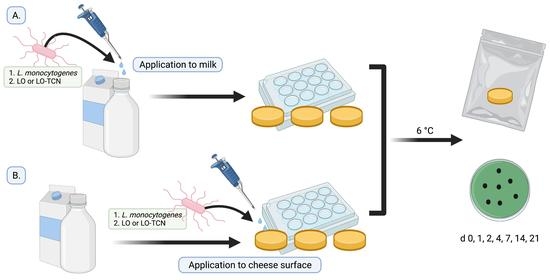
Listeria monocytogenes is a ubiquitous pathogen that can cause morbidity and mortality in the elderly, immune compromised, and the fetuses of pregnant women. The intrinsic properties of fresh cheese—high water activity (aW), low salt content, and near-neutral pH—make it susceptible to L. monocytogenes contamination and growth at various points in the production process. The aim of this study was to investigate the ability of lactose oxidase (LO), a naturally derived enzyme, to inhibit the growth of L. monocytogenes in fresh cheese during various points of the production process. Lab-scale queso fresco was produced and inoculated with L. monocytogenes at final concentrations of 1 log CFU/mL and 1 CFU/100 mL. LO and LO sodium thiocyanate (TCN) combinations were incorporated into the milk or topically applied to the finished cheese product in varying concentration levels. A positive control and negative control were included for all experiments. When L. monocytogenes was inoculated into the milk used for the cheese-making process, by day 28, the positive control grew to above 7 log CFU/g, while the 0.6 g/L treatment (LO and LO + TCN) fell below the limit of detection (LOD) of 1.3 log CFU/g. In the lower inoculum, the positive control grew to above 7 log CFU/g, and the treatment groups fell below the LOD by day 21 and continued through day 28 of storage. For surface application, outgrowth occurred with the treatments in the higher inoculum, but some inhibition was observed. In the lower inoculum, the higher LO and LO-TCN concentrations (0.6 g/L) reduced L. monocytogenes counts to below the LOD, while the control grew out to above 7 log CFU/g, which is a >5 log difference between the control and the treatment. These results suggest that LO could be leveraged as an effective control for L. monocytogenes in a fresh cheese. View Full-Text

UK – FSA working on reasons behind foodborne illness decline

Food Safety News

The Food Standards Agency’s chief scientific advisor has said potential trends in foodborne infections must be monitored after a decline during the COVID-19 pandemic.

Robin May said data from the past 12 months shows a substantial drop in foodborne disease rates for four major pathogens but this is likely because of fewer patients going to general practioners’ (GP) offices and reduced diagnostic testing during the coronavirus pandemic.

May said understanding the true level of foodborne disease in 2020 and early 2021 will require detailed analysis, work which the FSA has started.

“An accurate benchmark will be invaluable as we start to monitor post-COVID trends and establish, for instance, whether changes in domestic and commercial hygiene practices may ultimately lead to a lasting change in foodborne disease rates,” he said.

“In terms of foodborne disease reporting, the bottom line is we don’t know what the data really looked like for last year because so much of our data comes from things like GP reporting, which people were not doing.

Research – UV-C LED Irradiation Reduces Salmonella on Chicken and Food Contact Surfaces

MDPI

Ultraviolet (UV-C) light-emitting diode (LED) light at a wavelength of 250–280 nm was used to disinfect skinless chicken breast (CB), stainless steel (SS) and high-density polyethylene (HD) inoculated with Salmonella enterica. Irradiances of 2 mW/cm2 (50%) or 4 mW/cm2 (100%) were used to treat samples at different exposure times. Chicken samples had the lowest Salmonella reduction with 1.02 and 1.78 Log CFU/cm2 (p ≤ 0.05) after 60 and 900 s, respectively at 50% irradiance. Higher reductions on CB were obtained with 100% illumination after 900 s (>3.0 Log CFU/cm2). Salmonella on SS was reduced by 1.97 and 3.48 Log CFU/cm2 after 60 s of treatment with 50% and 100% irradiance, respectively. HD showed a lower decrease of Salmonella, but still statistically significant (p ≤ 0.05), with 1.25 and 1.77 Log CFU/cm2 destruction for 50 and 100% irradiance after 60 s, respectively. Longer exposure times of HD to UV-C yielded up to 99.999% (5.0 Log CFU/cm2) reduction of Salmonella with both irradiance levels. While UV-C LED treatment was found effective to control Salmonella on chicken and food contact surfaces, we propose three mechanisms contributing to reduced efficacy of disinfection: bacterial aggregation, harboring in food and work surface pores and light absorption by fluids associated with CB. View Full-Text

USA – FDA Core Investigation Table Update

FDA

Norway – Research – Risk ranking and source attribution of food- and waterborne pathogens for surveillance purposes – Toxoplasma the top risk!

VKM

Toxoplasma

Background
Providing risk managers with the information that they need for decision making is an important element in food-safety management. The present risk assessment was undertaken to establish a scientific basis that could be used to assist the Norwegian Food Safety Authority (NFSA) in implementing risk-based surveillance, monitoring, and control programmes for pathogens in food and water. The assessment approach used here consisted of two steps:(1) risk ranking of 20 selected pathogens based on the incidence and severity of their associated diseases following infection with the pathogens via food or water, and(2) a source attribution process aimed at identifying the main pathogen-food combinations that may pose a risk to human health for each of the ranked pathogens. We used an expert knowledge elicitation (EKE) procedure with a panel of nine experts, including all eight members of the Panel on Biological Hazards of the Norwegian Scientific Committee for Food and Environment (NSCFE) and one invited expert on food/water-borne viral infections.
Risk Ranking
The 20 pathogens selected for risk ranking were defined in the terms of reference (ToR) received from NFSA. We performed a multicriteria-based ranking of the pathogens in terms of their public health impact from food/water-borne transmission in Norway. The risk ranking utilized six criteria that estimated the incidence of food- and waterborne illness attributable to each pathogen, the severity of acute and chronic illness, the fraction of chronic illness, fatality rate, and the probability for future increased disease burden. For each pathogen, all criteria were scored by the expert panel members, and individual criterion scores were combined into an overall score for every pathogen. To achieve this, each criterion was weighted in terms of its relative importance, as judged by the expert panel. The overall scores so calculated were the basis for the ranking.
Source attribution
For each of the ranked pathogens, the subsequent source-attribution process aimed to identify the main food vehicles, reservoirs, and sources of infection for outbreak-related and sporadic cases of illness, the relative importance of food sources, and preventable risk factors in Norway. To achieve this, both microbiological and epidemiological data were scrutinized. These encompassed results from national surveillance and monitoring programmes, prevalence surveys, outbreak investigations, and research, including analytic epidemiological studies. When Norwegian data were sparse or absent, international reports and research were used.
Results
The six highest-ranked pathogens were, in descending order: Toxoplasma gondii, Campylobacter spp., Echinococcus multilocularis, enterohaemorrhagic E. coli (EHEC), Listeria monocytogenes, and non-typhoid Salmonella. It should be emphasized, however, that confidence intervals revealed considerable overlaps between the scores. The food vehicles associated with the pathogens varied widely. It is notable, however, that fresh produce was identified as being among the main food vehicles for 12 of the 20 pathogens, drinking water was associated with 8, and 5 were linked to raw milk or products thereof

Ireland – Boil water notice issued for Clare Island public water supply

Con-telegraph

crypto

FOLLOWING advice from the Health Service Executive, Irish Water and Mayo County Council have issued a boil water notice for the area supplied by the Clare Island public water supply to protect approximately 165 people following a recent drinking water quality test.

The notice has been put in place due to the detection of cryptosporidium in the Clare Island public water supply.

Cryptosporidium is a tiny parasite found in human and animal waste. If it is swallowed (ingested), it can cause a disease called cryptosporidiosis. The symptoms of cryptosporidiosis include fever, stomach upset, weight loss and diarrhoea.

Cryptosporidium may be found in water if it has been contaminated or if there has been a problem with water treatment.

USA – Florida reports four Vibrio deaths year-to-date

Outbreak News Today

Food Illness

Through June 18, Florida state health officials have reported ten Vibrio vulnificus infections, including four deaths, according to the latest data update.

Cases were reported in Escambia (2), Lee (2), Santa Rosa (2), Hernando, Hillsborough, Manatee and Polk counties and death were recorded in Escambia, Lee, Manatee and Polk counties.

Last year, the Florida Department of Health recorded 36 Vibrio vulnificus cases and seven deaths.

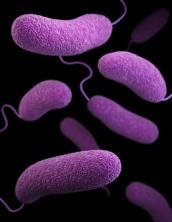
Vibrio vulnificus can cause disease in those who eat contaminated seafood or have an open wound that is exposed to warm seawater containing the bacteria. Ingestion of Vibrio vulnificus can cause vomiting, diarrhea and abdominal pain. Vibrio vulnificus can also cause an infection of the skin when open wounds are exposed to warm seawater; these infections may lead to skin breakdown and ulcers.

Research – Wet vs. dry inoculation methods have a significant effect of Listeria monocytogenes growth on many types of whole intact fresh produce

Journal of Food Protection

L. monocytogenes causes relatively few outbreaks linked to whole fresh produce but triggers recalls each year in the US. There are limited data on the influence of wet vs. dry methods on pathogen growth on whole produce. A cocktail of five L. monocytogenes strains that included clinical, food, or environmental isolates associated with foodborne outbreaks and recalls was used. Cultures were combined to target a final wet inoculum concentration of 4-5 log CFU/mL. The dry inoculum was prepared by mixing wet inoculum with 100 g of sterile sand and drying for 24 h. Produce investigated belonged to major commodity families: Ericaceae (blackberry, raspberry, and blueberry), Rutaceae (lemon and mandarin orange), Roseaceae (sweet cherry), Solanaceae (tomato), Brassaceae (cauliflower and broccoli) and Apiaceae (carrot). Intact, whole inoculated fruit and vegetable commodities were incubated at 2, 12, 22 and 35±2°C. Commodities were sampled for up to 28 days, and the experiment was replicated 6 times. The average maximum growth increase was obtained by measuring the maximum absolute increase for each replicate within a specific commodity, temperature, and inoculation method. Data for each commodity, replicate and temperature was used to create primary growth or survival models, describing the lag phase and growth or shoulder and decline as a function of time. Use of a liquid inoculum (vs. dry inoculum) resulted in markedly increased L. monocytogenes growth rate and growth magnitude on whole produce surfaces. This difference was highly influenced by temperature with a greater effect seen with more commodities at higher temperatures (22 and 35°C), versus lower temperatures (2 and 12 °C). These findings need to be explored for other commodities and pathogens. The degree to which wet or dry inoculation techniques more realistically mimic contamination conditions throughout the supply chain (e.g., production, harvest, post-harvest, transportation, or retail) should be investigated.

Research- Antimicrobial effects of plant extracts against Clostridium perfringens with respect to food-relevant influencing factors

Journal of Food Protection

The application of plant extracts (PEs) could be a promising option to satisfy consumers’ demand for natural additives to inhibit growth of variable pathogenic bacteria. Thus, the aim of this study was to develop a standardized microdilution method to examine the antimicrobial effects of ten hydrophilic plant extracts against two strains of C. perfringens facing various food-relevant influencing factors. Due to the high opacity of PEs, resazurin was used as an indicator for bacterial growth instead of pellet formation. The highest value of the minimum inhibitory concentration (MIC) of the replications of each PE was defined as effective plant extract concentration (EPC), whereas the next concentration beneath the lowest MIC value was defined as the ineffective plant extract concentration (IEPC). The EPC of seven PEs: allspice, cardamom, cinnamon, clove, coriander, ginger and mace were between 0.625 – 10 g/kg, whereas extracts of caravey, nutmeg and thyme showed no antimicrobial activity up to the maximum concentration tested (10 g/kg) against C. perfringens in vitro. Two intrinsic factors, sodium chloride and sodium nitrite, displayed either synergistic/additive effects or no interaction with most PEs. By combination with PEs at its ineffective plant concentration (IEPC, 0.08 – 1.25 g/kg), MIC of NaCl and NaNO2 decreased from 25 – 50 g/kg to 6 – 25 g/kg and > 200 mg/kg to 0.2 – 100 mg/kg respectively. On the contrary, lipid (sun flower oil) at a low concentration inhibited the antimicrobial effects of all tested PEs. For extrinsic factors, only allspice, ginger and coriander could maintain their antimicrobial effects after being heated to 78 °C for 30 min. The synergistic effect between PEs and pH values (5.0 and 5.5) was also found for all PEs. The established screening method with resazurin and defining EPC and IEPC values allows the verification of antimicrobial effects of PEs under various food-relevant influencing factors in a fast and reproducible way.

Research – Novel Sequence Types of Listeria monocytogenes of Different Origin Obtained in the Republic of Serbia

MDPI

Listeria monocytogenes, the causative agent of listeriosis, is amongst the major food-borne pathogens in the world that affect mammal species, including humans. This microorganism has been associated with both sporadic episodes and large outbreaks of human listeriosis worldwide, with high mortality rates. In this study, the main sequence types (STs) and clonal complexes (CCs) were investigated in all of the 13 L. monocytogenes strains originating from different sources in the Republic of Serbia in 2004–2019 and that were available in the BIGSdb-Lm database. We found at least 13 STs belonging to the phylogenetic lineages I and II. These strains were represented by ST1/ST3/ST9 of CC1/CC3/CC9, which were common in the majority of the European countries and worldwide, as well as by eight novel STs (ST1232/ST1233/ST1234/ST1235/ST1238/ST1236/ST1237/ST1242) of CC19/CC155/CC5/CC21/CC3/CC315/CC37, and the rare ST32 (clonal complex ST32) and ST734 (CC1), reported in the Republic of Serbia, the EU, for the first time. Our study confirmed the association of CC1 with cases of neuroinfection and abortions among small ruminants, and of CC3 and CC9 with food products of animal origin. The strains isolated in 2019 carried alleles of the internalin genes (inlA/inlB/inlC/inlE) characteristic of the most virulent strains from the hypervirulent CC1. These findings demonstrated the genetic relatedness between L. monocytogenes strains isolated in the Republic of Serbia and worldwide. Our study adds further information about the diversity of the L. monocytogenes genotypes of small ruminants and food products, as the strain distribution in these sources in Serbia had not previously been evaluated.