Category Archives: microbial contamination

Germany – Jacket potato salad “Saxon” -Salmonella

LMW

Warning type: Food
Date of first publication: December 18, 2020
Product name: Jacket potato salad “Saxon”
Manufacturer (distributor):

Feinkostmanufaktur frisch & spracher GmbH, Pulsnitz / Saxony

Reason for warning: Suspected contamination with salmonella
Packaging Unit: 200 g and 750 g
Durability: Best before: December 28th, 2020 and best before: January 2nd, 2021
Lot identification: Batch 12.10 and Batch 12.15
Further information:

The product was delivered to consumer markets in the city of Dresden as well as to REWE stores in Saxony and to Edeka stores in Saxony and Thuringia.

Homepage of the manufacturer:

Contact to the responsible authorities:
Saxony:

poststelle@sms.sachsen.de

Thuringia:

LM-Ueberendung@tlv.thueringen.de

Research – Enabling cost-effective screening for antimicrobials against Listeria monocytogenes in ham

Journal of Food Protection

Ready-to-eat (RTE) meat products, such as deli ham, can support the growth of Listeria monocytogenes (LM) which can cause severe illness in immunocompromised individuals. The objectives of this study were to validate a miniature ham model (MHM) against the ham slice method and screen antimicrobial combinations to control LM on ham using response surface methodology (RSM) as a time- and cost-effective high-throughput screening tool. The effect of nisin (Ni), potassium lactate sodium acetate (PLSDA), lauric arginate (LAG), lytic bacteriophage (P100), and Ɛ-polylysine (EPL) added alone, or in combination, was determined on the MHM over 12 days of storage. Results showed the MHM accurately mimics the ham slice method since no statistical differences were found (p=0.526) in the change of LM cell counts in MHM and slice counts after 12 days of storage at 4°C for treated and untreated hams. The MHM was then used to screen antimicrobial combinations using an on-face design and three center points in a central composite design. The RSM was tested using a cocktail of five LM strains isolated from foodborne disease outbreaks. Three levels of the above mentioned antimicrobials were used in combination for a total of 28 runs performed in triplicate. The change of LM cell counts were determined after 12 days of storage at 4°C. All tested antimicrobials were effective on reducing LM cell counts on ham when added alone. A significant antagonistic interaction (p=0.002) was identified by the RSM between LAG and P100, where this antimicrobial combination caused a 2.2 logCFU/g change of LM cell counts after 12 days of storage. Two  interactions, between Ni and EPL (p=0.058), and Ni and P100 (p=0.068), showed possible synergistic effects against LM on the MHM. Other interactions were clearly non-significant, suggesting additive effects. In future work, the developed MHM in combination with RSM can be used as a high-throughput method to analyze novel antimicrobial treatments against LM

Research – Prevalence of Antibiotic-Resistant Escherichia coli Isolates from Local and Imported Retail Chicken Carcasses

Journal of Food Protection

ABSTRACT

The spread of antibiotic resistance among bacterial strains has been associated with consumption of food contaminated with both pathogenic and nonpathogenic bacteria. The objective of this study was to determine the prevalence of antibiotic resistant Escherichia coli isolates in local and imported retail raw chicken meat in Qatar. A total of 270 locally produced (chilled) and imported (chilled or frozen) whole chicken carcasses were obtained from three Hypermarket stores in Qatar. The 216 E. coli isolates recovered from the chicken samples were subjected to antibiotic susceptibility testing with the disk diffusion method. Extended-spectrum β-lactamase (ESBL) production was evaluated with the double disk synergy test. Isolates harboring colistin resistance were identified with a multiplex PCR assay and DNA sequencing. Nearly 89% (192) of the 216 isolates were resistant to at least one of the 18 antibiotics tested. Isolates from local and imported chicken carcasses had relatively higher resistance to sulfamethoxazole (62% of isolates), tetracycline (59.7%), ampicillin and trimethoprim (52.3% each), ciprofloxacin (47.7%), cephalothin (45.4%), and colistin (31.9%). Less resistance was found to amoxicillin–clavulanic acid (6%), ceftriaxone (5.1%), nitrofurantoin (4.2%), piperacillin-tazobactam (4.2%), cefepime (2.3%), meropenem (1.4%), ertapenem (0.9%), and amikacin (0.9%). Nine isolates (4.2%) were ESBL producers, and 137 (63.4%) were multidrug resistant. The percentages of multidrug-resistant, ESBL-producing, and colistin resistant isolates were significantly higher among isolates from local chilled than from imported chilled and frozen chicken samples. Our findings indicate the high prevalence of antibiotic-resistant E. coli in chicken meat sold at retail in Qatar.

HIGHLIGHTS
  • A high prevalence of antibiotic resistant E. coli was found in retail chicken in Qatar.
  • Multidrug resistance was observed in 63.4% of the E. coli isolates.
  • Colistin resistance was observed in 31.9% of the E. coli isolates.
  • Contamination of chicken meat with antibiotic-resistant E. coli is a public health concern.

Research – Researchers use compressed carbon dioxide to decontaminate almonds and other nuts

Food Safety News

Researchers at the Fraunhofer Institute for Environment, Safety, and Energy Technology UMSICHT have developed a process to kill germs on almonds and nuts by using compressed carbon dioxide to decontaminate food.

The advantage of this process is that almonds retain their characteristic flavor and quality, according to the research report. Almonds are decontaminated and impregnated with antimicrobial oils using compressed carbon dioxide in a high-pressure autoclave. The oil extract coats the almond, making it difficult for germs to contaminate the fruit again. Some types of processing can affect the quality of food, particularly that of plant-based products that are consumed raw.

Without processing, almonds and other nuts may be contaminated with salmonella and these bacteria can spread to dry foods. Low-moisture foods like flour, baking mixes, dried meats, nuts, fruits and cereals are often used as ingredients in food products with almonds, which means that if one supplier faces a recall, many items that used the ingredient could be affected. However, the risk of E.coli, Salmonella and Listeria in dry foods can never be completely eliminated.

RASFF Alerts -Salmonella – Chilled Chicken Meat – Chicken Elements – Cooked Unpeeled Shrimp – Chicken Carcase – Beef Trimming – Boiled Clam Meat – Chicken Minced Meat – Dried Fish Maws -Chicken Wings – Chicken Fillet -Turkey Meat -Eggs

European Food Alerts

RASFF

Salmonella enterica ser. Enteritidis (in 5 out of 5 sample /25g) in chilled chicken meat from Poland in Poland

RASFF

Salmonella (presence /25g) in chilled chicken elements from Poland in Poland

RASFF

Salmonella (presence /25g) in cooked unpeeled shrimps from the Netherlands in the Netherlands

RASFF

Salmonella enterica ser. Enteritidis (presence /25g) in chilled chicken carcass from Poland in Poland

RASFF

Salmonella enterica ser. Enteritidis (in 1 out of 5 samples /25g) in and missing identification code on frozen beef trimmings from the United Kingdom, via Belgium in the Czech Republic

RASFF

Salmonella (in 2 out of 5 samples /25g) in frozen boiled clam meat (Paratapes undulatus) from Vietnam in Portugal

RASFF

Salmonella (presence /25g) in minced chicken meat from the Netherlands in the Netherlands

RASFF

Salmonella enterica ser. Agona (presence /25g), Salmonella enterica ser. Münster (presence /25g), Salmonella enterica ser. Nyborg (presence /25g) and Salmonella enterica ser. Poona (presence /25g) in dried fish maws from the Gambia in the UK

RASFF

Salmonella enterica ser. Infantis (presence /25g) in frozen chicken wings from Poland in Italy

RASFF

Salmonella enterica ser. Infantis (presence /25g) in chilled chicken fillet from Poland in Poland

RASFF

Salmonella (presence /25g) in chilled minced turkey meat from Poland in Poland

RASFF

Salmonella enterica ser. Coeln (presence /25g) in eggs from Ukraine in Latvia

RASFF

Salmonella enterica ser. Typhimurium (presence in 1 out of 5 samples) in chilled chicken meat from France in France

RASFF

Salmonella (presence /25g) in food supplements from India in Germany

RASFF Alert- Mycotoxin – Ergot Alkaloids – Rye

European Food Alerts

RASFF

ergot (Claviceps purpurea) alkaloids (4948 mg/kg – ppm) in rye from Germany in Austria

RASFF Alerts – Animal Feed – Salmonella -Rapeseed Cake – Dog Chews – Raw Pet Food

European Food Alerts

RASFF

Salmonella (present /15g) in dog chews from Poland in Germany

RASFF

Salmonella enterica ser. Agona (presence /25g) in rapeseed cake from Belgium in Belgium

RASFF

Salmonella group B in dog chews from Germany in Germany

RASFF

Salmonella enterica ser. Infantis (presence /25g) in frozen raw pet food from Germany in Belgium

Research – Tech developed to detect food poisoning in real-time

Korea Biomed

The Korea Food Research Institute (KFRI) said Wednesday its researchers have developed a technology to manage food-poisoning bacteria in food materials safely in variable temperature environments of the food supply chain, such as storage and distribution.

KFRI’s “dynamic prediction model” can predict the proliferation of food poisoning and contamination of food supplies in real-time using the Internet of Things by linking the temperature provided by the food supply network.

Most of the food ingredients in group meals are safe. Still, some food products contaminated with food poisoning bacteria may increase due to temperature changes during the distribution-storage process. This explains why real-time safety management technology is needed in the process, KFRI said in a news release.

USA – Tesoros Trading Company Recalls Product Because of Possible Health Risk – Listeria monocytogenes

FDA

Tesoros Trading Co. from Las Vegas, NV is recalling certain codes of frozen “Trader Joe’s Lightly Salted Edamame” because they have the potential to be contaminated with Listeria monocytogenes, an organism which can cause serious and sometimes fatal infections in young children, frail or elderly people, and others with weakened immune systems. Although healthy individuals may suffer only short-term symptoms such as high fever, severe headache, stiffness, nausea, abdominal pain and diarrhea, Listeria infection can cause miscarriages and stillbirths among pregnant women.

The recalled “Trader Joe’s Lightly Salted Edamame” were sold at Trader Joe’s retail stores only in the Arizona, Southern California, Southern Nevada, and Utah regions. All affected product has been removed from sale and destroyed.

The product comes in a 16 ounce plastic package and is stamped on the back bottom portion of the package with lots:

22LA102 M
or
22LA102 N
or
22LA102 P

The company has removed the affected lots from distribution as the FDA and the company continue to investigate the source of the problem.

Consumers who have purchased 16 ounce packages of “Trader Joe’s Lightly Salted Edamame” with the affected codes are urged to return them to the place of purchase for a full refund. Consumers with questions may contact the company at (702)706-5263 Monday-Friday 8am – 4:30pm PST.


Company Contact Information

Consumers:
 (702)706-5263

Product Photos

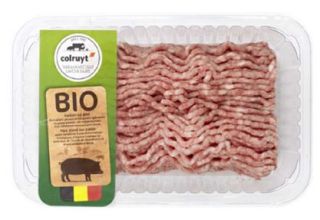
Luxembourg – COLRUYT ORGANIC PORK MINCE -Salmonella

SAP

Last name Organic minced pork
Mark Colruyt
Unit 400 g
Article number 17968
Best before date (DLC) 12/18/2020
Sale period from 12/9/2020 to 12/15/2020 included

Danger  : Presence of Salmonella

Salmonella can cause symptoms such as nausea, vomiting, abdominal cramps, diarrhea, fever and headache within 6 to 72 hours after consumption. These symptoms may be aggravated in young children, immunocompromised individuals and the elderly. People who have consumed these products and who present these symptoms are advised to consult a doctor, notifying him of this consumption.

Sale in Luxembourg by: Colruyt

Information source: Colruyt recall notification