Category Archives: microbial contamination

Research – Basil Essential Oil: Composition, Antimicrobial Properties, and Microencapsulation to Produce Active Chitosan Films for Food Packaging

MDPI

The essential oil (EO) from basil—Ocimum basilicum—was characterized, microencapsulated by vibration technology, and used to prepare a new type of packaging system designed to extend the food shelf life. The basil essential oil (BEO) chemical composition and antimicrobial activity were analyzed, as well as the morphological and biological properties of the derived BEO microcapsules (BEOMC). Analysis of BEO by gas chromatography demonstrated that the main component was linalool, whereas the study of its antimicrobial activity showed a significant inhibitory effect against all the microorganisms tested, mostly Gram-positive bacteria. Moreover, the prepared BEOMC showed a spheroidal shape and retained the EO antimicrobial activity. Finally, chitosan-based edible films were produced, grafted with BEOMC, and characterized for their physicochemical and biological properties. Since their effective antimicrobial activity was demonstrated, these films were tested as packaging system by wrapping cooked ham samples during 10 days of storage, with the aim of their possible use to extend the shelf life of the product. It was demonstrated that the obtained active film can both control the bacterial growth of the cooked ham and markedly inhibit the pH increase of the packaged food. View Full-Text
Research – A Methodology for Classifying Root Causes of Outbreaks of Legionnaires’ Disease: Deficiencies in Environmental Control and Water Management

MDPI

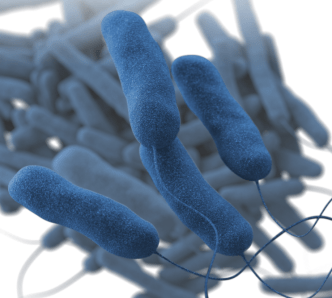
CDC legionella

Image CDC

We piloted a methodology for collecting and interpreting root cause—or environmental deficiency (ED)—information from Legionnaires’ disease (LD) outbreak investigation reports. The methodology included a classification framework to assess common failures observed in the implementation of water management programs (WMPs). We reviewed reports from fourteen CDC-led investigations between 1 January 2015 and 21 June 2019 to identify EDs associated with outbreaks of LD. We developed an abstraction guide to standardize data collection from outbreak reports and define relevant parameters. We categorized each ED according to three criteria: ED type, WMP-deficiency type, and source of deficiency. We calculated the prevalence of EDs among facilities and explored differences between facilities with and without WMPs. A majority of EDs identified (81%) were classified as process failures. Facilities with WMPs (n = 8) had lower prevalence of EDs attributed to plumbed devices (9.1%) and infrastructure design (0%) than facilities without WMPs (n = 6; 33.3% and 24.2%, respectively). About three quarters (72%) of LD cases and 81% of the fatalities in our sample originated at facilities without a WMP. This report highlights the importance of WMPs in preventing and mitigating outbreaks of LD. Building water system process management is a primary obstacle toward limiting the root causes of LD outbreaks. Greater emphasis on the documentation, verification, validation, and continuous program review steps will be important in maximizing the effectiveness of WMPs. View Full-Text

USA – Legionnaires’ disease outbreak in Portland: 1 dead; 4 hospitalised

Outbreak News Today

A bacterial pneumonia outbreak, known as Legionnaires’ disease has hit a Portland-based senior housing complex, leaving 1 dead and 4 hospitalized as more than 100 residents were evacuated from the housing complex.

A report released by the Multnomah County Health Department said that the outbreak is caused by contaminated water that has entered the Rosemont Court senior living complex. Health authorities further say that people that have increased risk, including senior members of the community, have a greater risk for Legionnaires disease, albeit being not contagious in nature.

Belgium – Watermelon Seeds, Roasted & Salted – Aflatoxin – Ochratoxin A

AFSCA

Following a notification via the RASFF system (European Food and Feed rapid alert system), the AFSCA withdraws from sale and recalls the following product to consumers: watermelon seeds “watermelon seeds, roasted & salted” of the brand Ciloglu due to a too high content of aflatoxin B1 and ochratoxin A.

The AFSCA asks not to consume this product and to bring it back to the point of sale where it was purchased.

Product Description:

• Product Category: Watermelon Seeds
• Product Name: watermelon seeds, roasted & salted
• Brand: Ciloglu
• Date of Minimum Durability (DDM)
: 09/28/2021
• Lot: NTX591477 • Weight: 200g

Ce product was sold through several points of sale in Belgium.

For any further information , you can contact the AFSCA contact point for consumers: 0800 / 13.550 or pointdecontact@afsca.be .

RASFF Alert – Listeria monocytogenes – Goat Cheese

European Food Alerts

RASFF

Listeria monocytogenes (<10 CFU/g) in goat cheese from Spain in Spain

RASFF Alerts – Animal Feed -Salmonella – Rapeseed Cake – Sunflower Pellets – Dog Chews

European Food Alerts

RASFF

Salmonella enterica ser. Agona (present /25g) in rapeseed cake from Belgium in Belgium

RASFF

Salmonella (25 /25g) in sunflower pellets from Hungary in Germany

RASFF

Salmonella (positive /25g) in dog chews from Turkey in Germany

RASFF Alert – Animal Feed – Aflatoxins – Groundnuts for Birds

European Food Alerts

RASFF

aflatoxins (B1 = 220 µg/kg – ppb) in groundnuts for birds from Austria in Denmark

New Zealand – Campylobacter Action Plan 2020-2021

MPI

Campylobacter kswfoodworld

The 2020 –2021 Action Plan incorporates a risk-based, whole-of-food chain approach to identification, selection and implementation of new control measures that will significantly reduce the foodborne campylobacteriosis burden in New Zealand.

The Action Plan includes: prioritisation of selected actions for immediate evaluation/implementation; identification of a further list of potential control measures on the basis of current knowledge, and establishing a framework for their systematic evaluation, prioritisation and implementation; setting of a public health improvement goal for the reduction of foodborne campylobacteriosis; and a lead in to medium-term control measures that will likely be implemented in out-years 2022 –2023.

New Zealand Food Safety will be primarily responsible for agreed actions and reporting against the work schedule. Industry will have responsibility for implementing both legislated and non-legislated actions.

Norway – The rules for selling raw milk remain unchanged

Mattilsynet

The Ministry of Health and Care Services (HOD) has decided not to change the regulations for the sale of raw milk for human consumption. The background is to have a high level of protection of consumer health.

In the autumn of 2017, the Ministry of Health and Care Services commissioned the Norwegian Food Safety Authority to prepare a draft regulation that allows a limited sale of raw milk and raw cream for consumption.

The proposed change in the regulations was that the farm or farms can sell up to 5000 liters of raw milk or raw cream per year if certain conditions are met, such as satisfactory hygiene, unbroken cold chain, warning marking and that the turnover was from the farm or farm.

The draft regulation was out for consultation . The Norwegian Food Safety Authority carried out a compilation of the consultation statements which were submitted to the Ministry of Health and Care Services. In its decision not to change the regulations, the Ministry of Health and Care Services has, among other things, emphasized the warnings from the Norwegian Institute of Public Health, the Norwegian Veterinary Institute and the Norwegian University of Life Sciences. All three agencies opposed liberalization in the consultation statement, out of consideration for the risk of infection and the risk of serious illness.

-From a public health perspective, restrictive regulations will be the most important risk-reducing measure to avoid illness in connection with the consumption of raw milk. This is ensured, among other things, through heat treatment of all raw milk and a ban on turnover, says senior adviser Margrethe Hovda Røed in the Norwegian Food Safety Authority.

Netherlands – DEEN Surinamese chicken salad – Listeria monocytogenes

NVWA

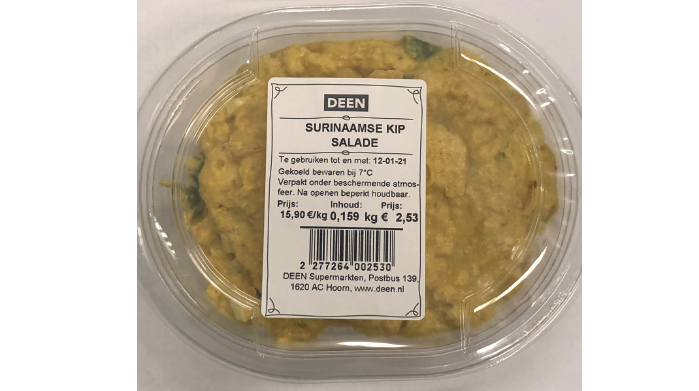
As a precautionary measure, DEEN supermarkets is recalling the following product with immediate effect:

  • DEEN Surinamese chicken salad, 160 gram tray with best before 12-01

During a quality check in the DEEN butcher’s shop it was found that this product can contain the bacteria listeria. Consumption of this product can cause gastrointestinal complaints and can be harmful to health, especially for children, the elderly, people with a weakened immune system and pregnant women.

If you have this product with a stated expiration date at home, DEEN advises you not to consume the above product.

You can return the above products to the store, you will then be refunded the purchase amount. For questions, you can contact DEEN customer service on working days between 08:00 and 17:00 on telephone number 0229-259259.

See also website Deen .

Download ‘Important safety warning DEEN Surinamese chicken salad’

PDF document | 1 page | 414 KB

Warning | 05-01-2021

DEEN Surinamese chicken salad