Category Archives: microbial contamination

Research – Finland and Switzerland see food recalls rise

Food Safety News

Food recalls increased for the sixth year in a row in 2021, according to the Finnish Food Agency (Ruokavirasto).

The amount of alerts passed 300 for the first time and were mainly because of microbiological contamination, allergens and pesticide residues. The 309 recall total was 42 more than in 2020.

Microbiological concerns such as Salmonella, Listeria and other bacteria caused 49 recalls, which is up 9 percent compared to the previous year. Salmonella was behind 26 recalls in products including fresh herbs and eggs while Listeria in items such as cheese caused five recalls.

Switzerland has revealed the number of recalls and public warnings issued in 2020.

The Federal Food Safety and Veterinary Office (FSVO) published 28 public warnings and 49 recalls for food. Warnings were most often because of pesticide residues, pathogenic microorganisms or allergens. Recalls were mainly because of pesticide residues, foreign bodies or mycotoxins.

At the beginning of 2020, Swiss authorities were informed about norovirus in oysters and mussels from France. Eight other EU countries received mussels from affected French production sites. In Switzerland, illnesses occurred following consumption of these products.

A total of 241 RASFF notifications concerned Switzerland and 62 were issued by the country.

For the 241 notifications, almost a third related to pesticide residues and 27 were because of microbial contamination. Of notices raised by Switzerland, 15 were because of mycotoxins and pesticide residues caused eight. Fifteen products from Switzerland were the subject of a RASFF post. The most frequent hazard was microbial contamination with four notifications.

Quebec – Notice not to consume bakery products made by Boulangerie-Pâtisserie L’Artisan

MAPAQ

WARNING TO THE POPULATION

QUEBEC CITY, March 2, 2022 /CNW Telbec/ – The Ministry of Agriculture, Fisheries and Food (MAPAQ), in collaboration with the Food Inspection Division of the City of Montreal and the company Boulangerie -Pâtisserie L’Artisan, located at 4780, avenue Papineau, in Montreal, warns the public not to consume the products indicated in the table below, because they have not been prepared and packaged in such a way as to ensure their safety.

Product name

Format

Affected lot

BREADS

Various formats,

various flavors

Units sold until
March 2, 2022

PASTRIES

PREPARED MEALS

CAKES

PASTRY SHOP

The products that are the subject of this warning were offered for sale until March 2, 2022, and only at the establishment designated above. They were sold chilled or at room temperature. The products were packed in a bag or in a cardboard box. They have no label.

The operator is voluntarily recalling the products in question. It has agreed with MAPAQ and the Food Inspection Division of the City of Montreal to distribute this warning as a precautionary measure. Also, people who have any of these products in their possession are advised not to consume it. They must return it to the establishment where they bought it or throw it away. Even if the affected products show no signs of tampering or suspicious odors, their consumption may represent a health risk. It should be noted that no case of illness associated with the consumption of these foods has been reported to MAPAQ to date.

USA – FDA Core Investigation Table Update

FDA

Date
Posted
Ref
Pathogen
Product(s)
Linked to
Illnesses

(if any)
Total
Case Count

Status
2/17/2022 1056 Cronobacter
sakazakii

&
Salmonella
Newport
Powdered
Infant
Formula
See
Advisory
Active
2/9/2022 1040 Listeria
monocytogenes
Not Yet
Identified
14 Active
2/2/2022 1054 Enteroinvasive
E. coli
O143:H26
Not Yet
Identified
16 Closed
1/10/2022 1050 E. coli
O121:H19
Romaine 4 Closed
12/29/2021 1052 E. coli
O157:H7
Packaged
Salad
See Outbreak
Advisory
Closed
12/20/2021 1039 Listeria
monocytogenes
Packaged
Salad
See Outbreak
Advisory
Active
12/15/2021 1048 Listeria
monocytogenes
Packaged
Salad
See Outbreak
Advisory
Active

USA – FDA Warning Letter – Greenhead Lobster Products LLC

FDA

The United States Food and Drug Administration (FDA) inspected your ready-to-eat (RTE) seafood processing facility located at 122 Heritage Park Rd., Bucksport, ME 04416-4603, on September 21, 22, 23, 27, and 30, and October 6, 2021. During our inspection we collected environmental samples (i.e., swabs) from various areas in your facility, including areas that are near food during processing operations and your food-contact surfaces. FDA laboratory analyses of environmental samples found the presence of Listeria monocytogenes (L. monocytogenes), a human pathogen, in your facility. Additionally, FDA found serious violations of the Seafood Hazard Analysis and Critical Control Point (HACCP) regulation, Title 21, Code of Federal Regulations (CFR), Part 123 (21 CFR Part 123).

In accordance with 21 CFR 123.6(g), failure of a processor of fish or fishery products to have and implement a HACCP plan that complies with this section or otherwise operate in accordance with the requirements of Part 123, renders the fish or fishery products adulterated within the meaning of Section 402(a)(4) of the Federal Food, Drug, and Cosmetic Act (the Act), 21 U.S.C. § 342(a)(4). Based on our inspectional results, including review of FDA’s environmental testing and your HACCP plan, we have determined that your RTE cooked lobster products are adulterated within the meaning of section 402(a)(4) of the Act, 21 U.S.C. § 342(a)(4), in that they have been prepared, packed, or held under insanitary conditions whereby they may have become contaminated with filth or rendered injurious to health. You may find the Act, the seafood HACCP regulation, and the 4th Edition of the Fish and Fisheries Products Hazards and Controls Guidance through links in FDA’s home page at www.fda.gov.External Link Disclaimer

At the conclusion of the inspection, the FDA investigators issued your facility a Form FDA 483, Inspectional Observations. You provided responses to the FDA Form 483 and FDA’s environmental sample findings via email on October 7 and 13, 2021, which included corrective actions taken by your firm. We have reviewed the documentation and continue to have serious concerns with your current HACCP programs as further described in this letter.

France – Child in France dies of E.coli infection as outbreak monitored

Connexion France

Health authorities have not released more information about the child that has died, but 13 other cases in children have prompted a nationwide investigation into the possible source.

Health authorities in France are monitoring an outbreak of E.coli following the death of a child and the detection of 13 cases across the country.

Santé publique France (SPF) issued the alert after the contaminations were first noticed at the beginning of February. The authority has confirmed that one child has died, but has not released information of the date of the death, location, or the age of the child.

Among children aged 1-15, there have been:

  • 5 cases reported in Nouvelle-Aquitaine
  • 3 cases in Hauts-de-France
  • 3 cases in Ile-de-France
  • 1 case in Brittany
  • 1 case in Pays de la Loire.

All of the children were affected by haemolytic uraemic syndrome (HUS), a potentially serious disease in young children, most often caused by food.

It is usually characterised by severe diarrhoea, which can lead to acute renal failure, and usually caused by bacteria belonging to the Escherichia coli (E.coli) family.

The SPF inquiry is looking into every report of similar cases as they are reported to paediatric units, and is aiming to “identify a common source of contamination and put appropriate measures in place”.

It has “not excluded any possibility at this stage”, it said.

USA – Updated Campylobacter Method

USDA

USDA Food Safety and Inspection Service Microbiology Laboratory Guidebook Update

Microbiology Laboratory Guidebook for USDA Food Safety and Inspection Service. This method has recently been updated:

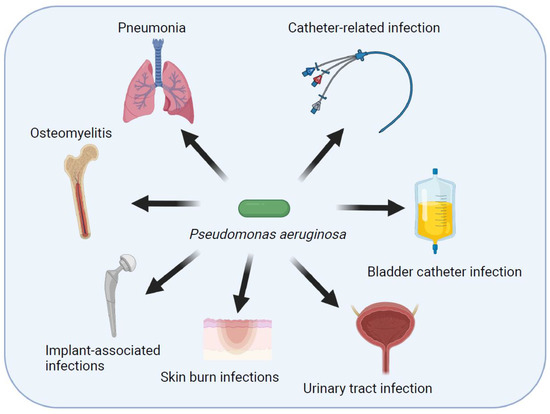
Research – Pathogenesis of the Pseudomonas aeruginosa Biofilm: A Review

MDPI

Pseudomonas aeruginosa is associated with several human infections, mainly related to healthcare services. In the hospital, it is associated with resistance to several antibiotics, which poses a great challenge to therapy. However, one of the biggest challenges in treating P. aeruginosa infections is that related to biofilms. The complex structure of the P. aeruginosa biofilm contributes an additional factor to the pathogenicity of this microorganism, leading to therapeutic failure, in addition to escape from the immune system, and generating chronic infections that are difficult to eradicate. In this review, we address several molecular aspects of the pathogenicity of P. aeruginosa biofilms. View Full-Text

Research – Legionellosis: A novel mechanism by which the bacterium Legionella pneumophila regulates the immune response of its host cells

Science Daily

Legionellosis or Legionnaires’ disease affected more than 1 800 people in France in 2019 and caused 160 deaths. This emerging disease is caused by Legionella pneumophila, an environmental bacterium that thrives in hot water systems. Researchers have discovered a mechanism that allows Legionella pneumophila to target the immune response of the cells it infects by secreting a small regulatory RNA. This mechanism, not described before, facilitates the survival and proliferation of Legionella pneumophila during infection. The work provides precious information on the strategies used by bacteria to manipulate their host cells.

Research – Shiga Toxin-Producing Escherichia coli and Milk Fat Globules

MDPI

Shiga toxin-producing Escherichia coli (STEC) are zoonotic Gram-negative bacteria. While raw milk cheese consumption is healthful, contamination with pathogens such as STEC can occur due to poor hygiene practices at the farm level. STEC infections cause mild to serious symptoms in humans. The raw milk cheese-making process concentrates certain milk macromolecules such as proteins and milk fat globules (MFGs), allowing the intrinsic beneficial and pathogenic microflora to continue to thrive. MFGs are surrounded by a biological membrane, the milk fat globule membrane (MFGM), which has a globally positive health effect, including inhibition of pathogen adhesion. In this review, we provide an update on the adhesion between STEC and raw MFGs and highlight the consequences of this interaction in terms of food safety, pathogen detection, and therapeutic development. View Full-Text

Research – Report finds food testing policies different between countries

Food Safety News

There are various approaches to food sampling in four nations, including the United States, as shown in a report published by the Food Standards Agency (FSA).

Campden BRI reviewed food control systems in Australia, Canada, New Zealand, and the United States.

The study looked at how authorities perform sampling and analysis of food and feed, systems for gathering intelligence, and other information which informs the sampling and testing program.

Findings suggest there is no one-size-fits-all approach as differences in planning and conducting various sampling activities were observed between the four countries.

Differing approaches
The FSA documents list three types of sampling: for official controls; hypotheses or surveillance sampling; and intelligence sampling. But the terminology used in other countries often varied.

Authorities in Canada, New Zealand, and the United States play both regulation setting and enforcement roles. However, Food Standards Australia New Zealand (FSANZ) sets standards and coordinates responses to food safety incidents but does not have enforcement powers.

Sharing the responsibilities between multiple agencies, which happens in the United States and Australia, may lead to differences in the extent of regulatory oversight in different parts of the country or between foods, sometimes even with similar risks, found the study.

Oversight of the entire food chain in Canada and New Zealand is mainly done by a single regulatory agency, which can facilitate the planning of sampling.

Because of resource constraints and the extensive range of products it oversees, the U.S. Food and Drug Administration tends to apply a risk-based prioritization approach when planning sampling and other activities. The FDA has three types of sampling: product sampling, environmental sampling, and emergency response/emerging issues sampling.

Because products under the U.S. Department of Agriculture’s Food Safety Inspection Service (FSIS) jurisdiction are relatively riskier, FSIS-regulated establishments are subject to a more comprehensive oversight, according to the study.