Category Archives: Lipophilic Marine Biotoxin

Luxembourg – REMINDER: TELLINES – BULK SALE ON FISH STALL- DSP

SAP

Presence of lipophilic toxins (DSP) exceeding the regulatory health threshold

Auchan is recalling the following product

Last name Tellines (medium and large)
Mark Unbranded – Bulk Sale
Sale period from September 7 to 9, 2022

Danger  : Presence of lipophilic toxins (DSP) exceeding the regulatory health threshold

DSP toxins cause intoxication in the consumer, the effects of which appear within 2 to 18 hours after ingestion of the contaminated shellfish. The main symptoms are gastrointestinal: diarrhea, nausea, vomiting, abdominal pain, and chills.

Sale in Luxembourg by: Auchan on a fish stall

A sale by other operators cannot be excluded.

Source of information: Auchan recall notification

Communicated by: Government Commission for Quality, Fraud and Food Safety .

RASFF Alert – Shellfish Toxins – Oysters

RASFF

Azaspiracid toxins above the regulatory limit in oysters from Ireland in France

New Zealand – North Island warning Kawhia Harbour area, West Coast -PSP

MPI

North Island warning

Kawhia Harbour area, West Coast

Reason for alert Paralytic Shellfish Poisoning (PSP)

Date warning issued 17 August 2022

Media release

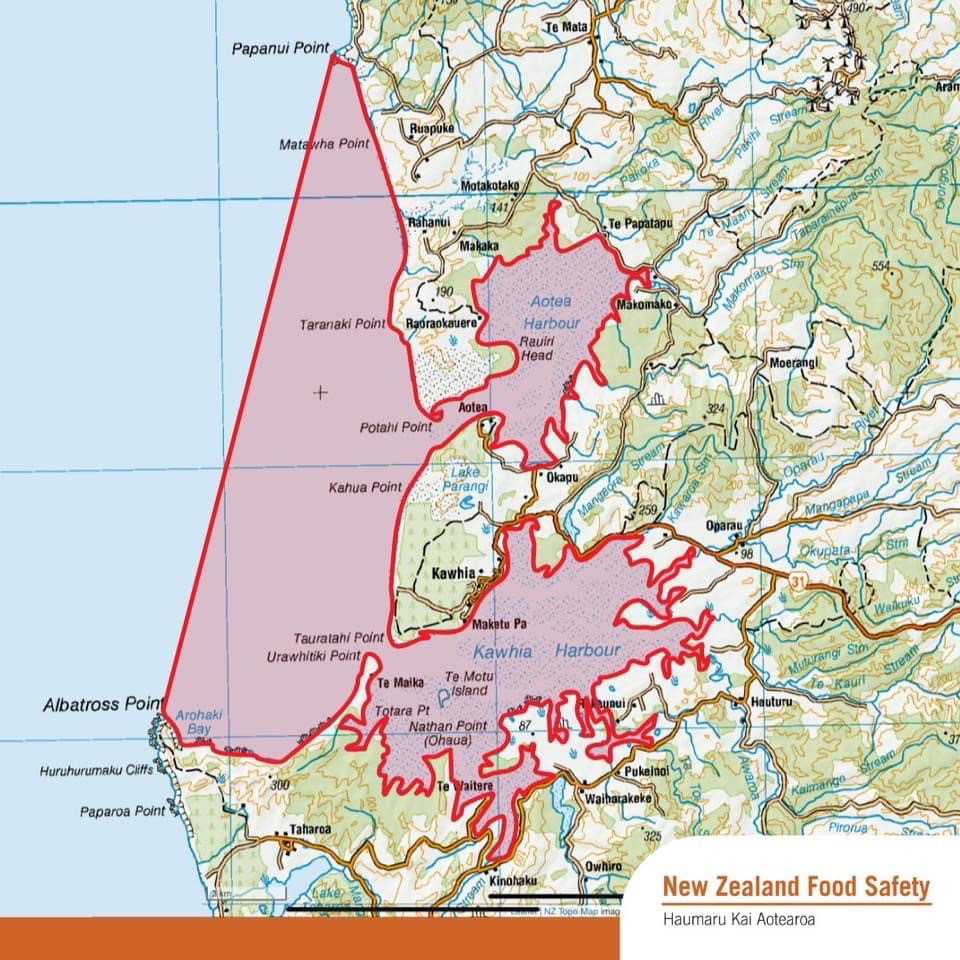
Affected area From Albatross Point across to Papanui Point, Including Kahwia and Aotearoa Harbours, West Coast North Island.
Shellfish affected Mussels, oysters, tuatua, pipi, toheroa, cockles, scallops, catseyes, kina (sea urchin) and all other bivalve shellfish.

Note, cooking shellfish does not remove the toxin.

Pāua, crab and crayfish may still be eaten if the gut has been completely removed prior to cooking, as toxins accumulate in the gut. If the gut is not removed its contents could contaminate the meat during the cooking process.

Symptoms Symptoms typically appear between 10 minutes and 3 hours after ingestion and may include:

  • numbness and a tingling (prickly feeling) around the mouth, face, and extremities (hands and feet)
  • difficulty swallowing or breathing
  • dizziness
  • headache
  • nausea
  • vomiting
  • diarrhoea
  • paralysis and respiratory failure and in severe cases, death.
Other information Paralytic shellfish toxins have been detected in shellfish at levels over the safe limit of 0.8mg/kg set by MPI. Ongoing testing will continue and any changes will be communicated accordingly.

Map of affected area

Map of the affected area in the Kawhia Harbour area, West Coast, North Island
Map of the affected area Kawhia Harbour area, West Coast

Research – Marine Harmful Algal Bloom (HAB)-Related Illness Tracking

OEHHA

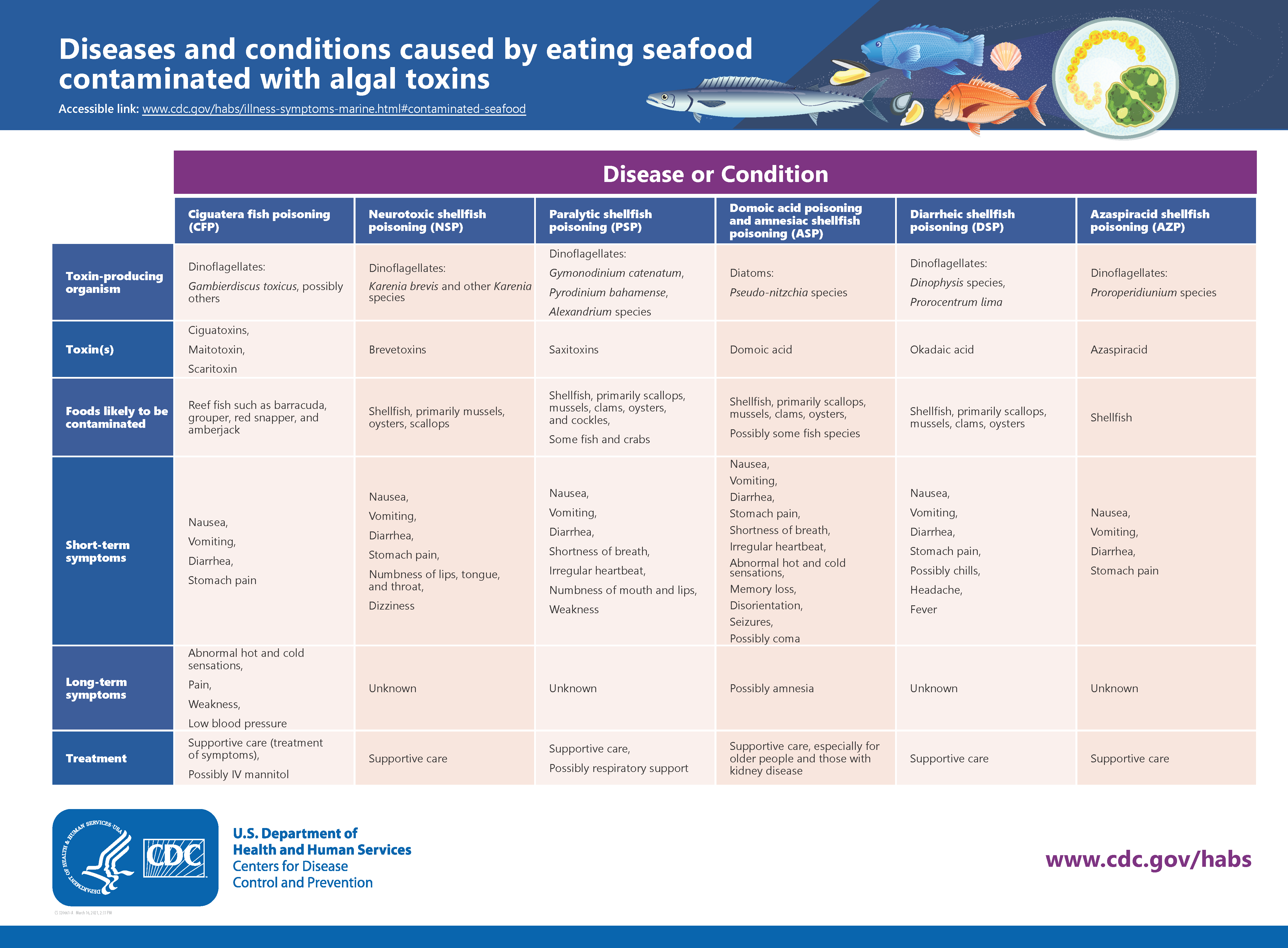
Diseases and conditions caused by eating seafood contaminated with algal toxins

What are marine harmful algal bloom (HAB)-related illnesses?

When phytoplankton and algae in marine waters occur at levels that pose a health risk to humans, animals, and the environment, they are referred to as marine harmful algal blooms (HABs). The US Centers for Disease Control and Prevention (CDC) provide resources on potential human and animal exposures to marine HABs or associated marine biotoxins via skin contact or inhalation, or consumption of fish and shellfish.

Research – Emergent marine toxins risk assessment using molecular and chemical approaches

EFSA

Cyanobacteria harmful blooms represent a deviation to the normal equilibrium in planktonic communities involving a rapid and uncontrolled growth. Owing to the capacity to produce toxins as secondary metabolites, cyanobacteria may cause huge economic losses in the fishing and aquaculture industries and poisoning incidents to humans due to their accumulation in the food chain. The conditions which promote toxic blooms have not yet been fully understood, but climate change and anthropogenic intervention are pointed as significant factors. For the detection of toxins in edible marine organisms, the establishment of international regulations and compulsory surveillance has been probed as exceptionally effective. However, not regulation nor monitoring have been settled concerning emergent marine toxins. In the light of this scenario, it becomes essential to apply fast and reliable surveillance methodologies for the early detection of cyanobacterial blooms as well as the occurrence of emergent marine toxins. Shotgun metagenomic sequencing has potential to become a powerful diagnostic tool in the fields of food safety and One Health surveillance. This culture‐independent approach overcomes limitations of traditional microbiological techniques; it allows a quick and accurate assessment of a complex microbial community, including quantitative identification and functional characterisation, in a single experiment. In the framework of the EU‐FORA fellowship, with the final goal of evaluate metagenomics as a promising risk assessment tool, the fellow worked on the development of an innovative workflow through state‐of‐the‐art molecular and chemical analytical procedures. This work programme aims to evaluate the occurrence of emergent marine toxins and the producing organisms in Cabo Verde coastal cyanobacteria blooms. Our results show the outstanding potential of a holistic metagenomic approach for the risk assessment of emergent marine toxins and the producing organisms. Additionally, we have also highlighted its value for the identification and evaluation of secondary metabolites as natural bioactive compounds with biotechnological and industrial interest.

Guatemala – Four deaths in Guatemala linked to contaminated shellfish – Saitoxin – PSP

Food Safety News

More than 30 people have fallen sick and four have died in Guatemala after eating shellfish.

The National Commission for the Surveillance and Control of Red Tide in Guatemala has extended an alert because of the presence of saxitoxins above the limits on the coasts of Tiquisate, Escuintla, Retalhuleu and San Marcos.

Public health officials said that since the end of April, 34 people had been affected and three children and one adult had died.

Authorities urged the public not to eat bivalve mollusks such as mussels, clams and oysters.

A warning was issued earlier this month after monitoring and analysis detected high concentrations of saxitoxins above the limits.

Saxitoxin is a toxin responsible for paralytic shellfish poisoning (PSP). Harmful algal blooms are often called red tides.

RASFF – Lipophilic Toxins – Tellins

RASFF

Detection of lipophilic toxins on tellins in Italy, Spain and Switzerland

RASFF Alert – Tellins – Algal Lipophilic Toxin

RASFF

Detection of lipophilic toxins on tellins from France in Belgium, Italy, Netherlands, Spain and Switzerland

The lipophilic toxins in shellfish can be divided into four groups of toxins with different chemical structures and biological effects: OA and its derivatives, the DTXs; the pectenotoxins (PTXs); the yessotoxins (YTXs); and the azaspiracids (AZAs). These toxins can often be found in combination in shellfish.

New Zealand – Public health warning for shellfish for all of Crail Bay, Marlborough Sounds – Paralytic Shellfish Poisoning (PSP) toxins

MPI

Map of the affected area all of Crail Bay, Marlborough Sounds

The Ministry for Primary Industries (MPI) today issued a public health warning advising the public not to collect or consume shellfish harvested from all of Crail Bay in the Marlborough Sounds.

Routine tests on shellfish samples taken from this region have shown levels of Paralytic Shellfish Poisoning (PSP) toxins above the safe limit of 0.8 mg/kg set by MPI. Anyone eating shellfish from this area is potentially at risk of illness.

Mussels, oysters, tuatua, pipi, toheroa, cockles, scallops, catseyes, kina (sea urchin) and all other bivalve shellfish should not be eaten.

Note, cooking shellfish does not remove the toxin.

Pāua, crab and crayfish may still be eaten if the gut has been completely removed prior to cooking, as toxins accumulate in the gut. If the gut is not removed, its contents could contaminate the meat during the cooking process.

Symptoms typically appear between 10 minutes and 3 hours after ingestion and may include:

  • numbness and a tingling (prickly feeling) around the mouth, face, and extremities (hands and feet)
  • difficulty swallowing or breathing
  • dizziness
  • headache
  • nausea
  • vomiting
  • diarrhoea
  • paralysis and respiratory failure and in severe cases, death.

If anyone becomes ill after eating shellfish from an area where a public health warning has been issued, phone Healthline for advice on 0800 61 11 16, or seek medical attention immediately. You are also advised to contact your nearest public health unit and keep any leftover shellfish in case it can be tested.

Monitoring of toxin levels will continue and any changes will be communicated accordingly. Commercially harvested shellfish – sold in shops and supermarkets, or exported – is subject to strict water and flesh monitoring programmes by MPI to ensure they are safe to eat.

Find out more

Read the signs in the affected area.

Shellfish biotoxin alerts

Subscribe to shellfish biotoxins to receive email alerts

Collecting shellfish and keeping them safe [PDF, 1.4 MB]

Causes and symptoms of toxic shellfish poisoning

About toxic algal blooms

Food safety for seafood gatherers booklet [PDF, 688 KB]

Information – How to Report Seafood-Related Toxin and Scombrotoxin Fish Poisoning Illnesses

FDA

To help FDA effectively investigate, remove unsafe seafood products from the market, and develop new prevention strategies, the FDA relies on illness reporting from public health officials and healthcare providers. While most foodborne outbreaks are tracked through the FDA’s Coordinated Outbreak Response and Evaluation (CORE) network, seafood-related illnesses caused by natural toxins have a unique reporting mechanism. This web page provides information on commonly occurring seafood-related illnesses and how to report them to the FDA.  To report an illness from raw bivalve molluscan shellfish, email the FDA at shellfishepi@fda.hhs.gov.

The FDA receives reports of illnesses associated with the consumption of specific types of fish. These illnesses may originate from the activity of certain bacteria, toxins produced by marine algae, or hazards inherent in the fish.

Commonly occurring illness:

Illness and reporting information for the commonly occurring illnesses are provided in each section. Contact the FDA with any questions or need for clarification of the illness or reporting.

In addition to the illnesses listed above, reporting of other less frequently occurring illnesses from natural toxins may be accomplished by emailing the FDA at Seafood.Illness@fda.hhs.gov.  Refer to Chapter 6 of the “Fish and Fishery Products Hazards and Controls Guidance” for a comprehensive list of natural toxin illnesses. To report illnesses related to miscellaneous natural toxin illnesses, please email FDA at Seafood.Illness@fda.hhs.gov.

The FDA works with first responders, physicians, and state and local health departments to investigate illnesses and outbreaks, manage them, and learn how to lessen future occurrences.