Category Archives: Histamine

RASFF Alert – Histamine – Tuna

RASFF

Histamine in Tuna from Spain in Belgium

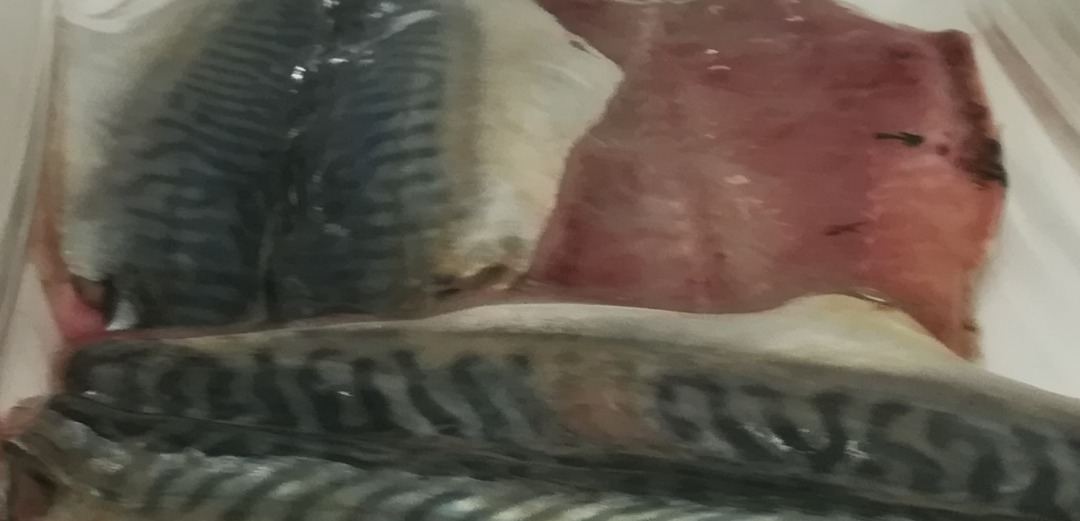
France – Mackerel fillet – Histamine

Gov france

Identification information of the recalled product

  • Product category Feed
  • Product subcategory Fishery and aquaculture products
  • Product brand name Unbranded
  • Model names or references Mackerel fillet Packing date: 10/26/22
  • Identification of products
    GTIN Date
    00000000 Use-by date 31/10/2022
  • Packaging Vacuum packed
  • Marketing start/end date From 26/10/2022 to 31/10/2022
  • Storage temperature Product to be stored in the refrigerator
  • Geographic area of ​​sale HYPER U LE GRAND QUEVILLY
  • Distributors HYPER U LE GRAND QUEVILLY

Practical information regarding the recall

  • Reason for recall Histamine
  • Risks incurred by the consumer Endogenous toxins: histamine (fish, cheese, alcoholic beverages, meats)

Research – Another drop in outbreaks was recorded in Germany for 2021

Food Safety News

The amount of foodborne outbreaks reported in Germany has continued to fall, according to the latest figures.

In 2021, the Robert Koch-Institut (RKI) and Federal Office of Consumer Protection and Food Safety (BVL) received slightly fewer reports of outbreaks with 168 compared to 193 in the previous year.

At least 1,179 cases, 196 hospitalizations, and two deaths were related to them in 2021. As in previous years, the top causes were Campylobacter and Salmonella.

Other agents involved in outbreaks were norovirus, Bacillus cereus, hepatitis A virus, Listeria monocytogenes, Clostridium perfringens, Yersinia enterocolitica, Shiga toxin-producing E. coli (STEC), Clostridium botulinum, Cronobacter sakazakii, histamine, Shigella, and Staphylococcus aureus. In seven outbreaks with 73 cases, the pathogen remained unknown.

Nineteen of the 22 outbreaks with more than five patients were caused by Salmonella.

RASFF Alerts – Histamine – Gruyere Cheese – Sardines – Anchovy Fillets

RASFF

Elevated Levels of Histamine and Tyramine in Gruyere Raw Milk Cheese from France in Ireland

RASFF

Histamine levels above allowed in semi-preserved sardines from Morocco in Spain

RASFF

Histamine in salted anchovy fillets from Croatia in Serbia

Hong Kong – Food Focus – Histamine in Fish and Fish Products

CFS

Food Safety Focus (150th Issue, January 2019) – Food Safety Platform

 Histamine in Fish and Fish Products

Reported by Mr. Kenneth Yung, Research Officer,
Risk Assessment Section, Centre for Food Safety

Fish is an important part of many types of cuisine that we savour.  However, the consumption of fish and fish products containing high level of histamine may cause scombrotoxin fish poisoning (SFP), also called histamine poisoning.  In Hong Kong, the Centre for Health Protection of the Department of Health recorded a total of 26 local SFP cases, affecting 45 persons from 2009 to 2018.  In this article, we discuss how histamine is formed and the ways to control level of histamine in fish and fish products..
Examples of fish which contain elevated levels of naturally

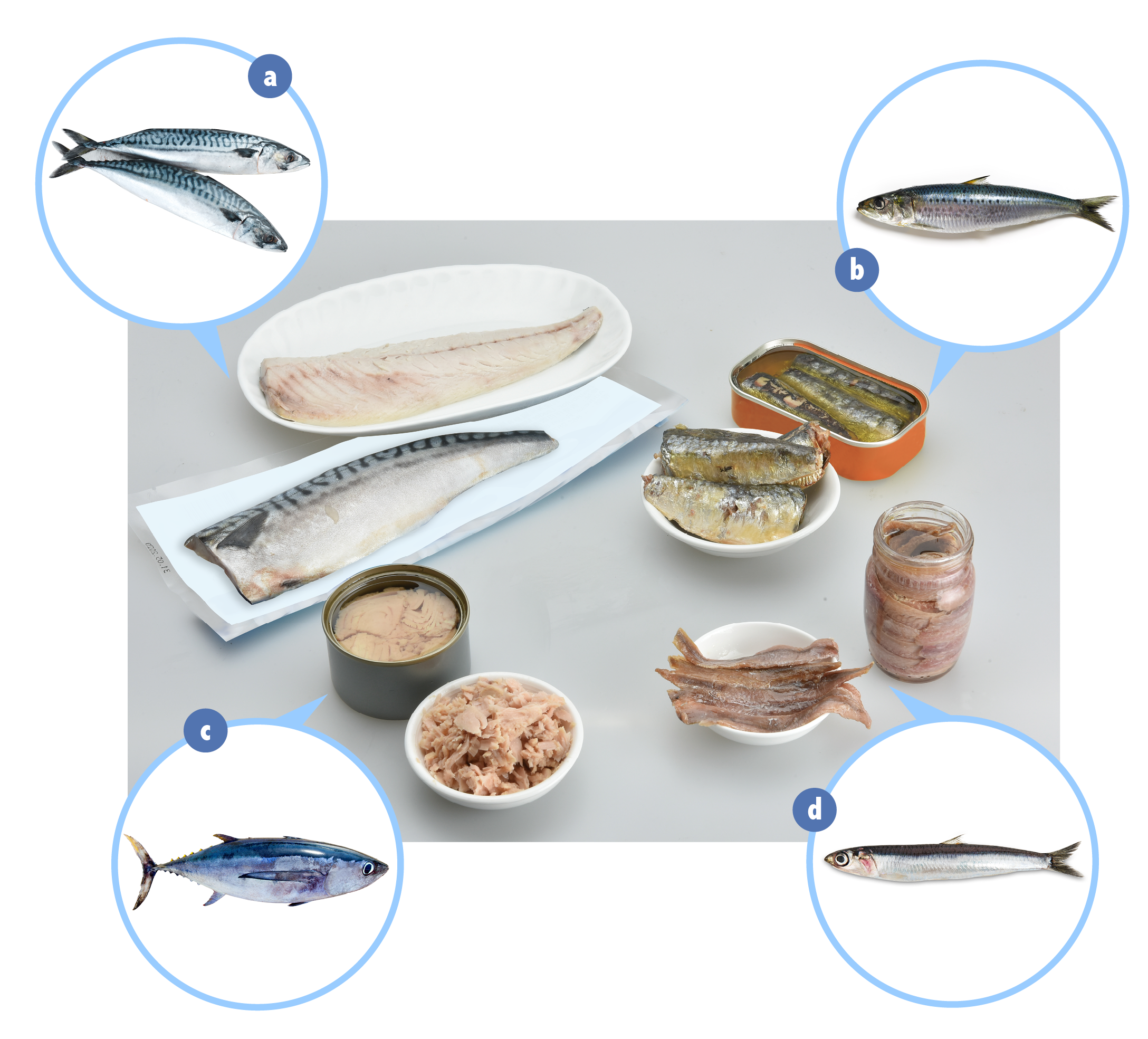
Examples of fish which contain elevated levels of naturally occurring histidine: (a) mackerel, (b) sardine, (c) tuna and (d) anchovy.  Some of their respective products have also been found to contain high levels of histamine.

Formation of Histamine in Fish and Fish Products

Histamine is a toxic metabolite produced by histamine-producing bacteria during spoilage and fermentation of fish and fish products.  Many histamine-producing bacteria are part of the natural microflora of the skin, gills and gut of freshly caught fish.  Histidine decarboxylase (HDC) enzymes, synthesized by histamine-producing bacteria when they multiply, convert the amino acid histidine that are naturally present in fish into histamine.

The level of histamine in fish and fish products mainly depends on species of fish and time-temperature control. Certain fishes like mackerel, sardine, tuna and anchovy naturally contain high amount of histidine and have been associated with SFP cases in Hong Kong and/or other places.

Time and temperature control is the most effective method for ensuring food safety for fish species prone to histamine production.  In the absence of proper time-temperature control such as refrigeration and freezing, formation of histamine may occur at any point throughout the supply chain.  Previous study conducted jointly by the Food and Environmental Hygiene Department and the Consumer Council revealed that high levels of histamine (up to 2600 mg/kg) that can cause SFP were detected in opened canned fish samples that were left at room temperature for 24 hours.  However, histamine was not detected in samples that were kept at 2°C for up to 168 hours.

Health Effects of Histamine

SFP is caused by the ingestion of food containing high levels of histamine i.e. consuming a serving size of 250g fish or fish product with histamine level exceeding 200 mg/kg may cause symptoms in healthy individuals.  Symptoms of SFP include tingling and burning sensation around the mouth, facial flushing and sweating, nausea, vomiting, headache, palpitations, dizziness and rash.  Exacerbation of asthma and more serious cardiac manifestations were reported in more severe cases.  The onset of symptoms is within a few hours after consumption and these symptoms will normally disappear in 12 hours without long term effect.

Control of Histamine in Fish and Fish Products

High levels of histamine can build up in fish and fish products before any signs of spoilage (e.g. bad smell or taste) develop.  Therefore, measures for control of histamine should be taken along the food chain from harvest to consumption.

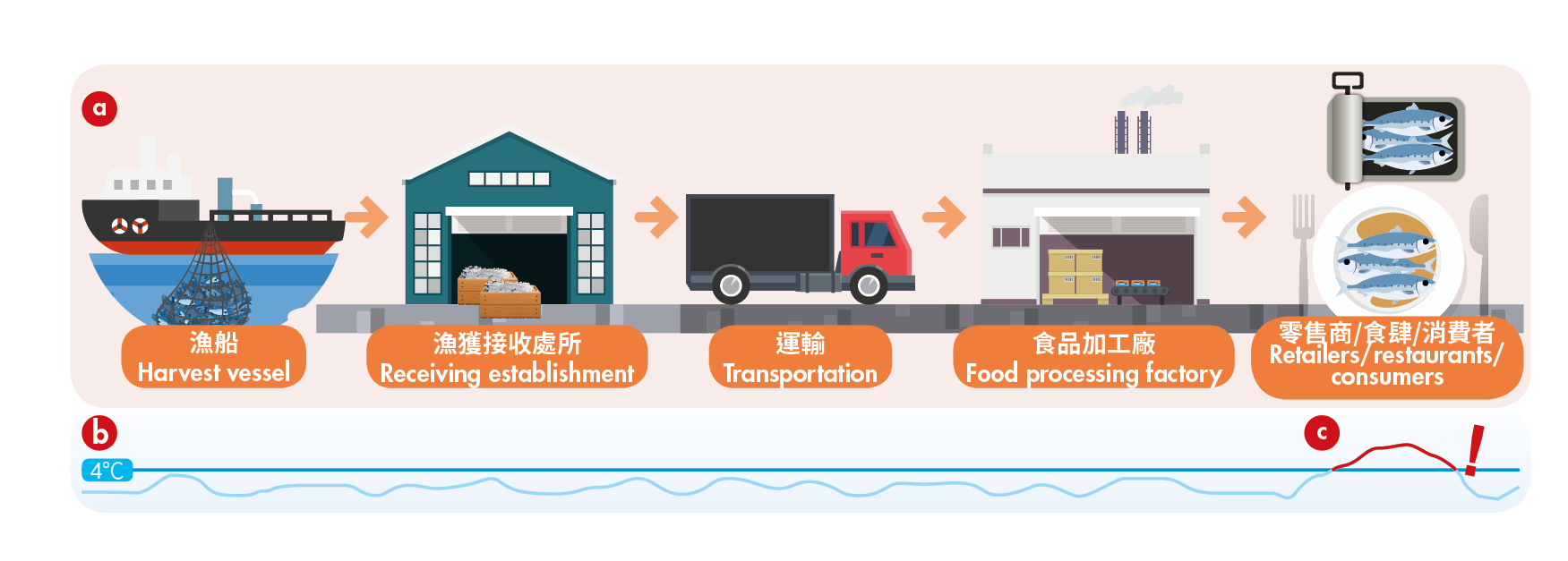
Care should be taken that the cold chain is maintained at or below 4°C along the supply chain, including points of transfer such as offloading of fish from the vessel and processing procedures.  Frozen fish and fish products should be kept at or below -18°C.  Transport vehicles or vessels should be adequately equipped to keep fish cold and pre-chilled before loading fish where applicable.  Adequate heat treatment (e.g. cooking, hot smoking) can kill histamine-producing bacteria and inactivate HDC enzymes, but cannot destroy pre-formed histamine.  Recommendations in the Code of Practice for Fish and Fishery Products (CAC/RCP 52-2003), issued by Codex Alimentarius Commission, should be observed to ensure food safety.
Food chain from harvest to consumption

(a) Cold chain should be maintained throughout the whole supply chain. (b) Refrigerated fish and fish products should be kept at or below 4°C. (c) The time which fish products are kept under ambient temperature should be minimised.

At the consumer level, fish should be chilled rapidly after purchase.  For pre-packaged fish and fish products, store according to the instructions of the manufacturer (e.g. keep refrigerated). If cooked fish and ready-to-eat fish products (e.g. tuna fish sandwiches and opened canned fish) are placed at room temperature all day long, they can be re-contaminated and histamine can form.  Therefore, if these foods are not being eaten immediately, they should be kept under refrigeration and be finished as soon as possible.

Hong Kong – CFS actively follows up on food poisoning outbreak involving tuna fillet – Histamine

CFS

The Centre for Food Safety (CFS) of the Food and Environmental Hygiene Department said today (October 31) that it is actively following up on a food poisoning outbreak involving tuna fillet, including investigating the restaurant and the importer concerned, and conducting source tracing. A sample of tuna fillet collected from the importer was found to contain a toxic metabolite, histamine. The CFS urged the public not to consume the product. The trade should stop using or selling the affected product immediately if they possess it.

Details of the product are as follows:

Product name: Frozen tuna fillet
Place of origin: Vietnam
Lot No.: VN 166 VI 157
Production date: July 5, 2022
Expiry date: July 5, 2024
Importer: Ichiban Pacific (H.K.) Ltd

A spokesman for the CFS said, “Upon notification by the Centre for Health Protection of the Department of Health of food poisoning cases involving tuna fillet, the CFS immediately sent staff to the restaurant concerned in Tsim Sha Tsui and the importer to conduct an investigation and source tracing, and took samples for testing. The test results showed that a frozen tuna fillet sample from the importer contained histamine at a level of 2800 milligrams per kilogram, which can cause food-borne intoxication.”

The spokesman added, “The importer, suppliers and restaurant concerned are following the CFS’s advice to stop sale and discard the affected product. The importer has also initiated a recall. Members of the public may call its hotline at 2512 2900 during office hours for enquiries about the recall. The CFS has also provided health education on food safety and hygiene to the person-in-charge and staff concerned, and instructed them to carry out thorough cleaning and disinfection, as well as to implement improvement measures to ensure food safety. Should there be sufficient evidence, prosecution will be instituted.”

According to section 54 of the Public Health and Municipal Services Ordinance (Cap. 132), all food for sale in Hong Kong, whether locally produced or imported, should be fit for human consumption. An offender is subject to a maximum fine of $50,000 and imprisonment for six months upon conviction.

“Histamine is a toxic metabolite commonly found in certain kinds of fish such as tuna, sardine, mackerel and anchovy, as a result of bacterial spoilage. Consumption of fish containing high levels of histamine can cause food-borne intoxication. Symptoms of histamine poisoning include a tingling and burning sensation around the mouth, facial flushing and sweating, nausea, vomiting, headache, palpitations, dizziness and rash. The onset of intoxication symptoms is within a few hours after consumption and these symptoms will normally disappear in 12 hours without long-term effects,” the spokesman said.

The CFS will alert the trade to the incident, continue to follow up and take appropriate action. An investigation is ongoing.

RASFF Alert – Histamine – Pickled Anchovies

RASFF

Presence of histamine in pickled anchovies from Morocco in France

RASFF Alerts – Histamine – Tuna – Sardines – Sardines in Sunflower Oil

RASFF

Histamine in Tuna from Sri Lanka in the Netherlands

RASFF

Histamine in sardines in France and Belgium

RASFF

Histamine in smoked sardines in sunflower oil from Morocco in Spain

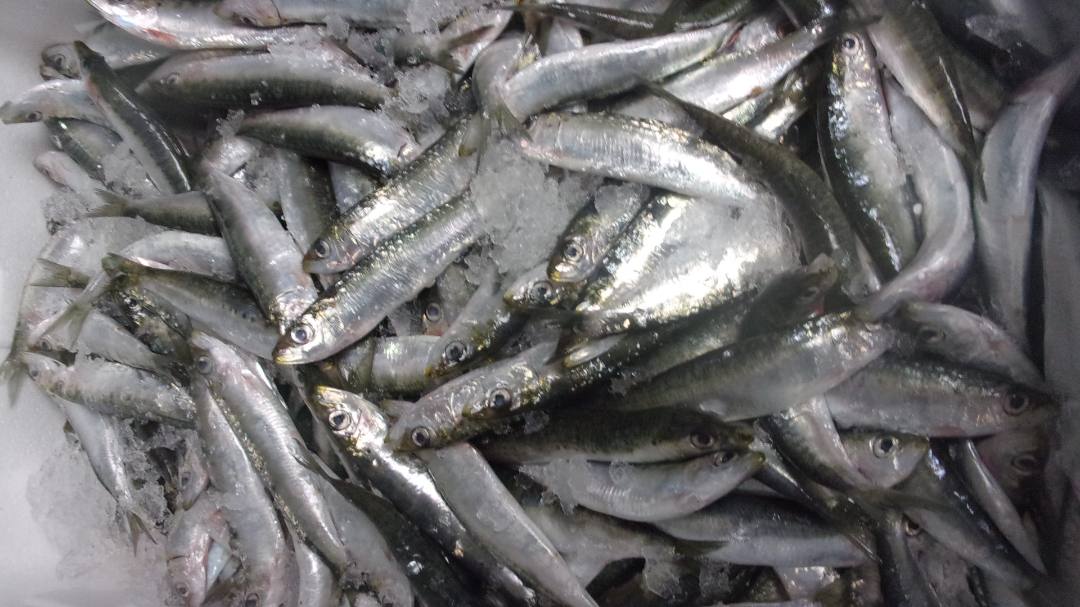
France – MEDITERRANEAN SARDINES – Histamine

Gov france

Identification information of the recalled product

  • Product category Feed
  • Product subcategory Fishery and aquaculture products
  • Product brand name/
  • Model names or references MEDITERRANEAN SARDINES SOLD AT THE FISH STALL
  • Identification of products
    Lot
    Mediterranean sardines sold at the fish stall in stores between 29/09 and 02/10/2022
  • Products ListPoster_sardine_med.pdfAttachment
  • Packaging/
  • Marketing start/end date From 29/09/2022 to 02/10/2022
  • Storage temperature Product to be stored at room temperature
  • Health mark FR 13.216.009 CE
  • Further information/
  • Geographic area of ​​sale Whole France
  • Distributors Auchan

Practical information regarding the recall

  • Reason for recall Non-compliant histamine level
  • Risks incurred by the consumer Endogenous toxins: histamine (fish, cheese, alcoholic beverages, meats)

Luxembourg – WHOLE MEDITERRANEAN SARDINE – UNBRANDED – Histamine

SAP

Auchan is recalling the following product :

Last name Whole Mediterranean sardine
Mark Unbranded
Marketing period from 29/09/2022 to 02/10/2022
Batch 0927355

Danger  : Non-compliant histamine level

Sale in Luxembourg by: Auchan

Source of information: Auchan recall notification

Communicated by: Luxembourg Veterinary and Food Administration .