Scientists at the Food Standards Agency (FSA) have looked at the key topics to consider when dealing with norovirus outbreaks linked to oysters.
Microbiological experts at the FSA assessed the public health risk of raw oysters, to help with development of risk management options during outbreaks.
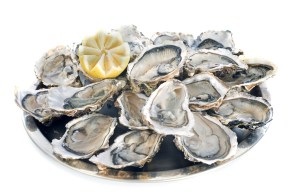
Work was done in response to recurring norovirus outbreaks linked to consumption of raw oysters. In England, between 2013 and 2022, there were 1,307 cases of norovirus linked to oysters. In Scotland, from 2017 to 2023, there were 259 reported cases. In the same periods, there were 28 outbreaks in England and eight in Scotland caused by oysters.
Earlier this month, two incidents of norovirus in oysters from France were reported to have sickened six people in Norway and 14 in Sweden.
A large outbreak with almost 200 cases in China was caused by poor hygiene at the producer and inadequate food storage at schools, according to a recent study.
An outbreak of acute gastrointestinal illness occurred at two middle schools in a rural region of Chongqing in 2021. The source was rice noodles contaminated with Bacillus cereus.
In May 2021, an outbreak was reported in the two schools. More than 100 students from the schools had symptoms of vomiting and nausea, prompting the Chongqing Center for Disease Control and Prevention and the local CDC to investigate and implement control measures.
As of November 17, 43 people infected with the outbreak strain of Salmonella have been reported from 15 states. Illnesses started on dates ranging from October 17, 2023, to November 6, 2023. Of 30 people with information available, 17 have been hospitalized. No deaths have been reported.
Public health investigators are using the PulseNet system to identify illnesses that may be part of this outbreak. CDC PulseNet manages a national database of DNA fingerprints of bacteria that cause foodborne illnesses. DNA fingerprinting is performed on bacteria using a method called whole genome sequencing (WGS). WGS showed that bacteria from sick people’s samples are closely related genetically. This suggests that people in this outbreak got sick from the same food.
Canada is also investigating a Salmonella outbreak linked to cantaloupes. The strain causing the outbreak in Canada is the same as the US outbreak strain. The Canadian Food Inspection Agency found Salmonella in a sample of Malichita brand cantaloupe, and WGS showed that the Salmonella on the cantaloupe is closely related genetically to the bacteria from sick people in Canada. This suggests that people in the Canadian and US outbreaks likely got sick from eating cantaloupe.
On November 1, 2023, Malichita brand cantaloupes were recalled in Canada.
On November 8, Trufresh recalled Malichita brand whole cantaloupes that were sold to US businesses between October 16 and October 23. On November 15, Trufresh expanded their recall to include additional whole cantaloupes.
Additional products containing Malichita brand cantaloupes were also recalled. On November 14, Vinyard Fruit and Vegetable Company recalled pre-cut fruit products and ALDI recalled [PDF – 2 pages] its whole cantaloupe, cantaloupe chunks, and pineapple spears.
CDC is advising people not to eat, sell, or serve recalled fruit.
More information about recalled products and product images can be found in the recall links above.
Whole fresh cantaloupes with a label that says “Malichita”, “4050”, and “Product of Mexico/produit du Mexique” sold between October 16 and October 23.
ALDIExternal Link Disclaimer cantaloupe, cut cantaloupe, and pineapple spears in clamshell packaging with Best-by dates between October 27 and October 31.
Vinyard cantaloupe chunks and cubes, fruit mixes, melon medleys, and fruit cups containing cantaloupe. Most have a “Vinyard” label, and some have a red label with “Fresh” sold between October 30 and November 10 in Oklahoma stores.
Recalled cantaloupe was sold at retail stores in Arizona, California, Maryland, New Jersey, Tennessee, Illinois, Indiana, Kentucky, Michigan, Oklahoma, Wisconsin, Texas, Florida and Canada. This list may not include all states as the cantaloupes could have reached consumers through further retail distribution.
More information about recalled products and product images can be found in the recall links above.
FDA’s investigation is ongoing. Updates to this advisory will be provided as they become available.
Illness usually occurs within 12 to 72 hours after eating contaminated food and usually lasts four to seven days. Symptoms include diarrhea, fever, and abdominal cramps. Children younger than five, the elderly, and people with weakened immune systems are more likely to have severe infections.
Status
Ongoing: updates to this advisory will be provided as they become available.
Recommendation
Consumers, restaurants, and retailers should not eat, sell, or serve recalled cantaloupe and products containing cantaloupe.
Some consumers freeze cantaloupe for later use. Consumers, restaurants, and retailers should check their freezers and throw away recalled fresh or cut cantaloupe that was frozen for later use.
If you cannot tell if your cantaloupe is part of the recall, do not eat or use it and throw it away.
Follow FDA’s safe handling and cleaning advice and use extra vigilance in cleaning and sanitizing any surfaces and containers that may have come in contact with these products to reduce the risk of cross-contamination.
Contact your healthcare provider if you think you may have symptoms of a Salmonella infection after eating recalled cantaloupe.
A new outbreak of Listeria monocytogenes (ref #989) linked to a not yet identified product has been added to the table. FDA has initiated sample collection and analysis. FDA’s investigation is ongoing.
A new outbreak of E. coli O103 (ref #1192) linked to a not yet identified product has been added to the table. FDA has initiated a traceback investigation. FDA’s investigation is ongoing.
For the investigation of illnesses (ref #1198) linked to apple cinnamon fruit puree pouches, the FDA has updated the advisory to include expanded recall information from the firm and additional reports of illness.
TheMaine Center for Disease Control and Prevention (Maine CDC) has identified a case of hepatitis A in a Falmouth food service worker. Hepatitis A is a contagious liver disease caused by the hepatitis A virus. It can spread through person-to-person contact or by consuming contaminated food or water.
The individual worked during their infectious period at The Dockside Grill, 215 Foreside Rd,Falmouth, on the following dates:
October 23-25
November 6-8
Anyone who dined in or ordered takeout from this restaurant during these days could be at risk for hepatitis A infection. The restaurant is working closely with the Maine CDC and there is no concern about ongoing exposure outside of these dates.
You can prevent getting hepatitis A with a vaccine and those exposed to hepatitis A can avoid getting sick if they get the vaccine within 14 days of the exposure The hepatitis A vaccine is a two-dose series. After one dose, at least 94 out of 100 people become immune to the hepatitis A virus for several years. Getting the second dose ensures long-term protection.
A pilot study in France has pointed to a significant under-reporting of shellfish-related foodborne outbreaks.
The objectives of the research were to quantify and describe the health impact of shellfish-related outbreaks as well as the circumstances of occurrence in Brittany, with the end goal of reducing their frequency.
An online questionnaire looked at shellfish consumption between November 2021 and April 2022, the practice of shore fishing, and the occurrence of shellfish outbreaks over the past five years.
A total of 438 responses were received between May and July 2022. Most respondents were women, the median age was 46, and 21 percent practiced shore fishing. From November 2021 to April 2022, 93 percent of participants reported having eaten shellfish. Almost two-thirds ate shellfish raw and cooked, while a quarter only ate cooked shellfish. Scallops and mussels were the most consumed, but oysters were the top raw type of shellfish eaten.
According to local reports, the eldest person to fall ill in the Miguel’s Cocina Salmonella outbreak has died. This follow reports that the second eldest, an 84 year-old woman represented by Ron Simon & Associates, the national salmonella law firm that has filed all the lawsuits in this litigation so far, has finally been released from the hospital. Unfortunately, on the day of her release, her long-time husband also passed away. So far, several dozen victims have come forward, according to the Miguel’s Cocina E. Coli Lawyer Ron Simon, adding “my office is still receiving calls every day from Miguel Concina victims. We represent more than two dozen victims so far, and expect that number to grow. People who consume food at a restaurant have the right to expect that the food to be safe and wholesome. Obviously, it was not.”


 FoodWorld