Category Archives: foodborne outbreak

USA – E. coli Outbreak Linked to Cake Mix – Investigation Notice – CDC

CDC

Fast Facts
  • Illnesses: 16
  • Hospitalizations: 7
  • Deaths: 0
  • States: 12
  • Recall: No
  • Investigation status: Active

Sick people in this outbreak reported tasting or eating raw cake batter made from a variety of cake mixes. A single brand or type of cake mix has not been linked to the illnesses.

Seventy-five percent of sick people are children under the age of 18. Children are more likely to have a severe E. coli infection.

Eating raw cake batter can make you sick. Raw cake batter can contain harmful germs like E. coli. Germs are killed only when raw batter is baked or cooked. Follow safe food handling practices when you are baking and cooking with cake mixes, flour, and other raw ingredients:

  • Do not taste or eat any raw batter, whether it is from a homemade recipe or from a mix.
  • Do not let children eat raw batter. Foodborne illnesses can be more serious for children.
  • Bake or cook raw batter before eating.
  • Follow the recipe or package directions for cooking or baking at the proper temperature and for the specified time.
  • Do not make milkshakes with products that contain raw foods such as cake mix, flour, or eggs.
  • Keep raw foods such as cake mix, flour, or eggs separate from ready-to-eat foods. Because cake mix and flour are powders, they can spread easily.
  • Follow label directions to refrigerate products containing raw batter or eggs until they are cooked.
  • Clean up thoroughly after handling cake mix, flour, or eggs:
    • Wash your hands with running water and soap after handling cake mix, flour, raw eggs, or any surfaces they have touched.
    • Wash bowls, utensils, countertops, and other surfaces with warm, soapy water.

Call your healthcare provider right away if you have any of these severe E. coli symptoms:

  • Diarrhea and a fever higher than 102°F
  • Diarrhea for more than 3 days that is not improving
  • Bloody diarrhea
  • So much vomiting that you cannot keep liquids down
  • Signs of dehydration, such as:
    • Not peeing much
    • Dry mouth and throat
    • Feeling dizzy when standing up

USA – Outbreak Investigation of Salmonella Typhimurium: Bright Farms Packaged Salad Greens (July 2021) – Listeria monocytogenes

FDA

Case Counts

Total Illnesses: 11
Hospitalizations: 2
Deaths: 0
Last Illness Onset: July 1, 2021
States with Cases: IL (6), WI (4), MI (1)
Product Distribution*: IL, WI, IA, IN, MI
*Distribution has been confirmed for states listed, but product could have been distributed further, reaching additional states

The FDA, along with CDC and state and local partners, is investigating a multistate outbreak of Salmonella Typhimurium infections linked to the consumption of BrightFarms packaged salad greens produced in the firm’s Rochelle, IL facility.

After FDA visited the facility and collected samples, some environmental samples tested positive for Salmonella Liverpool. Whole Genome Sequencing analysis revealed that the Salmonella found in these environmental samples was different from the outbreak strain. FDA is continuing its investigation and additional sample results are pending.

BrightFarms recalled additional packaged salad greens (see 2nd Recall Expansion) to include the Baby Spinach salad greens with a “Best By” date through 7/26/2021 produced in its Rochelle, IL, (Ogle County) greenhouse farm. The firm is not producing or distributing product from areas associated with environmental samples that tested positive for Salmonella.

FDA continues to work with BrightFarms to determine if there are additional products or “Best By” dates that could have been affected. Additional information will be provided as it becomes available.

Recommendation

Consumers, restaurants, and retailers should not eat, sell, or serve recalled BrightFarms packaged salad greens produced in Rochelle, IL. This includes the baby spinach packaged salad included in the firm’s expanded recall. The salads are packaged in a plastic clamshell container labeled as “fresh from Rochelle, IL.” According to the firm, these products were distributed in Illinois, Wisconsin, Iowa, Indiana, and Michigan.

Consumers, restaurants, retailers, and distributors should check their refrigerators and throw away any of the products identified above.

If you purchased or used these products, you should use extra vigilance in cleaning and sanitizing any surfaces that may have come in contact with the product, to reduce the risk of cross contamination.

FDA recommends that anyone who has symptoms of salmonellosis contact their healthcare provider.

Investigation Background

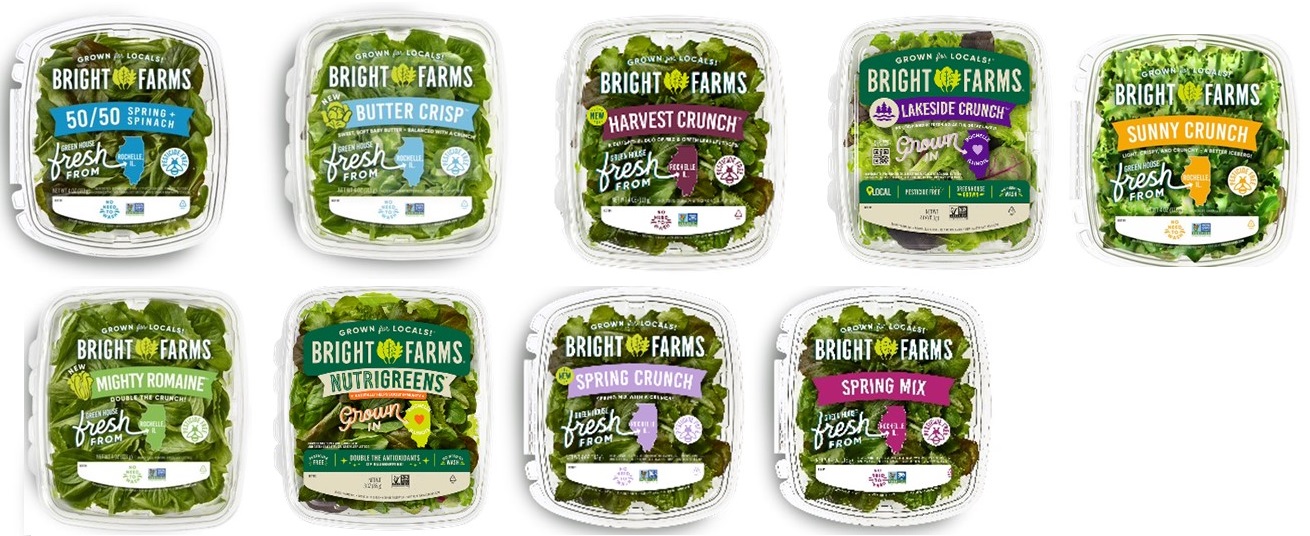
On July 15, 2021, BrightFarms recalled (see Initial Recall) packaged salad greens produced in its Rochelle, Illinois (Ogle County) greenhouse farm sold in Illinois, Wisconsin, Iowa, and Indiana. On July 21, 2021, Michigan was added to the list of states that received recalled products (see 1st Recall Expansion). Interview data and shopper card records show that seven people ate or bought multiple types of BrightFarms brand salad products before they got sick, including Sunny Crunch, 50/50 Spring & Spinach, Harvest Crunch, and Butter Crisp. FDA conducted a traceback investigation and identified the farm in Rochelle, IL, as the likely source of the BrightFarms brand salad bought by people who became ill. On July 28, 2021, following positive sample results, BrightFarms expanded their recall (see 2nd Recall Expansion) to include Baby Spinach packaged in clear, plastic clamshells with “Best By” dates through 7/26/2021.

The FDA continues working with BrightFarms to determine if there are additional products that could have been affected. Additional information will be provided as it becomes available.

The affected BrightFarms-branded products were sold by the following retailers:

  • Illinois: Mariano’s Fresh Markets, Walmart (select stores), Strack Van Till, Sullivan’s Foods, Caputo’s, Jewel-Osco
  • Wisconsin: Pick ‘n Save, Metro Market, Copps, Tadych’s, Walmart (select stores)
  • Iowa: Walmart (select stores)
  • Indiana: Strack Van Till
  • Michigan: Tadych’s

Additional retailers may be affected.

The expanded recall now includes the salad products below that are packaged in clear, plastic clamshells with “Best By” dates through 7/26/2021:

  • BrightFarms Baby Spinach TM (4 oz. and 8 oz. package)

The recall includes the below salad products packaged in clear, plastic clamshells with “best by” dates through 7/29/2021:

  • BrightFarms Nutrigreens TM (3 oz. package)
  • BrightFarms Butter Crisp TM (4 oz. Package)
  • BrightFarms Harvest Crunch ® (4 oz. package)
  • BrightFarms Mighty Romaine TM (4 oz. and 8 oz. package)
  • BrightFarms 50/50 Spring & Spinach (4 oz. package)
  • BrightFarms Spring Crunch (4 oz. package)
  • BrightFarms Spring Mix (4 oz. and 8 oz. package)
  • BrightFarms Sunny Crunch ® (4 oz. and 8 oz. package)
  • BrightFarms Lakeside Crunch TM  (4 oz. Package)

For specific product information, please see:


Product Images

Outbreak Investigation of Salmonella Typhimurium in BrightFarms Packaged Salad Greens - Product Images

Singapore – Recall of raw oysters linked to Vibrio parahaemolyticusoutbreak in USA

Click to access sfa-media-release—recall-of-raw-oysters-linked-to-vibrio-parahaemolyticus-outbreak-in-usa.pdf

Research – ECDC rapid risk assessment: multi-country outbreak of Salmonella infections thought to be linked to imported melons

HPS

Article: 55/3004

The European Centre for Disease Prevention and Control (ECDC) has reported that, between 15 March and 6 July 2021, 348 confirmed cases of Salmonella braenderup (S. braenderup) sequence type 22 (ST22) were recorded in 12 EU or EEA countries, and the UK. Of these cases, 68 were hospitalised, with no deaths recorded.

Based on epidemiological, microbiological and traceability investigations, the vehicles of infection are presumed to be melons imported from outside the EU, EEA and UK. A batch of galia melons from a Honduran producer are reported to be a probable source of infection, however the first cases were detected in March 2021, before this batch had been harvested. This indicates that contaminated food vehicles had been circulating in these countries earlier, seemingly confirmed by the April 2021 detection, in Austria, of the outbreak strain in melons.

Further investigations are required to identify the point of contamination along the production chain. The Honduran producer finished harvesting melons in April 2021, and their produce is no longer on the market, with no additional exports from Honduras foreseen until the new season starts in December 2021. Given delays in reporting and the possibility of secondary cases, further infections may still be reported, but with decreasing frequency.

Source: ECDC, 20 July 2021

Global Salmonella outbreak linked to melons from Honduras

Food Safety News

Almost 350 confirmed and 50 more possible Salmonella infections have been recorded across Europe and in the United Kingdom linked to melons. Some patients live in the United States.

Between mid-March and early July, 348 people fell ill due to Salmonella Braenderup and 68 needed hospital treatment but none have died. Four people were sick in the United States and two in Canada.

In late June, the U.S. Centers for Disease Control and Prevention (CDC) looked into three illnesses related genetically by whole genome sequencing, but didn’t find a link to those sick after eating melons in the UK. One ill person travelled outside the U.S. before they were sick but not to Europe and didn’t report eating melons. The other two sick people didn’t have food histories available and didn’t report traveling.

The UK is the most affected country with 102 confirmed infections while Sweden, Belgium and Germany all have 46. Denmark has 37 cases, Netherlands has 34, Switzerland has 18 while Austria, Czech Republic, Finland, France, Ireland, Luxembourg and Norway have single figure patient numbers.

RASFF Alert – Salmonella Food Outbreak – Fuet

RASFF

Salmonella food poisoning – FUET from Spain in France, Austria, Denmark, Estonia and Netherlands

Research – Rapid Outbreak Assessment: Multi-country outbreak of Salmonella Braenderup ST22, presumed to be linked to imported melons

ECDC

Between 15 March and 6 July 2021, 348 confirmed S. Braenderup sequence type 22 (ST22) cases were reported in 12 European Union/European Economic Area (EU/EEA) countries and the United Kingdom (UK). The cases were spread throughout the countries and only two reported travel. A total of 68 cases were hospitalised. No deaths were reported.

The case interviews and an analytical epidemiological study suggested small melons (in particular Galia melons) as the possible vehicle of infection. S. Braenderup ST22 matching the outbreak strain was isolated in the UK in two imported Galia melons from one batch from Honduras, and in Austria from a pooled sample of melons (unknown origin) including Galia melons.

Based on epidemiological, microbiological and traceability investigations, the vehicles of infection are presumed to be melons imported from outside the EU/EEA and the UK. Galia melons from the batch imported from a Honduran producer are probable vehicles of infection, at least in those cases reporting having consumed Galia melons. Further investigation is needed to identify the point of contamination along the production chain.

The first cases in the EU/EEA and the UK were detected in March 2021, before the batch found to be contaminated had been harvested. This indicates that contaminated food vehicles had been circulating in these countries earlier. This is confirmed by the detection of the outbreak strain in melons in Austria in April 2021.

Control measures have been implemented for imported melons distributed on the EU market. The Honduran producer finished harvesting melons in April 2021. These melons are no longer on the market. No additional exports from Honduras are foreseen until the new season starts in December. These measures reduce the risk of new infections. Given delays in reporting and the possibility of secondary cases, further cases may still be reported, but with decreasing frequency.

Downtown Publications

USA – Salmonella Outbreak Linked to Frozen Cooked Shrimp is Over.

CDC

This outbreak is over. Stay up to date on food recalls and outbreaks to avoid getting sick from eating contaminated food. 

Fast Facts
  • Illnesses: 6
  • Hospitalizations: 2
  • Deaths: 0
  • States: 2
  • Recall: Yes
  • Investigation status: Closed
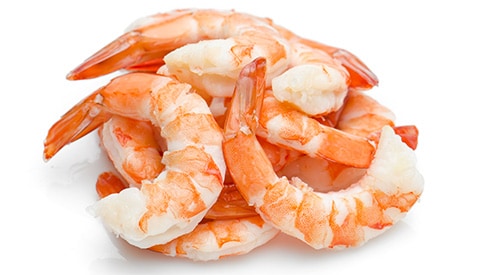
Cooked shrimp over a white background

Recalled Food

Frozen cooked shrimp supplied by Avanti Frozen Foods

  • Sold under multiple brand names including 365, Censea, Chicken of the Sea, CWNO, Hannaford, Honest Catch, Meijer, Open Acres, and Waterfront Bistro
  • Imported between December 2020 to February 2021, but may have been sold in stores more recently
  • See recall notice external icon for packaging sizes, descriptions, and product codes

Salmonella was found in a sample of Avanti Frozen Foods shrimp that was collected as part of FDA’s Imported Seafood Compliance Program.

New Zealand – Further testing programme to protect consumers – Salmonella Eggs Outbreak

MPI

hazegg.jpg

New Zealand Food Safety (NZFS) is extending a programme of testing to determine the extent of Salmonella Enteritidis (SE) in poultry flocks in New Zealand and to reduce the risk to consumers.

NZFS has been carrying out tracing and testing of poultry operations after SE was found at an Auckland poultry farm.  These efforts have focussed on egg producers rather than meat as farms have existing measures to protect against salmonella and cooking chicken meat kills the bacterium.

As a result, restrictions have been placed on three North Island egg layer operations, preventing potentially infected eggs from reaching consumers.

The new testing programme widens our focus and includes 20 egg-laying facilities and five chick rearers that collectively account for 80 per cent of the industry’s table eggs, says Deputy Director-General Vincent Arbuckle.

“Consumer safety is our number one priority here. While we think the overall risk to consumers is low, there is developing evidence of a potential link between poultry and recent cases of SE in humans. We consider this testing to be part of our precautionary measures to limit risk to consumers and industry.

“The poultry industry supports this approach as well as our plans to introduce further regulatory controls for the risk of SE.”

Mr Arbuckle said NZ Food Safety expected the testing programme to take about two months.

“We’ve contacted the facilities involved and will work with them to carry out the testing. Where there is evidence that implicates food products, actions will be taken as appropriate, to protect consumers.”

In the meantime, to reduce the possibility of getting ill through food, we’d like to remind people to follow the 3Cs of food safety at home: Clean food preparation surfaces, cook raw meat thoroughly, and chill cooked meat in the fridge.

There are key actions people can take to protect against Salmonella Enteritidis in eggs.

They include:

  • Keep eggs in the fridge after purchase.
  • Avoid raw or undercooked egg products. In particular, don’t serve raw eggs to children under 2 years of age, pregnant woman, the frail and elderly, and people with low or compromised immune systems.
  • Cook eggs thoroughly – until the white is completely firm and the yolk begins to thicken.
  • Wash your hands after handling eggs.
  • Consume eggs within the recommended date on the carton.
  • Keep surfaces and kitchen utensils clean and dry before and after handling eggs.
  • Use clean eggs free from dirt, faecal matter and cracks.

“Symptoms of Salmonella illness include abdominal cramps, diarrhoea, fever, headache, nausea and vomiting. It can be serious in people with reduced immunity, older people, children, and pregnant women,’’ Mr Arbuckle said.

“If you are concerned about your health, please contact your doctor for advice.”

The information collected from the survey will also inform the development of regulations to manage potential risk on poultry farms which is currently underway.

There have been 47 cases of Salmonella Enteritidis reported in 2021 to date. Genome testing has indicated a strong association with the preparation and consumption of poultry products, making this further stage of testing and reminders to consumers a prudent step at this time.

Further information

More information about food-borne salmonella

Information about salmonellosis – Ministry of Health

Clean, Cook, Chill

Research – Yersinia enterocolitica Outbreak Associated with Pasteurized Milk

Mary Ann Liebert

In July 2019, we investigated a cluster of Yersinia enterocolitica cases affecting a youth summer camp and nearby community in northeastern Pennsylvania. After initial telephone interviews with camp owners and community members, we identified pasteurized milk from a small dairy conducting on-site pasteurization, Dairy A, as a shared exposure. We conducted site visits at the camp and Dairy A where we collected milk and other samples. Samples were cultured for Y. enterocolitica. Clinical and nonclinical isolates were compared using molecular subtyping. We performed case finding, conducted telephone interviews for community cases, and conducted a cohort study among adult camp staff by administering an online questionnaire. In total, we identified 109 Y. enterocolitica cases. Consumption of Dairy A milk was known for 37 (34%); of these, Dairy A milk was consumed by 31 (84%). Dairy A had shipped 214 gallons of pasteurized milk in 5 weekly shipments to the camp by mid-July. Dairy A milk was the only shared exposure identified between the camp and community. Y. enterocolitica was isolated from Dairy A unpasteurized milk samples. Five clinical isolates from camp members, two clinical isolates from community members, and nine isolates from unpasteurized milk were indistinguishable by whole-genome sequencing. The risk for yersinosis among camp staff who drank Dairy A milk was 5.3 times the risk for those who did not (95% confidence interval: 1.6–17.3). Because Dairy A only sold pasteurized milk, pasteurized milk was considered the outbreak source. We recommend governmental agencies and small dairies conducting on-site pasteurization collaborate to develop outbreak prevention strategies.