Category Archives: Foodborne Illness

Research – Canada – Veal Liver as Food Vehicle for Human Campylobacter Infections

CDC  


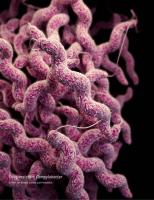
A matched case–control study in Quebec, Canada, evaluated consumption of veal liver as a risk factor for campylobacteriosis. Campylobacter was identified in 28 of 97 veal livers collected concurrently from slaughterhouses and retailers. Veal liver was associated with human Campylobacter infection, particularly when consumed undercooked.

Recent investigations conducted in Quebec, Canada, after an increased number of sporadic campylobacteriosis illnesses suggested that consumption of veal liver may be a risk factor for campylobacteriosis. Many of the persons infected reported eating veal liver, and many of those had eaten it pink or undercooked. The association between campylobacteriosis and the consumption of meat products, including chicken liver and offal from different animal species, has been previously described (15). We designed an epidemiologic study to examine the relationship between veal liver consumption and campylobacteriosis.

USA – More Ill with Salmonella Linked to Rose Acre Farms’ Eggs

Food Poison Journal 

Consumers, restaurants, and retailers should not eat, serve, or sell recalled eggs produced by Rose Acre Farms’ Hyde County farm. Throw them away or return them to the place of purchase for a refund.

  • These eggs were sold under multiple brand names, including Coburn Farms, Country Daybreak, Food Lion, Glenview, Great Value, Nelms, Publix, Sunshine Farms, and Sunups.
  • Check egg cartons for the following numbers: P-1065 (the plant number) and another set of numbers between 011 and 102 (the Julian date), or, for Publix and Sunups egg cartons, plant number P-1359D and Julian date 048A or 049A with Best By dates of APR 02 and APR 03.
  • Visit the FDA website for a list of recalled products.
  • Wash and sanitize drawers or shelves in refrigerators where recalled eggs were stored. Follow these five steps to clean your refrigerator.

Australia – Two hospitalised after eating recalled Creative Gourmet frozen pomegranate – Hepatitis A

ABC Au

Two South Australians have been hospitalised with Hepatitis A, believed to have been caused by them eating Creative Gourmet frozen pomegranate.

The product was recalled from Coles last month but SA Health is reminding South Australians to make sure they do not have the product in their freezers.

SA Health food and controlled drugs director Fay Jenkins said nationally there have been 11 cases linked to the outbreak, with two in South Australia.

“There’s a lady in her 60s and she is quite unwell and she is in hospital. There is a younger gentleman [aged 33] … and he’s actually been discharged from hospital,” Dr Jenkins said.

Symptoms of Hepatitis A include nausea, vomiting, fever, yellowing of the skin, dark urine and pale stools.

The infection can take from 15 to 50 days to develop.

USA – Ten Minnesota illnesses linked to national E. coli outbreak associated with romaine lettuce

MN Health State Eurofins Food Testing UK

Health officials say do not eat romaine unless certain it is not from Yuma region

The Minnesota Department of Health (MDH) is working with the Minnesota Department of Agriculture (MDA), the Centers for Diseases Control and Prevention (CDC), the U.S. Food and Drug Administration (FDA), and public health agencies in other states to investigate an outbreak of E. coli O157 infections associated with eating romaine lettuce.

Information on the national outbreak can be found on CDC’s and FDA’s websites: CDC: E. coli and FDA Investigating Multistate Outbreak of E. coli O157:H7 Infections Likely Linked to Romaine Lettuce from Yuma Growing Region.

Ten cases of E. coli O157 infection in Minnesota residents have recently been identified and linked to the multi-state outbreak. Illness onset dates range from April 20 through May 2. The cases are from both metro and greater Minnesota counties; 90 percent are female. Three cases were hospitalized, and two developed hemolytic uremic syndrome (HUS), a potentially fatal complication that can include kidney failure and other severe problems.

All of the Minnesota cases interviewed by public health investigators reported exposure to romaine lettuce. Reported exposure locations include restaurants, grocery stores, and residential facilities. MDH is working with MDA to further investigate these exposures.

“Do not eat, buy, or sell romaine lettuce unless you can confirm it is not from the Yuma growing region,” said Kirk Smith, manager of the Foodborne, Waterborne, Vectorborne, and Zoonotic Diseases section. “The Yuma growing region includes part of western Arizona and extends into the Imperial Valley of southeastern California, but does not include Salinas Valley or other growing regions in California.” Product from the Yuma growing region should no longer be on sale; however, individuals should check their refrigerators for romaine lettuce that may have been grown in the Yuma region.

Symptoms of illness caused by E. coli O157 typically include stomach cramps and diarrhea, often with bloody stools, but only a low-grade or no fever. People typically become ill two to five days after exposure, but this period can range from one to eight days. Most people recover in five to 10 days. However, E. coli O157 infections sometimes lead to HUS. Those most at risk of developing complications from E. coli O157 include children younger than 10, the elderly, and those with weakened immune systems.

Diarrhea associated with E. coli O157 infections should not be treated with antibiotics, as this practice might promote the development of HUS. Anyone who believes they may have developed an E. coli O157 infection should contact their health care provider.

Approximately 135 cases of E. coli O157 are reported each year in Minnesota. More information on E. coli O157 and how to prevent it can be found on the MDH E. coli website.

 

Information – Will Washing Romaine Lettuce Remove E. coli O157:H7?

Food Poisoning Bulletin 

Consumers are asking questions about this outbreak; namely, how can they protect themselves and their families? One of the questions is: will washing romaine lettuce and other produce eliminate the pathogenic bacteria?

The answer is, unfortunately, no. There are several reasons for this.

First, it only takes 10 Shiga toxin-producing E. coli bacteria to make a person very sick. That tiny amount is invisible to the eye. Washing romaine lettuce will not remove all the bacteria from microscopic surface of every leaf. Experts say that washing romaine lettuce and other produce can only reduce the number of bacteria that may be present, not completely eliminate them.

Second, pathogenic bacteria such as E. coli O157:H7 can form biofilms. These bacteria tend to cluster in small clumps so they can communicate with each other and protect each other. The bacteria produce a matrix made up of proteins, polysaccharides, and nucleic acids. The matrix is very dense and protects the bacteria from cleaning agents. It also protects the bacteria from antibiotics, and even desiccation. A simple rinse with water or a cleaning solution may not penetrate that biofilm.

And finally, the deeply crenelated surface of leafy greens provides lots of places for bacteria to hide. The same is true for other types of produce, especially cantaloupe. And, if there are tiny tears, bruises, or rips in the lettuce leaf, the bacteria can actually get inside. No amount of washing any kind of produce can reach the bacteria then.

The only thing that will kill E. coli bacteria is heat; the food must be heated to 160°F. There are very few recipes that call for cooked romaine lettuce. Grilling romaine lettuce halves will not increase the temperature enough to kill any bacteria that may be present.

Information – At least 9 countries affected by US eggs salmonella outbreak

Poultry World 

At least 9 countries have been caught up in the US egg salmonella outbreak, according to the US Food and Drug Administration (FDA).

The FDA said this week that eggs from Rose Acre Farms, the company at the centre of the massive egg recall, were distributed to:

  1. the United Arab Emirates,
  2. Haiti, the Bahamas,
  3. Hong Kong,
  4. Cayman Islands,
  5. Turks and Caicos Islands,
  6. Saint Barthélemy,
  7. Saint Martin
  8. Aruba
  9. the US Virgin Islands.

USA- FDA: Rodents, Filth Linked to Egg Recall

Quality Assurance Mag 

An inspection report released Thursday by the U.S. Food and Drug Administration indicates that the North Carolina farm linked to a multistate outbreak of Salmonella from contaminated eggs had an ongoing rodent infestation, unsanitary conditions and poor employee practices, CNN reported.

On April 13, Rose Acre Farms voluntarily recalled nearly 207 million eggs produced at its Hyde County farm in North Carolina that it believed were at risk of contaminated with Salmonella bacteria. Three days later, Cal-Maine Foods Inc. voluntarily recalled 280,800 eggs purchased from the same Rose Acre Farm.

Canada – CFIA – FDA – Norovirus Outbreak

FDA 

The U.S. Food and Drug Administration, along with the Centers for Disease Control and Prevention (CDC), the Public Health Agency of Canada, the Canadian Food Inspection Agency, and state and local partners, are investigating a multi-state outbreak of Norovirus illnesses that are linked to oysters.

What is the Problem and What is being Done About It?

The U.S. Food and Drug Administration is working with federal, state, and local officials regarding a norovirus outbreak linked to raw oysters from British Columbia, Canada. The FDA has confirmed that potentially contaminated raw oysters harvested in the south and central parts of Baynes Sound, British Columbia, Canada, were distributed to CA, IL, MA, and WA. It is possible that additional states received these oysters either directly from Canada or through further distribution within the U.S.

FDA and the states are conducting a traceforward investigation to determine where the raw oysters were distributed and ensure they’re removed from the food supply. Retailers should not serve raw oysters harvested from the following harvest locations (or landfiles) within Baynes Sound: #1402060, #1411206, #1400483, and #278757.

Oysters can cause food-related illness if eaten raw, particularly in people with compromised immune systems. Food contaminated with noroviruses may look, smell, and taste normal.

CFIA

Public Health Notice — Ongoing outbreak of norovirus and gastrointestinal illnesses linked to raw oysters

April 27, 2018 – Update

This notice has been updated to include additional cases of illness associated with this outbreak. In the last week, the Public Health Agency of Canada has seen a decrease in the number of cases being reported to the outbreak investigation team which indicates the outbreak may be slowing. The outbreak investigation remains active and findings to date have identified that most people who became sick were infected after consuming oysters that were harvested in the south and central parts of Baynes Sound, British Columbia. The investigation into a specific source of contamination impacting the shellfish farms in that area is ongoing.

Canada – Updated Food Recall Warning – Certain pork products recalled due to E. coli O157:H7

CFIA

Recall details

Ottawa, April 27, 2018 – The food recall warning issued on April 26, 2018 has been updated to include additional product information. This additional information was identified during the Canadian Food Inspection Agency’s (CFIA) food safety investigation.

Industry is recalling certain pork products from the marketplace due to possible E. coli O157:H7 contamination. Consumers should not consume and distributors, retailers and food service establishments, such as hotels, restaurants and cafeterias, should not sell or use the recalled products described below.

Recalled products

Brand Name Common Name Size Code(s) on Product UPC
Rimbey Foods Ltd. Sliced Pork Belly Variable Sold from February 19 up to and including April 27, 2018 Starts with 0 200118
Fuge Fine Meat Salchicha de Huacho Sausage 630 g All Best Before dates from May 3, 2018 up to and including May 26, 2018 None
Fuge Fine Meat Maple Sage Bratwurst Sausage 630 g All Best Before dates from May 3, 2018 up to and including May 26, 2018 None
Fuge Fine Meat DD Bratwurst Sausage 630 g All Best Before dates from May 3, 2018 up to and including May 26, 2018 None

RASFF Alert – Foodborne Outbreak – Salmonella – Fuet Sausage – France

kswfoodworld food safety poisoning

RASFF-foodborne outbreak caused by Salmonella (4, 5, 12:i:-) in fuet sausage from Spain in France