Category Archives: Foodborne Illness

USA – FDA Investigating Multistate Outbreak of Salmonella Adelaide Infections Linked to Pre-Cut Melons

The U.S. Food and Drug Administration, along with the Centers for Disease Control and Prevention (CDC) and state and local partners, are investigating a multistate outbreak of Salmonella Adelaide illnesses that may be linked to cut melons.

June 13, 2018 Update

The FDA is sharing additional distribution information that identifies retail locations that may have received potentially contaminated product subject to the recall. The FDA is advising consumers to discard any recalled products purchased at the listed locations.

The FDA is sharing a consolidated list of retail locations with consumers as the information becomes available. The retail information augments product information released on June 8th. Additional retail locations may be added as more information is received by the FDA. This list has been compiled from lists firms have reported to FDA that received recalled bulk product. Firms may be added or removed as more information becomes available. Consumers may wish to ask a retailer directly if the recalled product was available for sale.

As of June 12, and 13, 2018, locations in Iowa, Pennsylvania, West Virginia, and Wisconsin have been added that received potentially contaminated product.

UK- Scotland – Red alert over rare meat as survey reveals more Scots are falling victim to food poisoning

Sunday Post beefrsir

A TASTE for pink meat could be responsible for record food poisoning figures, safety campaigners fear.

More than two-fifths of people reported having suffered severe stomach upsets after eating under-cooked food – a new high.

The fifth biannual Food in Scotland Consumer Tracking Survey reveals the growing popularity for pinker meat may be putting diners at risk of campylobacter and salmonella poisoning.

The alarming statistics come as more people than ever enjoy a barbecue in Scotland’s good weather.

There has been a rise in the number washing raw meat, which they shouldn’t, and a drop in the number washing utensils during preparation, which they should.

Poland – Salmonella on Green Caffe Nero. How many people have been poisoned with a cake in a cafe?

VAAJU 

As evidenced by recent reports, Green Caffe Nero clients in Warsaw, Krakow and Wrocław have asked about the “Green Mosque” cake. Some of them are in hospital. Among the victims of salmonella raging in the famous coffee bar are children.

According to Warsaw’s “Metro”, 52 cases were reported in total. As many as 21 people required hospitalization, including three children. In total there are 6 children among the victims. Sanepid not only inspected Warsaw’s premises Green Caffe Nero but also cafes in Wrocław and Kraków . There were also infected cakes. Krakow inspection confirmed that she had four people suffering from salmonella after eating the “green moss” dough. At least one of the sick people was poisoned in Wrocław.

USA – FDA Investigating Multistate Outbreak of Salmonella Adelaide Infections Linked to Pre-Cut Melons

FDA 

Fast Facts

  • The FDA, CDC, along with state and local officials are investigating a multi-state outbreak of Salmonella Adelaide infections. CDC reports that fruit salad mixes that include pre-cut melons are a likely source of this outbreak.
  • FDA advises consumers not to eat recalled fresh cut watermelon, honeydew melon, cantaloupe, and fresh-cut fruit medley products containing any of these melons produced at the Caito Foods facility in Indianapolis, Indiana. Caito Foods, LLC distributed products produced at this facility in Georgia, Illinois, Indiana, Kentucky, Michigan, Missouri, North Carolina and Ohio. The products were packaged in clear, plastic clamshell containers and distributed to Costco, Jay C, Kroger, Payless, Owen’s, Sprouts, Trader Joe’s, Walgreens, Walmart, and Whole Foods/Amazon. Caito Foods, LLC has voluntarily recalled fruit salad mixes that contain pre-cut melons to prevent further distribution of potentially contaminated products.
  • The CDC reports that 60 people in five Midwestern states have become ill. Among 47 people with information available, thirty-one cases (66%) have been hospitalized.
  • The 60 illnesses occurred within the period of April 30, 2018 to May 28, 2018.
  • The FDA is working with CDC, along with state partners in Illinois, Indiana, Michigan, Missouri, and Ohio to trace back the pre-cut melons to identify the source to determine the full distribution of pre-cut melons, and to learn more about the potential route of contamination.
  • As this is an ongoing investigation, the FDA will update this page as more information becomes available, such as product information, epidemiological results, and recalls.
  • Consumers who have symptoms of Salmonella infection should contact their health care provider to report their symptoms and receive care. Most people infected with Salmonella develop diarrhea, fever, and abdominal cramps. Most infections usually lasts 4 to 7 days and most people recover without treatment, however some people develop diarrhea so severe that they need to be hospitalized.

Research – Behavior of 11 Foodborne Bacteria on Whole and Cut Mangoes var. Ataulfo and Kent and Antibacterial Activities of Hibiscus sabdariffa Extracts and Chemical Sanitizers Directly onto Mangoes Contaminated with Foodborne Bacteria

Journal of Food Protection

The behavior of foodborne bacteria on whole and cut mangoes and the antibacterial effect of Hibiscus sabdariffa calyx extracts and chemical sanitizers against foodborne bacteria on contaminated mangoes were investigated. Mangoes var. Ataulfo and Kent were used in the study. Mangoes were inoculated with Listeria monocytogenes, Shigella flexneri, Salmonella Typhimurium, Salmonella Typhi, Salmonella Montevideo, Escherichia coli strains (O157:H7, non-O157:H7 Shiga toxin–producing, enteropathogenic, enterotoxigenic, enteroinvasive, and enteroaggregative). The antibacterial effect of five roselle calyx extracts (water, ethanol, methanol, acetone, and ethyl acetate), sodium hypochlorite, colloidal silver, and acetic acid against foodborne bacteria were evaluated on contaminated mangoes. The dry extracts obtained with ethanol, methanol, acetone, and ethyl acetate were analyzed by nuclear magnetic resonance spectroscopy to determine solvent residues. Separately, contaminated whole mangoes were immersed in five hibiscus extracts and in sanitizers for 5 min. All foodborne bacteria attached to mangoes. After 20 days at 25 ± 2°C, all foodborne bacterial strains on whole Ataulfo mangoes had decreased by approximately 2.5 log, and on Kent mangoes by approximately 2 log; at 3 ± 2°C, they had decreased to approximately 1.9 and 1.5 log, respectively, on Ataulfo and Kent. All foodborne bacterial strains grew on cut mangoes at 25 ± 2°C; however, at 3 ± 2°C, bacterial growth was inhibited. Residual solvents were not detected in any of the dry extracts by nuclear magnetic resonance. Acetonic, ethanolic, and methanolic roselle calyx extracts caused a greater reduction in concentration (2 to 2.6 log CFU/g) of all foodborne bacteria on contaminated whole mangoes than the sodium hypochlorite, colloidal silver, and acetic acid. Dry roselle calyx extracts may be a potentially useful addition to disinfection procedures of mangoes.

Israel – Twenty soldiers were poisoned in Jerusalem – Salmonella

Siva Telegram 


20 IDF soldiers serving in different units, were poisoned while staying in the Beit Ha-Hayal in Jerusalem last week.

Soldiers arrived in Jerusalem to participate in the seminar of the organization for the security fence through which they were called.

We are talking about food poisoning, presumably with Salmonella. The soldiers return to their units, were suffering from diarrhoea, fever and vomiting. Some of the victims were placed in detention centers.

One of the instructors of the seminar starting to receive reports of all new cases of the disease, realized that the cause must be one, and remembered the complaints of the soldiers the “disgusting food” and the “stinking fish.”

The administration of the Beit Ha-Hayal said that the results of the inspection of Salmonella in the kitchen of the institution is not discovered. However, the kitchen is closed, the contractor who supplied the food suspended, and the administration is looking for a new contractor.

RASFF Alert – Foodborne Outbreak Suspected – STEC E.coli O26:H11 – Raw Milk Reblochon

kswfoodworld food safety poisoning

RASFF-foodborne outbreak suspected (STEC O26H11 eae+ stx2+) to be caused by raw milk reblochon from France in France

USA – Salmonella-Contaminated Eggs Sicken 35 People Across Nine States

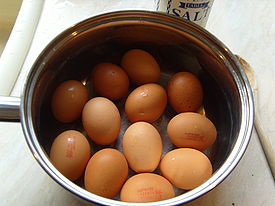
Food Logistics 275px-Boiled_eggs_in_saucepan_by_Sarah_McCulloch

A salmonella outbreak attached to more than 200 million eggs has sickened 35 people, spreading across nine states.

NBC reports that 35 people across nine states have been sickened by a salmonella outbreak tied to a recall of more than 200 million eggs.

The eggs have been traced to egg-based producer Rose Acre Farms in Hyde County, North Carolina. Last month, the Centers for Disease Control and Prevention said that 23 people were sickened by the eggs, but since then the number has jumped to 35.

The 12 people that fell ill recently were in five different states along the East Coast.

According to NBC, the eggs were sold under different brands in a variety of retailers and restaurants. According to the CDC, 11 people have been hospitalized but no deaths have been reported.

USA – Why Are There So Many HUS Complications in the E. coli O157:H7 Romaine Outbreak? An Attorney Answers

Food Poisoning Bulletin 

The hospitalization rate and hemolytic uremic syndrome case count in the deadly E. coli O157:H7 HUS outbreak that is linked to romaine lettuce has been very high. Typically, in an E. coli outbreak, about 30% of patients are hospitalized, and about 5 to 10% develop hemolytic uremic syndrome (HUS).

But in this outbreak, the hospitalization rate is almost 50%, and 13% of those patients have developed HUS. Why is the hospitalization rate and the HUS rate so high in this particular outbreak?

Typically, the group most susceptible to developing HUS is children under the age of 5. The patient age range in this outbreak is from 1 to 88. There could be quite a few children sick, which may explain the high HUS rate.

Another explanation for the high HUS rate and the high hospitalization rate is the type of toxins the E. coli bacteria are producing. Shiga toxin-producing E. coli bacteria make two types of those toxins: Stx1 and Stx2. Unfortunately, the bacteria in this outbreak are making Stx2, which causes more damage to the body.

Another factor could be that the lettuce was contaminated with an unusually high number of bacteria. It takes just 10 E. coli bacteria to make someone sick. More bacteria can release more toxins and cause more damage.”

USA – 54 sick from Salmonella at Chicago’s Cook County Jail

Barf Blog

At least five detainees have gotten sick in an apparent salmonella outbreak at a medium-security division of the Cook County Jail in Chicago.

Detainees at the jail’s Division 11, 3015 S. California Boulevard, “began experiencing symptoms of a gastrointestinal illness” last week, according to a statement from the Cook County Sheriff’s Office. Over the weekend, five cases of salmonella were confirmed among the 54 detainees reporting symptoms.

Two of the detainees were hospitalized for their symptoms, the sheriff’s office said. One has since been returned to the jail and the other was expected to be returned to the jail on Tuesday.