The Los Angeles County Department of Public Health is investigating a report of hepatitis A virus infection in an employee of Buffalo Wild Wings in Monterey Park (4000 Market Place, Monterey Park, CA 91754).
KSWFoodWorld

The Los Angeles County Department of Public Health is investigating a report of hepatitis A virus infection in an employee of Buffalo Wild Wings in Monterey Park (4000 Market Place, Monterey Park, CA 91754).
Posted in Food Virus, Food Virus Illness, Hepatitis A
Sheet USA Today November 16.11 reported 70 people infected on the ship Travel Coral Princess. The ship was carrying 1.822 passengers on a month-long journey from Singapore to Los Angeles (California, USA) when a virus spread and caused an outbreak on board.
The US Centers for Disease Control and Prevention (USCDC) said that 55 guests and 15 crew members on the Coral Princess ship were infected with norovirus, with the main symptoms being vomiting and diarrhea.
Norovirus is an intestinal virus that is highly contagious through direct or indirect contact with an infected person. According to the website CruiseMapper, the Coral Princess ship owned by Princess Cruises Company (headquartered in California), left Singapore on October 17.10.
The Coral Princess has implemented “enhanced cleaning and disinfection procedures in accordance with its pandemic preparedness and response plan,” among other measures, according to the CDC. The CDC’s ship sanitation program is monitoring the outbreak remotely. The cruise line did not respond to a request for comment.
By page Cruise Mummy On November 15.11, another norovirus outbreak was also recorded on the Crown Princess cruise ship currently traveling around Australia and New Zealand.
Passengers on board the ship received a letter advising them to disembark in Darwin, Australia, if possible, so that authorities could conduct a thorough cleaning of the ship, including disinfecting all guest rooms and public areas.
While cases of norovirus have been reported on cruise ships, the total number of cases represents only 1% of all cases ever reported on board. world.
Dr. Sarah Hochman at Tisch Hospital (New York, USA) confirmed that this virus has no special connection to cruise ships.
“It really is (spread) in any setting where there are large numbers of people congregate. It also happens in the community on a much smaller scale, between households and household contacts. It’s just not as limited. medical public as much as for larger gathering settings,” according to Dr. Hochman.
In a rare occurrence of locally acquired typhoid fever in Canada, health officials in Ottawa recently traced an outbreak back to a chronic Salmonella Typhi carrier working as a food handler. The outbreak involved seven confirmed cases from Oct. 2018 to May 2022 and was linked to the asymptomatic carrier through whole genome sequencing (WGS) and social network analysis.
Typically, cases of typhoid fever in Canada are linked to international travel, making this localized outbreak unusual. The investigation led by Ottawa Public Health underscores the potential for chronic carriers, who may shed bacteria without symptoms and unintentionally transmit the disease over an extended period. All eight outbreak-related isolates matched genetically, confirming the cluster.
A recently published report has detailed the largest multi-provincial Salmonella outbreak in Canada in more than two decades, linking 515 confirmed cases to contaminated red onions imported from the United States.
The outbreak, which occurred between June and August 2020, affected residents across seven provinces, with 19 percent of those infected requiring hospitalization. The findings, outlined in a report from the Public Health Agency of Canada (PHAC) and other health agencies, underscore the complexity of foodborne illness investigations and the challenges posed by fresh produce contamination.
A separate report from the U.S. Food and Drug Administration in 2020, found that a sheep farm was likely a contributing factor in the contamination of the onions.
Posted in food bourne outbreak, food contamination, food handler, Food Hazard, Food Hygiene, Food Illness, Food Inspections, Food Micro Blog, Food Microbiology, Food Microbiology Blog, Food Microbiology Research, Food Microbiology Testing, Food Pathogen, Food Virus Illness, Foodborne Illness, foodborne outbreak, foodbourne outbreak, Illness, outbreak, Research, Salmonella
Nearly 50 female students of a government college were hospitalised for suspected food poisoning after having dinner at their hostel in Maharashtra’s Latur city, officials said on Sunday.
The hostel, part of the Puranmal Lahoti Government Polytechnic, has 324 female students.
At around 7 pm on Saturday, the students had dinner, consisting of rice, chapattis, ‘okra’ curry and lentil soup, the officials said.
Food poisoning, also known as foodborne illness, is a significant public health issue in the United States. Every year, millions of people suffer from foodborne illnesses, ranging from mild discomfort to life-threatening conditions. These illnesses arise from consuming contaminated food, which may harbor harmful bacteria, viruses, or parasites. Beyond the personal toll on those affected, food poisoning has far-reaching economic implications, from medical costs to lost productivity. Various health agencies, including the Centers for Disease Control and Prevention (CDC), the Food and Drug Administration (FDA), and state and local health departments, work tirelessly to mitigate the impact of foodborne illnesses. This article will provide an in-depth examination of the annual cases of food poisoning in the U.S., the associated economic costs, and the roles of these agencies in safeguarding public health.
In 2018, food-borne disease (FBD) was estimated to be responsible for 2.4 million cases of illness and more than 16,000 hospitalisations per year in the United Kingdom (UK) [1], with revised estimates indicating ca 180 deaths annually in the UK arising from exposure to 11 key pathogens [2]. The estimated annual cost from these illnesses is EUR 10.5 billion (GBP 9 billion) [3], with far-reaching impacts on health providers, industry and individuals.
Food for human consumption can become contaminated at any stage of food production, delivery, storage or preparation, and can involve contamination from environmental, human or animal sources [4–6], making identification of sources and pathways of pathogens responsible for FBD outbreaks a complex process. Furthermore, there is currently no fully integrated framework in the UK for the monitoring and surveillance of FBD, causing difficulty in the prediction and delay in the mitigation of outbreaks.
In 2022, a series of programmes was launched under HM Treasury Shared Outcomes Fund, one of which, Pathogen Surveillance in Agriculture, Food and Environment (PATH-SAFE) [7], aimed to pilot a better national surveillance programme for FBD and antimicrobial resistance (AMR).
Pilot studies carried out under PATH-SAFE focused on norovirus, Listeria monocytogenes and Salmonella spp., identified by the Food Standards Agency (FSA) as being among the top five priority pathogens of concern with respect to FBD outbreaks [8], along with Escherichia coli, used as an indicator organism for faecal contamination.
To present the findings and discuss the challenges, needs and opportunities for implementing a successful national biosurveillance programme, the Centre for Environment, Food and Aquaculture Science (Cefas) and Bangor University hosted a workshop at the Royal Institution, London, on 31 January 2024. Stakeholders with a range of interests in pathogens implicated in FBD and AMR were invited to contribute their views and recommendations on how best to achieve the desired outcomes for an effective national surveillance framework. Participants from diverse roles (scientists, decisionmakers, public health analysts, policy advisors) across government, academia and charities attended the event.
The first part of the workshop was devoted to presentations of work carried out under the pilot studies, including a combined poster and networking session. For the second part of the workshop, participants were guided into breakout groups to participate in discussions on “Surveillance and management of microbiological risks: gaps & limitations, knowledge & perceptions, approaches & opportunities”.
This workshop was a collaboration across disciplines with participants from multiple organisations: Declan Power (Animal & Plant Health Agency); Jaime Martinez-Urtaza (Universitat Autonòma de Barcelona); Davey Jones, Kata Farkas, Reshma Silvester (Bangor University); Andrew Weightman (Cardiff University); Craig Baker-Austin, David Haverson, David Walker, Richard Heal (Centre for Environment, Fisheries & Aquaculture Science); Steve Morris (Department for Environment, Food & Rural Affairs); Edward Haynes (Fera Science Ltd); Anthony J. Wilson (Food Standards Agency); K. Marie McIntyre (Newcastle University); Mandy Wootton (NHS Wales); Ellie Brown (Ribble Rivers Trust); Oliver Pybus (Royal Veterinary College); Rob Collins (The Rivers Trust); Andrew Singer (UK Centre for Ecology & Hydrology); Matthew Wade (UK Health Security Agency); Edel Light (Veterinary Medicines Directorate).
More than 120 people, including women and children, were hospitalised due to food poisoning after consuming items made from buckwheat flour, officials said on Tuesday.
A team from the District Food and Drug Administration raided and sealed the shops of two vendors supplying the contaminated buckwheat flour (kuttu atta), they said, adding a case has been registered against them.
The incident was reported from several villages in the Farah police station area of Mathura district last night. All victims are stable, the officials said
In the first weeks of July (July 1-July 14), the number of reported cases of campylobacter infected in Sweden increased to nearly 100 cases per week. In the following weeks (July 15-July 28), the number of reported cases increased further, to 160 and 210 cases per week respectively. The cases are found in several regions. The increase coincides with previously increased occurrence of campylobacter in broiler flocks.
The Campylobacter program in chicken in Sweden (sva.se)
Good handling of raw chicken reduces the risk of becoming infected.
Campylobacter (livsmedelsverket.se)
The Lagos State Government has linked a spike in cholera cases in the Eti-Osa Local Government Area to unregistered tiger nut drinks consumed by affected individuals.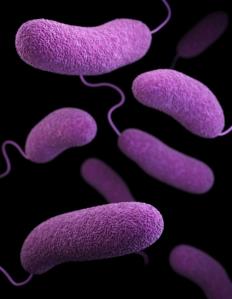
Upon investigating the surge in cases in Eti-Osa, the government conducted a survey, which revealed that the common factor among patients was the consumption of tiger nut drinks.
Posted in food bourne outbreak, food contamination, Food Hazard, Food Hygiene, Food Illness, Food Micro Blog, Food Microbiology, Food Microbiology Blog, Food Microbiology Testing, Food Pathogen, food recall, Food Safety, Food Safety Alert, Food Safety Management, Food Safety Regulations, Food Testing, Food Virus Illness, Foodborne Illness, foodborne outbreak, foodbourne outbreak, Illness, outbreak

 FoodWorld