Category Archives: Food Testing

USA – Hepatitis A outbreak in Las Vegas: Should vaccinations be required for food workers?

Reno Gazette Virusds

When the number of hepatitis A cases hit peak levels in Southern Nevada in the late 1990s, health officials required all food workers to get immunization shots to prevent the virus that could cause liver damage and lead to death.

But after the number of cases dropped to historic lows in the 2000s, the immunization rule was eliminated.

Today, hepatitis A cases are now on the rise around the U.S. and in Southern Nevada, where health officials reported last week that an infected Las Vegas 7-Eleven clerk handled hot dogs and hot deli items and exposed an unknown number of customers to the virus.

When should immunization shots be mandated to fight disease?

RASFF Alerts – Aflatoxin – Par Boiled Brown Rice – Groundnut Kernels – Hazlenut Flour – Peanuts

RASFF-Logo

RASFF – aflatoxins (B1 = 4.09 µg/kg – ppb) in par boiled brown rice from Myanmar in Poland

RASFF – aflatoxins (B1 = 5 / B1 = 8.6; Tot. = 18 µg/kg – ppb) in groundnut kernels from Argentina in the Netherlands

RASFF – aflatoxins (B1 = 9.4 µg/kg – ppb) in hazelnut flour from Georgia in Bulgaria

RASFF – aflatoxins (B1 = 20; Tot. = 23 µg/kg – ppb) in peanuts from Egypt in the Netherlands

RASFF – aflatoxins (B1 = 6.5 µg/kg – ppb) in peanuts from the United States in the Netherlands

RASFF Alerts – Histamine – Tuna

RASFF-Logo

RASFF – histamine (740 mg/kg – ppm) in tuna loins from Vietnam in Portugal

RASFF – histamine (2600 mg/kg – ppm) in frozen tuna from Vietnam in Belgium

RASFF Alert – Moulds – Cake

RASFF-Logo

RASFF – cake from Denmark infested with moulds in Denmark

RASFF Alerts – Listeria monocytogenes – Poultry Sausage – Frozen Cooked Mussels

RASFF-Logo

RASFF – Listeria monocytogenes (<10 CFU/g) in poultry sausage from Poland in France

RASFF – Listeria monocytogenes (<10 CFU/g) in frozen cooked mussels from Spain in Italy

RASFF Alert – Norovirus – Frozen Seaweed Salad

RASFF-Logo

RASFF – norovirus (GII /25g) in frozen seaweed salad from Taiwan in Italy

RASFF Alerts – Salmonella – Sesame Seeds – Black Pepper – Salted Chicken Fillets – Chilled Smoked Bacon – Ginger

RASFF-Logo

RASFF – Salmonella (in 1 out of 5 samples /25g) in sesame seeds from Sudan in Greece

RASFF – Salmonella (presence /25g) in sesame seeds from Sudan in Greece

RASFF – Salmonella (presence /25g) in black pepper from Brazil in the Netherlands

RASFF – Salmonella enterica ser. Kedougou (presence /25g) in frozen salted chicken fillets from Thailand, via the Netherlands in Finland

RASFF – Salmonella (presence /25g) in sesame seeds from India in Poland

RASFF – Salmonella (presence /25g) in sesame seeds from Sudan in Greece

RASFF – Salmonella (presence /25g) in sesame seeds from Sudan in Greece

RASFF – Salmonella (presence /25g) in frozen salted chicken half breasts from Brazil in the Netherlands

RASFF – Salmonella (presence /25g) in chilled smoked bacon from Belgium in France

RASFF – Salmonella enterica ser. Enteritidis (presence /25g) in frozen chicken fillets from Poland in France

RASFF – Salmonella (presence /25g) in ginger from Italy, with raw material from Nigeria, via Poland in Italy

Canada – The Deli-Shop Pâtés Recalled in Canada For Possible Listeria

Food Poisoning Bulletin

Les Spécialités Prodal (1975) Ltée is recalling certain The Deli-Shop Pâtés from the marketplace for possible Listeria monocytogenes contamination. There have been no reported illnesses conducted with the consumption of these recalled products. The Pâtés were sold in Quebec at the retail level.

The recalled products are all The Deli-Shop brand. They are: Country-style Pâté – Cognac packaged in 150 gram sizes, with UPC number 0 59749 95188 3 and code 2019SE26; Country-style Pâté – Pepper in 150 gram packages, with UPC number 0 59749 95189 0 and code 2019SE26; and Country-style Pâté – Old Fashioned, also sold in 150 gram packages, with UPC number 0 59749 95187 6 and code 2019SE26.

Also recalled is Liver Pâté – Fine Herbs, packaged in 150 gram containers, with UPC number 0 59749 95191 3 and code 2019SE26; Liver Pâté – Garlic, sold in 150 gram containers and with UPC number 0 59749 95190 6 and code 2019SE26; and Liver Pâté – Old Fashioned, packaged in 150 gram containers with UPC number 0 59749 95192 0 and code 2019SE26.

The recalled was triggered by Canadian Food Inspection Agency (CFIA) test results. The CFIA is conducting a food safety investigation, which may lead to the recall of more products. If more products are recalled, they will be listed on the web site. You can see pictures of the recalled product labels at the CFIA web site.


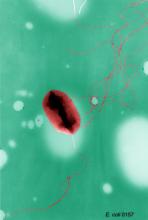
UK – The bloody diarrhoea gives it away: UK family of boy hit by E. coli O157 after Turkish holiday takes legal action

Barf Blog

kswfoodworld E.coli O157

Image CDC


Julie Gilmartin, 39, said her son Matthew Bennett, 10, started to develop symptoms including diarrhea on the plane home from a week-long stay at the Bone Club Sunset Hotel & Spa, Antalya, at the start of July.

Following several tests, his mother was advised Matthew had been diagnosed with E.coli O157, a serious bacterial infection that can cause serious long-term complications and sometimes even death.

Spain – Four ill in Spain with botulism linked to tuna – Clostridium botulinum

Food Safety News

Four people are part of a foodborne botulism outbreak in Spain after eating DIA brand tuna.

A batch of canned tuna in sunflower oil of the brand DIA has been removed from sale. The Spanish Agency for Food Safety and Nutrition (AESAN) said those who became ill ate a homemade salad that included the tuna. Spanish media reported one of the patients was still in hospital.

The foodborne outbreak was suspected to be caused by the tuna or grated carrots from Spain with distribution including Andorra, according to a Rapid Alert System for Food and Feed (RASFF) notice.

AESAN became aware on Aug. 9, through the Spanish rapid information exchange system (SCIRI), of a notification from health authorities in Castilla y León of a food poisoning outbreak caused by botulinum toxin linked to consumption of canned tuna in a homemade “Russian” salad.