Category Archives: Food Temperature Abuse

RASFF Alert – Foodborne outbreak -Suspected Histamine -Frozen Yellowfin Tuna Loins

RASFF

Foodborne outbreak suspected (histamine poisoning) to be caused by frozen yellowfin tuna loins from Spain in Italy

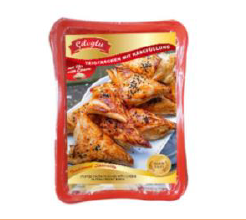
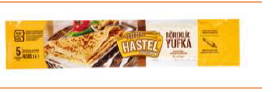
Germany – DOUGH BAGS WITH CHEESE FILLING 300 G HASTEL DOUGH SHEETS FOR BÖREK 400 G HASTEL YUFKA DOUGH SHEETS FOR BÖREK 360 G DOUGH SHEETS FOR BÖREK & BAKLAVA 500 G – Mould

LMW

Warning type: Food
Date of first publication:  07/06/2021
Product name:

DOUGH BAGS WITH CHEESE FILLING 300 G HASTEL DOUGH SHEETS FOR BÖREK 400 G HASTEL YUFKA DOUGH SHEETS FOR BÖREK 360 G DOUGH SHEETS FOR BÖREK & BAKLAVA 500 G

Product pictures:

Unnamed.PNG

Ciloglu Handels GmbH

Unnamed.PNG

Ciloglu Handels GmbH

Unnamed.PNG

Ciloglu Handels GmbH

Unnamed.PNG

Ciloglu Handels GmbH

Manufacturer (distributor):

Distributor: Ciloglu Handels GmbH, Gärtringen

Reason for warning:

It cannot be ruled out that the above-mentioned products show microbial and substantial deviations. Molds were found, which means that the affected foods are no longer suitable for consumption.

Durability: Dumplings with cheese filling 300 g, best before 01.09.2021 and 06.08.2021; Hastel dough sheets for Börek 400 g, best before 27.09.2021; Hestel Yufka dough sheets for Börek 360 g best before 27.09.2021; Dough sheets for Börek and Baklava 500g, best before 16.02.2022
Additional Information:

 Reference is made to the company’s customer information sheet attached.

Contact to the responsible authorities:

Baden-Württemberg: poststelle@mlr.bwl.de

Bavaria: poststelle@lgl.bayern.de
Berlin: poststelle@senjustva.berlin.de
Bremen: Schnellwarnung@gesundheit.bremen.de
Hamburg: poststelle@justiz.hamburg.de
Hesse: Schnellwarnung@rpda.hessen.de
Mecklenburg-Western Pomerania: poststelle@lm.mv-regierung.de
Lower Saxony: poststelle@ml.niedersachsen.de
North Rhine-Westphalia: poststelle@mulnv.nrw.de
Rhineland-Palatinate: Poststelle.Referat22@lua.rlp.de
Saarland: poststelle-luv@lav.saarland.de
Saxony: poststelle@sms.sachsen.de
Schleswig-Holstein: poststelle@jumi.landsh.de
Thuringia: LM-Ueberendung@tlv.thueringen.de
Press releases and information
title Attachment or web link
Customer information

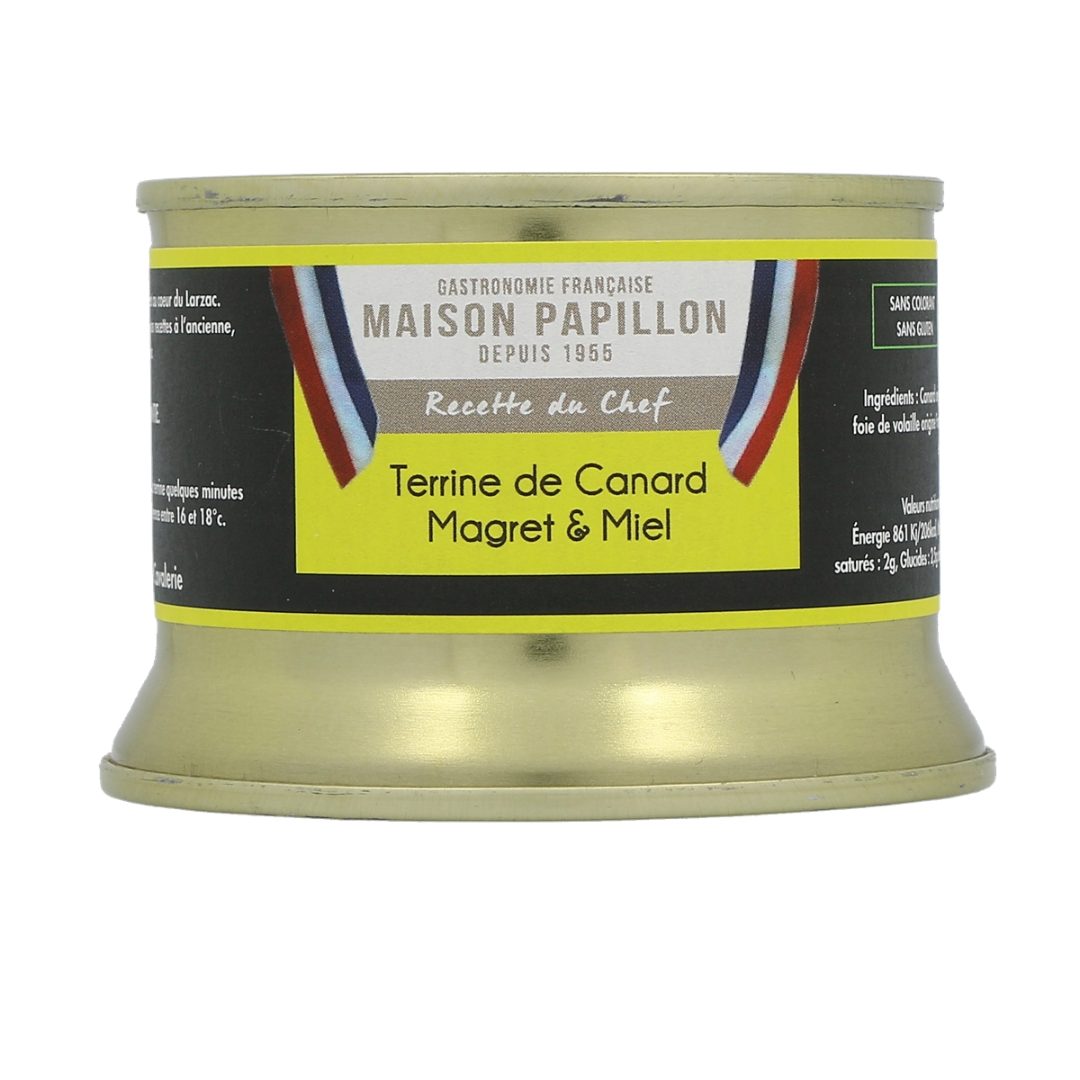
France – Honey Duck Breast Terrine – Blown Cans

Gov france

Identifying information for the recalled product

  • Product category Food
  • Product sub-category Meats
  • Product brand name PAPILLON house
  • Names of models or references1702
  • Product identification
    GTIN Lot Dated
    3306111005017 310321A Date of minimum durability 03/30/2025
  • Packaging Preserves
  • Start date / End of marketing From 04/30/2021 to 07/05/2021
  • Storage temperature Product to be stored at room temperature
  • Health markFR12.063.026CE
  • Geographical sales area Whole France
  • Distributors REGIONAL DISTRIBUTION (12)

Practical information regarding the recall

  • Reason for recall UNSTABLE CANNED WITH BOMBED LID – ODOR ON OPENING
  • Risks incurred by the consumer Other biological contaminants
  • Consumer behavior Stop consuming
    Return the product to the point of sale
  • Contact number0565622626
  • Compensation modalities Exchange
  • End date of the recall procedure Sunday 30 March 2025

Denmark – Mold in chorizo ​​sausage

DVFA

Mozami A / S is recalling Fúet Chorizo ​​sausage, as there is a risk of mold in the product.

Recalled Foods , Published: July 6, 2021

What food:
Fuet Chorizo (see picture here )
Net weight: 150 grams
Best before date: 1/11/2021
Batch number: 4040621

Sold in:
Fakta and Coop 365 stores throughout the country

Company withdraws:
Mozami A / S, By Milestone 4, 8361 Hasselager

Cause:
After receiving a number of store inquiries, the company has established that there is a risk of mold in the product.

Risk:
Mold formation makes the product unfit for human consumption.

Advice for consumers: The Danish
Veterinary and Food Administration advises consumers to deliver the product back to the store where it was purchased or to discard it.

Denmark – Mold in vegan nuggets

DVFA

Rømer Vegan is recalling a batch of vegan nuggets, as there is a risk of mold in the products.

Recalled Foods , Published: June 30, 2021

Modified June 30, 2021

Which food:
Rømer Vegan Nuggets Organic
Net Weight: 250 grams
Best before date: 19/07/2021, 21/07/2021, 26/07/2021
EAN barcode: 5708665800144

Sold in:
Irma stores throughout the country.

Company recalling:
Rømer Vegan, Vrinners Bygade 45, 8420 Knebel Cause: The company has found that there is a risk of mold in the products. Risk: Mold formation means that the products are considered unsuitable as food. Advice for consumers: The Danish Veterinary and Food Administration advises consumers to deliver the product back to the store where it was purchased or to discard it.

France – Product recall: SUPPLIER HOMARD ATLANTIQUE brand yellowfin tuna – Histamine

Oulah

ENCOUNTERED PROBLEM

Presence of Histamine

PROPOSED SOLUTION

People who may have this product are asked not to consume it and to return it to the point of sale where it was purchased.

Histamine poisoning is manifested by allergic-type reactions triggered when histamine is absorbed in high amounts. The symptoms most often encountered are: facial-cervical redness, rash, itching, tingling of the skin. They are generally followed by neurological disorders: headache, heart palpitations, dizziness. Secondary symptoms, gastrointestinal in nature, may appear: nausea, stomach pain, vomiting, diarrhea. Symptoms appear immediately or several hours after ingestion of food. They normally disappear within a few hours, but can exceptionally last for several days. In rare cases (high doses of histamine and sensitivity of the subject), the allergic reaction can then up to histamine shock.

If you think you are having symptoms of histamine poisoning, seek medical advice immediately.

FURTHER INFORMATION

▸ Names of the models or references
ALBACORE TUNA LONG


▸ Barcode
82675312


▸ Lot
39


▸ DLC – DDM
06/12/2021


▸ Packaging


▸ Start date / End of marketing
From 06/07/2021 to 06/11/2021


▸ Health mark


▸ Geographical area of ​​sale
SALE AT THE POISSONNERIE DE PLOUARZEL


SUPER U PLOUARZEL distributors


▸ Consumer service contact
0298896822


▸ Source
ATLANTIC LOBSTER SUPPLIER


USA – Timeline for Identifying and Reporting Illnesses in Foodborne Outbreaks

CDC

Ever wonder why the number of illnesses in a foodborne outbreak can increase for weeks, even after the contaminated food is off the market?

A series of events happen before public health officials can report that a case of illness is linked to an outbreak. Each event takes a certain amount of time. This time is known as the “reporting lag” or “lag window” of an outbreak. It is usually 3–4 weeks. For illnesses caused by some bacteria, such as Listeria, it may be longer. Public health officials work to speed up this process when possible.

The steps below outline what typically happens from the day someone eats a contaminated food to the day their illness is linked to a multistate foodborne outbreak investigated by CDC.*

Day 1: You eat a food containing harmful bacteria.
Day 3: You start to feel sick.
  • Symptoms of food poisoning (such as nausea and diarrhea) could start anywhere from a few hours to a few weeks later, depending on the bacteria you ingested. The following chart describes how long it typically takes for someone to have symptoms after being infected with some of the most common foodborne bacteria.
How long it typically takes for someone to have symptoms after being infected with some of the most common foodborne bacteria.
Bacteria Typical start of symptoms
Campylobacter 2–5 days
E. coli 3–4 days
Listeria 1–4 weeks
Salmonella 6 hours–6 days
Vibrio 1-2 days
Should I call the doctor?

Find out when some common food poisoning symptoms are severe enough to need medical attention. See the list

Day 5: You still feel sick with nausea or diarrhea, so you decide to see a healthcare provider.
  • To learn which germ is making you sick, the healthcare provider collects a sample of your stool (poop), urine (pee), or blood.
  • The provider sends your sample to a clinical laboratory for testing.
Day 6: The clinical laboratory tests your sample.
  • After receiving your sample, the laboratory takes 1–3 days to run tests, depending on their capacity.
Day 9: Clinical laboratory test results show what germ is causing your illness.
  • The clinical laboratory identifies the germ making you sick and reports the test results to your healthcare provider.
  • The clinical laboratory should also report test results to the state or local public health department, and they notify CDC.
Days 9–16: The clinical laboratory sends a sample of your bacteria to a public health laboratory.
  • The clinical laboratory ships the bacteria found in your sample to a public health laboratory for whole genome sequencing (WGS) analysis.
  • Shipping can take up to a week, depending on transportation arrangements in your state and the distance between the two laboratories.
Days 16–21: The public health laboratory performs WGS analysis and other tests on the bacteria.
  • The public health laboratory performs tests to determine the bacteria’s DNA fingerprint and other characteristics.
  • WGS testing and analysis of the results, including whether the bacteria is resistant to any antibiotics, can take 2–10 days depending on the bacteria.
What Is Whole Genome Sequencing?

CDC and public health laboratories use a technology called whole genome sequencing (WGS) to generate DNA fingerprints of bacteria causing illness. When bacteria have nearly identical DNA fingerprints, we consider them “genetically closely related.” Illnesses caused by bacteria that are genetically closely related are more likely to have a common source, such as a contaminated food. An outbreak is an event in which a group of people get similar illnesses from a common source. Disease detectives investigate outbreaks to find out what is making people sick.

Find out how CDC uses WGS to detect and solve foodborne outbreaks.

Day 22: The public health laboratory sends WGS results to CDC.
  • Within a day of analyzing the WGS results, state public health officials add the DNA fingerprint from the bacteria to PulseNet, a national laboratory network coordinated by CDC. PulseNet connects foodborne illnesses in order to identify outbreaks.
Day 23: CDC determines if your illness is related to other recent illnesses.
  • CDC scientists determine whether the bacteria causing your illness is closely related genetically to any other recent WGS results from other people in PulseNet.
  • If it is closely related to bacteria causing recent illnesses in other people, CDC may begin an outbreak investigation or add your illness to an ongoing investigation.

Total time: 34 weeks

*Most cases of illness, even those caused by common foodborne germs, are not linked to a foodborne outbreak. This can happen for many reasons. A major reason is that most illnesses are not part of an outbreak. Another reason is that germs that cause foodborne illness can also be spread in other ways, such as by water or directly from one person to another. Also, if an illness is diagnosed by a culture-independent diagnostic test, that case may not be linked to an outbreak because these tests do not provide the information needed to link it to an outbreak. In addition, many people do not seek medical care for foodborne illnesses, so their illnesses cannot be diagnosed or reported to public health officials.

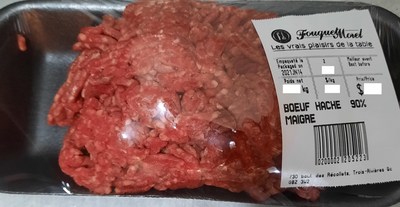
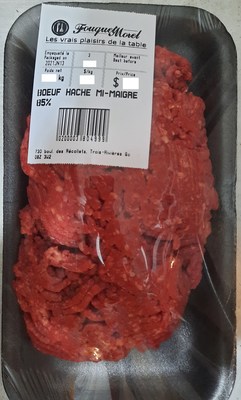
Canada – Notice not to consume ground beef sold by Fouquet Morel inc. – E.coli O157

MAPAQ

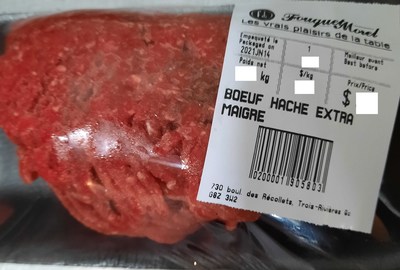
QUEBEC, June 22, 2021 / CNW Telbec / – The Ministry of Agriculture, Fisheries and Food (MAPAQ), in collaboration with Fouquet Morel Inc., located at 730, boulevard des Récollets, in Trois -Rivers, advise the population not to consume the products indicated in the table below, as these foods are likely to contain the bacterium E. coli O157.

Product name

Format

Packing date

Retention deadline

“EXTRA LEAN GROUND BEEF”

Variable


“Emb. :

on 2021JN13

on 2021JN14 “

ND

“90% LEAN GROUND BEEF”

“MID-LEAN GROUND BEEF 85%”

The products that are the subject of this warning were packaged between June 13 and 14 inclusively and were offered for sale only at the establishment mentioned above. They were packaged in trays covered with transparent plastic wrap. They were offered in a refrigerated state. The product label includes, in addition to their name, the words “Fouquet Morel – The real pleasures of the table”.

The operator is voluntarily recalling the products in question. He agreed with MAPAQ to disseminate this warning as a precautionary measure. In addition, people who have any of these products in their possession are advised not to consume it. They must return it to the establishment where they bought it or throw it away.

It should be noted that proper cooking of meat destroys the E. coli O157 bacteria in all cases. Preparing ready-made meals, such as spaghetti sauce, shepherd’s pie, or meat pie, requires a fairly long cooking time and a temperature high enough to destroy the bacteria.

Food contaminated with E. coli O157 may not look or smell spoiled, but eating such foods can cause serious illness or death. They are manifested by diarrhea and abdominal pain, often accompanied by blood in the stool. These symptoms usually appear two to ten days after eating a contaminated food. Nausea, vomiting and sometimes fever can be associated with it. When these symptoms appear, it is strongly recommended to consult a doctor without delay. Most symptoms go away within five to ten days. It should be noted that no case of illness associated with the consumption of these foods

Additional information

The Ministry publishes various information documents concerning food safety. Those interested can consult them in the “Food consumption” section of the MAPAQ website: www.mapaq.gouv.qc.ca/consommation This link will open in a new window. . They also have the option of registering online, by visiting www.mapaq.gouv.qc.ca/rappelsaliments This link will open in a new window. , to receive, by email, the food recall releases published by the Department. Finally, it is possible to follow “MAPAQaliments” on Twitter at the following address: www.twitter.com/MAPAQaliments This link will open in a new window. .

Extra Lean Ground Beef (CNW Group / Ministry of Agriculture, Fisheries and Food) This link will open in a new window.

90% lean ground beef (CNW Group / Ministry of Agriculture, Fisheries and Food) This link will open in a new window.

Medium-lean ground beef (CNW Group / Ministry of Agriculture, Fisheries and Food) This link will open in a new window.

Risk  classification : class 1
Reference number:  4351

Source:
Media relations
Communications
Department Ministry of Agriculture, Fisheries
and Food
Tel. : 418 380-2100, extension 3512
www.mapaq.gouv.qc.ca This link will open in a new window.

CisionView original content to download multimedia: http://www.newswire.ca/en/releases/archive/June2021/22/c5135.html This link will open in a new window.

Denmark – Risk of mold growth in Organic mayonnaise

DVFA

Scandic Food A / S is recalling REMA 1000 Organic Mayonnaise, as there is a risk of mold growth in the product

Recalled Foods , Published: June 21, 2021

What food:
REMA 1000 Organic Mayonnaise
Net content: 210g
Best before date: 21-02-2022
Lot: L2
Sold in:
REMA 1000 stores nationwide
Company recalling:
Scandic Food A / S
Cause:
There is a risk of mold growth in the product.
Risk:
Mold growth means that the product is considered unsuitable as food.
Advice for consumers:
The Danish Veterinary and Food Administration advises consumers to deliver the product back to the store where it was purchased or to discard it.

Czech Republic – Tourist durable salami – Mould

Potravinynapranyri

Illustration photo no. 1

Place of inspection:
Prerov ( Kojetinska 3133/10, 750 02 Prerov )
Company ID: 07329709
Food group: Meat and meat products Durable meat products

Tourist durable salami
Category: Dangerous food
Unsatisfactory parameter:

mold visible to the eye

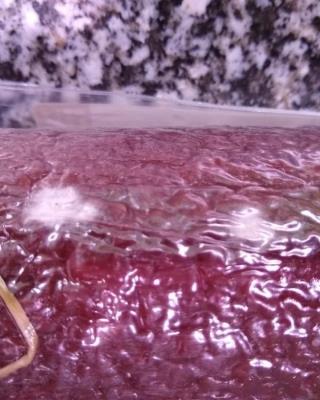
Mold colonies visible to the naked eye were visible on the surface of the food. Food is not considered safe if it shows signs of spoilage.

The food had a broken package.

Lots: L: 54
Date of minimum durability: 06/14/2021
Packaging: Original (PE cover)
Quantity of product in package: 0.954 kg
Date of sampling: May 20, 2021
Reference number: 21-000164-CAFIA-CZ
The sample was found by an official inspection of the State Agricultural and Food Inspection Authority.