Archives
-
Join 343 other subscribers
KSWFoodWorld
Blog Stats
- 431,446 Views
Category Archives: Food Technology
Research – Salmonella Inactivation Model by UV-C Light Treatment in Chicken Breast
This study aims to evaluate the effectiveness of inactivating Salmonella enteritidis in fresh chicken breast by irradiation using a combination of short-wave UV (0, 3, 6, 9, 12, and 15 J/cm2) and a natural antimicrobial such as caffeine (0, 5, 10, 15, and 20 nM/g) at 14 °C as alternative proposals to conventional techniques to reduce pathogens in food. The effect of temperature was studied in an initial phase (2 to 22 °C). The most suitable models were double Weibull in 60% of cases, with an adjustment of R2 0.9903–0.9553, and Weibull + tail in 46.67%, with an adjustment of R2 of 0.9998–0.9981. The most effective combination for the reduction in Salmonella was 12 J/cm2 of UV light and 15 nM/g of caffeine, with a reduction of 6 CFU/g and an inactivation rate of 0.72. The synergistic effect was observed by increasing caffeine and UV light. Furthermore, the physico-chemical characteristics of the food matrix were not affected by the combination of both technologies. Therefore, these results suggest that this combination can be used in the food industry to effectively inactivate Salmonella enteritidis without deteriorating product quality.
Research – Efficacy of organic acids, lactic and formic acid, and peracetic acid in decontaminating process water and carcasses in chicken slaughter
Abstract
Foodborne pathogens pose a persistent threat in broiler chicken production, particularly during the slaughter process, where contamination with zoonotic pathogens remains a concern. This study focuses on the potential of organic acids, such as formic and lactic acid, and the oxidizing agent peracetic acid, to decontaminate scalding water and enhance the hygiene of chicken carcasses. We conducted suspension tests introducing various organic loads to mirror the conditions of practical scalding water. Additionally, the surface tests were performed on chicken skin. Both methods were further tested in an experimental slaughtering facility. In suspension tests, the organic acids achieved impressive decontamination, with a 5-log10 reduction of the test organisms Enterococcus hirae, Salmonella Typhimurium and Campylobacter jejuni at minimal concentrations (between 0.04% and 2% for formic acid; between 0.1% and 4.5% for lactic acid). Peracetic acid also effectively sanitized model water and chicken skin, even when used in low concentrations (between 0.001% and 0.1%), both in the laboratory-based testing and in the experimental slaughtering facility. These results suggest that the tested disinfectants can effectively sanitize process water, even under conditions mimicking practical scalding water with organic matter. Peracetic acid, in particular, proved highly effective in improving chicken skin hygiene even at low concentrations.
Research – Innovative Hurdle Strategies for Listeria Control on Food-Contact Surfaces: A Peroxyacetic Acid–Steam Approach

Abstract
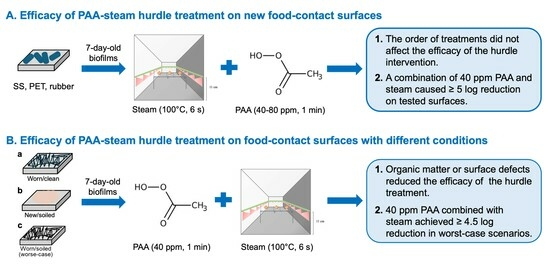
The persistence of Listeria monocytogenes biofilms on equipment surfaces poses a significant risk of cross-contamination, necessitating effective surface decontamination strategies. This study assessed the effectiveness of hurdle treatments combining peroxyacetic acid (PAA) and saturated steam against 7-day-old L. innocua (a non-pathogenic surrogate for L. monocytogenes) biofilms on stainless steel (SS), polyester (PET), and rubber surfaces. Results demonstrated >6 log10 CFU/coupon L. innocua reductions on SS and PET surfaces after PAA (40 ppm, 1 min) followed by steam treatment (100 °C, 6 s). On rubber surfaces, PAA (80 ppm, 1 min) followed by steam treatment (100 °C, 6 s) resulted in ~5 log10 CFU/coupon L. innocua reduction. The presence of apple juice soil reduced the efficacy of hurdle treatments, with PAA (40 ppm, 1 min) and steam exposure (6 s) resulting in 5.6, 5.8, and 4.2 log10 CFU/coupon reductions of L. innocua on SS, PET, and rubber, respectively. The efficacy of this antimicrobial combination was further reduced by surface defects, especially in the presence of organic matter. Nevertheless, the treatment still achieved >5 log10 CFU/coupon reductions of L. innocua on worn SS and PET soiled with apple juice and ~4.5 log10 CFU/coupon reduction on worn, soiled rubber surfaces. These findings highlight that PAA treatments followed by a brief steam exposure are effective strategies for controlling Listeria on food-contact surfaces.
Research – Persistence of Salmonella and Campylobacter on Whole Chicken Carcasses under the Different Chlorine Concentrations Used in the Chill Tank of Processing Plants in Sri Lanka
Abstract
The persistence of non-typhoidal Salmonella and Campylobacter in chicken meat is a considerable public health risk and a future challenge. This study aimed to determine the prevalence of Salmonella and Campylobacter in poultry processing lines where different chlorine concentrations were used in the chill tank. The samples were collected from four types of processing plants in Sri Lanka, considering the chlorine concentration used in the chill tank, which ranged from 2 ppm to 50 ppm. Salmonella and Campylobacter were isolated from whole carcass washings, neck skin, and cecal samples. Subsequently, an antimicrobial susceptibility test was performed for the isolates. The results revealed the overall prevalence of Salmonella and Campylobacter was 78.25% and 63.5%, respectively. Positive percentages of Salmonella and Campylobacter were high in the carcasses compared to the neck skin and ceca. The Campylobacter counts on the whole carcasses were significantly low (p < 0.001), at higher chlorine concentrations ranging from 20 to 30 ppm and 40 to 50 ppm. The pathogen prevalence in the whole carcasses was 84.7% Campylobacter coli, 39.1% Campylobacter jejuni, 71.1% Salmonella Typhimurium, and 28.8% Salmonella Infantis. The highest resistance was observed for tetracycline (63.8%) in Salmonella, while it was for gentamicin (87.8%) in Campylobacter. The prevalence percentage of multidrug-resistant Campylobacter was 51.2%, while it was 2.12% for Salmonella. The persistence of multidrug-resistant Salmonella and Campylobacter on the post-chill carcasses was highlighted in the present study as a significant public health threat that has to be addressed urgently.
Research – Comparative Study of the Antibacterial Effects of S-Nitroso-N-acetylcysteine and Sodium Nitrite against Escherichia coli and Their Application in Beef Sausages
Abstract
This study investigated the antibacterial effects of S-nitroso-N-acetylcysteine (SNAC) and sodium nitrite (NaNO2) against Escherichia coli and their application in beef sausages. Both SNAC and NaNO2 demonstrated pH-responsive antibacterial activity, with SNAC showing greater efficacy than NaNO2 (p < 0.05) at the same pH (3, 5, and 7). The reactive oxygen species (ROS) and reactive nitrogen species (RNS) induced in E. coli by SNAC were significantly higher than those induced by NaNO2 (p < 0.05), and both ROS and RNS values increased as the pH decreased. In addition, a lower pH led to more pores on the E. coli cell surface and increased membrane permeability, resulting in a more pronounced inhibitory effect. When applied to a beef sausage, SNAC-treated sausages had significantly lower total colony counts and carbonyl content compared to NaNO2-treated ones (p < 0.05). Consequently, SNAC shows great potential as a replacement for NaNO2 in meat products.
Research – Impact of Biotic and Abiotic Factors on Listeria monocytogenes, Salmonella enterica, and Enterohemorrhagic Escherichia coli in Agricultural Soil Extracts
Abstract
Outbreaks of Enterohemorrhagic Escherichia coli (EHEC), Salmonella enterica, and Listeria monocytogenes linked to fresh produce consumption pose significant food safety concerns. These pathogens can contaminate pre-harvest produce through various routes, including contaminated water. Soil physicochemical properties and flooding can influence pathogen survival in soils. We investigated survival of EHEC, S. enterica, and L. monocytogenes in soil extracts designed to represent soils with stagnant water. We hypothesized pathogen survival would be influenced by soil extract nutrient levels and the presence of native microbes. A chemical analysis revealed higher levels of total nitrogen, phosphorus, and carbon in high-nutrient soil extracts compared to low-nutrient extracts. Pathogen survival was enhanced in high-nutrient, sterile soil extracts, while the presence of native microbes reduced pathogen numbers. A microbiome analysis showed greater diversity in low-nutrient soil extracts, with distinct microbial compositions between extract types. Our findings highlight the importance of soil nutrient composition and microbial dynamics in influencing pathogen behavior. Given key soil parameters, a long short-term memory model (LSTM) effectively predicted pathogen survival. Integrating these factors can aid in developing predictive models for pathogen persistence in agricultural systems. Overall, our study contributes to understanding the complex interplay in agricultural ecosystems, facilitating informed decision-making for crop production and food safety enhancement.
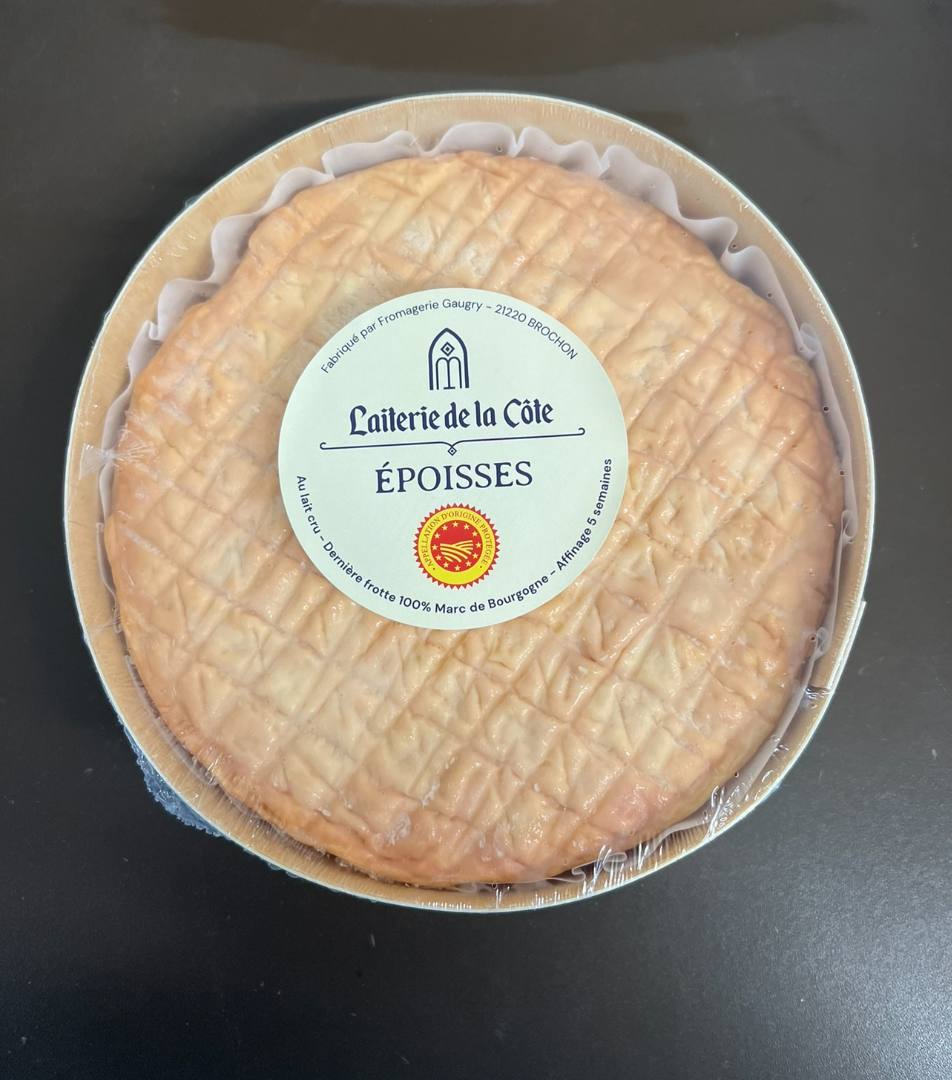
France – Epoisses with raw milk 900g format – Listeria monocytogenes

Product Category
Food
Product subcategory
Milk and dairy products
Product brand name
Dairy of the Coast
Model names or references
Epoisses with raw milk 900g format
Product identification
GTIN Batch Date
93360410003665 150 Minimum durability date 08/18/2024
93360410003665 150 Minimum durability date 08/19/2024
Products List
List_of_products_for_consumer_recall_with_LDLC_brand.pdfAttachment
Packaging
Filmed wood background
Start/End of marketing date
From 07/09/2024 to 07/23/2024
Storage temperature
Product to be kept in the refrigerator
Health mark
FR 21-110-001 CE
Geographic area of sale
Whole France
Distributors
None
Posted in food contamination, food handler, Food Hazard, Food Hygiene, Food Inspections, Food Micro Blog, Food Microbiology, Food Microbiology Blog, Food Microbiology Testing, Food Pathogen, Food Quality, food recall, Food Safety, Food Safety Alert, Food Safety Management, Food Safety Regulations, Food Technology, Food Testing, Listeria, Listeria in Cheese, Listeria monocytogenes, Raw Milk, raw milk cheese
Research – IAEA helps Cuba with Ciguatoxin problem
Scientists are helping researchers in Cuba find dangerous toxins in marine algae that can lead to outbreaks from contaminated seafood.
The International Atomic Energy Agency (IAEA) has been building capacity for monitoring ciguatera using nuclear and isotopic techniques to identify seafood biotoxins.
Ciguatoxins are a class of algal toxins. They enter the food chain by consuming Ciguatoxin-containing algae by fish and shellfish and accumulating in larger predatory fish. 
Research – Recent Advances in Non-Contact Food Decontamination Technologies for Removing Mycotoxins and Fungal Contaminants
Abstract
Agricultural food commodities are highly susceptible to contamination by fungi and mycotoxins, which cause great economic losses and threaten public health. New technologies such as gamma ray irradiation, ultraviolet radiation, electron beam irradiation, microwave irradiation, pulsed light, pulsed electric fields, plasma, ozone, etc. can solve the problem of fungal and mycotoxin contamination which cannot be effectively solved by traditional food processing methods. This paper summarizes recent advancements in emerging food decontamination technologies used to control various fungi and their associated toxin contamination in food. It discusses the problems and challenges faced by the various methods currently used to control mycotoxins, looks forward to the new trends in the development of mycotoxin degradation methods in the future food industry, and proposes new research directions.
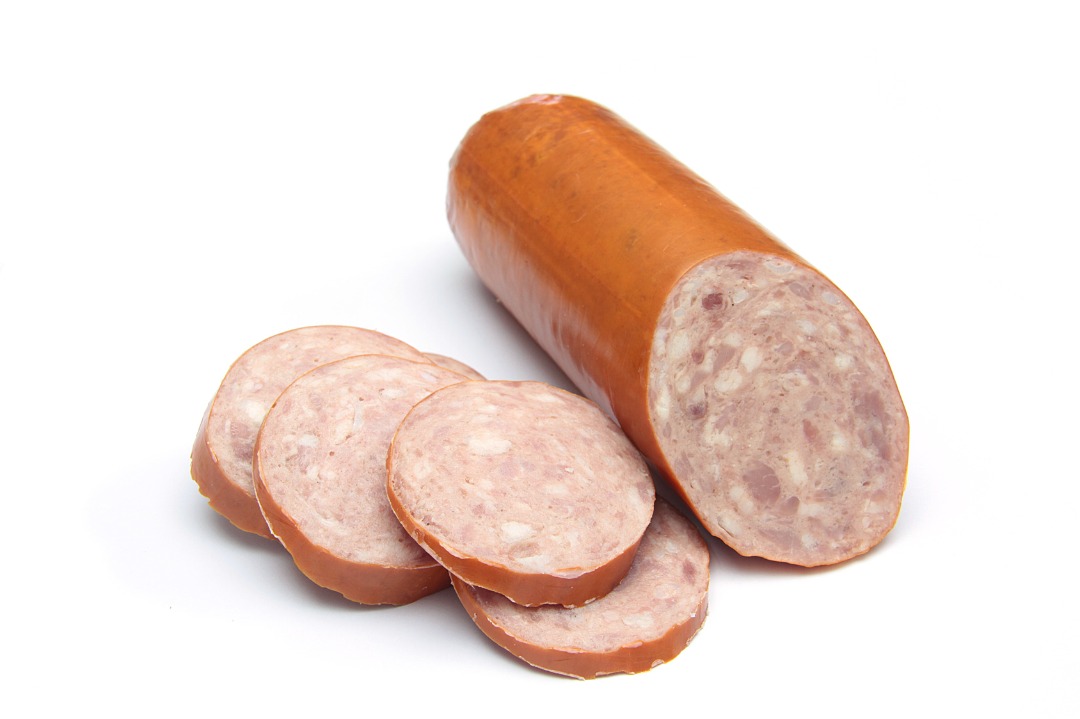
France – GARLIC SAUSAGE sold in the delicatessen section of the MARKET MAULEON-LICHARRE store between 07/04/2024 and 07/16/2024 – Listeria monocytogenes

Product Category
Food
Product subcategory
Meats
Product brand name
Unbranded
Model names or references
GARLIC SAUSAGE sold in the delicatessen section of the MARKET MAULEON-LICHARRE store between 07/04/2024 and 07/16/2024
Product identification
GTIN Batch
1111111111116 Sold between 04/07/2024 and 16/07/2024
Start/End of marketing date
From 04/07/2024 to 17/07/2024
Storage temperature
Product to be kept in the refrigerator
Geographic area of sale
Carrefour Market Mauléon-Licharre
Distributors
Carrefour Market Mauléon-Licharre ONLY
Posted in food contamination, food handler, Food Hazard, Food Hygiene, Food Inspections, Food Micro Blog, Food Microbiology, Food Microbiology Blog, Food Microbiology Testing, Food Pathogen, Food Quality, food recall, Food Safety, Food Safety Alert, Food Safety Management, Food Safety Regulations, Food Technology, Food Testing, Listeria, Listeria France, Listeria monocytogenes