Category Archives: Food Microbiology

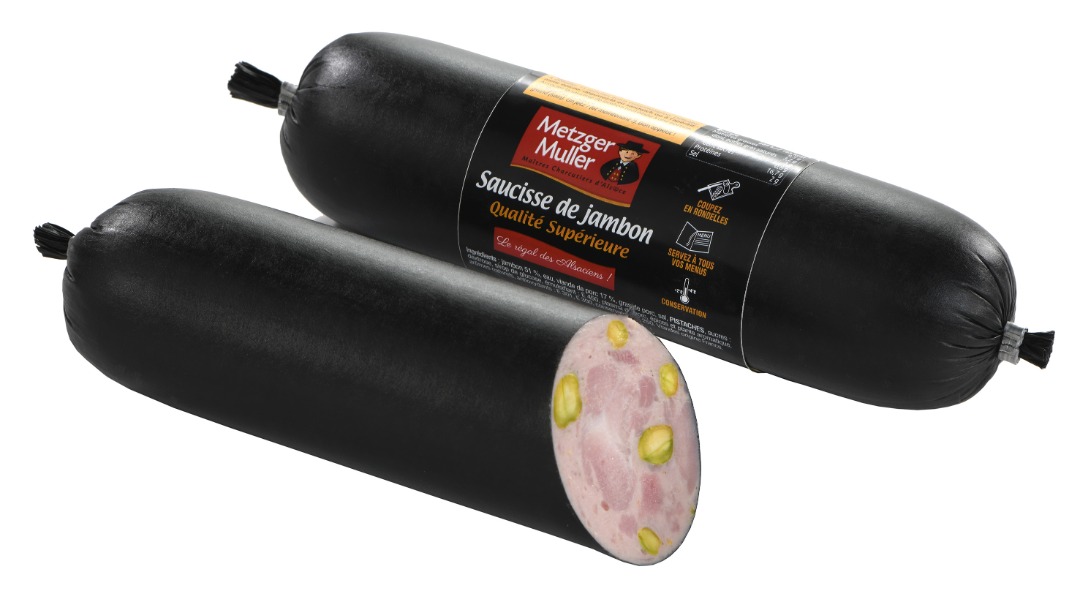
France – Defective casing, leading to the development of mold on the casing and possible contamination of the sausage contained inside the casing.

Gov france

Ham Sausage

Gov france

Ham Sausage

France – Onion Tortilla – Clostridium botulinum

Gov france

Identification information of the recalled product

  • Product category Feed
  • Product subcategory Prepared meals and snacks
  • Product brand name Itinerary of Flavors
  • Model names or references Onion Tortilla – Itinerary of Flavors – 500g
  • Identification of products
    GTIN Date
    3250392934200 Use-by date 06/19/2023
    3250392934200 Use-by date 06/27/2023
    3250392934200 Use-by date 05/07/2023
    3250392934200 Use-by date 07/10/2023
    3250392934200 Use-by date 07/17/2023
    3250392934200 Use-by date 07/24/2023
    3250392934200 Use-by date 07/31/2023
    3250392934200 Use-by date 08/08/2023
    3250392934200 Use-by date 08/11/2023
  • Marketing start/end date From 05/19/2023 to 07/21/2023
  • Storage temperature Product to be stored in the refrigerator
  • Geographic area of ​​sale Whole France
  • Distributors Intermarché

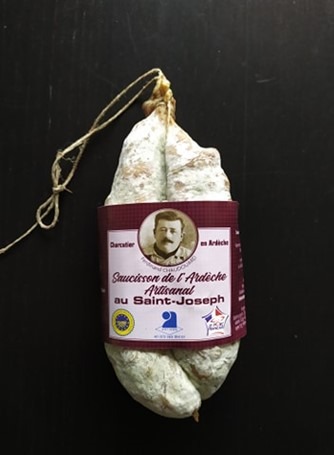
France – Bridled sausage with Saint Joseph from the Ardèche Artisanal – Listeria monocytogenes

Gov france

Identification information of the recalled product

  • Product category Feed
  • Product subcategory Meats
  • Product brand name Ferdinand Chaudouard
  • Model names or references Bridled sausage with Artisanal Saint Joseph from the Ardèche 400g Naked Bridled sausage with Artisanal Saint Joseph from the Ardèche 400g in micro-perforated film
  • Identification of products
    Lot Date
    23241 Recommended best before date between 07/17/2023 and 09/18/2023
  • Products List LISTING_CLIENTS_ALERTE_LISTERIA_LOT_23241_ST_JO.pdfAttachment
  • Packaging naked or wrapped in micro-perforated film
  • Marketing start/end date From 07/17/2023 to 07/18/2023
  • Storage temperature Product to be stored at room temperature
  • Health mark FR-07.138.002-CE
  • Geographic area of ​​sale Whole France
  • Distributors U, Leclerc, independent stores

Research – Listeria (Sweden 2022-2023)

Folkhalsomyndigheten

Cases where people have contracted listeria infection are now being investigated by the Public Health Agency in collaboration with the regional infection control units and the Swedish Food Agency.

From the end of May to the beginning of July, ten people have contracted listeria infection caused by the same variant of listeria, serotype IIa. Another four people fell ill in the fall of 2022 with the same strain of bacteria. The cases consist of ten men and four women and are aged 63 to 93 years. They have been reported from eight of the country’s regions. According to the information reported to the Public Health Authority, three of the patients in the oldest age group have died in close connection with their listeria infection.

The people we know who have become ill have had to answer a questionnaire about the foods they have eaten. Many have indicated that they ate cold-smoked and/or smoked salmon, but the exact product that caused the outbreak is not clear.

Risk groups for getting serious illness from listeria are pregnant women, the elderly and people with a weakened immune system.

Research – A Novel Foodborne Illness Detection and Web Application Tool Based on Social Media

MDPI

Abstract

Foodborne diseases and outbreaks are significant threats to public health, resulting in millions of illnesses and deaths worldwide each year. Traditional foodborne disease surveillance systems rely on data from healthcare facilities, laboratories, and government agencies to monitor and control outbreaks. Recently, there is a growing recognition of the potential value of incorporating social media data into surveillance systems. This paper explores the use of social media data as an alternative surveillance tool for foodborne diseases by collecting large-scale Twitter data, building food safety data storage models, and developing a novel frontend foodborne illness surveillance system. Descriptive and predictive analyses of the collected data were conducted in comparison with ground truth data reported by the U.S. Centers for Disease Control and Prevention (CDC). The results indicate that the most implicated food categories and the distributions from both Twitter and the CDC were similar. The system developed with Twitter data could complement traditional foodborne disease surveillance systems by providing near-real-time information on foodborne illnesses, implicated foods, symptoms, locations, and other information critical for detecting a potential foodborne outbreak.

Research – Estimating the Prevalence of Foodborne Pathogen Campylobacter jejuni in Chicken and Its Control via Sorghum Extracts

MDPI

Abstract

CDC Campy

Campylobacter jejuni is a Gram-negative bacterium which is considered as the most reported cause of foodborne infection, especially for poultry species. The object of this work is to evaluate the occurrence of C. jejuni in chicken meat as well its control via three types of sorghum extracts (white sorghum (WS), yellow sorghum (YS), and red sorghum (RS)); antibacterial activity, antioxidant power, and cytotoxicity of sorghum extracts were also assessed. It was found that C. jejuni is very abundant in chicken meat, especially breast and thigh. WS extract showed more effectiveness than both yellow and red ones. Lyophilized WS extract offered high total phenolic compounds (TPCs) and total flavonoid compounds (TFCs) of 64.2 ± 0.8 mg gallic acid equivalent (GAE/g) and 33.9 ± 0.4 mg catechol equivalent (CE)/g, respectively. Concerning the antibacterial and antioxidant activities, WS showed high and significant antibacterial activity (p < 0.001); hence, WS displayed a minimum inhibitory concentration (MIC) of 6.25%, and revealed an inhibition zone of 7.8 ± 0.3 mm; it also showed an IC50 at a concentration of 34.6 μg/mL. In our study, different samples of chicken fillet were collected and inoculated with pathogenic C. jejuni and stored at 4 °C. Inoculated samples were treated with lyophilized WS extract at (2%, 4%, and 6%), the 2% treatment showed a full reduction in C. jejuni on the 10th day, the 4% treatment showed a full reduction in C. jejuni on the 8th day, while the 6% treatment showed a full reduction in C. jejuni on the 6th day. Additionally, 2%, 4%, and 6% WS extracts were applied on un-inoculated grilled chicken fillet, which enhanced its sensory attributes. In sum, WS extract is a promising natural preservative for chicken meat with accepted sensory evaluation results thanks to its high antibacterial and antioxidant potentials.

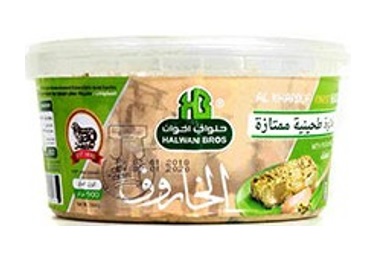
Germany – Al Kharouf Halva – Salmonella

LMW

Alert type: Groceries
Date of first publication: 07/24/2023
Product name:

Al Kharouf Halwa

Product images:

Halva.jpg

Fadie Food B.V

Manufacturer (distributor):

Fadie Food B.V

Reason for warning:

salmonella

Packaging Unit: 400g and 800g
Durability: Beginning of February 2023 to end of February 2025
Lot identification: batch code NW800 I76
Additional Information:

see attached customer information

Manufacturer’s website:

 Belgium – “Camembert De Normandie” cheese (250g) from the REO brand – Listeria monocytogenes

AFSCA

Recall by Intermarché
Product: “Camembert De Normandie” cheese (250g) from the REO brand.
Problem: Possible presence of listeria monocytogenes.
Fromagerie REO has decided to withdraw from sale the raw milk cheese “Camembert De Normandie” (250g) of the REO brand due to the possible presence of listeria monocytogenes.

Product description:

CAMEMBERT DE NORMANDIE “raw milk” product from the REO brand
Expiry date (DDM) 25/07/2023
EAN 3332621044239
Weight 250g

USA – Conagra recalled 2M pounds of canned meat due to Botulism Risk

Food Poison Journal

Jan. 31, 2023 – Conagra Brands, Inc., a Fort Madison, Iowa establishment, is recalling approximately 2,581,816 pounds of canned meat and poultry products due to a packaging defect that may cause the products to become contaminated without showing any outward signs of contamination, the U.S. Department of Agriculture’s Food Safety and Inspection Service (FSIS) announced today.

The meat and poultry products were produced between December 12, 2022, and January 13, 2023. The following products are subject to recall: [view spreadsheet] [view labels].

The products subject to recall bear establishment number “P4247” on the product cans. These items were shipped to retail locations nationwide.

The problem was discovered when the establishment notified FSIS after observing spoiled and/or leaking cans from multiple production dates at the establishment’s warehouse.

Subsequent investigation by the establishment determined that the cans subject to recall may have been damaged in a manner that is not readily apparent to consumers, which may allow foodborne pathogens to enter the cans.

There have been no confirmed reports of adverse reactions due to consumption of these products. Anyone concerned about an injury or illness should contact a healthcare provider.

FSIS is concerned that some product may be on retail shelves or in consumers’ pantries. Consumers who have purchased these products are urged not to consume them.

UK records hundreds of Salmonella cases after travel to Turkey

Food Safety News

kswfoodworld salmonella

Almost 250 Salmonella infections in the United Kingdom since the start of 2023 have been linked to travel to Turkey.

The UK Health Security Agency (UKHSA) has shared steps to reduce the risk of common infections when going abroad in summer.

The agency has detected a number of clusters of gastrointestinal illness in people returning from Turkey, the majority of whom had been to the Antalya region. Whole genome sequencing (WGS) has revealed some clusters are related, which indicates a likely common source of infection.

Between mid-January and July 19, there have been 241 confirmed cases of Salmonella Enteritidis, the majority with specimen collection dates from April onward.

Fifty-six percent of cases are male and the median age is 29 years old. Of the 93 cases for which travel information is available, people reported staying in different hotels in Turkey and most ate a variety of foods at their hotel resort as part of an all-inclusive holiday package.

UKHSA issued a warning ahead of the school summer holidays as the source of illness has not been identified. UKHSA, Turkish health authorities and other international public health agencies are involved in ongoing investigations.