Archives
-
Join 348 other subscribers
KSWFoodWorld
Blog Stats
- 458,182 Views
Category Archives: Food Microbiology
Research – Trends in Food Pathogens Risk Attenuation
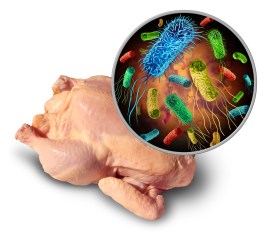
Foodborne pathogens represent one of the most dangerous threats to public health along the food chain all over the world. Over time, many methods were studied for pathogen inhibition in food, such as the development of novel packaging materials with enhanced properties for microorganisms’ growth inhibition (coatings, films) and the use of emerging technologies, like ultrasound, radio frequency or microwave. The aim of this study was to evaluate the current trends in the food industry for pathogenic microorganisms’ inhibition and food preservation in two directions, namely technology used for food processing and novel packaging materials development. Five technologies were discussed in this study, namely high-voltage atmospheric cold plasma (HVACP), High-Pressure Processing (HPP), microwaves, radio frequency (RF) heating and ultrasound. These technologies proved to be efficient in the reduction of pathogenic microbial loads in different food products. Further, a series of studies were performed, related to novel packaging material development, by using a series of antimicrobial agents such as natural extracts, bacteriocins or antimicrobial nanoparticles. These materials proved to be efficient in the inhibition of a wide range of microorganisms, including Gram-negative and Gram-positive bacteria, fungi and yeasts.
Posted in Decontamination Microbial, Food Micro Blog, Food Microbiology, Food Microbiology Blog, Food Microbiology Research, Food Microbiology Testing, Food Pathogen, microbial contamination, Microbial growth, Microbiological Risk Assessment, Microbiology, Microbiology Investigations, Microbiology Risk, Pathogen, pathogenic
Research – Bacterial Changes in Boiled Crayfish between Different Storage Periods and Characterizations of the Specific Spoilage Bacteria
Abstract
This study investigated changes in the microbial compositions of crayfish tails during storage at 4 °C (for 0–12 days) as measured using high-throughput sequencing (HTS). The specific spoilage organisms (SSOs) in the crayfish tails were isolated using culture-dependent cultivation methods, and they were identified by 16S rRNA and characterized for their enzymatic spoilage potentials (e.g., protease, lipase, phospholipase, and amylase). The spoilage abilities of the selected strains in the crayfish tails were assessed by inoculating them into real food. Moreover, the microbial growth and the volatile basic nitrogen (TVB-N) changes were monitored during the storage period. The results from the HTS showed that the dominant genus of shrimp tails evolved from Streptococcus (D0) to Pseudomonas (D4) and, finally, to Paenisporosarcina (D12) during storage. Seven bacterial species (Acinetobacter lwoffii, Aeromonas veronii, Kurthia gibsonii, Pseudomonas sp., Exiguobacterium aurantiacum, Lelliottia amnigena, and Citrobacter freundii) were screened from the spoiled shrimp tails by the culture-dependent method, among which Aeromonas veronii had the strongest spoilage ability.
Research – The Effect of Different Organic Acids and Their Combination on the Cell Barrier and Biofilm of Escherichia coli
Abstract
Organic acids are natural antimicrobial compounds commonly used in the food industry. In this study, acetic, lactic, butyric, citric, and malic acid at minimum inhibitory concentrations and their combinations at optimal inhibition concentrations were used to treat E. coli, and the effects on the cell barrier and biofilm of E. coli were evaluated. Acetic acid showed the highest membrane-damaging effect, while citric acid and malic acid could specifically damage the cell wall of E. coli, leading to alkaline phosphatase leakage. The RT-qPCR results showed that organic acids upregulated the membrane-protein-related genes of E. coli, and the combination of organic acids had a wider range of effects than single organic acid treatment. Moreover, organic acids inhibited the formation of E. coli biofilm and cellular activity within the biofilm. This study showed that the combination of organic acids plays a synergistic inhibitory role mainly through multiple destructive effects on the cell barrier and exhibited synergistic anti-biofilm effects. The three–three combination of acetic, lactic acid, and a third organic acid (butyric, citric, or malic) can play a better synergistic antibacterial effect than the two-pair combination of acetic and lactic acid. These findings have implications for the usage, development, and optimization of organic acid combinations.
Researchers explore the significance of Salmonella-positive foods in the UK.

According to a study, the Salmonella prevalence on tested foods on sale in the United Kingdom was low but highest for imported frozen chicken.
Researchers from the Quadram Institute and the University of East Anglia in England isolated Salmonella from 42 food samples.
Salmonella isolates collected from food using whole genome sequencing (WGS) were compared to isolates from humans in the UK.
Raw foods were collected at retail in Norfolk, including 311 samples each of chicken, leafy greens, and pork, 279 prawns, and 157 salmon between May 2018 and November 2019.
Posted in Decontamination Microbial, Food Micro Blog, Food Microbiology, Food Microbiology Blog, Food Microbiology Research, Food Microbiology Testing, microbial contamination, Microbial growth, Microbiological Risk Assessment, Microbiology, Microbiology Investigations, Microbiology Risk, Salmonella, Salmonella in Chicken
RASFF Alert – Aflatoxin – Rice Cakes
Aflatoxins in rice cakes from the Netherlands, via Germany in Austria, Czech Republic, Germany, Hungary, Netherlands, Slovenia.
Posted in Aflatoxin, Aspergillus Toxin, food contamination, food handler, Food Hazard, Food Hygiene, Food Inspections, Food Micro Blog, Food Microbiology, Food Microbiology Research, Food Microbiology Testing, Food Poisoning, Food Quality, food recall, Food Safety, Food Safety Alert, Food Safety Management, Food Safety Regulations, Food Testing, Food Toxin, Mold Toxin, Mould Toxin, Mycotoxin, RASFF
RASFF Alert – Food poisoning due to venison and wild boar meat consumption
Food poisoning due to venison and wild boar meat consumption in France, Germany, Slovakia, Slovenia, Spain, United Kingdom
Posted in food contamination, food handler, Food Hazard, Food Hygiene, Food Inspections, Food Micro Blog, Food Microbiology, Food Microbiology Blog, Food Microbiology Testing, Food Poisoning, Food Quality, food recall, Food Safety, Food Safety Alert, Food Safety Management, Food Safety Regulations, Food Testing, Food Toxin, RASFF
RASFF Alert – Histamine – Lanzard
histamine over the limit in lanzard (scomber japonicus) from France in Italy
Posted in food contamination, food handler, Food Hazard, Food Hygiene, Food Inspections, Food Micro Blog, Food Microbiology, Food Microbiology Blog, Food Microbiology Testing, Food Poisoning, Food Quality, food recall, Food Safety, Food Safety Alert, Food Safety Regulations, Food Testing, Food Toxin, Histamine, RASFF
RASFF Alert- STEC E.coli – Beef Meat
STEC in taurus meat from Brazil, at the border in the Netherlands and Belgium
Posted in food contamination, food handler, Food Hazard, Food Hygiene, Food Inspections, Food Micro Blog, Food Microbiology, Food Microbiology Blog, Food Microbiology Testing, Food Pathogen, Food Quality, food recall, Food Safety, Food Safety Alert, Food Safety Regulations, Food Testing, RASFF, STEC, STEC E.coli
RASFF Alert- Staphylococcus aureus – Babi Pangang
Too high of Staphylococcus aureus in babi pangang from the Netherlands in Belgium
Posted in food contamination, food handler, Food Hazard, Food Hygiene, Food Inspections, Food Micro Blog, Food Microbiology, Food Microbiology Blog, Food Microbiology Testing, Food Pathogen, Food Poisoning, Food Quality, food recall, Food Safety, Food Safety Alert, Food Safety Management, Food Safety Regulations, Food Testing, Food Toxin, RASFF, Staphylococcal Toxin, Staphylococcus aureus
RASFF Alert- Listeria monocytogenes – Smoked Salmon
Listeria monocytogenes in smoked salmon from Poland in Germany
Posted in food contamination, food handler, Food Hazard, Food Hygiene, Food Inspections, Food Micro Blog, Food Microbiology, Food Microbiology Blog, Food Microbiology Testing, Food Pathogen, Food Quality, food recall, Food Safety, Food Safety Alert, Food Safety Management, Food Safety Regulations, Food Testing, Listeria, Listeria monocytogenes, Listeria Smoked Fish, RASFF
