Category Archives: Food Microbiology Research

NEW FOOD SAFETY GUIDE – Ensuring Food Safety in the Cold Chain

Cold Chain Federation

The Cold Chain Federation has published the first ever handbook on managing food safety specifically for temperature-controlled storage and distribution.

The handbook, Ensuring Food Safety in the Cold Chain, brings together the latest information on compliance, best practice and recommendations for managing the key food safety risks in the cold chain and insights into likely future considerations, the new guide meets the industry’s need for a holistic, comprehensive and up-to-date cold chain food safety reference guide.

For a copy of the guide e-mail: compliance@coldchainfed.org.uk.

France – Product recall: Rustadou brand Richelieu crust pie approx 2kg – Listeria monocytogenes

Oulah

ENCOUNTERED PROBLEM

Risk of presence of Listeria monocytogenes

PROPOSED SOLUTION

People who may have this product are asked not to consume it and to return it to the point of sale where it was purchased.

People who have consumed this product and who present with fever, isolated or accompanied by headaches, are invited to consult their attending physician, notifying him of this consumption.
Pregnant women should pay special attention to these symptoms, as well as immunocompromised people and the elderly. These symptoms may suggest listeriosis, a disease that can be serious and can take up to eight weeks to incubate.

FURTHER INFORMATION

▸ Model names or references
Richelieu crust pie approx 2kg Rustadou


▸ Barcode


▸ Lot
151 221


▸ DLC – DDM
06/25/2021


▸ Packaging
Packaging in film – approximately 2kg


▸ Start date / End of marketing
From 06/04/2021 to 06/15/2021


▸ Health mark
FR 39-475-003 CE


▸ Geographical sales area


METRO France distributors


▸ Consumer service contact
You can call 03 84 87 20 20 from 8 a.m. to 4 p.m. Monday to Friday, outside of these hours contact 08 26 20 79 20


▸ Source
METRO FRANCE

UK – Major retailers below Campylobacter chicken limit; smaller shops test higher

Food Safety News

None of the top nine retailers in the United Kingdom reported Campylobacter in chicken test results near the FSA limit in the first three months of this year.

The Food Standards Agency (FSA) maximum acceptable level is 7 percent of birds with more than 1,000 colony forming units per gram (CFU/g) of Campylobacter.

Tesco was the supermarket that recorded the worst contaminated chicken results with 4 percent of 300 samples above 1,000 CFU/g in the first quarter of 2021 (1Q) which was down from 6 percent in 4Q 2020.

Sainsbury’s performed much better in the latest set of figures covering January to March with around 2 percent of chickens sampled above 1,000 CFU/g compared to 7 percent in 4Q 2020.

Asda reported 1.3 percent tested positive for the highest level of contamination in the latest quarter compared to 1.8 percent in the previous three months.

Hong Kong – Food Safety Information

Click to access borne_diseases.pdf

USA – FDA Core Investigation Table – Shrimp Link in Salmonella Outbreak

FDA

*Shrimp: The information collected so far indicates that pre-cooked shrimp is the likely source of this outbreak, however it appears that the product lots linked to outbreak illnesses are past its shelf life and are no longer available for sale. The most recent illness occurred in late April 2021. FDA continues to investigate and if FDA’s outbreak investigation results in specific actionable steps for consumers to take to protect themselves, a public health advisory will be issued.

USA – Factors Potentially Contributing to the Contamination of Peaches Implicated in the Summer 2020 Outbreak of Salmonella Enteritidis

Click to access Rep.pdf

USA/Canada- Factors Potentially Contributing to the Contamination of Red Onions Implicated in the Summer 2020 Outbreak of Salmonella Newport

FDA

Executive Summary

Between June and October 2020, federal and state agencies investigated a Salmonella Newport foodborne illness outbreak associated with consumption of red onions from the Southern San Joaquin Valley and Imperial Valley in California. The outbreak, which caused 1,127 reported domestic illnesses and 515 reported Canadian cases, is the largest Salmonella outbreak in over a decade. This outbreak is also remarkable because the food vehicle, whole red onions, is a raw agricultural commodity that had not been previously associated with a foodborne illness outbreak.

The U.S. Food and Drug Administration (FDA), alongside state and federal partners, investigated the outbreak to identify potential contributing factors that may have led to red onion contamination with Salmonella Newport. While the Salmonella Newport outbreak strain (specific whole genome sequence [WGS]) was not identified in any of the nearly 2,000 subsamples tested, a total of 11 subsamples (10 water and 1 sediment) collected near one of the growing fields identified in the traceback were positive for Salmonella Newport, representing a total of three different genotypical strains (unique WGS patterns). Although a conclusive root cause could not be identified, several potential contributing factors to the 2020 red onion outbreak were identified, including a leading hypothesis that contaminated irrigation water used in a growing field in Holtville, California may have led to contamination of the onions.

While our investigation did not occur during any harvesting activities, visual observations of the implicated red onion growing fields suggested several plausible opportunities for contamination including irrigation water, sheep grazing on adjacent land, as well as signs of animal intrusion, such as scat and large flocks of birds which may spread contamination. Similarly, the investigation did not occur while packing activities were ongoing. However, visual observations and records review of packing house practices confirmed numerous opportunities for spread of foodborne pathogens such as Salmonella, including signs of animal and pest intrusion as well as food contact surfaces which had not been inspected, maintained, cleaned, or sanitized as frequently as necessary to protect against the contamination of produce. Thomson International Inc. cooperated with FDA throughout the investigation and is continuing to engage with FDA on the agency’s findings and recommendations.

Notably, Salmonella isolates from two sediment subsamples and two water subsamples collected during this investigation were found to be genetically related by WGS to clinical isolates from 2016 and 2018 foodborne illness outbreaks (Salmonella Muenchen and Salmonella Montevideo, respectively) associated with consumption of sprouts. This may be indicative of human pathogen persistence and distribution in this growing region (a concentrated area of seed for sprouting production), which could pose a risk of contamination for any produce commodity. FDA issued an assignment to follow-up at the associated firms. Sprouts are not a food vehicle of interest in the 2020 Salmonella Newport foodborne illness outbreak.

We urge growers to conduct risk assessments that include evaluation of hazards that may be associated with adjacent and nearby land uses—especially relating to the presence of livestock and wildlife and the potential for runoff into growing fields or water sources—and implement risk mitigation strategies where appropriate. FDA recognizes the interconnection between people, animals, plants, and their shared environment when it comes to public health outcomes, and we encourage collaboration among various groups in the broader agricultural community (e.g., produce growers, those managing animal operations, state and federal government agencies, and academia) to address this issue.

This document provides an overview of the traceback investigation, subsequent on-site investigation, and factors that potentially contributed to the contamination of red onions with Salmonella Newport.

Download the Full Report (PDF 531KB)

Research – Poultry study points to genes linked to food bug – Campylobacter.

Roslin

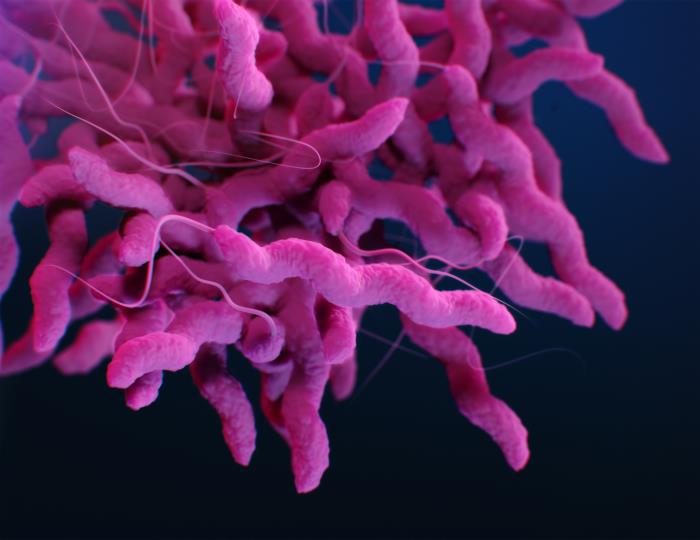
Campylobacter kswfoodworld

Variation in the response of chickens to Campylobacter helps identify key genes that may provide resistance to infection.

Research has identified genes in chickens that could offer resistance to harmful bacteria commonly found in poultry and could inform ways to limit the risk of associated food poisoning in people.

The study, led by a team from the Roslin institute, has identified a large number of genes in chicken guts that may determine whether the birds are resistant to Campylobacter.

The insights could inform research towards breeding chickens that are less likely to carry Campylobacter bacteria, and so limit the risk to poultry consumers.

Research – Escherichia coli Survival on Strawberries and Unpacked Romaine Lettuce Washed Using Contaminated Water

MDPI

A number of foodborne outbreaks have occurred in the past decade, with higher incidences associated with romaine lettuce and strawberries. Contaminated agricultural water has been reported as the source of microbial contamination in most of these outbreaks. Maintaining the adequate and sanitary quality (0 E. coli/100 mL) of agricultural water can be challenging during post-harvest operations such as washing. The study focused on the attachment of generic E. coli (Rifampicin resistant) onto romaine lettuce and strawberries, mimicking the produce wash step. The produce was washed with contaminated water, air-dried, and stored in display units for 7 days. The produce was sampled randomly each day and analyzed for the surviving E. coli count. The results indicated that E. coli can survive in both lettuce and strawberries over extended periods. A survival population of 2.3 log CFU/cm2 (day 8) was observed on lettuce with an initial population of 2.8 log CFU/cm2 (day 0). On strawberries, the population reduced from 3.0 (day 0) to 1.7 log CFU/cm2 (day 7), with an initial E. coli concentration of approx. 6 log CFU/mL in the wash water. Strawberry leaves had a higher attachment of E. coli than the fruit (p < 0.05). In conclusion, romaine lettuce and strawberries washed with contaminated water can cause an outbreak affecting consumers and public health. View Full-Text

Research – Prevalence, Antibiogram and Genetic Characterization of Listeria monocytogenes from Food Products in Egypt

MDPI

World Health Organization classified Listeria monocytogenes as a major notable foodborne pathogen associated with high mortality and hospitalization. The study reports the prevalence, antibiogram, virulence determination and genetic characterization of L. monocytogenes from different food products. A total of 250 food samples, fifty samples each from raw milk, ice cream, minced meat, fish fillet and sausage were collected from the Menoufiya governorate in Egypt. L. monocytogenes was detected in 17 (6.8%) of the tested food samples including minced meat (14%), fish fillet (8%), sausage (6%) and raw milk (6%). The antimicrobial susceptibility assay of 17 L. monocytogenes isolates against seventeen antibiotics belonging to eight antibiotics classes revealed a high susceptibility to norfloxacin (82.3%), amoxicillin-clavulanic acid (76.4%), cefotaxime (70.5%), erythromycin (64.6%), amoxicillin (64.6%), gentamicin (58.7%) and vancomycin (58.7%). While, high resistance was observed against oxytetracycline (76.4%), trimethoprim-sulfamethoxazole (76.4%), chloramphenicol (70.5%), doxycycline (64.6%), levofloxacin (41.2%) and azithromycin (41.2%). Of note, all L. monocytogenes isolates were multidrug-resistant. The multiplex PCR successfully amplified L. monocytogenes in all tested isolates. Screening of the five virulence-related genes revealed the hlyA and iap as the most prevalent genes followed by actA gene, however, the inlA and prfA genes were not detected in any of the studied isolates. The partial 16S rRNA gene sequencing of three L. monocytogenes isolates showed a high nucleotide similarity (99.1–99.8%) between the study isolates and various global clones, and phylogenetic analysis clustered these L. monocytogenes strains with other Listeria species including L. welshimeriL. seeligeri and L. innocua. This study demonstrates the impact of L. monocytogenes as a major contaminant of various food products and suggests more attention to the awareness and hygienic measures in the food industry. View Full-Text