Category Archives: Food Microbiology Research

Image

INFOSAN Research

Image

INFOSAN Research

Image

INFOSAN Research

USA – FOOD RECALL SEARCH – FOOD RECALL REPORTER

Food Industry Council

Food Industry Counsel is proud to offer the Food Recall Reporter, the only searchable food recall database that allows users to conduct a food recall search for FDA and USDA food product recalls. Search food and beverage recalls, the types of food products, the reasons for the recalls, and the names of the companies recalling the products.

Germany – borchers organic low carb flour – Aflatoxin

LMW

Warning type: Food
Date of first publication: 07/23/2021
Product name:

borchers organic low carb flour

Product pictures:

Image.jpg

From the manufacturer bojati food GmbH

Manufacturer (distributor):

bojati food GmbH Margarete-Steiff-Str. 10 28876 Oyten

Reason for warning: Aflatoxins in low carb flour
Packaging Unit: 350g
Durability: 12/24/2021
Production date: 05/12/2021
Lot identification: Lot 21000457
Homepage of the manufacturer:

Contact to the responsible authorities:

Baden-Württemberg:poststelle@mlr.bwl.de

Lower Saxony:poststelle@ml.niedersachsen.de
Saxony-Anhalt:poststelle@ms.sachsen-anhalt.de

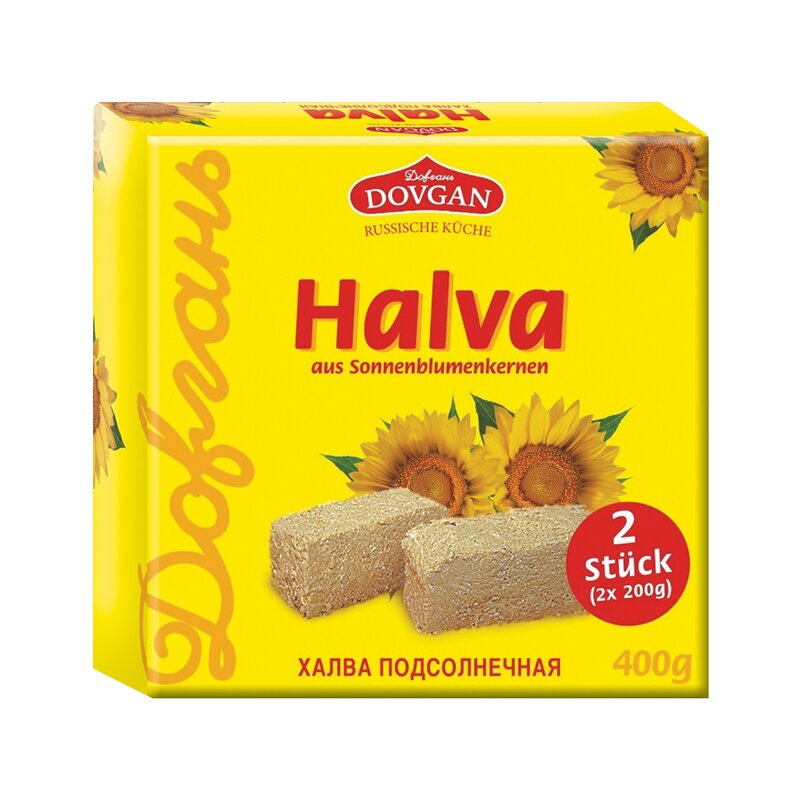
Germany – Halva made from sunflower seeds -Salmonella

LMW

Warning type: Food
Date of first publication: 07/24/2021
Product name: Halva made from sunflower seeds
Product pictures:

Produktabbild.jpg
Manufacturer (distributor):

Dovgan GmbH Hamburg Germany

Reason for warning:

Salmonella in halva from sunflower seeds

Packaging Unit: 400 g
Durability:

29.09.2021 and 22.10.2021

Additional Information:

Only goods with the best before dates 29.09.2021 and 22.10.2021 , which are printed on the back of the packaging concerned, are exclusively affected.

Homepage of the manufacturer:

Contact to the responsible authorities:

Baden-Württemberg:poststelle@mlr.bwl.de

Bavaria:poststelle@lgl.bayern.de
Berlin:poststelle@senjustva.berlin.de
Hamburg:poststelle@justiz.hamburg.de
Hesse:Schnellwarnung@rpda.hessen.de
Mecklenburg-Western Pomerania:poststelle@lm.mv-regierung.de
Lower Saxony:poststelle@ml.niedersachsen.de
North Rhine-Westphalia:poststelle@mulnv.nrw.de
Rhineland-Palatinate:Poststelle.Referat22@lua.rlp.de
Saxony:poststelle@sms.sachsen.de
Schleswig-Holstein:poststelle@jumi.landsh.de
Thuringia:LM-Ueberendung@tlv.thueringen.de

Research – A Series of Papaya-Associated Salmonella Illness Outbreak Investigations in 2017 and 2019 – A Focus on Traceback, Laboratory, and Collaborative Efforts

Journal of Food Protection
kswfoodworld

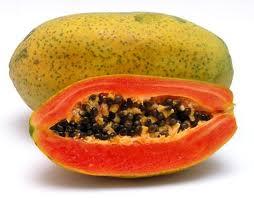
In 2017 and 2019, five outbreaks of infections from multiple strains of Salmonella linked to the consumption of whole, fresh Maradol papayas were reported in the United States, resulting in 325 ill persons. Traceback, laboratory, and epidemiologic evidence indicated papayas as the likely vehicle for each of these outbreaks and identified the source of papayas. State and FDA laboratories recovered Salmonella from papaya samples from various points of distribution, including at import entry, and conducted serotyping, pulsed-field gel electrophoresis (PFGE), and phylogenetic analyses of whole genome sequencing (WGS) data. Federal and state partners led traceback investigations to determine the source of papayas. Four different suppliers of papayas were linked by traceback and laboratory results to five separate outbreaks of Salmonella infections associated with papayas. In 2017, multiple states tested papaya samples collected at retail, and Maryland and Virginia investigators recovered strains of Salmonella associated with one outbreak. FDA collected 183 papaya samples in 2017, and 11 samples yielded 62 isolates of Salmonella. Eleven serotypes of Salmonella were recovered from FDA papaya samples, and nine serotypes were closely related genetically by PFGE and WGS to clinical isolates of four outbreaks, including the outbreak associated with positive state sample results. Four farms in Mexico were identified and their names were released to the general public, retailers, and foreign authorities. In 2019, FDA collected 119 papaya samples, three of which yielded Salmonella; none yielded the 2019 outbreak strain. Investigators determined that papayas of interest had been sourced from a single farm in Campeche, Mexico through traceback. This information was used to protect public health through public guidance, recalls, and import alerts and helped FDA collaborate with Mexican regulatory partners to enhance the food safety requirements for papayas imported from Mexico.

Research – Interactions between Microbial Food Safety and Environmental Sustainability in the Fresh Produce Supply Chain

MDPI

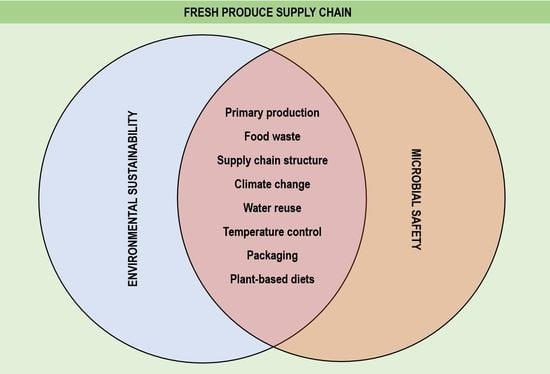
Improving the environmental sustainability of the food supply chain will help to achieve the United Nations Sustainable Development Goals (SDGs). This environmental sustainability is related to different SDGs, but mainly to SDG 2 (Zero Hunger), SDG 12 (Responsible Production and Consumption), SDG 13 (Climate Action), and SDG 15 (Life on Land). The strategies and measures used to improve this aspect of the food supply chain must remain in balance with other sustainability aspects (economic and social). In this framework, the interactions and possible conflicts between food supply chain safety and sustainability need to be assessed. Although priority must be given to safety aspects, food safety policies should be calibrated in order to avoid unnecessary deleterious effects on the environment. In the present review, a number of potential tensions and/or disagreements between the microbial safety and environmental sustainability of the fresh produce supply chain are identified and discussed. The addressed issues are spread throughout the food supply chain, from primary production to the end-of-life of the products, and also include the handling and processing industry, retailers, and consumers. Interactions of fresh produce microbial safety with topics such as food waste, supply chain structure, climate change, and use of resources have been covered. Finally, approaches and strategies that will prove useful to solve or mitigate the potential contradictions between fresh produce safety and sustainability are described and discussed. Upon analyzing the interplay between microbial safety and the environmental sustainability of the fresh produce supply chain, it becomes clear that decisions that are taken to ensure fresh produce safety must consider the possible effects on environmental, economic, and social sustainability aspects. To manage these interactions, a global approach considering the interconnections between human activities, animals, and the environment will be required. View Full-Text

Research – Bacteriophage Therapy to Reduce Colonization ofCampylobacter jejuniin Broiler Chickens before Slaughter

Click to access viruses-13-01428.pdf

Research – Reduction of Escherichia coli O157:H7, Listeria monocytogenes, or Salmonella on Whole Yellow Onions (Allium cepa) Exposed to Hot Water

Journal of Food Protection

In-home or food service antimicrobial treatment options for fresh produce are limited. Hot water treatments for whole (unpeeled) produce have been proposed but data to support this practice for onions are not available. Separate cocktails of rifampin-resistant Escherichia coli O157:H7, Listeria monocytogenes , or Salmonella were cultured on agar and suspended in sterile water. The outer papery skin at the equator or root or stem ends of the whole yellow onions was spot inoculated at 6 log CFU/onion. After drying for 30 min and, in some cases, storage at 4°C for 6 days, onions were immersed in water at ~100°C for 5 s or 85°C for 10 to 180 s. There was no significant difference ( P > 0.05) in the mean decline of Salmonella on onions that were exposed to hot water after drying the inoculum for 30 min or after storage at 4°C for 6 days. Exposure of whole onions at 100°C for 5 s reduced E. coli O157:H7 and L. monocytogenes populations by >5 log CFU/onion at all inoculum sites and Salmonella populations by >5 log CFU/onion at the stem end and equator but not consistently at the root end. Mean root-end reductions of ≥5 log CFU/onion of E. coli O157:H7, L. monocytogenes , or Salmonella were achieved consistently when the root end was fully immersed in 85°C hot water for 45 or 60 s, except in a small number of cases (4/57; 7%) when the root end oriented above the water line during treatment. When onions were held at 85°C for 180 s with the root end above the water line in an uncovered water bath, no significant declines in Salmonella populations were observed; significant mean declines of Salmonella were achieved (mean 5 log CFU/onion [range 3.49 to 6.25]) when the water bath was covered. Short exposure to hot water can significantly reduce pathogens on the surface of whole onions; reductions are more consistent when the root end is submerged, or when the water bath is covered.