Category Archives: Food Microbiology Research

USA – FDA Investigation of Cronobacter Infections: Powdered Infant Formula (February 2022)

FDA

If you want to check if your powdered formula is part of the recall, you can enter the product lot code on the bottom of your package on the company’s websiteExternal Link Disclaimer.

If you have questions or need information about the recall, you can Submit Questions/Get Assistance.

If your infant is experiencing symptoms related to Cronobacter infection, such as poor feeding, irritability, temperature changes, jaundice, grunting breaths, or abnormal body movements; contact your health care provider to report their symptoms and receive immediate care.

To report an illness or adverse event, you can

The U.S. Food and Drug Administration (FDA), along with the Centers for Disease Control and Prevention (CDC) and state and local partners are investigating consumer complaints and/or reports of infant illness, received from 9/20/2021 to 1/11/2022, related to products from Abbott Nutrition’s Sturgis, MI, facility. The four ill patients are reported to have consumed powdered infant formula produced from Abbott Nutrition’s Sturgis, MI, facility.

Following the voluntary recall and hold of certain powdered infant formula products produced at the Abbott Nutrition facility in Sturgis, MI, Abbott has committed to completing enhanced testing of stored product batches prior to making release determinations. While the FDA recognizes that Abbott has conducted standard product testing, there were a limited number of samples tested. Additionally, although finished product testing does not eliminate the risk of contamination, the enhanced testing will provide for a greater chance to detect Cronobacter sakazakii, if present; however, this enhanced level of testing will take additional time.

In the meantime, the FDA has informed Abbott Nutrition that the agency has no objection to the company immediately releasing product to individuals needing urgent, life-sustaining supplies of the specialty and metabolic formulas listed below on a case-by-case basis. The FDA is concerned that the risk of not having certain specialty and metabolic products available could significantly worsen underlying medical conditions and in some cases pose life-threatening risks for infants and individuals who rely on these products. In these circumstances, the benefit of allowing parents, in consultation with their healthcare providers, to access these products may outweigh the potential risk of bacterial infection.

Abbott has confirmed with the FDA that the company will consider release of these products on a case-by-case basis, depending on product availability and the severity of the individual’s need. Patients and caregivers seeking access to these products should contact Abbott directly to request that a product be made available to them by calling 1-800-881-0876.

It is important for parents and caregivers to understand that any products released on a case-by-case basis at this time were made at Abbott Nutrition’s Sturgis, MI, facility, and that the processes, procedures, and conditions that the FDA observed during its inspection of the Sturgis MI production facility from January 31 – March 3, 2022, raise concerns that powdered infant formula produced at this facility prior to the FDA’s inspection carry a risk of contamination. Therefore, those seeking access should consult with their healthcare provider in considering whether the benefit of consuming such product outweighs the potential risk of bacterial infection in the user’s particular circumstances. Parents and caregivers should continue to work with their medical provider to consider whether comparable alternative products may be appropriate.

Parents and caregivers who obtain these products should carefully follow Abbott’s preparation instructions as indicated on the product container. Should product released on a case-by-case basis be used, parents and caregiver should pay close attention to the user’s health status and alert a healthcare provider immediately of any change in health status. In the meantime, the FDA is continuing to work diligently to ensure the safe resumption of production of infant formula at Abbott Nutrition’s Sturgis, Michigan facility.

Specialty and Metabolic Formulas that may be Released on a Case-By-Case Basis:

  • Glutarex-1
  • Glutarex-2
  • Cyclinex-1
  • Cyclinex-2
  • Hominex-1
  • Hominex-2
  • I-Valex-1
  • I-Valex-2
  • Ketonex-1
  • Ketonex-2
  • Phenex-1
  • Phenex-2
  • Phenex-2 Vanilla
  • Pro-Phree
  • Propimex-1
  • Propimex-2
  • ProViMin
  • Calcilo XD
  • Tyrex-1
  • Tyrex-2
  • Similac PM 60/40

Recommendation

The FDA is advising consumers not to use recalled Similac, Alimentum, or EleCare powdered infant formulas. Recalled products can be identified by the 7 to 9 digit code and expiration date on the bottom of the package (see image below). Products are included in the recall if they have all three items below:

  • the first two digits of the code are 22 through 37 and
  • the code on the container contains K8, SH, or Z2, and
  • the expiration date is 4-1-2022 (APR 2022) or later.

In addition to products described above, Abbott Nutrition has recalled Similac PM 60/40 with a lot code 27032K80 (can) / 27032K800 (case). At this time, Similac PM 60/40 with lot code 27032K80 (can) / 27032K800 (case) is the only type and lot of this specialty formula being recalled. Additional recall information for the initial recall is available on the FDA website. Parents can also enter their product lot code on the company’s websiteExternal Link Disclaimer to check if it is part of the recall.

Additional information for parents and caregivers of infants receiving medical specialty infant formulas and individuals using certain medical foods is available below.

Additional Information for Parents and Caregivers:

The recalls do not include liquid formula products.

Parents and caregivers should never dilute infant formula and should not make or feed homemade infant formula to infants. Consumers should also avoid purchasing imported formula through online sales, as it has the potential to be counterfeit.

If your regular formula is not available, contact your child’s healthcare provider for recommendations on changing feeding practices.

If you get infant formula through WIC, do not throw the formula out. Instead, you should take it to the store for a refund and exchange or call the company at 1-800-986-8540 to help you. WIC recipients should be able to obtain a different brand of similar formula. Call your local WIC clinic for more guidance. Also see:

More information on Cronobacter and infant formula is available on CDC’s website.

Recalled powdered infant formulas have the potential to be contaminated with Cronobacter, a bacterium that can cause severe foodborne illness primarily in infants. Cronobacter infections are rare but are especially high risk for newborn infants (see symptoms below).

Cronobacter bacteria can cause severe, life-threatening infections (sepsis) or meningitis (an inflammation of the membranes that protect the brain and spine). Symptoms of sepsis and meningitis may include poor feeding, irritability, temperature changes, jaundice (yellow skin and whites of the eyes), grunting breaths, and abnormal body movements. Cronobacter infection may also cause bowel damage and may spread through the blood to other parts of the body.

If your child is experiencing any of these symptoms, you should notify your child’s healthcare provider and seek medical care for your child immediately. Healthcare providers and health departments are encouraged to report any confirmed cases of Cronobacter sakazakii to CDC.
New Zealand – Elite brand confectionery products – Salmonella Update

MPI

Updated on 2 May 2022:  This recall has been extended to include an additional product – All batches and all dates of Elite brand Chocolate Flavoured Spread is being recalled due to the possible presence of Salmonella.

28 April 2022: Benedikt Imports Pty Ltd is recalling all batches, all dates, all packaging, or size and all flavour variations of Elite branded confectionery products, including Elite chocolate, Elite cakes, Elite wafers, Energy grain snacks, Energy chocolate rice cakes, gum and toffee candies due to the possible presence of Salmonella.

Product type Confectionery products
Name of product (size) All packaging, or size and all flavour variations of Elite brand confectionery products, manufactured by Elite-Strauss, Israel are affected by this recall, including:

  • Elite brand chocolate
  • Elite brand chocolate flavoured spread
  • Elite brand cakes
  • Elite brand wafers
  • Elite brand Energy grain snacks
  • Elite brand Energy chocolate rice cakes
  • Elite brand gums
  • Elite brand toffee candies
Batch and date marking All batches and all dates
Package size and description The products are sold in various weights in various packaging variations.
Distribution The products are sold at the below ethnic grocery stores and may have been provided to community groups:

  • Chabad New Zealand Hebrew Charitable Trust, 788 Remuera Road, Remuera, Auckland
  • The Greys Ave Deli or The Kosher Deli, 108 Greys Avenue Auckland Central, Auckland and online – The Kosher Deli 
  • Wellington Kosher Co-Operative, 80 Webb Street, Te Aro, Wellington

The products were sold as part of the ‘Home Away From Home Gift Box’ from The Greys Ave Deli or The Kosher Deli in Auckland and online via the company’s website. Only the Elite brand confectionery products in the gift box are affected by this recall and should not be consumed.

The products have not been re-exported.

Notes This recall does not affect any other Elite brand products, or any other products imported by Benedikt Imports Pty Ltd.

If you are a retailer of any of the Elite brand products listed in this recall notice, you need to download a copy of the below Point of Sale notice and display in your store for one month:

Point of sale notice [PDF, 45KB]

Consumer advice

Customers are asked to check the brand of products before consumption.

Affected products should not be consumed. There have been cases of illnesses in Israel reportedly linked to Elite brand confectionery products, manufactured by Elite-Strauss Group, Israel. There have been no confirmed cases of illnesses in New Zealand, however if you have consumed any of these products and have any concerns about your health, seek medical advice.

Customers should return the products to their retailer for a full refund.

Sweden – Ferrero expands its recall of Kinder products – Salmonella

Livsmedelsverket

Ferrero is expanding its recall of Kinder products made in Arlon, Belgium with three more products: Kinder Happy moments mini mix, Kinder maxi and Kinder Schokobons. This in connection with ongoing salmonella investigations. 

USA – In Food Safety Study, 25% of Participants Contaminated Salad with Raw Chicken

NCSU

Foodborne Pathogen

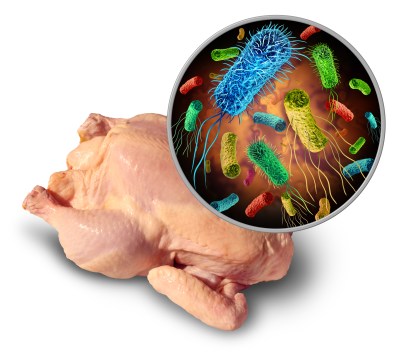
In a study aimed at assessing the impact of washing poultry on kitchen contamination, researchers found that more than a quarter of study participants contaminated salad with raw poultry – including many study participants who did not wash the poultry. The study highlights the importance of hand-washing and cleaning and sanitizing the kitchen in order to reduce the risk of foodborne illness when cooking at home.

Washing raw poultry is not recommended, due to concerns about inadvertently contaminating other foods and surfaces – and increasing the risk of foodborne illness.

“We wanted to know what effect an educational intervention would have on getting people to stop washing poultry before cooking, and what effect any resulting change in behavior might have on reducing contamination in the kitchen,” says Ellen Shumaker, corresponding author of the study and an extension associate at North Carolina State University. “We also wanted to get a better idea of how, if at all, washing poultry actually led to increased contamination in the kitchen.”

For the study, researchers recruited 300 home cooks who said they washed poultry before cooking it. The researchers sent food safety information to 142 of the study participants via email, outlining risk-reduction efforts – including the recommendation to not wash raw poultry during food preparation. The remaining 158 study participants did not receive the education intervention.

All 300 study participants were then invited to test kitchens equipped with video cameras that filmed meal preparation. Participants were asked to cook chicken thighs and prepare a salad. After preparing the chicken thighs, but before putting the chicken in the oven, participants were called out of the kitchen to conduct a short interview. Participants were then sent back into the kitchen to cook the chicken thighs, prepare the salad, and clean the kitchen as they would at home.

What the study participants didn’t know was that the chicken thighs were inoculated with a harmless strain of bacteria, which the researchers would be able to detect. This allowed researchers to swab surfaces in the kitchen to see whether any cross-contamination occurred during the food preparation and cooking process.

When study participants left the kitchen to conduct the interview, researchers swabbed the kitchen to identify any potential contamination. This process was repeated after each participant had completed cooking the meal and cleaned the kitchen. The prepared salad was also tested for possible contamination.

Ninety-three percent of the participants who received the intervention did not wash the chicken, as compared to 39% of the participants who did not receive the intervention.

However, the researchers were surprised to see that people who did wash the chicken and people who didn’t wash the chicken had similar levels of contamination from the raw chicken in their prepared salads.

Research – Do You Really Need to Wash Fruits and Vegetables?

AARP

During the journey from farm to table, the fruits, vegetables and other foods we eat are exposed to countless people, places, substances and surfaces before ever reaching our mouths. It would seem a given, then, that everything we bring home from the grocery store needs to be thoroughly washed and sanitized.

“Produce comes from the environment; it comes from the ground. The way that it’s grown and harvested, it can have dirt on it and other bacteria,” says Meredith Carothers, technical information specialist at the U.S. Department of Agriculture (USDA). “Unlike meat and poultry, which is packaged, a lot of times produce is just out in the grocery store on display.”

From a food safety standpoint, experts say it’s not necessary to wash all foods. In fact, washing some foods can actually increase the risk of contamination and illness. To help clear up any confusion, we asked Carothers to break down the do’s and don’ts of food washing.

Rules for washing produce

Do rinse fruits and vegetables under running water. After produce is harvested, it gets sorted, delivered and put on display in the grocery store. During this process there are many opportunities for produce to encounter a number of hands and surfaces. Before consuming fresh produce, remove any torn or bruised parts (bacteria that can cause illness thrive in these places) and rinse under running water to remove germs and dirt.

Do scrub hard produce with a clean brush. Foods like potatoes or apples can be scrubbed to thoroughly remove dirt from the exterior, including crevices that rinsing alone may not reach.

Do dry rinsed produce on a clean surface. That means spreading a clean cloth or paper towel on a clean surface to avoid recontamination. If you use a salad spinner, make sure it’s clean before you add greens to it, and clean it again between batches.

Don’t wash produce labeled “prewashed” or “ready to eat.” It is already safe to eat out of the package. Just make sure that prewashed produce doesn’t encounter unclean surfaces or utensils — especially if those surfaces have had raw meat or its juices on them.

Don’t use soap to clean produce. The USDA does not recommend any type of detergent on fruits or vegetables because it can leave behind a film that is not intended to be consumed. Some produce is also porous and may absorb the soap. Although you can buy commercial produce washes, they aren’t approved or labeled by the Food and Drug Administration (FDA) and are not recommended.

Don’t soak produce. Soaking may remove the germs initially, but the now-tainted water can recontaminate your produce as well as nearby surfaces. When produce is rinsed under running water, the dirt and germs go down the drain.

Research – Pathogens can hitch a ride on plastic to reach the sea

Phys Org

Microplastics are a pathway for pathogens on land to reach the ocean, with likely consequences for human and wildlife health, according to a study from the University of California, Davis.

The study, published April 26 in the journal Scientific Reports, is the first to connect microplastics in the ocean with land-based pathogens. It found that microplastics can make it easier for disease-causing pathogens to concentrate in plastic-contaminated areas of the ocean.

The pathogens studied—Toxoplasma gondii, Cryptosporidium (Crypto) and Giardia—can infect both humans and animals. They are recognized by the World Health Organization as underestimated causes of illness from shellfish consumption and are found throughout the ocean.

“It’s easy for people to dismiss plastic problems as something that doesn’t matter for them, like, ‘I’m not a turtle in the ocean; I won’t choke on this thing,'” said corresponding author Karen Shapiro, an infectious disease expert and associate professor in the UC Davis School of Veterinary Medicine. “But once you start talking about disease and health, there’s more power to implement change. Microplastics can actually move germs around, and these germs end up in our water and our food.”

Research – Cryptosporidium: Still Open Scenarios

MDPI

water contamination

Cryptosporidiosis is increasingly identified as a leading cause of childhood diarrhea and malnutrition in both low-income and high-income countries. The strong impact on public health in epidemic scenarios makes it increasingly essential to identify the sources of infection and understand the transmission routes in order to apply the right prevention or treatment protocols. The objective of this literature review was to present an overview of the current state of human cryptosporidiosis, reviewing risk factors, discussing advances in the drug treatment and epidemiology, and emphasizing the need to identify a government system for reporting diagnosed cases, hitherto undervalued.

Research – Spanish study finds organic produce contamination

Food Safety News

Early findings from researchers in Spain has found organic produce can be contaminated with a range of bacteria.

The study suggests that amoebas that live on organic leafy vegetables can shelter human pathogens like Pseudomonas, Salmonella, and Helicobacter.

Details are based on a poster presentation at the European Congress of Clinical Microbiology and Infectious Diseases (ECCMID) in Lisbon, Portugal, from April 23 to 26. All abstracts were peer reviewed by a congress committee. There is no paper yet, but the research has been submitted to a medical journal for publication.

However, other scientists warned that while conclusions are interesting, the fact that data has not yet been peer reviewed means they cannot be put into context.

Research – An Evaluation of Food Safety Performance in Wineries

MDPI

Wine production has food safety hazards. A Hazard Analysis Critical Control Point (HACCP) system makes it possible to identify, evaluate, and control significant food safety hazards throughout the wine production process. The Prerequisites Programs (PPRs) and HACCP performance in Protected Denomination of Origin “Vinos de Madrid” wineries were analyzed. Winery performances were evaluated for every critical control point (CCPs) in each winemaking process stage, including their implementation of PPR and HACCP principles. This study was developed through a survey of 55 questions divided into 11 sections, and it was conducted on a sample of 21 wineries. The results revealed that the CCPs worst performance level are for the control of metals (Cd, Pb, As) in grapes and fungicides or pesticide control in the harvest reception. A total of 91.5% of the wineries had implemented a prerequisites program (PPRs), regardless of their annual wine production. However, there was variability in the type of prerequisite plans, training, level of knowledge of operators, and annual budget allocation. Three out of four wineries had an HACCP, although corrective action procedures and verification procedures had the lowest and the worst HACCP practical implementation. The significant barriers for HACCP performance in wineries are linked with a lack of food safety staff training, low involvement of all staff in food safety tasks, and poor application of CCP chemical and microbiologic control methods.

Research – Role of Lactic Acid Bacteria in Food Preservation and Safety

MDPI

Fermentation of various food stuffs by lactic acid bacteria is one of the oldest forms of food biopreservation. Bacterial antagonism has been recognized for over a century, but in recent years, this phenomenon has received more scientific attention, particularly in the use of various strains of lactic acid bacteria (LAB). Certain strains of LAB demonstrated antimicrobial activity against foodborne pathogens, including bacteria, yeast and filamentous fungi. Furthermore, in recent years, many authors proved that lactic acid bacteria have the ability to neutralize mycotoxin produced by the last group. Antimicrobial activity of lactic acid bacteria is mainly based on the production of metabolites such as lactic acid, organic acids, hydroperoxide and bacteriocins. In addition, some research suggests other mechanisms of antimicrobial activity of LAB against pathogens as well as their toxic metabolites. These properties are very important because of the future possibility to exchange chemical and physical methods of preservation with a biological method based on the lactic acid bacteria and their metabolites. Biopreservation is defined as the extension of shelf life and the increase in food safety by use of controlled microorganisms or their metabolites. This biological method may determine the alternative for the usage of chemical preservatives. In this study, the possibilities of the use of lactic acid bacteria against foodborne pathogens is provided. Our aim is to yield knowledge about lactic acid fermentation and the activity of lactic acid bacteria against pathogenic microorganisms. In addition, we would like to introduce actual information about health aspects associated with the consumption of fermented products, including probiotics.