Category Archives: Food Microbiology Blog

France – FINGER TARTLET – Salmonella

Gov france

Identification information of the recalled product

  • Product category Feed
  • Product subcategory Others
  • Product brand name HAFNER
  • Model names or references TARTLET FINGER HAFNER 125X45
  • Identification of products
    GTIN Batch Date
    3068220269000 250322 Use-by date 03/31/2023
  • Packaging PACKAGE OF 60 PIECES
  • Marketing start/end date From 06/03/2022 to 06/08/2022
  • Storage temperature Product to be stored in the refrigerator
  • Health mark SALMONELLOSIS CONTAMINATION
  • Further information STRAWBERRY AND RASPBERRY TARTLET RECTANGULAR SIZE 125X45
  • Geographic area of ​​sale Whole France
  • Distributors INTERMARCHE

Practical information regarding the recall

  • Reason for recall SALMONELLOSIS CONTAMINATION

Germany – Alburji Tahini Sesame 100% – Salmonella

LMV

Alert type: Food
Date of first publication: 06/17/2022
Product name: Alburji Tahini Sesame 100%
Product images:

Tahini.jpg
Manufacturer (distributor):

Distributor: Bakri Kasas, Ostbahnhofstr. 9, 60314 Frankfurt/Main

Reason for warning:

Salmonella was detected in the enrichment procedure in 25 g of the sample.

Packaging Unit: 400g
Durability: 07/2022
Lot identification: P:02/2021 E:07/2022 PN:4
Further information:

Reference is made to the company’s press release.

Contact to the competent authorities:

Baden-Württemberg: poststelle@mlr.bwl.de

Bavaria: poststelle@lgl.bayern.de
Hesse: rapid warnings@rpda.hessen.de

Germany – Mama Africa, shrimps smoked – smoked shrimp – Microbiological Safety

LMW

Alert type: Food
Date of first publication: 06/17/2022
Product name:

Mama Africa, shrimps smoked – smoked shrimp

Manufacturer (distributor): Alimenti dal mondo – Italia srl
Reason for warning:

microbiological risk

Packaging Unit: 50g
Contact to the competent authorities:

Bavaria: poststelle@lgl.bayern.de

USA – Freshpet Voluntarily Recalls One Lot of Freshpet Select Fresh from the Kitchen Home Cooked Chicken Recipe 4.5-Pound Bags Due to Potential Salmonella Contamination

FDA

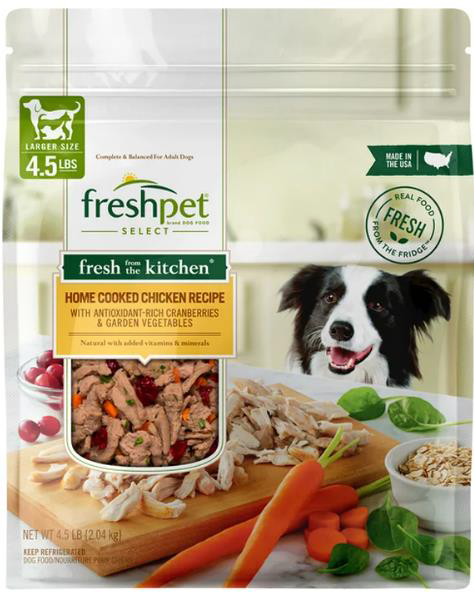
Freshpet Select Fresh From The Kitchen Home Cooked Recipe

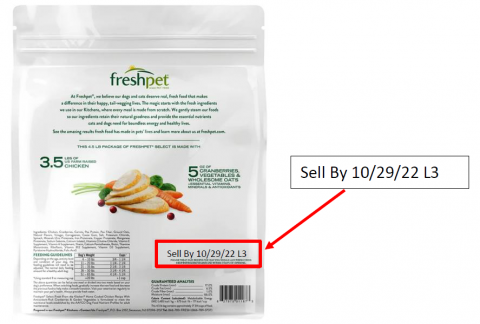
Back Label, Sell By 10/29/22 L3

Freshpet Inc. is announcing a voluntary recall of a single lot of Freshpet Select Fresh From the Kitchen Home Cooked Chicken Recipe (4.5 lb. bag), with sell by date of 10/29/22, due to potential contamination with Salmonella.

Salmonella can affect animals eating the product and there is risk to humans, notably children, the elderly, and the immunocompromised, when handling contaminated products, especially if they have not thoroughly washed their hands after having contact with the products or surfaces exposed to these products.

Healthy people infected with Salmonella should monitor themselves for some or all of the following symptoms: nausea, vomiting, diarrhea or bloody diarrhea, abdominal cramping, and fever. Salmonella can result in more serious ailments, including arterial infections, endocarditis, arthritis, muscle pain, eye irritation, and urinary tract symptoms. Consumers exhibiting these signs after having contact with this product should contact their healthcare provider.

Dogs with Salmonella infections may be lethargic and have diarrhea or bloody diarrhea, fever, and vomiting. Some dogs will have only decreased appetite, fever, and abdominal pain. Infected but otherwise healthy dogs can be carriers and infect other animals or humans. If your dog has consumed the recalled product and has these symptoms, please contact your veterinarian.

If pet parents have products matching the following description and sell by date in their possession, they should stop feeding it to their dogs and dispose of it immediately. Please call us if you have any of the recalled product, Freshpet Select Fresh From the Kitchen Home Cooked Chicken Recipe (4.5 lb. bag) with Sell by Date 10/29/22. The Sell by date, along with the UPC code, can be found on the bottom and back of each bag. Please see chart and product pictures below for details.

Our Freshpet Team had designated this single lot for destruction, but a small portion of the lot was inadvertently shipped to retailers in limited geographic markets in the last two weeks. No other Freshpet products or lot codes are impacted by this recall.

To date, Freshpet has received no reports of illness, injury, or adverse reaction. The lot may have sold at limited Walmart stores in Alabama and Georgia; and limited Target stores and other select retailers in Connecticut, Massachusetts, Maine, New Hampshire, New Jersey, New York, Pennsylvania, Puerto Rico, Rhode Island, Vermont, and West Virginia.

Product Name Retail UPC Code Lot Code Sell by Date
FRESHPET® SELECT FRESH FROM THE KITCHEN HOME COOKED RECIPE 627975011673 10/29/22 10/29/22 L3

The safety of pets and pet parents and the quality of our products are of the greatest importance, and we value the trust placed in Freshpet.

Pet parents who have questions or would like to report adverse reactions should call 1.800.285.0563 Mon. through Fri., 9 am–9 pm (EDT) and Sat. through Sun. 9 am–1 pm (EDT) or visit https://freshpet.co/JUNE22External Link Disclaimer.

This recall is being conducted in cooperation with the U.S. Food and Drug Administration.

UK – Waitrose recalls Waitrose Frozen Cooked & Peeled Jumbo King Prawns and Essential Frozen Cooked King Prawns because of the possible presence of uncooked prawns

FSA

Waitrose is recalling Waitrose Frozen Cooked & Peeled Jumbo King Prawns and Essential Frozen Cooked King Prawns because they may contain raw, uncooked prawns. The possible presence of raw, uncooked prawns makes this product unsafe to eat.

Product details

Waitrose Frozen Cooked & Peeled Jumbo King Prawns
Pack size 200g
Batch code VN394
Best before end: All date codes up to and including February 2024
Essential Frozen Cooked King Prawns
Pack size 250g
Batch code VN394
Best before end: All date codes up to and including June 2023

Risk statement

The possible presence of raw, uncooked prawns in the products listed above.

Action taken by the company

Waitrose is recalling the above products. Point of sale notices will be displayed in all retail stores that are selling these products. These notices explain to customers why the products are being recalled and tell them what to do if they have bought the products. Please see the attached notice.

Our advice to consumers

If you have bought any of the above products do not eat them. Instead, return them to the store from where they were bought for a full refund.

Canada – Certain Revive Superfoods brand Smoothies and Oats recalled due to possible Norovirus contamination of raspberries used in these products

CFIA

Summary

Product
Certain smoothies and oats
Issue
Food – Microbial Contamination – Norovirus
What to do

Do not consume recalled products

Revive Superfoods Açaí Twist Smoothie Revive Superfoods Açaí Twist Smoothie - Nutrition Facts

Revive Superfoods Berry Blü Smoothie Revive Superfoods Berry Blü Smoothie - Nutrition Facts

Revive Superfoods Berry Patch Oats Revive Superfoods Berry Patch Oats - Nutrition Facts

Revive Superfoods Coconut Cream Smoothie Revive Superfoods Coconut Cream Smoothie - Nutrition Facts

Revive Superfoods Heart Beet Smoothie Revive Superfoods Heart Beet Smoothie - Nutrition Facts

Revive Superfoods Raspberry & Mango Smoothie Revive Superfoods Raspberry & Mango Smoothie - Nutrition Facts

Revive Superfoods Strawberry Zen  Smoothie Revive Superfoods Strawberry Zen  Smoothie - Nutrition Facts

Issue

Revive Organics Inc. is recalling the affected products from the marketplace due to possible norovirus contamination of the raspberries used in these products.

The recalled products have been sold nationally and online.

What you should do

  • If you think you became sick from consuming a recalled product, call your doctor
  • Check to see if you have recalled products
  • Do not consume recalled products
  • Recalled products should be thrown out or returned to the location where they were purchased

People with norovirus illness usually develop symptoms of gastroenteritis within 24 to 48 hours, but symptoms can start as early as 12 hours after exposure. The illness often begins suddenly. Even after having the illness, you can still become re-infected by norovirus. The main symptoms of norovirus illness are diarrhea, vomiting (children usually experience more vomiting than adults), nausea and stomach cramps. Other symptoms may include low-grade fever, headache, chills, muscle aches and fatigue (a general sense of tiredness). Most people feel better within one or two days, with symptoms resolving on their own, and experience no long-term health effects. As with any illness causing diarrhea or vomiting, people who are ill should drink plenty of liquids to replace lost body fluids and prevent dehydration. In severe cases, patients may need to be hospitalized and given fluids intravenously.

Canada – Certain Abbott brand powdered infant formula products recalled due to possible Cronobacter sakazakii and Salmonella

CFIA

Summary

Product
Certain powdered infant formula products
Issue
Food – Microbial Contamination – Salmonella
Food – Microbial Contamination – Other
What to do

Do not consume, use, sell, serve, or distribute the recalled products

Affected products

Issue

Shoppers Drug Mart is recalling certain Abbott brand powdered infant formula products from the marketplace due to possible Cronobacter sakazakii and Salmonella contamination. The products were previously recalled on February 17, 2022 and some units were sold via on-line in error.

What you should do

  • If you think you became sick from consuming a recalled product, call your doctor
  • Check to see if you have the recalled products in your home or establishment
  • Do not consume the recalled products
  • Recalled products should be thrown out or returned to the location where they were purchased

Food contaminated with Cronobacter sakazakii may not look or smell spoiled but can still make you sick. Although Cronobacter sakazakii is not commonly linked to human illness, in rare cases it can cause serious or fatal infections. Cronobacter sakazakii can cause rare bloodstream and central nervous system infections and has been associated with severe intestinal infection (necrotizing enterocolitis) and blood poisoning (sepsis), especially in newborns.

Food contaminated with Salmonella may not look or smell spoiled but can still make you sick. Young children, pregnant women, the elderly and people with weakened immune systems may contract serious and sometimes deadly infections. Healthy people may experience short-term symptoms such as fever, headache, vomiting, nausea, abdominal cramps and diarrhea. Long-term complications may include severe arthritis.

Research – Research Note Survival of Campylobacter jejuni, Salmonella, and Listeria monocytogenes and Temperature Change in Low-temperature–Long-time-cooked Chicken Meat 

Journal of Food Protection

Low-temperature­–long-time (LT–LT) cooking, also known as sous vide cooking, in which meat is sealed in a bag and cooked in hot water at a relatively low-temperature of around 60°C, increased in popularity; indeed, home-use low-temperature cookers are now commercially available. However, after LT–LT cooking, if even a small number of foodborne bacteria remain, they could cause infection and foodborne illnesses. Therefore, in the present study, the aim was to determine the appropriate LT–LT cooking methods for chicken by assessing temperature changes and studying the bacteria in LT–LT-cooked chicken meat. At set cooking temperatures of 60°C and 65°C, the temperatures were measured at the surface and in the centers of single- and double-layer samples of 300-g chicken breast meat. The time required to reach 50°C were 5–14 min at the surface, 25 min in the center of the single-layer sample, and 33–35 min in the center of the double-layer sample. The time taken to reach 50°C was fastest in SF followed by SG and DB (P < 0.05). When the meat was LT–LT cooked at 60°C and 65°C for 60 min, color changes in the meat and heating of the meat were observed all the way to the interior. Campylobacter jejuni, Salmonella O7 and Listeria monocytogenes were inoculated into chicken breasts, which were then cooked at set temperatures of 60°C and 65°C for 15, 30, 60, 90, and 120 min. Campylobacter jejuni survived for up to 30 min of cooking, Salmonella O7 survived for up to 60 min of cooking at 60°C and 30 min at 65°C, and L. monocytogenes survived for up to 90 min of cooking at 60°C and 60 min at 65°C. Thus, to prevent infection and illness caused by the three tested bacteria species, LT–LT cooking for 120 min at 60°C and 90 min at 65°C is recommended.

Research – Decontamination of Pathogenic and Spoilage Bacteria on Pork and Chicken Meat by Liquid Plasma Immersion

MDPI

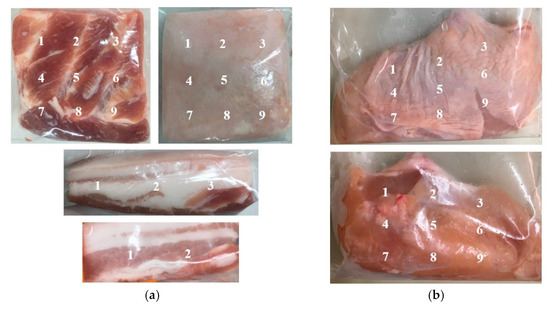
In this research, we aimed to reduce the bacterial loads of Salmonella Enteritidis, Salmonella Typhimurium, Escherichia coli, Campylobacter jejuni, Staphylococcus aureus, and Pseudomonas aeruginosa in pork and chicken meat with skin by applying cold plasma in a liquid state or liquid plasma. The results showed reductions in S. Enteritidis, S. Typhimurium, E. coli, and C. jejuni on the surface of pork and chicken meat after 15 min of liquid plasma treatment on days 0, 3, 7, and 10. However, the efficacy of the reduction in S. aureus was lower after day 3 of the experiment. Moreover, P. aeruginosa could not be inactivated under the same experimental conditions. The microbial decontamination with liquid plasma did not significantly reduce the microbial load, except for C. jejuni, compared with water immersion. When compared with a control group, the pH value and water activity of pork and chicken samples treated with liquid plasma were significantly different (p ≤ 0.05), with a downward trend that was similar to those of the control and water groups. Moreover, the redness (a*) and yellowness (b*) values (CIELAB) of the meat decreased. Although the liquid plasma group resulted in an increase in the lightness (L*) values of the pork samples, these values did not significantly change in the chicken samples. This study demonstrated the efficacy of liquid plasma at reducing S. Enteritidis, S. Typhimurium, E. coli, C. jejuni, and S. aureus on the surface of pork and chicken meat during three days of storage at 4–6 °C with minimal undesirable meat characteristics. View Full-Text

Research – Microbiological Profile, Prevalence and Characterization of Salmonella enterica in Peanuts, Pecans, Raisins, Sun-dried Tomatoes, and Chocolate Sprinkles Sold in Bulk in Markets of Queretaro, Mexico 

Journal of Food Protection

In Mexico, the prevalence of Salmonella enterica in low water activity foods and their link to outbreaks is unknown. The aim of this study was to determine the microbiological profile and the prevalence of S. enterica in low water activity foods (peanuts, pecans, raisins, sun-dried tomatoes, and chocolate sprinkles) purchased in retail establishments in Queretaro, Mexico. Seventy samples of each food item sold in bulk were purchased. Aerobic plate count (APC), molds, yeasts, total coliforms, Escherichia coli, and Staphylococcus aureus were quantified in 10-g samples. The prevalence of S. enterica in 25 g samples was determined. From positive samples, S. enterica  isolates (60) were characterized based on their antimicrobial susceptibility to 14 antibiotics, the presence/absence of 13 virulence genes and serotype. The concentration of APC, molds, yeast, total coliforms, and E. coli ranged from 3.1-5.2 Log CFU g-1, 2.0-2.4 Log CFU g-1, 2.0-3.0 Log CFU g-1, 0.6-1.1 Log MPN g -1, and 0.5-0.9 Log MPN g -1, respectively. S. aureus  was not detected in any sample (<10 CFU g -1). The prevalence of  S. enterica in chocolate sprinkles, raisins, peanuts, pecans, and sun-dried tomatoes was 26%, 29%, 31%, 40%, and 52%, respectively. Most isolates (68.3%) were resistant to at least one antibiotic. The chromosome-associated virulence genes were found in all isolates and only one strain had sopE, and 98.3% of the isolates were grouped in the same virulotype. Among the isolates, the most frequent serotype was Tennessee (51/60). According to the characteristics evaluated, the isolates were grouped in 24 clusters. The elevated prevalence of S. enterica highlight the role of low water activity food items sold in bulk at markets as a potential vehicle for pathogens transmission. Regardless of the low variability among S. enterica isolates, their characterization could be helpful to elucidate which strains are circulating in these foods for improving epidemiological surveillance.