Category Archives: Food Micro Blog

UK – Waitrose recalls Waitrose 2 British Hot Smoked Rainbow Trout Fillets because of contamination with Listeria monocytogenes

FSA

Waitrose is recalling Waitrose 2 British Hot Smoked Rainbow Trout Fillets because Listeria monocytogenes has been found in the product.

Product details

Waitrose 2 British Hot Smoked Rainbow Trout Fillets
Pack size 125g
Use by 11 June 2022

Risk statement

The presence of Listeria monocytogenes in the product listed above.

Symptoms caused by this organism can be similar to flu and include high temperature, muscle ache or pain, chills, feeling or being sick, and diarrhoea. However, in rare cases, the infection can be more severe, causing serious complications, such as meningitis.

Some people are more vulnerable to listeria infections, including those over 65 years of age, pregnant women and their unborn babies, babies less than one month old and people with weakened immune systems.

Action taken by the company

Waitrose is recalling the above product. Point of sale notices will be displayed in all retail stores that are selling this product. These notices explain to customers why the product is being recalled and tell them what to do if they have bought the product. Please see the attached notice.

Our advice to consumers

If you have bought the above product do not eat it. Instead, return it to the store from where it was bought for a full refund.

USA – Mystery 2021 Pennsylvania Pool E. coli and C. difficile Outbreak Finally Explained – 15 Sickened

Food Poison Journal

On June 7, 2021, the Pennsylvania Department of Health (PADOH) received multiple complaints of gastrointestinal illness from patrons of a community swimming pool. Two patrons reported positive Shiga toxin-producing Escherichia coli (STEC) and Clostridioides difficile from stool specimens. PADOH issued pool closure orders and initiated an outbreak response to identify a source and prevent additional illnesses.

Confirmed cases were defined as isolation of E. coli O157:H7 or detection of Shiga toxin or Shiga toxin genes from stool specimens of persons who visited the pool during May 31–June 7, 2021. Probable cases were defined as three or more loose stools in 24 hours with nausea, vomiting, fever, or cramps in persons who visited the pool during the same time frame. C. difficile results were deemed incidental upon consultation with experts (LC McDonald, MD, CDC, personal communication, June 2021) and were not included in the case definition.

Fifteen cases (nine confirmed, six probable) in persons aged 4–14 years were identified; 10 patients were male. All persons reported swimming at the pool on May 31, 2021, the seasonal opening date, and had no other common exposures. The total number of pool visitors on this date is unknown. Symptom onsets occurred during June 2–June 4, 2021. Thirteen patients sought medical evaluation, and six were hospitalized. Four received antibiotics for C. difficile. None developed hemolytic uremic syndrome.

Early findings suggested an unusual association between exposure to a chlorinated swimming pool and infections caused by two pathogens susceptible to chlorine. Pool inspection revealed an automatic chlorinator malfunction. Record-keeping was inconsistent with local requirements, and the few available records demonstrated at least one instance of no detectable chlorine. The pool reopened following chlorinator repair, after which no additional cases were identified.

Research – Outbreak of Salmonella Newport linked to imported frozen cooked crayfish in dill brine, Sweden, July to November 2019

Eurosurveillance

Salmonellosis is the second most commonly reported bacterial gastro-intestinal infection after campylobacteriosis in the European Union (EU) and European Economic Area (EEA). In the EU/EEA, the yearly notification rate of salmonellosis has been around 20 cases per 100,000 individuals in the period from 2015 to 2019 [1]. In 2020, the notification rate decreased to 14 cases per 100,000 individuals; the decline is considered to be an effect of the COVID-19 pandemic [2].  serotype Newport was the fifth most common serotype in the EU/EEA in 2019, accounting for 1.1% of reported serotypes from human salmonellosis cases [1]. In Sweden, human salmonellosis is notifiable by law. The average yearly notification rate of salmonellosis in Sweden between 2015 and 2019 was 21.5 cases per 100,000 individuals, with the majority of cases being infected abroad [3]. In 2019,  Newport was the fifth most common serotype also in Sweden and accounted for 5% of the reported serotypes [3].

Salmonellosis is a bacterial zoonosis. Humans get infected by contaminated foods, through contact with infected animals or humans or via the environment [4]. In recent years, egg and egg products, bakery products and pork and pork products have been the most common food vehicles in food-borne salmonellosis outbreaks reported in EU countries [1].  Newport has previously been linked to outbreaks caused by vehicles of both animal and vegetable origin, for example beef, watermelon and mung bean sprouts [5–8].  Newport have also been detected in fish and different shellfish and in fresh herbs [9–11].

In late September 2019, the Public Health Agency of Sweden (PHAS) identified a cluster of nine cases with  Newport sequence type (ST) 46. The cluster was detected as part of the routine microbial surveillance programme where isolates of  from domestic infections are sent to PHAS for typing using whole genome sequencing (WGS). The cluster was put under observation; it evolved slowly and on 23 October, the cluster consisted of 25 cases. The cases were geographically spread across the country and all but one case were adults. The onset of disease ranged from 16 August to 12 October 2019. The spread of cases, geographically and in time, indicated that the infection source was a contaminated food that was distributed nation-wide and could still be on the market. A national outbreak was declared and an outbreak investigation was initiated with the objectives to describe the outbreak and identify the source in order to prevent further cases.

The outbreak team included investigators from PHAS, the Swedish Food Agency (SFA) and the affected regional Departments of Communicable Disease Control and Prevention (CDC department).

Here we report an investigation of a national outbreak of  Newport in Sweden, with the aim of describing the actions that led to the identification and recall of the source of the infection.

Research – International outbreak of salmonellosis in young children linked to the consumption of Kinder brand products. Update in France as of June 2, 2022.

Sante Publique

Following the investigations carried out by the Belgian health authorities, together with their English, European and in particular French counterparts, the company Ferrero proceeded on April 5, 2022 to the recall of several Kinder range products manufactured in a factory in Belgium due to suspected contamination by Salmonella Typhimurium . On April 8, 2022, the recall finally affected all Kinder products from this factory, regardless of their expiry date. On April 14, 2022, an update of the recalled products, including the 2021 Christmas Advent Calendars, was released.

Case of salmonellosis in France: update on June 2, 2022

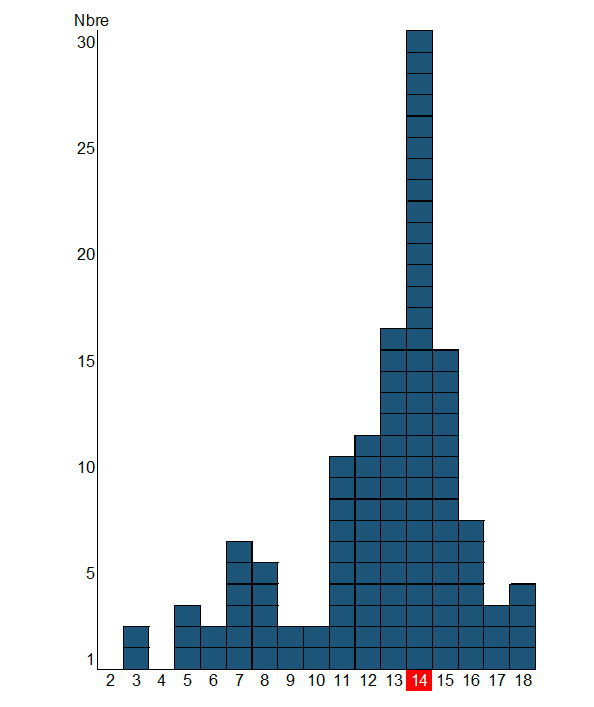
In total, as of 02/06/2022: 118 cases of salmonellosis with a strain belonging to the epidemic have been identified by the National Reference Center (CNR) for salmonella at the Institut Pasteur in France (figure 1) .

Figure 1 – Epidemic curve: number of confirmed cases of salmonellosis caused by Salmonella Typhimurium, monophasic variant (cluster 1 HC5_296366 and cluster 2 HC5_298160), by week of isolation (with in red the week corresponding to the recall of products from the production plant) ‘Arlon in Belgium) – Metropolitan France, weeks 2 to 18, 2022 (N=118)
Figure 1 - Epidemic curve: number of confirmed cases of salmonellosis caused by Salmonella Typhimurium, monophasic variant (cluster 1 HC5_296366 and cluster 2 HC5_298160), by week of isolation (with in red the week corresponding to the recall of products from the production plant) 'Arlon in Belgium) - Metropolitan France, weeks 2 to 18, 2022 (N=118)

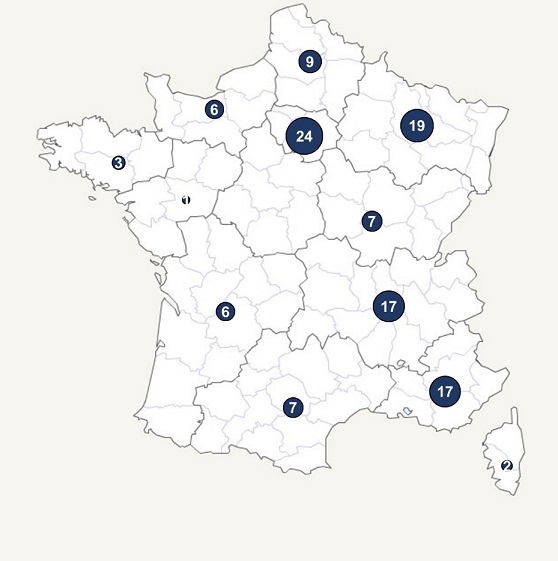
The 118 cases are spread over 12 metropolitan regions (Ile-de-France (24 cases), Grand-Est (19 cases), Auvergne-Rhône-Alpes (17 cases), Provence-Alpes-Côte d’Azur (17 cases) , Hauts-de-France (9 cases), Bourgogne-Franche-Comté (7 cases), Occitanie (7 cases), Normandy (6 cases), New Aquitaine (6 cases), Brittany (3 cases), Corsica (2 cases) and Pays de la Loire (1 case)) with a median age of 4 years, and concern 57 girls and 61 boys.

Figure 2 – Geographical distribution of confirmed cases of salmonellosis due to Salmonella Typhimurium, monophasic variant (cluster 1 HC5_296366 and cluster 2 HC5_298160), by region of residence – metropolitan France, weeks 2 to 18, 2022
Figure 2 - Geographical distribution of confirmed cases of salmonellosis due to Salmonella Typhimurium, monophasic variant (cluster 1 HC5_296366 and cluster 2 HC5_298160), by region of residence - metropolitan France, weeks 2 to 18, 2022

Fifty-one cases were questioned by Public Health France. All the cases, except 1, report, before the onset of their symptoms (which occurred between 20/01 and 04/04/2022), the consumption of chocolates of the brand cited here.

Twenty-two people were hospitalized for their salmonellosis, all since discharged. No deaths were reported.

The foods in question having been identified and the management measures taken, the weekly situation updates are drawn up. Public Health France continues to monitor the reporting of cases by the NR, which are expected due to the different delays inherent in monitoring ( see the infographic dedicated to food alerts ).

The successive withdrawals and recalls of the Kinder brand products concerned, produced by the Belgian factory with its closure by the Belgian authorities, should limit the occurrence in France of new cases of salmonellosis in connection with these chocolates.

The possible identification of new cases with dates of isolation at a distance from the recall withdrawal measures will be the subject of investigations if necessary.

To find out the list of products concerned by the withdrawal-recall: https://rappel.conso.gouv.fr/

People who have consumed the products mentioned above and who present symptoms (gastrointestinal disorders, fever within 72 hours of consumption), are invited to consult their doctor without delay, notifying him of this consumption.

In order to limit person-to-person transmission (especially in households with young children), it is recommended to wash your hands well with soap and water after using the toilet, after changing your child, and before to cook.

USA – CDC investigates two cruise ship outbreaks – Cause Unknown

Outbreak News Today

The Centers for Disease Control and Prevention’s (CDC) Vessel Sanitation Program (VSP) reports investigating two outbreaks on recent cruise ship voyages- Seabourn Cruise Lines, Seabourn Odyssey and Carnival Cruise Line’s Carnival Splendor.

Seabourn Odyssey: 20 passengers and crew on a recent voyage (April 28–May 19, 2022) were sickened with symptoms of diarrhea and vomiting.

The etiology of the outbreak is unknown.

In response to the outbreak, Seabourn Cruise Lines and the crew aboard the ship reported the following actions:

  • Increased cleaning and disinfection procedures according to the ship’s outbreak prevention and response plan.
  • Sent daily reports of gastrointestinal illness cases to VSP.
  • Consulted with VSP about sanitation cleaning procedures and reporting ill cases.

Carnival Splendor: 93 passengers and crew have reported being ill during the May 24–31, 2022 voyage.

Like the Seabourn outbreak, individuals affected on this cruise suffered from vomiting and diarrhea. The cause of the outbreak is unknown.

Norway – Goman Burrito Taco from Goman is withdrawn from the market – Listeria monocytogenes

Matportalen

Goman Burrito Taco

83 pieces of the product in question have been sold in coop stores in Western Norway.

Goman dept. West via Coop asks consumers who have bought the product to throw it away or return it to the store.

The content of Listeria bacteria in food can lead to disease in people at risk groups such as the elderly with impaired health and people with weakened immune systems.

Contact person:

Quality coordinator Grethe Skånøy, Goman dept. West, tel. 901 69 774 , e-mail grethe.skaanoy@coop.no

Luxembourg – RECALL: DELHAIZE BRAND MARINATED CHICKEN STRIPS – Salmonella

SAP

Delhaize recalls the following product:

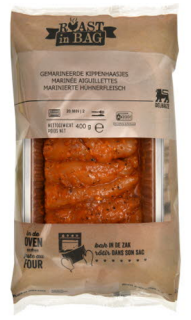
Last name Marinated chicken strips
Mark Delhaize
Unity 400g
EAN code 5400120803508
Use-by date (DLC) 06/13/2022
Sale period from 05-31-2022 to 06-02-2022 inclusive

Danger: Presence of Salmonella

Salmonella can cause symptoms such as nausea, vomiting, abdominal cramps, diarrhea, fever and headache within 6 to 72 hours after consumption. These symptoms may be aggravated in young children, immunocompromised subjects and the elderly. People who have consumed these products and have these symptoms are invited to consult a doctor and report this consumption to him.

Israel – Nahala Spices Brand Ground Nutmeg -Aflatoxin

GovIL

Subhi Nahala & Sons Ltd recalls Nahala Spices Brand Ground Nutmeg (100g; all expiration dates up to and including 13/04/23) due to elevated levels of aflatoxin.

Belgium – Marinated chicken strips (400g) of the Delhaize brand – Salmonella

AFSCA

Delhaize recall
Product: Marinated chicken strips (400g) of the Delhaize brand.
Problem: presence of Salmonella.


Delhaize asks its customers not to consume and to return the product below to the store.

In collaboration with the FASFC, Delhaize has decided to withdraw this product from the market and to recall it from consumers due to the presence of Salmonella.

Product info:

Name: Marinated chicken strips
Brand: Delhaize
EAN code: 5400120803508 Best before
date (BBD):
13-06-2022 Marketing period: from 31-05-2022 to 02-06-2022 inclusive
Weight: 400g

Every day, Delhaize performs hundreds of internal quality controls to guarantee the quality and food safety of its products at all times.

In the meantime, Delhaize has already taken all affected products off the shelves and tightened checks on the product and the supplier. Customers who have purchased this product are asked not to consume it. Customers have the option of returning the product in question to the point of sale where they purchased it. Reimbursement for each affected item is guaranteed.

Other products of the same assortment are not affected and can therefore be consumed in complete safety. Delhaize would like to apologize for the inconvenience caused.

Advice and information for consumers:

What if you have already purchased the product?

Do not consume the product and return it to your Delhaize store. The products will be refunded to you.

For further information , customers can contact our Customer Service on the free number 0800/95 713.

USA- Massive cheese recall due to Listeria monocytogenes

Food Poison Journal

Paris Brothers, Inc., of Kansas City, Missouri is recalling several specific cheese products listed below because they have the potential to be contaminated with Listeria monocytogenes, an organism which can cause serious and sometimes fatal infections in young children, frail or elderly people, and others with weakened immune systems. Although healthy individuals may suffer only short-term symptoms such as high fever, severe headache, stiffness, nausea, abdominal pain and diarrhea, Listeria infection can cause miscarriages and stillbirths among pregnant women.

The following cheeses produced on May 4, 5, and 6, 2022 are the only products in the recall. Shipping cartons with the affected product will bear the lot codes of 05042022, 05052022, or 05062022. Individual retail outlets may have relabeled the individual consumer packages.

• Cottonwood River Cheddar
• D’amir Brie Double Crème French Brie
• Milton Prairie Breeze White Cheddar Style
• Milton Tomato Garlic Cheddar
• Paris Brothers Mild Cheddar
• Paris Brothers Colby Jack
• Paris Brothers Pepper Jack
• Cervasi Pecorino Romano

The products were delivered to wholesalers for distribution in grocery stores in KS, MO, AR, IA, OK, NE, SD, one store in MS, and one store in FL.

This recall is the result of routine sampling by the FDA, which revealed the presence of Listeria monocytogenes.