Category Archives: Food Micro Blog

France – Spice Mixture for Fish – Bacillus cereus

Food Safety News

Identification information of the recalled product

  • Product category Feed
  • Product subcategory Herbs and spices
  • Product brand name marius
  • Model names or references Flask Mixture for Fish
  • Identification of products
    GTIN Batch Date
    3183811060528 000324548 Date of minimum durability 09/20/2025
  • Packaging 42g bottle
  • Marketing start/end date From 04/10/2022 to 06/12/2022
  • Storage temperature Product to be stored at room temperature
  • Further information Glass bottle with black cap
  • Geographic area of ​​sale Whole France
  • Distributors Retail
  • List of points of saleTRACABILITE_6052__LOT_000324548_(ginger_moulu_lot_28042022_lot_fournisseur_N°1556).pdf

Practical information regarding the recall

  • Reason for recall Presence of Bacillus cereus in ginger raw material
  • Risks incurred by the consumer Bacillus cereus

UK – Co-op recalls Co-op Anchovies in olive oil because it contains histamine

FSA

Co-op is recalling Co-op Anchovies in olive oil because it contains histamine. This means the product is a possible health risk for anyone with a sensitivity to histamine.

Product details

Co-op Anchovies in olive oil
Pack size 50g
Best before end date: September 2023

Risk statement

Histamine can trigger an immune system response resulting in symptoms such as diarrhoea, shortness of breath, headaches, or skin irritation

Action taken by the company

Co-op is recalling the above product. Point of sale notices will be displayed in all retail stores that are selling this product. These notices explain to customers why the product is being recalled and tell them what to do if they have bought the product. Please see the attached notice.

Our advice to consumers

If you have bought the above product, do not eat it. Instead return it to the nearest Co-op store for a full refund, or if self-isolating or shielding please contact the customer careline – contact 0800 0686 727 or customer.careline@coop.co.uk.

Australia – Don’t be raw and risky – food safety tips for Christmas and Summer entertaining (5 December 2022)

Food Safety Council

The Food Safety Information Council today released their food safety tips for Christmas and Summer entertaining especially warning about the risk of raw or minimally cooked foods.

Cathy Moir, Council Chair, said that we are all looking forward this Summer to getting together with multi-generations of family and friends which will include those most at risk if they get food poisoning: the elderly, pregnant, and people with poor immune systems.

‘With an estimated 4.67 million cases of food poisoning a year in Australia we all want to keep our family and friends safe, which we can do by following some simple tips.

‘Firstly, cook your meat and poultry to a safe temperature. Our recent consumer survey found that 4% surveyed said they had eaten rare meat or offal with 0.2% eating raw meat or offal in the last six months. This is a risk for food poisoning, including parasitic infections such as toxoplasmosis. You can protect your guests by using a digital meat thermometer and cook your foods safely to these temperatures measured in the centre of the food:

  • All poultry including turkey (whole cuts, roast or mince) should be cooked to at least 75°C.
  • Beef, lamb, kangaroo in whole cuts like chops, steaks, pieces and roasts at least 63°C (medium rare) and leave to rest 3 to 5 minutes.
  • Pork whole cuts and pieces to 70°C and roasts to between 70°C and 75°C and leave to rest 3 to 5 minutes.
  • Beef, lamb, kangaroo, or pork that have been made into sausages, hamburgers or mince as well as rolled roasts, liver and other offal 75°C
  • Fish fillets should be cooked to around 63°C or when flesh flakes easily

‘Eggs and egg dishes such as quiche, can also be a food safety risk and should be cooked to 72°C in the centre (or until the white is firm and the yolk thickens). Raw eggs in eggnog and health shakes, raw egg mayonnaise and aioli, or fancy desserts made with raw eggs like tiramisu are a real risk for food poisoning.

‘Don’t forget to wash your hands with soap and water before preparing and cooking food, and after handling shell eggs, seafood, raw meat and poultry, burgers and sausages.

‘Here are some more key Christmas and Summer entertaining food safety tips which may also help reduce the cost of food and waste less:

  1. Don’t strain your fridge: Plan ahead and don’t buy more food than you need. It’s vital that you don’t overstock your fridge and freezer, as this won’t allow the cool air to circulate freely and food cannot be adequately frozen or chilled. Less food will also help to reduce food waste.
  2. Make space: Prevent overstocking by making room in your fridge for perishable foods by removing alcohol and soft drinks and put them on ice in a container or laundry sink. This also stops guests opening the fridge so often and helps to maintain the temperature at 5°C or below. Use a fridge thermometer to check the fridge temperature.
  3. Bird or bits? Think about getting a turkey breast that is simpler to cook, rather than a whole turkey. If you do need a whole turkey ask your supermarket if they sell them fresh rather than frozen. Otherwise it must be covered and defrosted in your fridge which can take several days and also increases the risk of potentially contaminating ready to eat foods stored in the fridge.
  4. Christmas ham won’t last forever – check the storage instructions and best before or use by date before removing the ham from its plastic wrap. Cover it with a clean cloth soaked in water and vinegar, keep the cloth moist so it doesn’t dry out, and store it in the fridge at or below 5°C. It is important to remember that the use by date on the original packaging won’t apply after the packaging has been removed, so check the fine print on the label for the suggested shelf life after opening (or ask your butcher if it us unpackaged). Reduced salt hams are now becoming popular but will not last as long as conventional hams so think how much you are going to use in the next week or so and freeze the rest for later.
  5. Phased roll-out: Don’t leave perishable chilled foods out in the heat of Summer for more than an hour. These foods include cold meats, soft cheeses like Camembert and Brie, cold poultry, cooked seafood like prawns and smoked salmon, pâtés, sushi and salads. Put out small amounts and replace them (do not top them up) from the fridge.
  6. Get it cold, quick. Refrigerate leftovers as soon as possible. If perishable foods and leftovers have been left out of the fridge for less than two hours they should be okay to refrigerate or freeze to eat later, so long as they haven’t been sitting out on a hot day. Never eat perishable food that has been unrefrigerated for more than four hours as it may not be safe and should be thrown away. Food should not be refrigerated if it has been outside in the heat for more than an hour and discarded after it has been outside for more than 2 hours.

Research – Microbiological and Sensorial Quality of Beef Meat (Longissimus dorsi) Marinated with Cinnamon Extract and Stored at Various Temperatures

MDPI

Abstract

Meat spoilage caused by temperature abuse is a major problem for producers, retailers, and consumers that can generate large economic losses to industries. Microbial growth of Pseudomonas spp. is the main source of spoilage during storage. Cinnamon has antimicrobial properties that may potentially be used to reduce the spoilage caused by Pseudomonas. The objectives of this study were to determine the inhibitory effect of cinnamon extract (CE) against Pseudomonas aeruginosa (ATCC 27853) and evaluate the treatment of CE on meat quality during different storage temperatures (5 °C, 10 °C, 15 °C, and 25 °C). The anti-Pseudomonas result showed that 100% (w/v) CE concentration produced a 13.50 mm zone of inhibition in a disc diffusion assay. The minimum inhibitor concentration (MIC) of CE was noted at 25% (v/v), whereas the minimum bactericidal concentration (MBC) value was observed at 50% (v/v) concentration of CE. The time-kill showed the growth of P. aeruginosa decreased from 7.64 to 5.39 log CFU/mL at MIC concentration. Total phenolic content and IC50 value of the cinnamon extract was expressed as 6.72 ± 0.87 mg GAE/g extract and 0.15 mg/mL, respectively. When the meat was marinated with 50% (v/v) CE and stored at various temperatures, the total viable count (TVC) and growth of Pseudomonas spp. were lowered as compared to the control sample. However, the reduction in microbial count in all samples was influenced by the storage temperature, where the lowered microbial count was noted in the sample treated with CE and stored at 5 and 10 °C for 48 h. The pH of meat treated with or without CE ranged from pH 5.74 to 6.48. The sensory attributes of colour, texture, and overall acceptability have a significant difference, except for odour, between marinated meat and control. The results indicate that the use of cinnamon extract as the marination agent for meat could reduce the growth of Pseudomonas spp. and therefore assist in extending the shelf life of meat at 5 and 10 °C storage temperatures.

Shannon Illingworth Explains Why Lettuce and Spinach Keeps Getting Contaminated With E. Coli

yahoo finance

The Centers for Disease Control (CDC) reports that  each year in the United States, 48 million people get sick, 128,000 are hospitalized, and 3,000 die from foodborne diseases.

“Those numbers are staggering and unacceptable,” says Shannon Illingworth, founder of “Know the Grow.”

Illingworth is spreading the word that our nation’s food system is in crisis, and it’s time for people to understand where and how their food was grown.

“That lettuce on your plate may have come from thousands of miles away, picked way ahead of its peak flavor and nutritional value, and may have been exposed to pathogens in dozens of ways during its voyage from seedling to your table,” he said.

According to the CDC, “Germs can contaminate leafy greens at many points before they reach your plate. For example, germs from animal poop can get in irrigation water or fields where vegetables grow. Germs can also get on leafy greens in packing and processing facilities, in trucks used for shipping, from the unwashed hands of food handlers, and in the kitchen.”

Read more at the link above.

CJEU clarifies the Food for Special Medical Purposes Definition

Lex blog

On the 27 October 2022, the Court of Justice of the EU (“CJEU”) issued a preliminary ruling  regarding the definition of foods for special medical purposes (“FSMP”).  The CJEU held that for a food product to be classified as an FSMP, it must cover the increased or specific nutritional requirements caused by the disease.  It is not sufficient that the product counteracts the disease or alleviates its symptoms, as that would blur the lines between foods and medicinal products. 

Research – Inhibition of Cronobacter sakazakii by Litsea cubeba Essential Oil and the Antibacterial Mechanism

MDPI

Abstract

Litsea cubeba essential oil (LC-EO) has anti-insecticidal, antioxidant, and anticancer proper-ties; however, its antimicrobial activity toward Cronobacter sakazakii has not yet been researched extensively. The objective of this study was to investigate the antimicrobial and antibiofilm effects of LC-EO toward C. sakazakii, along with the underlying mechanisms. The minimum inhibitory concentrations of LC-EO toward eight different C. sakazakii strains ranged from 1.5 to 4.0 μL/mL, and LC-EO exposure showed a longer lag phase and lower specific growth compared to untreated bacteria. LC-EO increased reactive oxygen species production, decreased the integrity of the cell membrane, caused cell membrane depolarization, and decreased the ATP concentration in the cell, showing that LC-EO caused cellular damage associated with membrane permeability. LC-EO induced morphological changes in the cells. LC-EO inhibited C. sakazakii in reconstituted infant milk formula at 50 °C, and showed effective inactivation of C. sakazakii biofilms on stainless steel surfaces. Confocal laser scanning and attenuated total reflection–Fourier-transform infrared spectrometry indicated that the biofilms were disrupted by LC-EO. These findings suggest a potential for applying LC-EO in the prevention and control of C. sakazakii in the dairy industry as a natural antimicrobial and antibiofilm agent.

Italy – READY-TO-COOK SMOKED SALMON CUTTINGS – Listeria monocytogenes (2nd Batch)

Salute

Brand : POSEIDON

Name : READY-TO-COOK SMOKED SALMON CUTTINGS

Reason for reporting : Recall for microbiological risk

Publication date : December 9, 2022

Documentation

Documentation

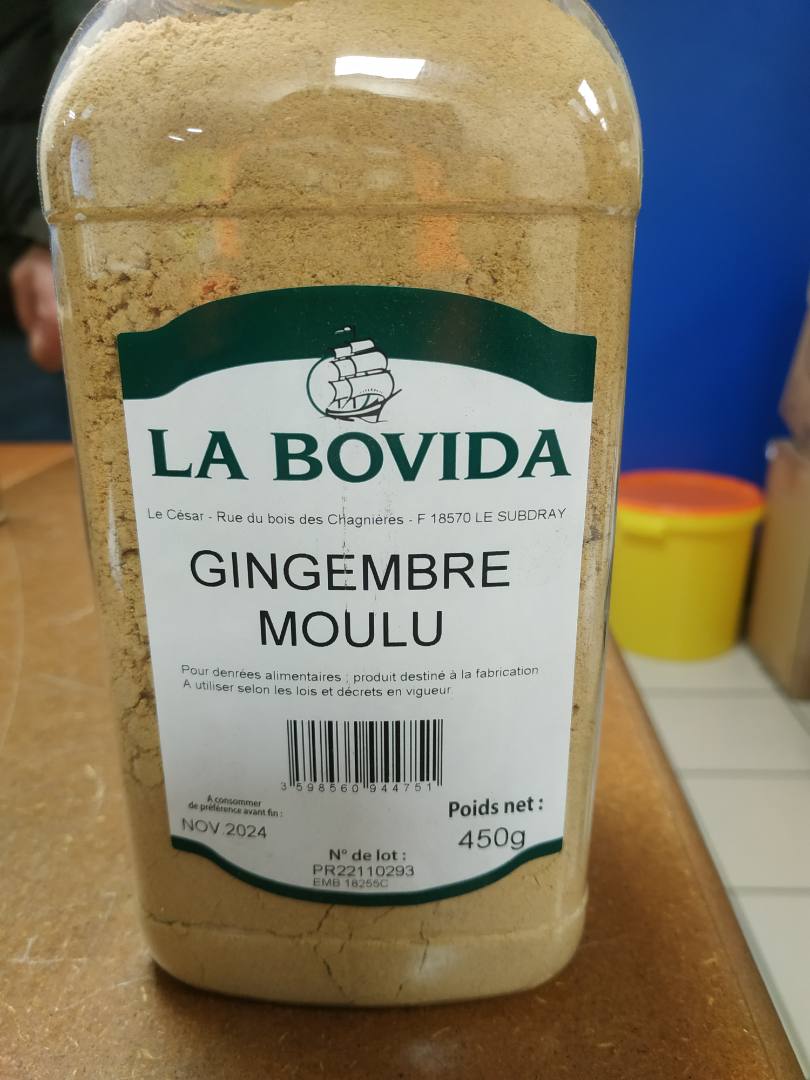
France – Ground ginger in 450g jar – Bacillus cereus

Gov france

Identification information of the recalled product

  • Product category Feed
  • Product subcategory Herbs and spices
  • Product brand name La Bovida
  • Model names or references Ground ginger in 450g jar
  • Identification of products
    GTIN Batch Date
    3598560944751 PR22110293 Best before date 30/11/2024
  • Packaging 450g jar
  • Marketing start/end date From 01/11/2022 to 30/11/2024
  • Storage temperature Product to be stored at room temperature
  • Geographic area of ​​sale Whole France
  • Distributors TOC SHOP LES HALLES 36 Rue Montmartre, 75001 Paris

Practical information regarding the recall

  • Reason for recall presence of Bacillus cereus
  • Risks incurred by the consumer Bacillus cereus

France – Ground Ginger – Bacillus cereus

Gov france

Identification information of the recalled product

  • Product category Feed
  • Product subcategory Herbs and spices
  • Product brand name La Bovida
  • Model names or references Ground ginger 1kg bag
  • Identification of products
    GTIN Batch Date
    3598560944010 PR22110341 Best before date 30/11/2024
  • Packaging1kg bag
  • Marketing start/end date From 20/11/2022 to 30/11/2024
  • Storage temperature Product to be stored at room temperature
  • Health mark EMB18255C
  • Geographic area of ​​sale Whole France
  • Distributors La Bovida Rungis 10 Avenue de Normandie, 94150 Rungis

Practical information regarding the recall

  • Reason for recall presence of Bacillus cereus
  • Risks incurred by the consumer Bacillus cereus