Category Archives: Food Micro Blog

Research – Prevalence ofE. coliO157:H7 in water sources: an overview on associated diseases, outbreaks and detection methods

Elsevier

Escherichia coliO157:H7 is a zoonotic pathogen with its ability to cause human illness ranging from diarrheal dis-ease to fatal hemolytic uremic syndrome.E. coliO157:H7 had been associated with waterborne outbreaksresulting in high morbidity and mortality worldwide. Therefore, it is important to investigate the prevalence ofE. coliO157:H7 in water sources especially used for drinking and to develop the diagnostic methods for itsearly detection. The review describes traditional cultural methods, immunological techniques, and polymerasechain reaction (PCR)–based methods for detection of this bacterium in water sources. The current PCR-basedtechniques such as real-time PCR are more specific and sensitive and require less detection time (b3 hours).These methods can be applied for regular water monitoring and proper management of water sources to preventwaterborne diseases due toE. coliO157:H7.


Research – Vibrio vulnificus and Vibrio parahaemolyticus in Oysters under Low Tidal Range Conditions: Is Seawater Analysis Useful for Risk Assessment?

MDPI

Food Illness

Abstract

Human-pathogenic Vibrio bacteria are acquired by oysters through filtering seawater, however, the relationships between levels of these bacteria in measured in oysters and overlying waters are inconsistent across regions. The reasons for these discrepancies are unclear hindering our ability to assess if -or when- seawater samples can be used as a proxy for oysters to assess risk. We investigated whether concentrations of total and human pathogenic Vibrio vulnificus (vvhA and pilF genes) and Vibrio parahaemolyticus (tlh, tdh and trh genes) measured in seawater reflect concentrations of these bacteria in oysters (Crassostrea virginica) cultured within the US lower Chesapeake Bay region. We measured Vibrio spp. concentrations using an MPN-qPCR approach and analyzed the data using structural equation modeling (SEM). We found seawater concentrations of these bacteria to predictably respond to temperature and salinity over chlorophyll a, pheophytin or turbidity. We also inferred from the SEM results that Vibrio concentrations in seawater strongly predict their respective concentrations in oysters. We hypothesize that such seawater-oyster coupling can be observed in regions of low tidal range. Due to the ease of sampling and processing of seawater samples compared to oyster samples, we suggest that under low tidal range conditions, seawater samples can foster increased spatial and temporal coverage and complement data associated with oyster samples.

Research – EFSA – FOODSAFETY4EU: paving the way for the food safety system of the future

EFSA

Abstract

Food safety is a top priority for the European Commission, which policies aim at sustaining a high level of protection of human health and consumers’ interests, while ensuring an effective functioning of the internal EU market. Under the New Transparency Regulation (EU/2019/138), the 3-year EU-fundedFOODSAFETY4EUproject (FS4EU) kicked off in January 2021, represents a significant step for the European Union (EU) food safety system (FSS), towards more transparency, better engagement, and closer cooperation.

This Horizon 2020 Project, coordinated by CNR-ISPA (Italy), focuses on building a multi-stakeholder platform for the future EU FSS. The FOODSAFETY4EU Network currently consists of 23 consortium partners and around 50 stakeholders: Food Safety Authorities (FSA), consumer associations, academia, research centres and networks, food industries and sector associations, thinktanks, etc. Through a structured, digitally supported, participatory process, the platform hosts the co-design of future strategic research and innovation agenda (SRIA), as well as risk communication models tailored to the specificities of various target groups. Among the goals: providing scientific advice and technical support for EU food safety policies, by enabling actors to access, share and exchange scientific knowledge, resources, and data more efficiently, to better synchronise food safety research and policies, and to contribute to a more transparent communication through the FSS.

Overall, the FS4EU project underpins the EFSA missions in risk assessment, including risk communication, with the ambition to be a basis for a Knowledge Centre for Food Safety in Europe. Accordingly, the EU-FORA 2021–2022 fellow (based in CNR-ISPA under the Work Programme RECIPE: Risk AssEssment/Risk CommunIcation: understanding the context and addressing Priorities of the futurE–a learning-by-doing approach) committed to multiple Work Packages, actively participated to various activities, thus successfully contributing to the FS4EU project meeting its objectives by the end of 2023

France – Cooked Ham – Listeria monocytogenes

Gov france

Identification information of the recalled product

  • Product category Feed
  • Product subcategory Meats
  • Product brand name Father Anselm
  • Model names or references HAM deboned with Gouge s/v /4 vacuum-packed by 4 hams, pocket intended for the cutting department
  • Identification of products
    GTIN Batch Date
    2333404000000 33648 Use-by date 06/01/2023
  • Marketing start/end date From 02/12/2022 to 19/12/2022
  • Storage temperature Product to be stored in the refrigerator
  • Health mark EN 69.259.002 EC
  • Geographic area of ​​sale Whole France
  • Distributors Leclerc, Carrefour brands + butchers, retailers and wholesalers see attached list of points of sale concerned
  • List of points of sale Tracabilite_avale_161222.pdf

Practical information regarding the recall

  • Reason for recall Listeria monocytogenes detected, with count <10 cfu/g
  • Risks incurred by the consumer Listeria monocytogenes (causative agent of listeriosis)

Czech Republic – KROLEWSKI CHEESE 45% – Mold/Mould

Potravinynapranyri

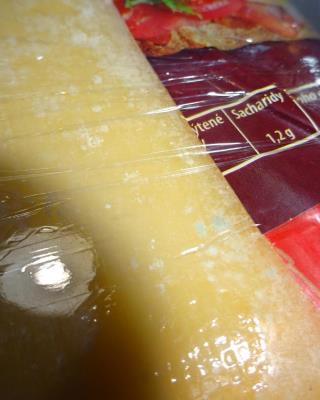
Illustrative photo #1

Place of inspection:
Bedřichov ( Bedřichov 1597, 468 12 Bedřichov )
ID: 07942125
Food group: Milk and milk products / Cheese
KROLEWSKI CHEESE 45%
Category: Dangerous foods
Invalid parameter:
fungi visible to the eye

There were green and white mold colonies on the surface of the cheese. Food is not considered safe if it shows signs of spoilage.

The sample was taken from a loaded package that had three different shelf life dates on it.

Batch: Batch number: 41
Packaging: packed partly in the original technological packaging and partly in clear food foil
Quantity of the product in the package: 3.06 kg
Date of sample collection: 3/11/2022
Reference number: 22-000605-SZPI-CZ
 
The sample was detected by the official control of the State Agricultural and Food Inspection.

France – Grated Emmental cheese 29% fat 200g – Listeria monocytogenes

Gov france

Identification information of the recalled product

  • Product category Feed
  • Product subcategory Milk and dairy products
  • Product brand name BIOCOOP
  • Model names or references Grated Emmental cheese 29% fat 200g
  • Identification of products
    Batch Date
    batch number GD003GD1 DLC 12/02/2023 Use-by date 16/12/2022
  • Marketing start/end date From 01/12/2022 to 06/12/2022
  • Storage temperature Product to be stored in the refrigerator
  • Health mark EN 73-171-001 EC
  • Further information The product was blocked on 06/12/2022 upon receipt of the first results.
  • Geographic area of ​​sale Whole France
  • Distributors BIOCOOP store in the Great West and North East Center only.

Practical information regarding the recall

  • Reason for recall Presence of Listeria monocytogenesis (<10) on a sample.
  • Risks incurred by the consumer Listeria monocytogenes (causative agent of listeriosis)

Czech Republic – Chicken China Curry -Salmonella

Potravinynapranyri

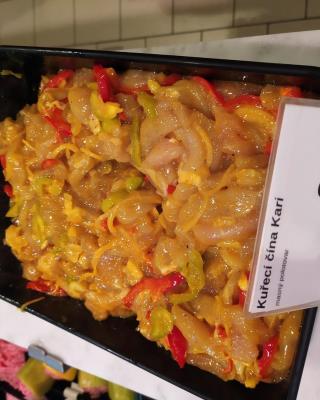
Illustrative photo #1

Place of inspection:
Prague 8 ( Maškova 1798/2, Kobylisy, 18200 Prague 8 )
ID: 07387156
Food group: Meat and meat products / Semi- finished meat
Chicken China Curry
Category: Dangerous foods
Invalid parameter:
Samonella Enterica sera. Enteritidis

The pathogenic bacterium Salmonella Enterica sera were detected in the meat semi-finished product. Enteritidis . This bacteria can cause a disease called salmonellosis.

Expiration date: 3/11/2022
Packaging: not packed
Producer: ZEMAN – meat, sausages as
Country of origin:  Czechia
Date of sample collection: 3/11/2022
Reference number: 22-000053-SVS-CZ
 
The sample was detected by the official control of the State Veterinary Administration.

France – Burgundy parsley ham – Listeria monocytogenes

Gov france

Identification information of the recalled product

  • Product category Feed
  • Product subcategory Meats
  • Product brand name Father Anselm
  • Model names or references Burgundy parsley ham
  • Identification of products
    GTIN Batch Date
    23334420 33348 Use-by date 01/13/2023
  • Packaging vacuum-packed, entire pouch of approximately 2.2 to 2.5 kg
  • Marketing start/end date From 01/12/2022 to 19/12/2022
  • Storage temperature Product to be stored in the refrigerator
  • Health mark EN 69.259.002 EC
  • Geographic area of ​​sale Whole France
  • Distributors Leclerc Champvert Lyon (69009), Carrefour Vénissieux (69200) and Carrefour Market Belley (01300), Super U store Pont de Beauvoisin (73330)

Practical information regarding the recall

  • Reason for recall detection of Listeria monocytogenes, with a count of less than 10 cfu/g

Czech Republic – Marinated chicken breast steak Italia – Salmonella

Potravinynapranyri

Place of inspection:
Třemošnice ( 1. maje 447, 53843 Třemošnice )
ID: 07387156
Food group: Meat and meat products / Semi- finished meat
Marinated chicken breast steak Italia
Category: Dangerous foods
Invalid parameter:
Salmonella Agona

The pathogenic bacterium Salmonella Agona was detected in the semi-finished meat . This bacteria can cause a disease called salmonellosis.

Expiration date: 8/18/2022
Packaging: not packed
Producer: ZEMAN – meat, sausages as
Country of origin:  Czechia
Date of sample collection: 8/16/2022
Reference number: 22-000055-SVS-CZ
 
The sample was detected by the official control of the State Veterinary Administration.

Research – Emerging health threat and cost of Fusarium mycotoxins in European wheat

Nature.com

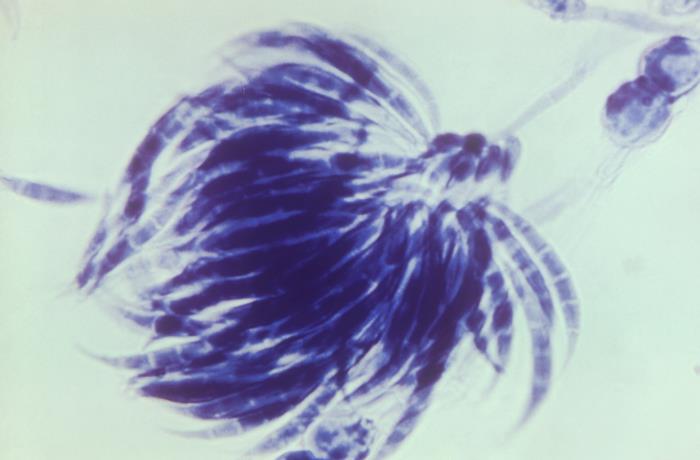
CDC Fusarium1

Mycotoxins harm human and livestock health, while damaging economies. Here we reveal the changing threat of Fusarium head blight (FHB) mycotoxins in European wheat, using data from the European Food Safety Agency and agribusiness (BIOMIN, World Mycotoxin Survey) for ten years (2010–2019). We show persistent, high, single- and multi-mycotoxin contamination alongside changing temporal-geographical distributions, indicative of altering FHB disease pressure and pathogen populations, highlighting the potential synergistic negative health consequences and economic cost.