Category Archives: Food Micro Blog

UK – Update 1: Tahira Foods recalls a number of products because of poor temperature control

FSA

Tahira Foods Limited is recalling a number of products because there has been a breakdown in temperature control which makes these products unsafe to eat. This product recall information notice has been updated to provide specific batch codes.
Any of the products listed below sold at Asda, Coop, Morrisons and/or Sainsburys are not affected.

Product details

Tahira Chilled Beef Sausage Hot and Spicy
Pack size 500g and 8x500g
Batch code 63479, 64318, 64167, 64678, 64978
Tahira Chilled Chicken Sausage Piri Piri
Pack size 500g and 8x500g
Batch code 63479, 64318, 64399, 64978, 64678
Tahira Chilled Chicken Sausage Tikka
Pack size 500g and 8x500g
Batch code 63479, 64318, 64399, 64978, 64678
Tahira Turkey Chorizo
Pack size 80g and 12x80g
Batch code 22300, 22363
Tahira Sliced Turkey Pizza Topping Salami
Pack size 125g and 12x125g
Batch code 64338, 64840
Tahira Sliced Poultry Mortadella with Paprika
Pack size 200g and 8x200g
Batch code 64399, 64101
Tahira Chilled Mini Chicken Sausage
Pack size 400g and 6x400g
Batch code 64338
Tahira Beef Salami
Pack size 80g and 12x80g
Batch code 22363
Tahira Nabulsi Cheese
Pack size 250g and 8x250g
Batch code 4811

Risk statement

Insufficient temperature control makes these products unsafe to eat.

Action taken by the company

Tahira Foods Limited is recalling the above products from customers. Point of sale notices will be displayed in all retail stores that are selling the products affected. These notices explain to customers why the products are being recalled and tells them what to do if they have bought the products. Any of the products listed above sold at Asda, Coop, Morrisons and/or Sainsburys are not affected. Please see the attached notice.
UK – Tahira Foods recalls a number of products because of poor temperature control

FSA

Tahira Foods Limited is recalling a number of products because there has been a breakdown in temperature control which makes these products unsafe to eat.
Any of the products listed below sold at Morrisons, Coop and/or Asda are not affected.

Product details

Tahira Chilled Beef Sausage Hot and Spicy
Pack size 500g and 8x500g
Batch code All batches
Use by All dates
Tahira Chilled Chicken Sausage Piri Piri
Pack size 500g and 8x500g
Batch code All batches
Use by All dates
Tahira Chilled Chicken Sausage Tikka
Pack size 500g and 8x500g
Batch code All batches
Use by All dates
Tahira Turkey Chorizo
Pack size 80g and 12x80g
Batch code All batches
Use by All dates
Tahira Sliced Turkey Pizza Topping Salami
Pack size 125g and 12x125g
Batch code All batches
Use by All dates
Tahira Sliced Poultry Mortadella with Paprika
Pack size 200g and 8x200g
Batch code All batches
Use by All dates
Tahira Chilled Mini Chicken Sausage
Pack size 400g and 6x400g
Batch code All batches
Use by All dates
Tahira Beef Salami
Pack size 80g and 12x80g
Batch code All batches
Use by All dates
Tahira Nabulsi Cheese
Pack size 250g and 8x250g
Batch code All batches
Use by All dates

Risk statement

Insufficient temperature control makes these products unsafe to eat.

Action taken by the company

Tahira Foods Limited is recalling the above products from customers. Point of sale notices will be displayed in all retail stores that are selling the products affected. These notices explain to customers why the product is being recalled and tells them what to do if they have bought the product. Please see the attached notice.

Any of the products listed above sold at Morrisons, Coop and/or Asda are not affected.

UK – Lidl GB recalls Deluxe Strolghino Salami because of the potential presence of Salmonella

FSA

Lidl GB is recalling Deluxe Strolghino Salami because Salmonella has been found in the product.

Product details

Deluxe Strolghino Salami
Pack size 250g
Use by 13 Apr 2023 and 08 May 2023

Risk statement

The presence of Salmonella in the product listed above.

Symptoms caused by Salmonella usually include fever, diarrhoea and abdominal cramps.

Action taken by the company

Lidl GB is recalling the above product. Point of sale notices will be displayed in retail stores that are selling this product. These notices explain to customers why the product is being recalled and tell them what to do if they have bought the product. Please see the attached notice.

Our advice to consumers

If you have bought any of the above product do not eat it. Instead, return it to the store from where it was bought for a full refund. If you have any queries or concerns please email customer.services@lidl.co.uk or telephone 0800 977 7766.

Research – Bread Biopreservation through the Addition of Lactic Acid Bacteria in Sourdough

MDPI

Abstract

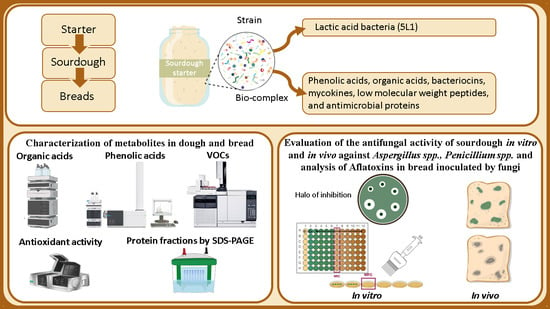
Nowadays, the consumer seeks to replace synthetic preservatives with biopreservation methods, such as sourdough in bread. Lactic acid bacteria (LAB) are used as starter cultures in many food products. In this work, commercial yeast bread and sourdough breads were prepared as controls, as well as sourdough breads with L. plantarum 5L1 lyophilized. The impact of L. plantarum 5L1 on the properties of bread was studied. Antifungal compounds and the impact on the protein fraction by the different treatments in doughs and breads were also analyzed. In addition, the biopreservation capacity of the treatments in breads contaminated with fungi was studied and the mycotoxin content was analyzed. The results showed significant differences with respect to the controls in the properties of the bread and a higher total phenolic and lactic acid content in breads with higher amounts of L. plantarum 5L1. In addition, there was a higher content of alcohol and esters. Furthermore, adding this starter culture produced hydrolysis of the 50 kDa band proteins. Finally, the higher concentration of L. plantarum 5L1 delayed fungal growth and reduced the content of AFB1 and AFB2 compared to the control.

Research – Evaluation of antibiotic efficacy of Ocimum gratissimum L. essential oil against Staphylococcus aureus and Pseudomonas aeruginosa

Academic Journals

Abstract

Ocimum gratissimum essential oil (EOGT) has been evaluated for its antibacterial efficacy, and its combinational therapy with antibiotics may enhance the therapeutic efficiency against infection-causing bacteria. Herein, we evaluated the chemical composition of EOGT and its antibiotic efficacy against Staphylococcus aureus and Pseudomonas aeruginosa. GC-MS and GC-FID analyzed EOGT. The antibiotic efficacy was determined by the agar diffusion method, microdilution, minimum inhibitory concentration (MIC), and fractional inhibitory concentration index (FICI). Eugenol (74.2%) was the main component of OGT. Using the agar diffusion method, the action of rifampicin, ciprofloxacin, and tetracycline was evaluated against S. aureus, while the action of cefepime and ciprofloxacin was evaluated against P. aeruginosa. FICI showed a reduced MIC of ciprofloxacin and tetracycline associated with EOGT. In the presence of EOGT, MIC of ciprofloxacin reduced from 0.6 to 0.0006 μg/mL and of tetracycline decreased from 0.028 to 0.0018 μg/mL against S. aureus and from 4 to 0.12 μg/mL against P. aeruginosa. EOGT enhanced the antibacterial efficacy of the antibiotics suggesting a synergistic effect, thereby enhancing the efficacy in treating infection against S. aureus and P. aeruginosa.

Research – Implementation of the HACCP System for Apple Juice Concentrate Based on Patulin Prevention and Control

MDPI

Abstract

Patulin (PAT) is a toxic secondary metabolite produced by Aspergillus sp. and Penicillium sp., which acts as a contaminant of most apples and their products. The internationally recognized HACCP system is selected as the theoretical basis to more effectively reduce the PAT in apple juice concentrate (AJC). Through field investigation of apple juice concentrate (AJC) production enterprises, we collected 117 samples from 13 steps of AJC production, including whole apple, apple pulp, and apple juice. PAT contents were analyzed via high-performance liquid chromatography (HPLC) and compared with samples from the different production processes. The result demonstrated that the PAT content was significantly (p < 0.05) influenced by five processes, receipt of raw apples, sorting of raw apples, adsorption step, pasteurization, and aseptic filling. These processes were determined as the CCPs. Monitoring systems for maintaining CCPs within acceptable limits were established, and corrective actions were proposed in case a CCP was surpassed. Based on the above-identified CCPs, critical limits, and control methods (corrective actions), a HACCP plan related to the production process of AJC was established. This study provided important guidance for juice manufacturers wishing to effectively control the PAT content in their products.

Research – Presence and Persistence of Listeria monocytogenes in the Danish Ready-to-Eat Food Production Environment

MDPI

Abstract

Listeria monocytogenes is an ubiquitously occurring foodborne bacterial pathogen known to contaminate foods during the production processes. To assess the presence and persistence of L. monocytogenes in Danish ready-to-eat (RTE) food production companies in response to a Listeria awareness campaign, the production environment of selected companies were sampled in 2016 and in 2020. Whole genome sequencing (WGS) was performed to characterize the isolates (n = 50, plus 35 isolates obtained from the routine surveillance during 2016–2020), including investigation of the presence of virulence, persistence and resistance genes. The number of companies that tested positive by culture was 17/39 (43.6%) in 2016 and 11/34 (32.4%) in 2020, indicating a limited effect of the campaign. WGS analyses of the 85 isolates showed that the most common sequence types (STs) were ST8 and ST121. The single nucleotide polymorphism (SNP) analysis showed that isolates coming from the same company and belonging to the same ST exhibited <10 SNP differences regardless of the sampling year and whether the samples came from the environment or products, indicating the persistence of the specific STs. Several prevalent STs were found in clinical cases concurrently, including genetically similar isolates. This highlights the issue of persistent L. monocytogenes in the food production environment and the need for improved risk communication and mitigation strategies.

Research – A Highly Effective Bacteriophage-1252 to Control Multiple Serovars of Salmonella enterica

MDPI

Abstract

Salmonella enterica (S. enterica) is the most common foodborne pathogen worldwide, leading to massive economic loss and a significant burden on the healthcare system. The primary source of S. enterica remains contaminated or undercooked poultry products. Considering the number of foodborne illnesses with multiple antibiotic resistant S. enterica, new controlling approaches are necessary. Bacteriophage (phage) therapies have emerged as a promising alternative to controlling bacterial pathogens. However, the limitation on the lysis ability of most phages is their species-specificity to the bacterium. S. enterica has various serovars, and several major serovars are involved in gastrointestinal diseases in the USA. In this study, Salmonella bacteriophage-1252 (phage-1252) was isolated and found to have the highest lytic activity against multiple serovars of S. enterica, including Typhimurium, Enteritidis, Newport, Heidelberg, Kentucky, and Gallinarum. Whole-genome sequencing analysis revealed phage-1252 is a novel phage strain that belongs to the genus Duplodnaviria in the Myoviridae family, and consists of a 244,421 bp dsDNA, with a G + C content of 48.51%. Its plaque diameters are approximately 2.5 mm to 0.5 mm on the agar plate. It inhibited Salmonella Enteritidis growth after 6 h. The growth curve showed that the latent and rise periods were approximately 40 min and 30 min, respectively. The burst size was estimated to be 56 PFU/cell. It can stabilize and maintain original activity between 4 °C and 55 °C for 1 h. These results indicate that phage-1252 is a promising candidate for controlling multiple S. enterica serovars in food production.

Research – The Prevalence and Antibiotic-Resistant of Listeria monocytogenes in Livestock and Poultry Meat in China and the EU from 2001 to 2022: A Systematic Review and Meta-Analysis

MDPI

Abstract

To compare the prevalence and antibiotic resistance rate of Listeria monocytogenes in livestock and poultry (beef, pork and chicken) meat between China and the European Union (EU), a meta-analysis was conducted. Ninety-one out of 2156 articles in Chinese and English published between January 2001 and February 2022 were selected from four databases. The prevalence of L. monocytogenes in livestock and poultry (beef, pork and chicken) meat in China and Europe was 7.1% (3152/56,511, 95% CI: 5.8–8.6%) and 8.3% (2264/889,309, 95% CI: 5.9–11.0%), respectively. Moreover, a decreasing trend was observed in both regions over time. Regarding antibiotic resistance, for the resistance to 15 antibiotics, the pooled prevalence was 5.8% (95% CI: 3.1–9.1%). In both regions, the highest prevalence was found in oxacillin, ceftriaxone and tetracycline, and a large difference was reported between China and the EU in ceftriaxone (52.6% vs. 17.3%) and cefotaxime (7.0% vs. 0.0%). Based on the above, it remains a significant challenge to enforce good control measures against the meat-sourced L. monocytogenes both in China and in the EU.

Research – Methods to improve Salmonella surveillance in turkeys studied

Feedstuffs

Vaccine programs in the turkey industry are a primary pre-harvest Salmonella mitigation strategy, and development of effective programs rely heavily on effective Salmonella serovar surveillance. Noteworthy hurdles to surveillance and vaccine program development includes the fact that traditional isolation identifies only the most abundant serovars in a population, while underlying serovars remain unknown. Further, there is a lack of understanding where in the supply chain samples should be taken to inform serovars present in the system.

USPOULTRY and the USPOULTRY Foundation recently announced the completion of a funded research project at the University of Georgia in which researchers evaluated methods to improve Salmonella surveillance in turkeys. The research was made possible in part by an endowing Foundation gift from Cargill and proceeds from the International Poultry Expo, part of the International Production & Processing Expo (IPPE). The research is part of the Association’s comprehensive research program encompassing all phases of poultry and egg production and processing.