Category Archives: Food Micro Blog

Philippines – Dozens downed by food poisoning in Sulu

Manilla Times

ZAMBOANGA CITY: Dozens of villagers in the southern province of Sulu were rushed to hospital on suspicion of food poisoning after they consumed snacks given by soldiers, radio reports said.

Radio Pilipinas Jolo said at least 63 people, including 47 children, complained of dizziness and stomach ache after eating “ginataan” handed out by soldiers on Friday in the village of Tagbak in Indanan town.

The radio station also quoted Dr. Alhazer Siraji Ismael, of the Sulu Sanitarium Hospital, that most of the patients suffered from severe dehydration.

Ismael said six of the patients had to be monitored but the others were in stable condition.

Among those in the hospital were Girls Scout Executive Helen Hajan, and her daughter. The military did not issue any statement on the incident.

Switzerland – Swiss checks find microbially contaminated fruit salads

Food Safety News

Listeria and coagulase-positive Staphylococci have been found during inspections of fruit salads in Switzerland, according to the Swiss Association of Cantonal Chemists (ACCS).

Cantonal chemists analyzed the microbiological quality of fruit salads by taking 205 samples.

During the control, organized from May to September 2022, the samples of fruit salads were taken throughout Switzerland and Liechtenstein to check the microbial quality and for the presence of bacteria that could pose a health risk.

Food control is done by cantons, which carry out inspections and laboratory analyses with the help of cantonal chemists. Switzerland is made up of 26 regions called cantons.

Fruit salads can represent a health risk, particularly if storage temperatures and times are not adequate and products are intended for vulnerable people in retirement homes, nursing homes, or hospitals.

Targeted sampling looked at types of fruit more likely to be contaminated by bacteria such as low-acid fruits like melon or watermelon and followed criteria set in food legislation.

Research – Food safety considerations in the production of traditional fermented products: Japanese rice koji and miso

Wiley Online

Abstract

While established in Asia, rice koji and miso are fermented foods that are becoming more popular in western countries. They have been shown to contain a variety of microorganisms, consisting of bacteria, yeasts, and fungal species. Many contemporary miso varieties are not pasteurized as consumers are looking for more natural products, and/or have the desire to consume fermented foods containing live microorganisms. While correctly prepared fermented foods are rarely associated with food safety outbreaks, incidences have been recorded. On these occasions, pathogenic, or spoilage microorganisms were introduced into the products from external sources such as the raw material or the processing environment. Consequently, hygiene and fermentation conditions need to be carefully monitored to ensure food safety. Furthermore, many of the production steps during koji and miso manufacture do not fit into contemporary food safety guidelines for foods. Although pH is a required food safety hurdle for fermented foods, this does not apply to nonacidic foods such as koji or miso. This review focuses on control of microbial pathogens and discusses the processes of miso fermentation, and how fermentation of rice koji and miso fits with current food safety hurdles in western countries.

USA – Kawasho Foods USA Inc. Announces a Voluntary Recall of a Single Lot of GEISHA Medium Shrimp 4oz. Because of Possible Health Risk

FDA

Picture of GEISHA Medium Shrimp, 4 oz can

Company Announcement

Kawasho Foods USA Inc. of New York, NY, is voluntarily recalling one lot of canned GEISHA Medium Shrimp 4oz. because of reported swelling, leaking, or bursting cans. There is a possibility that the product has been under processed, which could lead to the potential for spoilage organisms or pathogens.

The Product was distributed to retail stores (Walmart, Associated Food Stores, Stater Bros Markets, Safeway, Albertsons) in California, Utah, Arizona, and Colorado.

The GEISHA Medium Shrimp is packaged in a 4oz. metal can, with UPC 071140003909. The one lot being recalled is LGC12W12E22; BEST BY: MAY/12/2026 and this code appears on the bottom of the product can.

Consumers should not use this product, even if it does not look or smell spoiled. No illnesses or other adverse consequences have been reported to date in connection with this product.

Consumer who have purchased this product are urged to return to place of puchase for a full refund. If you have any question regarding this recall, please contact us at (212)841-7400 (Monday to Friday, 9:00 a.m. to 5 p.m. EST) or via email at info@geishabrand.com.


Company Contact Information

Consumers:
 (212) 841-7400
 info@geishabrand.com

USA- Jan Fruits Inc. Recalls Enoki Mushrooms Because of Possible Health Risk – Listeria monocytogenes

FDA

Company Announcement

FEBRUARY 24, 2023, Jan Fruits Inc. of VERNON, CA is recalling all its cases of its 200g/7.05oz packages of ENOKI MUSHROOM (Product of Taiwan) because it has the potential to be contaminated with Listeria monocytogenes an organism which can cause serious and sometimes fatal infections in young children, frail or elderly people, and others with weakened immune systems. Although healthy individuals may suffer only short-term symptoms such as high fever, severe headache, stiffness, nausea, abdominal pain and diarrhea, Listeria infection can cause miscarriages and stillbirths among pregnant women.

The recalled Enoki Mushroom product was distributed in CA to small local produce distributors or wholesalers for further distribution to retail stores within CA and HI.

The Enoki Mushroom comes in a 200g/7.05oz clear plastic package with the following description “Taiwan Best Quality Enoki Natural Mushroom***Manufacturer: Changhua County Mushrooms Production Cooperative” in English. There is a green lettered “Premium” Printed with two QR scan codes and UPC 8 51084 00835 8 on the back side of a package There is a Lot Code #3779 outside of box.

No illnesses have been reported to date in connection with this problem. The distribution of the product is suspended.

The recall was the result of a routine sampling program by the State of Hawaii which revealed that the finished products contained Listeria monocytogenes. We have ceased the production and distribution of the product as we continue our investigation as to what caused the problem.

This recall is being made with the knowledge of the U.S. Food and Drug Administration and CDPH.

Although safety measures were taken to prevent the following risk, the safety of consumers is our top priority. We urge to return enoki package to the place of purchase for a full refund. Consumers with question may contact the company at 323-923-2879 Ext. 3. Monday – Friday 7:00am – 3:00pm.


Company Contact Information

Consumers:
Jan Fruits Inc.
 323-923-2879 Ext. 3

Argentina – Tainted meat linked to two deaths in Argentina

Food Safety News

Argentinian officials have confirmed leptospirosis and Salmonella in an outbreak that has killed two people.

Authorities in Buenos Aires reported that four adults were hospitalized in the city of Berazategui in early 2023. Salmonella and Shigella were detected in the fatal cases and in one patient it was Salmonella Typhimurium. Leptospirosis was also confirmed in two cases under investigation.

The deaths were in two men aged 48 and 36. A 40-year-old patient was discharged from the hospital at the end of January while a 47-year-old is recovering.

Initial investigations found all patients had a recent history of eating meat and meat products such as offal. Authorities said this led them to suspect a common food as the source of the outbreak.

In two cases, there was a link to a butcher shop. However, testing of seized products was negative for Salmonella, E. coli, and Shigella. For another patient, one food sample was positive for Salmonella.

Samples were sent for analysis to the National Food Safety and Quality Service (SENASA) and National Food Institute (INAL). Authorities in Berazategui also closed one butcher shop because of hygiene problems.

Bacteria that cause leptospirosis are spread through the urine of infected animals, which can get into water or soil and survive for weeks to months. People can get infected by consuming contaminated food or water.

Finland – Several cases of food poisoning caused by oysters confirmed in Helsinki

Helsinki Times

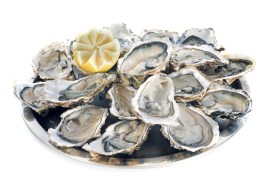
french oysters

The Environment Services of the City of Helsinki is investigating a number of suspected cases of food poisoning that are believed to be related to dining at several different restaurants and a pop-up event since the beginning of February. Currently, there are about 20 known cases of illness.

The individuals who have fallen ill all consumed oysters, and environmental services have taken food samples from the restaurants as well as patient samples from the city’s epidemiological action. Norovirus has been found in the samples.

The Food Safety Unit is requesting that anyone who has eaten oysters at Fisken på Disken, Ravintola Natura, Ravintola Gillet, The Cock, Ravintola Meripaviljonki, and the pop-up event at Ravintola Sake bar & Izakaya in February 2023 and has fallen ill after their meal, to contact the food safety unit. Illnesses may also be linked to other restaurants.

Those who have fallen ill are encouraged to contact the food safety unit primarily through an electronic food poisoning form at https://ilppa.fi. Contact can also be made by phone on weekdays from 8 am to 4 pm at +358 9 310 31527.

Norovirus is the most common cause of sudden intestinal infections in Finland.

Quebec – Notice not to consume duck and pork rillettes prepared and sold by the Chez Valère cafeteria at the Université de Montréal – Food Safety

Quebec

(MAPAQ), in collaboration with the Food Inspection Division of the City of Montreal and the Chez Valère cafeteria of the University of Montreal , located at 3200, rue Jean-Brillant, in Montreal, warns the public not to consume the product indicated in the table below, because it has not been prepared and packaged in such a way as to ensure its safety.

Product name

Format

Affected batch

“Duck and pork rillettes”

UNITARY

Units sold until February 20, 2023

The product that is the subject of this warning was offered for sale until February 20, 2023, at the establishment designated above as well as at the Bistro sur la montagne convenience store, located at 2350 , boulevard Édouard-Montpetit, in Montreal. The product was packaged in a glass jar and sold at room temperature.

The operator is voluntarily recalling the product in question. It has agreed with MAPAQ and the Food Inspection Division of the City of Montreal to distribute this warning as a precautionary measure. In addition, people who have this product in their possession are advised not to consume it. They must return it to the establishment where they bought it or throw it away. Even if the affected product shows no signs of tampering or suspicious odors, its consumption may represent a health risk.

It should be noted that no case of illness associated with the consumption of this food has been reported to MAPAQ to date.

France Saint Chabret – Listeria monocytogenes

Gov france

Identification information of the recalled product

  • Product category Feed
  • Product subcategory Milk and dairy products
  • Product brand name Unbranded
  • Model names or references Saint Chabret
  • Identification of products
    GTIN Batch Date
    3540500004506 50.31.22 Use-by date between 02/22/2023 and 05/06/2023
  • Packaging Whole piece of about 550g
  • Marketing start/end date From 09/02/2023 to 07/03/2023
  • Storage temperature Product to be stored in the refrigerator
  • Health mark FR 23 093 001 CE
  • Further information goat tome
  • Geographic area of ​​sale Whole France
  • Distributors Leclerc, creameries
  • List of points of saleList_clients_St_Chabret.pdf

Practical information regarding the recall

  • Reason for recall Presence of Listeria monocytogenes
  • Risks incurred by the consumer Listeria monocytogenes (causative agent of listeriosis)

France – Stuffed roast veal – Salmonella

Gov france

Identification information of the recalled product

  • Product category Feed
  • Product subcategory Meats
  • Product brand name E.Leclerc Schiltigheim
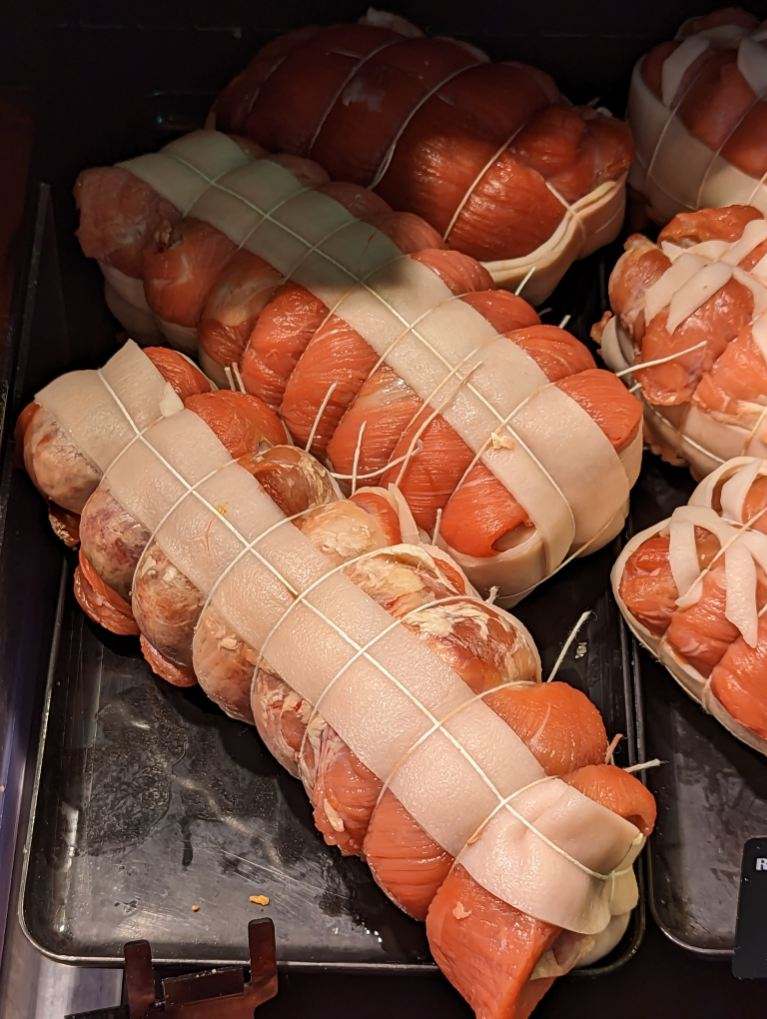
  • Model names or references Stuffed roast veal
  • Identification of products
    Batch
    see attached product list
  • Products List Poster_roast_of_veal_stuffed.pdfAttachment
  • Packaging Sale on demand in the Traditional Butcher department
  • Marketing start/end date From 02/02/2023 to 04/02/2023
  • Storage temperature Product to be stored in the refrigerator
  • Further information Stuffed roast veal
  • Geographic area of ​​sale Center E.Leclerc Schiltigheim – SCHILDIS
  • Distributors Center E.Leclerc Schiltigheim

Practical information regarding the recall

  • Reason for recall Demonstration of the presence of salmonella
  • Risks incurred by the consumer Salmonella spp (causative agent of salmonellosis)