Category Archives: Food Micro Blog

Canada – Maple Dale Cheese Co. brand cheese products recalled due to Listeria monocytogenes

CFIA

Summary

Product
Cheese products
Issue
Food – Microbial Contamination – Listeria
What to do

Do not use, sell, serve or distribute the affected products

Audience
Hotels, restaurants and institutions
Warehouse

Affected products

Issue

Maple Dale Cheese Co. brand cheese products recalled due to Listeria monocytogenes. The recalled products were sold in Alberta and Ontario.

Italy- CLAMS LUPINO (Chamela gallina) – E.coli

Salute

Brand : Gio’ Mare SPA

Name : CLAMS LUPINO (Chamela gallina)

Reason for reporting : Recall due to microbiological risk

Date of publication : 1 March 2023

Documentation

Documentation

Italy – Scrigno di venere (Scapharca inaeequivalvis) – E.coli

Salute

Brand : Gio’ Mare Spa

Name : Scrigno di venere (Scapharca inaeequivalvis)

Reason for reporting : Remind for microbiological risk

Date of publication : March 1, 2023

Documentation

Documentation

Italy – Lupine clam (Chamelea gallina) – E.coli

Salute

Brand : Gio’ Mare Spa

Name : Lupine clam (Chamelea gallina)

Reason for reporting : Recall due to microbiological risk

Date of publication : March 1, 2023

Documentation

Documentation

Canada – Mother Dairy brand Paneer Fresh Cheese recalled due to generic E. coli

CFIA

Summary

Product
Paneer Fresh Cheese
Issue
Food – Microbial Contamination – E. Coli – non-pathogenic
What to do

Do not use, sell, serve or distribute the affected products.

Audience
Hotels, restaurants and institutions
Retail

Affected products

Issue

Mother Dairy brand Paneer Fresh Cheese recalled due to generic E. coli.

The recalled products have been sold in British Columbia, Alberta, Manitoba, Ontario and Quebec.

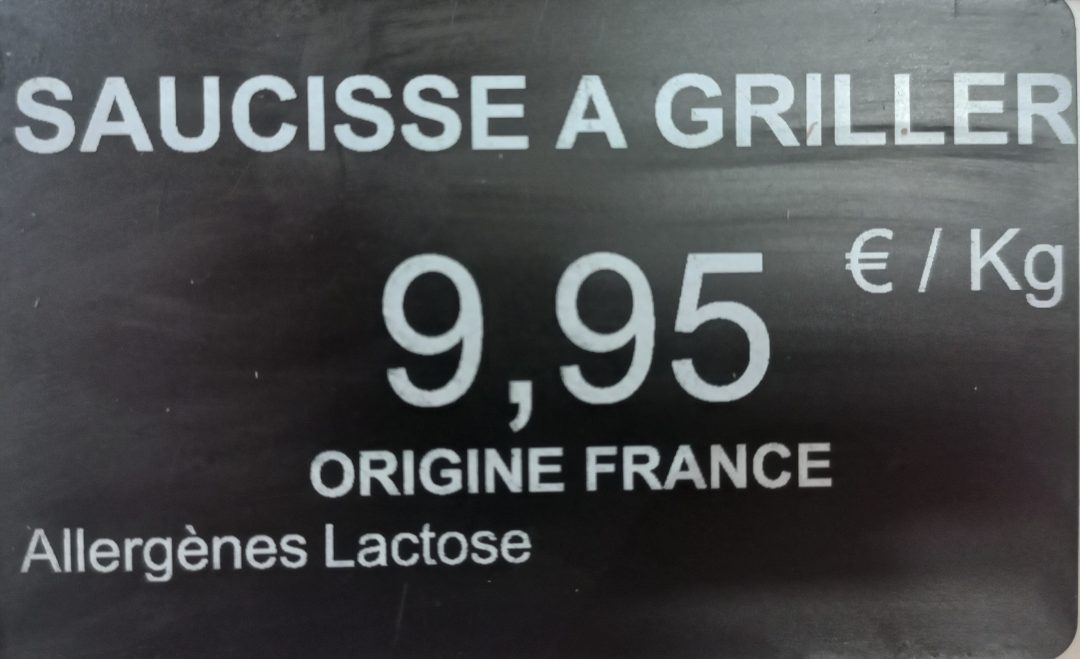
France – GRILLING SAUSAGE – Listeria monocytogenes

Gov france

Identification information of the recalled product

  • Product category Feed
  • Product subcategory Meats
  • Product brand name UNBRANDED – PRODUCED IN OUR WORKSHOPS
  • Model names or references GRILLING SAUSAGE SOLD IN THE TRADITIONAL DEPARTMENT GRILLING SAUSAGE SOLD IN SELF-SERVICE
  • Identification of products
    Batch Date
    Sold in the traditional department from 22 to 26/02/2023
    Sold in self-service: – Packaging date: 22/02/2023 – Expiry date: 27/02/2023 – Lot: Chipo 21/02 Use-by date 02/27/2023
  • Products List Poster_reminder_sausage_to_grill_butchery_trad___LS_27022023.pdfAttachment
  • Packaging Bulk sold in the traditional butcher’s section Wrapped trays sold in self-service
  • Storage temperature Product to be stored in the refrigerator
  • Geographic area of ​​sale Lure and surroundings (70200)
  • Distributors Center E.Leclerc of Lure

Practical information regarding the recall

  • Reason for recall Detection of listeria monocytogenes
  • Risks incurred by the consumer Listeria monocytogenes (causative agent of listeriosis)

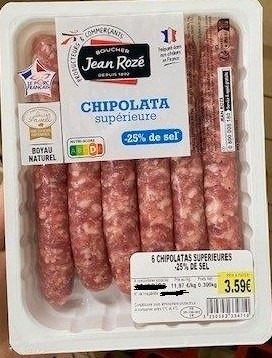
France – 6 SUPERIOR CHIPOLATAS -25% SALT – Salmonella

Gov france

Identification information of the recalled product

  • Product category Feed
  • Product subcategory Meats
  • Product brand name JOHN ROZE
  • Model names or references 6 SUPERIOR CHIPOLATAS -25% SALT: 300 g
  • Identification of products
    GTIN Batch Date
    3250392334710 J30510585 Use-by date 06/03/2023
  • Packaging Packaging by 6/tray; 300g
  • Marketing start/end date From 02/22/2023 to 02/28/2023
  • Storage temperature Product to be stored in the refrigerator
  • Health mark FR-35-136-002-CE
  • Geographic area of ​​sale Whole France
  • Distributors Intermarché

Practical information regarding the recall

  • Reason for recall Presence of Salmonella
  • Risks incurred by the consumer Salmonella spp (causative agent of salmonellosis)

Research – Isolation of Salmonella species of public health concern from commonly fed dried meat dog treats

BVA Journals

Abstract

Background

Dried non-heat-treated meat treats, such as ears, skin and tails, are popular supplementary dog foods. Previous studies have demonstrated Salmonella spp. contamination on treats, particularly in pig ears and chicken products. This small, exploratory, cross-sectional study investigated Salmonella spp. presence in dried treats available in the UK.

Methods

A selection of dried treats from local pet shops and online retailers underwent bacterial culture for Salmonella spp. and subsequent antimicrobial susceptibility testing, with Salmonella serotype determined by whole genome sequencing.

Results

Eighty-four samples were tested, with 16% being Salmonella spp. positive. Five Salmonella serotypes were identified, each associated with specific treat types. An antimicrobial-resistant phenotype was identified in 39% of isolates. All serotypes identified are known to cause human infection.

Limitations

This study was limited by a small sample size and limited number of retail sources.

Conclusion

Salmonella spp. of public health concern were present in some dried dog treats in this study. Dog owners, pet food retailers and veterinary professionals should be aware of the potential zoonotic disease risk associated with these treats, and appropriate hygiene measures, including thorough hand washing, should be utilised if they are fed.

USA – FDA investigates cases of Legionnaires disease on cruise ships

Food Safety News

FDA Warning Letters

American Cruise Lines
Guilford, CT

American Cruise Lines is on notice from the Food and Drug Administration (FDA) after an inspection of their American Star and American Heritage vessels. According to the warning letter, the FDA continues to have concerns with the potential exposure of passengers and crew members to Legionella onboard American Cruise Lines’ vessels.

In Jan. 24, 2023, warning letter, the FDA described an April 30 through June 17, 2022, an inspection of American Cruise Lines’ American Star and American Heritage vessels.

The warning letter includes information about failed water tests for a sink in the galley and hand-washing sinks for wait staff. The FDA also found that disinfection was ineffective.

American Star
Presence of Legionella Onboard the Vessel

On April 30, 2022, FDA investigators collected 10 biofilm swabs and 14 bulk one-liter potable water samples from various locations on the vessel. The Maryland Department of Health laboratory recovered Legionella from:

Biofilm Swabs with 60 percent of samples positive:

American Heritage

Presence of Legionella Onboard the Vessel

On June 15, 2022, FDA investigators collected 24 biofilm swabs and 29 bulk one-liter potable water samples from various locations on their vessels. The Maryland Department of Health laboratory recovered Legionella from:

Biofilm Swabs with 8 percent of samples positive:

The Use of Ozone Technology: An Eco–Friendly Method for the Sanitization of the Dairy Supply Chain

MDPI

Abstract

The dairy field has considerable economic relevance in the agri-food system, but also has the need to develop new ‘green’ supply chain actions to ensure that sustainable products are in line with consumer requirements. In recent years, the dairy farming industry has generally improved in terms of equipment and product performance, but innovation must be linked to traditional product specifications. During cheese ripening, the storage areas and the direct contact of the cheese with the wood must be carefully managed because the proliferation of contaminating microorganisms, parasites, and insects increases significantly and product quality quickly declines, notably from a sensory level. The use of ozone (as gas or as ozonated water) can be effective for sanitizing air, water, and surfaces in contact with food, and its use can also be extended to the treatment of waste and process water. Ozone is easily generated and is eco-sustainable as it tends to disappear in a short time, leaving no residues of ozone. However, its oxidation potential can lead to the peroxidation of cheese polyunsaturated fatty acids. In this review we intend to investigate the use of ozone in the dairy sector, selecting the studies that have been most relevant over the last years.