Category Archives: Food Micro Blog

Research – Staphylococcal Infections: Host and Pathogenic Factors

MDPI

Staph

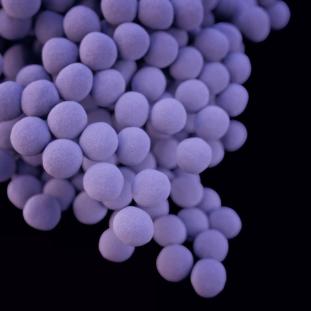
In 1880, the Scottish surgeon Sir Alexander Ogston first described staphylococci in pus from a surgical abscess in a knee joint: “The masses looked like bunches of grapes” [1]. In 1884, the German physician Friedrich Julius Rosenbach differentiated the staphylococci by the color of their colonies: S. aureus (from the Latin aurum, gold) [2]. For another 20 years, very little was known on the pathophysiology of this bug. Based on a PubMed search record, the first Staphylococcal paper was published in 1900 on a case report [3]. More and more scientists gradually engaged to study diseases caused by this bacterium.
There were some 10 publications recorded during the period 1900–1910, which translate in average to one publication/year. Research on this bug exploded in the 20th century, which is reflected in a recent PubMed search. It yields 47,974 publications records when searched using the keyword “Staphylococcus” in the title. During the period 2010–2020, the average publication was 2000 articles/year. This record makes Staphylococcus the single most researched bacterium based on this publication track record.
Over time, numerous Staphylococcus species were discovered, consisting of more than 45 staphylococcal species and 24 subspecies classified using molecular methods [4]. These various species of Staphylococcus are clinically important as 30% of the healthy human population is colonized with various Staphylococcus spp. Some strains are opportunistic pathogens and can cause a minor infection to life-threatening diseases. Pathogenicity of these different strains depends on several virulence factors: Level of protein expression as well as the robustness of the regulatory networks expressing these virulence factors.
These factors consist of numerous toxins, enterotoxins (some of which act as superantigens), enzymes, and proteins with other functions (cytoplasmic, extracellular, and surface) that are tightly regulated by two-components (TC), transcriptional and translational regulators, as well as quorum-sensing (QS) regulatory networks [5]. This Special Issue is dedicated to the studies and recent advancements in our understanding of staphylococcal virulence mechanisms that enable Staphylococcus spp. either to successfully establish themselves as a colonizer or to overcome the host’s defense system to cause infection.
Europe – Salmonella sickens up to 200 across EU and UK

Food Safety News

Salm2

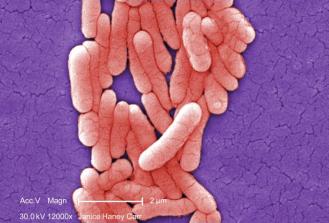
More than 200 people in 11 countries could be part of a Salmonella outbreak across Europe. Investigations to find the source of the Salmonella Braenderup infections are ongoing.

The European Centre for Disease Prevention and Control (ECDC) confirmed to Food Safety News that it was supporting countries in their investigations and following the incident closely with the European Food Safety Authority (EFSA).

The hardest hit country is the United Kingdom with 52 confirmed infections while France only has one confirmed patient. Denmark has 27 and Sweden 25 confirmed infections with the Netherlands recording 13 people sick.

USA – Randall Foods Inc. Initiates Voluntary Recall of all Randall Beans – Possible Micro Contamination

FDA

Summary

Company Announcement Date:
FDA Publish Date:
Product Type:
Food & Beverages
Foodborne Illness
Reason for Announcement:
Potential for underprocessing which could result in Clostridium botulinum contamination
Company Name:
Randall Foods Inc.
Brand Name:
Randall
Product Description:
Randall Beans

Company Announcement

Randall Foods, Inc. of Cincinnati, Ohio is recalling all its Randall-brand beans because of manufacturing deviations that may pose a potential health risk.  The recall includes the following products:

Brand

Description

UPC

Batch/Lot Numbers

“Best By” Date

Randall RANDALL GREAT NORTHERN BEANS 48OZ 070095000100 ALL Prior to January 1 2025
Randall RANDALL GREAT NORTHERN BEANS 24OZ 070095000117 ALL Prior to January 1 2025
Randall
Randall
RANDALL GREAT NORTHERN BEANS 15.4OZ
RANDALL PINTO BEANS 48OZ
070095000131
070095000209
ALL
ALL
Prior to January 1 2025
Randall RANDALL PINTO BEANS 24OZ 070095000216 ALL Prior to January 1 2025
Randall RANDALL PINTO BEANS 15.4OZ 070095000230 ALL Prior to January 1 2025
Randall RANDALL MIXED BEANS 48OZ 070095000407 ALL Prior to January 1 2025
Randall RANDALL MIXED BEANS 24OZ 070095000414 ALL Prior to January 1 2025
Randall RANDALL MIXED BEANS 15.4OZ 070095000430 ALL Prior to January 1 2025
Randall RANDALL KIDNEY BEANS 48OZ 070095000308 ALL Prior to January 1 2025
Randall RANDALL KIDNEY BEANS 24OZ 070095000315 ALL Prior to January 1 2025
Randall RANDALL KIDNEY BEANS 15.4OZ 070095000339 ALL Prior to January 1 2025
Randall RANDALL NAVY BEANS 48OZ 070095000506 ALL Prior to January 1 2025
Randall RANDALL NAVY BEANS 15.4OZ 070095000537 ALL Prior to January 1 2025
Randall RANDALL BLACK BEANS 48OZ 070095000605 ALL Prior to January 1 2025
Randall RANDALL BLACK BEANS 24OZ 070095000612 ALL Prior to January 1 2025
Randall RANDALL BLACK BEANS 15.4OZ 070095000636 ALL Prior to January 1 2025
Randall RANDALL GARBANZO BEANS 24OZ 070095000711 ALL Prior to January 1 2025
Randall RANDALL GARBANZO BEANS 15.4OZ 070095000735 ALL Prior to January 1 2025
Randall RANDALL ULITMATE 4-BEAN MIX 48OZ 070095000902 ALL Prior to January 1 2025
Randall RANDALL ORGANIC GREAT NORTHERN BEANS 48OZ 070095005105 ALL Prior to January 1 2025

The product is sold in 48oz, 24oz, and 15.4oz glass jars with tan labels with “Randall” at the label top.    Approximately 1.6 million cases of affected products were distributed between March 1, 2019 and May 15, 2021 at retail locations in the following states: Alabama, Arkansas, Florida, Iowa, Illinois, Kansas, Kentucky, Michigan, Minnesota, Missouri, Nebraska, North Carolina, New York, Ohio, Oklahoma, Pennsylvania, South Dakota, Tennessee, Texas, Virginia, Wisconsin, and West Virginia.

The manufacturing deviations included a nonfunctioning temperature indicating device raising the possibility that the product was not effectively processed. Processing at temperatures below a required temperature could create a condition that could lead to premature spoilage or food borne illness; however, there have been no illnesses reported. The company is issuing this voluntary recall as a precaution.

Consumers who have purchased jars of Randall-brand beans, regardless of the “Best By” date, should return them to the place of purchase for a full refund.  Consumers with questions may contact the company between 9 am and 5 pm at 1-513-793-6525.


Company Contact Information

Consumers:
Scott Keating
 1-513-793-6525

France – Product recall: Unbranded pork and beef stuffing – Listeria monocytogenes

Oulah

Product recall: Unbranded pork and beef stuffing

ENCOUNTERED PROBLEM

Presence of Listeria monocytogenes

PROPOSED SOLUTION

Those in possession of this product are asked not to consume it and to return it to the point of sale where it was purchased.

People who have consumed this product and who have a fever, isolated or accompanied by headaches, are invited to consult their doctor, notifying him of this consumption.
Pregnant women should pay special attention to these symptoms, as well as immunocompromised people and the elderly. These symptoms may suggest listeriosis, a disease that can be serious and can take up to eight weeks to incubate.

FURTHER INFORMATION

▸ Packaging date
05/04/2021


▸ DLC – DDM
05/08/2021


▸ Packaging
Trays filmed with the store label ¨Intermarché 26 270 Loriol-sur-Drôme¨ and expected regulatory notices.


▸ Start date / End of marketing
From 04/05/2021 to 08/05/2021


▸
Loriol’s geographical area in Drôme


▸
Intermarché distributors


▸ Consumer service contact
0475 611 320


▸ Source
DENIR INTERMARCHE

France – Product recall: CELNAT brand Wholemeal Small Spelled Flour – Ochratoxin A

Oulah

Product recall: CELNAT brand Wholemeal Small Spelled Flour

ENCOUNTERED PROBLEM

Presence of Ochratoxin A

PROPOSED SOLUTION

Do not consume and return to the point of sale for reimbursement.

FURTHER INFORMATION

▸ Names of models or references
Reference IEP – Whole wheat flour – 500g


▸ Barcode
3273120020969


▸ Lot
• 09721
• 09821


▸ DLC – DDM
• 04/07/2022
• 04/08/2022


▸ Packaging
Plastic bag – 500g


▸ Start date / End of marketing
Since 04/12/2021


▸ Distributors
Organic specialty store and organic chain store


▸ Consumer service contact
0471030414


▸ Source
CELNAT

France – Product recall: CELNAT brand Wholemeal Small Spelled Flour 10kg – Ochratoxin A

Oulah

Product recall: CELNAT brand Wholemeal Small Spelled Flour 10kg

ENCOUNTERED PROBLEM

Presence of Ochratoxin A

PROPOSED SOLUTION

Do not consume and return to the point of sale for reimbursement.

FURTHER INFORMATION

▸ Names of models or references
Reference IEP / 10 – Whole wheat flour – 10kg


▸ Barcode
3273120029665


▸ Lot
• 05621
• 09621


▸ DLC – DDM
• 11/25/2021
• 01/06/2022


▸ Packaging
Paper bag – 10kg


▸ Start date / End of marketing
Since 03/02/2021


▸ Distributors
Organic specialty store and organic chain store


▸ Consumer service contact
0471030414


▸ Source
CELNAT

France – Product recall: CELNAT brand Wholemeal Small Spelled Flour 25kg – Ochratoxin A

Oulah

Product recall: CELNAT brand Wholemeal Small Spelled Flour 25kg

ENCOUNTERED PROBLEM

Presence of Ochratoxin A

PROPOSED SOLUTION

Do not consume and return to the point of sale for reimbursement.

FURTHER INFORMATION

▸ Names of models or references
Reference IEP / 10 – Whole wheat flour – 10kg


▸ Barcode
3273120020983


▸ Lot
• 08221
• 09621


▸ DLC – DDM
• 23/12/2021
• 06/01/2022


▸ Packaging
Paper bag – 25kg


▸ Distributors
Organic specialty store and organic chain store


▸ Consumer service contact
0471030414


▸ Source
CELNAT

Bahamas – Conch Alert After Cases Of Suspected Poisoning

Tribune 242

KSWFOODWORLD

FOOD safety officials are cautioning against the consumption of fresh conch after several suspected cases of conch poisoning.

Several reports of conch poisoning made the rounds on social media over the past few days before the Bahamas Agricultural Health and Food Safety Authority issued a statement yesterday.

The authority warned consumers to avoid fresh conch until officials are able to determine the source of the contamination.

Conch poisoning is typically caused by the bacterium, Vibrio parahaemolyticus, with contamination attributed to poor hygienic practices during its handling and preparation.

Health Minister Renward Wells said there had been about 10 reported cases of conch poisoning. He said the ministry was concerned that this has risen in recent days. He was unable yesterday to say where the cases originated.

Meanwhile, Bahamas Commercial Fishers Alliance President Adrian Laroda said he would not caution against eating conch because it could have implications on the industry. Instead, he urged handlers to wash the mollusk properly during preparation.

RASFF Alerts – Listeria monocytogenes – Organic Quinoa – Cheese -Smoked Cheese

RASFF

Listeria monocytogenes in chilled organic quinoa ready to be used in salad mixes from Belgium in France and the Netherlands

RASFF

Cheese possible contaminated with L. monocytogenes from the Netherlands in Sweden

RASFF

Listeria monocytogenes in formaggio affumicato from the Czech Republic in Italy, Belgium, France, Germany, Luxembourg and the Netherlandd

RASFF Alerts -STEC E.coli – Lamb Meat

RASFF

Shigatoxin-producing Escherichia coli in lamb meat from New Zealand in Germany