Category Archives: Food Inspections

Ukraine – Salmonella outbreak reported in Zaporizhia

Outbreak News Today

Health officials in Ukraine report investigating a Salmonella outbreak in the southeastern Ukraine city of Zaporizhia. Twelve cases have been hospitalized with salmonellosis and sources of infection are being investigated  to include food, drinking and wastewater.

A few days before hospitalization, all the victims ate in the same cafeteria.

Contact persons are also interviewed and surveyed. Final disinfection was organized in the hearth at the place of residence of sick people. Anti-epidemic measures continue.

France -Raymond et Fils Arcachon Cap Ferret oysters – Lipophilic Toxin

Oulah

ENCOUNTERED PROBLEM

Lipophilic toxin in shellfish

PROPOSED SOLUTION

Foodborne illness caused by lipophilic toxins results in gastrointestinal disorders (diarrhea, vomiting, abdominal pain), headache and moderate fever appearing between 2h and 18h ​​after consumption.

People who hold these products are therefore asked not to consume them and to return them to the point of sale for destruction.

People who have consumed the products mentioned above and who present these symptoms, are invited to consult their doctor by reporting this consumption.

FURTHER INFORMATION

▸ Packaging
2 dozen N ° 3

▸
Packed on 05/19/2020

▸ Veterinary identification number
FR. 33.236.061.CE

▸ Contact customer service
For any questions, you can contact the Raymond et Fils Company on 05 56 60 89 62 or on 06 88 60 01 02.

▸ Source
https://www.carrefour.fr/


Australia – Report on Emerging and Ongoing Issues – Annual Report 2019 – Salmonella in Raw Fish

FSANZ

This report describes potential emerging food safety risks (described as emerging issues) identified by Food Standards Australia New Zealand (FSANZ) in 2019 along with the ongoing food safety issues monitored during this period.

Food safety risks can emerge when new hazards are identified or if new information comes to light about an existing food safety hazard, such as increased exposure. Identifying and monitoring emerging issues enables FSANZ to better forecast and predict possible food safety risks, and develop appropriate measures to manage the identified risks if required.

FSANZ develops food standards that become part of the Australia and New Zealand Food Standards Code. FSANZ identifies emerging and ongoing food safety issues within this broader context of standards development. As a consequence, the types of issues identified in this report are likely to be ‘hazards’ that need some further investigation. These can be chemical such as glutamates, microbiological such as Hepatitis A in berries, or physical such as microplastics in foods in nature.

Additionally, the food regulatory system has well established processes for food recalls and food incidents. A food recall is action taken by a food business to remove unsafe food from distribution, sale and consumption. FSANZ coordinates and monitors food recalls in Australia, while New Zealand Food Safety coordinate recalls in New Zealand. Individual food recalls and incidents are not normally identified through the emerging issues framework, and they not included in this report.

FSANZ has begun work on longer term emerging issues and we have engaged our key stakeholder committees in horizon scanning across two, five and ten years. The outcomes from the process with the Consumer and Public Health Dialogue (CPHD) and the Retailers and Manufacturers Liaison Committee (RMLC) have been included in the report. This is an overt strategy to lift FSANZ’s emerging issues gaze from hazards to also include broader processes for example climate change and changes such as consumption habits and supply chain issues. Future annual emerging and ongoing issues reports are expected to have a greater focus on these types of processes and changes.

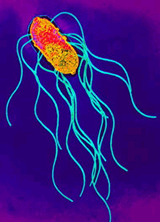
USA – Radhuni Curry Powder Recalled For Possible Salmonella Contamination

Food Poisoning Bulletin Salmonella kswfoodworld

New Hoque and Sons of Maspeth, New York is recalling Radhuni Curry Powder for possible Salmonella contamination. No illnesses have been reported to date in connection with this issue.It may seem unusual for a dry spice to be contaminated with a pathogen, but this has happened before.

The Radhuni Curry Powder was distributed in New York City, New York, including in grocery stores in Jamaica, Jackson Heights, and the Bronx. The powder is packaged in 400 gram clear plastic bottles. The expiration date is 01/02/2022, which is printed on the side of the bottle. The curry powder was sold between 4/17/2020 and 4/21/2020. It ws removed from stores on May 14, 2020.

The recall was triggered by routine sampling program by the FDA, which found the pathogen in the product. The company has stopped distributing the curry powder and has removed it from store shelves. The FDA and the company are investigating what caused the problem.

RASFF Alert – Diarrhoeic Shellfish Poisoning (DSP) toxins – Okadaic acid – Live Mussels

RASFF-Logo

RASFF – Diarrhoeic Shellfish Poisoning (DSP) toxins – okadaic acid (267 µg/kg – ppb) in live mussels (Mytilus Galloprovincialis) from Italy in Italy

RASFF Alert – Aflatoxin -Blanched Groundnut Kernels

RASFF-Logo

RASFF – aflatoxins (B1 = 6 µg/kg – ppb) in blanched groundnut kernels from India in the Netherlands


RASFF Alerts – Ochratoxin A – Dried Figs

RASFF-Logo

RASFF – ochratoxin A (25 µg/kg – ppb) in dried figs from Turkey in the Netherlands

RASFF – ochratoxin A (26 µg/kg – ppb) in dried figs from Turkey in the Netherlands

RASFF Alerts – Listeria monocytogenes – Chilled Beef Steak – Goat Cheese Balls filled with Honey – Sliced Salami

RASFF-Logo

RASFF – Listeria (presence) in chilled beef steak from the Netherlands in the Netherlands

RASFF – Listeria monocytogenes (presence /25g) in goat cheese balls filled with honey from France in France

RASFF – Listeria monocytogenes (presence /25g) in sliced salami from Italy, processed in Sweden in Sweden

RASFF Alert – E.coli – Fresh Coriander

RASFF-Logo

RASFF – too high count of Escherichia coli (6000 CFU/g) in fresh coriander from Thailand in the UK

RASFF Alerts – Salmonella – Chicken Quarters – Chicken Legs- Chicken Thighs – Chicken Breast – Chicken Wings- Sesame Seeds – Halal Chicken

RASFF-Logo

RASFF – Salmonella enterica ser. Enteritidis (presence /25g) in fresh chicken quarters from Poland in Lithuania

RASFF – Salmonella enterica ser. Infantis (presence /25g) in chilled chicken leg quarters from Poland in Bugaria

RASFF – Salmonella enterica ser. Infantis (in 4 out of 5 samples /25g) in frozen chicken thighs from Poland in Estonia

RASFF – Salmonella enterica ser. Enteritidis (in 1 out of 5 samples /25g) in chilled chicken legs from Poland in Lithuania

RASFF – Salmonella (presence /25g) in sesame seeds from Ethiopia in the Netherlands

RASFF – Salmonella enterica ser. Derby (presence /25g) in chicken breast fillet from Poland in Lithuania

RASFF – Salmonella (presence /25g) in frozen salted chicken half breast from Brazil in the Netherlands

RASFF – Salmonella enterica ser. Infantis (presence /25g) in chilled chicken wings from Poland in the Czech Republic

RASFF – Salmonella enterica ser. Infantis (presence /25g) in chilled chicken breast from Poland in the Czech Republic

RASFF – Salmonella enterica ser. Typhimurium (presence /25g) in frozen halal chicken fillets from Romania in France

RASFF – Salmonella (in 1 out of 5 samples /25g) in hulled sesame seeds from India in the Netherlands

RASFF – Salmonella enterica ser. Enteritidis (presence /25g) in chilled chicken thighs from Poland in Slovakia
