Category Archives: Food Inspections

Canada – Updated Food Recall Warning – GPM brand Pea Shoots recalled due to Listeria monocytogenes

CFIA

Recall details

Ottawa, April 24, 2019 – The food recall warning issued on April 19, 2019 has been updated to include additional distribution information. This additional information was identified during the Canadian Food Inspection Agency’s (CFIA) food safety investigation.

Golden Pearl Mushrooms Ltd. is recalling GPM brand Pea Shoots from the marketplace due to possible Listeria monocytogenes contamination. Consumers should not consume the recalled products described below.

Recalled products

Brand Name Common Name Size Code(s) on Product UPC
GPM Sweet Pea Shoots 230 g 10851 6 84469 00008 7
GPM Pea Shoots 100 g 10851 6 84469 00012 4
GPM Pea Shoots 455 g 10851 6 84469 00018 6

What you should do

If you think you became sick from consuming a recalled product, call your doctor.

Check to see if you have recalled products in your home. Recalled products should be thrown out or returned to the store where they were purchased.
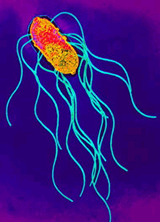

UK – Updated: Asda recalls two of its own-brand Cereal Bars because of the possible presence of salmonella

FSA

Updated: Asda recalls two of its own-brand Cereal Bars because of the possible presence of salmonella

25 April 2019

Asda has taken the precautionary step of recalling its Peanut and Almond Cereal Bars in addition to its Cranberry and Nut Cereal Bars (packs of 4) because the products might contain salmonella.

Product details

Asda Cranberry and Nut Cereal Bars (pack of 4)

Pack size 4x35g
Best before end: September 2019
Asda Peanut and Almond Cereal Bars (pack of 4)

Pack size 4x35g
Best before end: September 2019

No other Asda products are known to be affected.

Risk statement

The products listed above might be contaminated with salmonella. Symptoms caused by salmonella usually include fever, diarrhoea and abdominal cramps.

Action taken by the company

Asda is recalling the above products. Point of sale notices will be displayed in all retail stores that are selling these products. These notices explain to customers why the products have been recalled and tell them what to do if they have bought them. Please see the attached notices.

Research – Prevalence, Levels, and Viability of Salmonella in and on Raw Chicken Livers

Journal of Food Protection

We surveyed chicken livers from various sources for the presence and levels of Salmonella. The pathogen was recovered from 148 (59.4%) of 249 chicken livers purchased at retail stores in Delaware, New Jersey, and Pennsylvania over about a 9-month period. Positive samples harbored Salmonella at levels of 6.4 most probable number (MPN)/g to 2.4 log CFU/g. The percentage of Salmonella-positive livers purchased at retail outlets in New Jersey (72%, 59 of 82 livers) was significantly higher (P < 0.05) than the percentage for livers purchased in Delaware (48%, 36 of 75 livers); however, this percentage was not significantly different (P > 0.05) from that for livers purchased in Pennsylvania (57.6%, 53 of 92 livers). The pathogen was also recovered more often (P = 0.019) from livers that were packaged by retailers (81 of 121 livers, 66.9%) than from livers packaged directly by processors (67 of 128 livers, 52.3%). In related studies, 12 (5.8%) of 207 chicken livers harvested from birds on a research farm tested positive for Salmonella at levels of 0.4 to 2.2 MPN/g. The recovery rate of Salmonella was 4.4% (6 of 135 livers) from livers with the gall bladder attached and 8.3% (6 of 72 livers) from livers when the gall bladder was removed at harvest on the research farm. We also quantified the levels of a nine-strain cocktail (ca. 6.5 log CFU/g) of Salmonella strains inoculated externally onto or internally into livers both before and after extended cold storage. Storage for at least 2 days at 4°C or 15 days at −20°C resulted in a decrease of about 1.0 log CFU/g in pathogen levels. Given the relatively high recovery rate (ca. 6.0 to 60.0%) and high (possibly illness causing) levels (0.4 MPN/g to 2.4 CFU/g) of Salmonella associated with chicken livers in the present study, further interventions for processors are needed to lower the prevalence and levels of this pathogen on poultry liver.

Research – More severe salmonella outbreaks ahead

Science Daily Salmonella kswfoodworld

Australia has more salmonella outbreaks than any other country in the world, with the number of cases doubling over the last decade.

Over the past month alone, there have been numerous reports of the salmonella pathogen infecting eggs, leading to vast recalls of products and sparking calls from experts for more stringent hygiene practices.

In a study published in Scientific Reports, University of Sydney researchers developed a model that can predict outbreaks several months in advance.

While this prediction can provide early warning signs for disease surveillance and enable a more timely and precise allocation of health resources, the team discovered future salmonella outbreaks are likely to become more severe.

Led by the Director of Complex Systems Research Group Professor Mikhail Prokopenko, the team used 2008-2016 strain data to demonstrate that genetic networks of salmonella pathogens are linked through just a few degrees of separation, indicating an increasing severity of future epidemics.

“The data on salmonella outbreaks in NSW in the last decade or so highlights a continuing “arms race” between pathogens and their human hosts,” explained Professor Prokopenko.

“In a classical Darwinian evolution scenario, the pathogens spread over time by initially creating many mutated variants, with the more infectious “clones” soon becoming the most dominant within their own population,” he explained.

RASFF Alerts – Aflatoxin – Nutmeg – Peanuts – Dried Red Chillies

RASFF-Logo

RASFF – aflatoxins in nutmeg from India in the UK

RASFF – aflatoxins (B1 = 9.9; Tot. = 10.6 µg/kg – ppb) in peanuts with shell from Israel in Italy

RASFF – aflatoxins (B1 = 7.0 µg/kg – ppb) in red dried whole chillies from India in the UK

RASFF Alert – Norovirus – Frozen Red Currants – Oysters

RASFF-Logo

RASFF – norovirus (presence /25g) in frozen red currants from Poland in Belgium

RASFF – norovirus (GI; GII /2g) in oysters from the Netherlands in Belgium

RASFF Alert – Ochratoxin A – Raisins

RASFF-Logo

RASFF – ochratoxin A (15.49 µg/kg – ppb) in raisins from China in Poland

RASFF Alert – Listeria monocytogenes – Black Angus Steak Tartare

RASFF-Logo

RASFF – Listeria monocytogenes (presence /25g) in chilled black angus steak tartare from Ireland in the Netherlands

RASFF Alert – Bacillus subtilis – Beans with Ginger

RASFF-Logo

RASFF – Bacillus subtilis (5.8*6 CFU/g) in preserved beans with ginger from China in Ireland

RASFF Alerts – STEC E.coli – Filet Americaine – Chilled Boneless Meat

RASFF-Logo

RASFF – shigatoxin-producing Escherichia coli (stx +, eae + /25g) in filet americaine from Belgium in Belgium

RASFF – shigatoxin-producing Escherichia coli (O113: H21 – stx2+ /25g) in chilled boneless meat from Argentina in Germany