Category Archives: Food Inspections

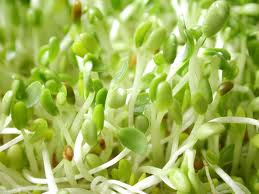
Information – FDA issues new draft guidance to improve the safety of seeds for sprouting

FDA alfalfa

“Over the past 22 years, the FDA has investigated 50 reported outbreaks of foodborne illness associated with contaminated sprouts. Together, these outbreaks resulted in more than an estimated 2,600 cases of illness. Last year, there were two reported outbreaks associated with sprouts, resulting in more than an estimated 100 illnesses. Studies indicate that contaminated seed is the likely source of most sprout-related outbreaks, as this commodity is inherently more susceptible to these issues because they are grown in warm and humid conditions that are favorable for bacteria like Salmonella, Listeria and E. coli,” said FDA Deputy Commissioner for Food Policy and Response Frank Yiannas. “The FDA is committed to taking swift action to respond to outbreaks related to sprouts and keep our food supply safe, but we also know that measures to prevent issues from happening in the first place are an important element of protecting consumers. By studying outbreaks related to sprouts over the years, we have been able to recommend changes in the industry to help lower the incidence of sprout-related outbreaks. Today’s new draft guidance is another critical step, like the Sprout Safety Alliance or sprout-specific requirements of the Produce Safety Rule, the agency is taking to prevent illnesses related to sprouts.”

The U.S. Food and Drug Administration today released a proposed draft guidance, “Reducing Microbial Food Safety Hazards in the Production of Seed for Sprouting,” intended to make the sprout seed industry (seed growers, conditioners, packers, holders, suppliers, and distributors) aware of the agency’s serious concerns with the continuing outbreaks of foodborne illness associated with the consumption of raw and lightly-cooked sprouts.

Incorporating aspects of the Codex Code of Hygienic Practice for Fresh Fruits and Vegetables Annex II, Annex for Sprout Production; the International Sprout Growers Association-Institute for Food Safety and Health’s “U.S. Sprout Production Best Practices”; and Good Agricultural Practices, the FDA’s draft guidance issued today provides the agency’s recommendations to firms throughout the production chain of seed for sprouting. It states that if a grower, holder, conditioner, or distributor reasonably believes that its seeds are expected to be used for sprouting, we recommend that the grower, holder, conditioner, or distributor take steps that are reasonably necessary to prevent those seeds from becoming contaminated. We also recommend that firms throughout the supply chain – from seed production and distribution through sprouting – review their current operations related to seeds for sprouting.

During the 60-day comment period for this draft guidance, stakeholders will be able to provide comments on the draft provisions. For more information on this guidance, as well as instructions on how to submit your comments, please visit Draft Guidance for Industry: Reducing Microbial Food Safety Hazards in the Production of Seed for Sprouting.

USA – Raw Oysters link in Shigella Outbreak

Food Poison Journal


Audience

  • Consumers who recently experienced symptoms of foodborne illness after eating raw oysters
  • Restaurants that sell raw oysters in California, Nevada, New York, and Arizona

Product

  • Oysters harvested from Estero El Cardon, Baja California Sur, Mexico
  • Oysters were distributed primarily to California, Nevada, New York, and Arizona
  • Oysters were sold to wholesale distributors with direct sales to restaurants and not to grocery retail outlets.

Purpose

Consumers should not purchase oysters marketed as being harvested from Estero El Cardon, in Baja California Sur, Mexico from restaurants. Consumers who have recently experienced symptoms of foodborne illness should contact their healthcare provider and report their symptoms and receive care.

Restaurants and retailers should not serve oysters from the Estero El Cardon harvest area in Baja California Sur, Mexico. Restaurants and retailers should dispose of any products with harvest tags that indicate a growing area of Estero El Cardon by throwing them away.


USA – Tequila’s Mexican Grill closed due to Food Poisoning

Food Poison Journal

The Barry-Eaton District Health Department (BEDHD) in Hastings, Michigan has closed Tequila’s Mexican Grill again as of 11:45 AM on Friday, June 21st.

BEDHD received additional information from the investigation and from epidemiology that suggests the 39 individual illnesses is not norovirus. Based on this information, BEDHD staff reviewed additional food handling procedures at the restaurant and determined it was in the best interest of public health to close the restaurant. BEDHD staff will continue working with Tequila’s Mexican Grill to assure food handling standards are being met. Once all requirements are implemented, BEDHD will consider re-opening the restaurant.

UK – Inquests launched into deaths of victims of Listeria Sandwiches

Food Poison Journal

According to British press reports, Enid Heap and Beverley Sowah both died at Manchester Royal Infirmary, likely from eating Listeria tainted sandwiches.

Ms. Heap, from Beswick, died with her family at her bedside on May 6 after she was admitted to the hospital in March when suffering breathing difficulties, Manchester Coroner’s Court heard. Mrs. Sowah, who was born in Jamaica and lived in Manchester, was admitted to the same hospital on April 15 and died on April 26. Coroner Nigel Meadows confirmed before the listeria deaths were uncovered an inquest had already been held into Mrs. Sowah’s death and he had concluded no inquest hearing was needed for Ms. Heap’s death.

In other news, a Derbyshire man, Ian Hitchcock, with liver cancer, who was diagnosed with Listeria at the Royal Derby Hospital, was later transferred to Nottingham City Hospital where he died on June 8. An inquest into Mr. Hitchcock’s death has been opened at Derby Coroner’s Court.

USA – Recall of Glass Jars of in the Mix, Brand Castle and Sisters’ Gourmet Baking Mixes Because of Possible Health Risk.

FDA

In cooperation with ADM Milling Co., Brand Castle, LLC of Bedford Heights, Ohio is voluntarily recalling 25 oz and 32 oz glass jars of cookie and brownie mix out of an abundance of caution because it may be contaminated with pathogenic E. coli.

The product is being recalled because an ingredient supplier, ADM Milling Co., has issued a recall for the flour used in these products due to E. coli contamination found in a single lot code of H&R Flour at their Buffalo production plant.

To date, no illnesses have been reported with these products and no further product have been shipped from our facility.

Canada – Updated Food Recall Warning – France Délices brand Choco-Raspberry Crunchy recalled due to Norovirus

CFIA France Délices - Choco-Raspberry Crunchy - case

Recall details

Ottawa, June 21, 2019 – The food recall warning issued on June 4, 2019 has been updated to include additional product and distribution information. This additional information was identified during the Canadian Food Inspection Agency’s (CFIA) food safety investigation.

France Délices Inc. is recalling France Délices brand Choco-Raspberry Crunchy from the marketplace due to possible norovirus contamination of the raspberries used in this product. Consumers should not consume and retailers, should not sell, or serve the recalled product described below.

The following product has been sold in Alberta and Quebec from the following retailers:
Name Address
European Foods Inc. 8705 53 Avenue NW, Edmonton, AB
Fruit & Légumes Tardif Inc. 559, chemin St-Jean, Laprairie, QC
Hospitality Corner 1650, avenue Cedar, Montréal, QC
IGA Vanier 1035, boul. Wilfrid Hamel, Vanier, QC
IGA Boischatel 5114, avenue Royale, Boischatel, QC
IGA Alimentation Famille Gaouette Inc. 2020, route 112, St-Césair, QC
IGA 17010, boul. Henri-Bourassa, Québec, QC
IGA Baie-Comeau 1500, rue de Bretagne, Baie-Comeau, QC
IGA Crevier Terrebonne 1115, Montée des Pionniers, Terrebonne, QC
Métro Plus St-Zotique 350, rue Principale, St-Zotique , QC
Métro Plus Supermarché Boucher 341, chemin de Joliette, St-Félix de Valois, QC
Metro Gatineau 214, boul. de la Cité des Jeunes, Gatineau, QC
Métro Turgeon 1550, boul. Talbot, Chicoutimi, QC
Provigo Lorraine 95, boul. de Gaulle, Lorraine, QC
Trésors Sucrés 3640, Jean Talon Est, Montréal, QC

This product has been sold clerk-served from retail counters, with or without a label or coding, up to and including June 21, 2019. Consumers who are unsure if they have purchased the affected product are advised to contact their retailer.

Recalled products

Brand Name Common Name Size Code(s) on Product UPC
France Délices Choco-Raspberry Crunchy 95 g 08519 7 74461 16122 7

What you should do

If you think you became sick from consuming a recalled product, call your doctor.

Check to see if you have recalled products in your home. Recalled products should be thrown out or returned to the store where they were purchased.

People with norovirus illness usually develop symptoms of gastroenteritis within 24 to 48 hours, but symptoms can start as early as 12 hours after exposure. The illness often begins suddenly.

Australia – Lactalis Australia Pty Ltd — Lactalis Australia Milk 1L & 2L

Photograph of Lactalis Milk Products

Identifying features

Use by date
2 July 2019
Other
APN/AEN in order of appearance above excepting Pauls Professional Café Crema Milk (Food service no bar code), 9315303001458, 9344113001006, 9344113001013, 9322613103024, 9310036039488, 9310036000808, 9310036000853

What are the defects?

The recall is due to microbial (E. coli) contamination.

What are the hazards?

Food products contaminated with E. coli may cause illness if consumed.

USA – Missouri Jack in the Box link in Hepatitis A scare

Food Poison Journal

The Franklin County Health Department is planning mass vaccinations after learning an employee who works at the Jack in the Box located at the Bourbeuse River Access in Union, Missouri had Hepatitis A while serving customers.

The Missouri Department of Health and Senior Services said the employee handled food on June 9 and June 10.

Hepatitis A  is a viral infection of the liver that can cause loss of appetite, nausea, tiredness, fever, and stomach pain. It’s usually spread when a person unknowingly ingests the virus from objects, food, or drinks that have been contaminated. Franklin County health officials have conducted several inspections of the Jack in the Box since the problem was discovered.

Health officials said it is uncommon for restaurant customers to become infected with Hepatitis A due to an infected food handler. However, anyone who consumed food or drinks at the restaurant on June 9 or June 10 is recommended to receive vaccination by June 23 as further protection from becoming ill.

USA – Blackberries recalled over Norovirus

Food Poison Journal Norovirus Food Safety kswfoodworld

Alma Pak of Alma, Georgia is recalling specific lots of product containing frozen blackberries (noted below) due to the potential of being contaminated with Norovirus. FDA testing of frozen blackberries was reported to have tested positive for Norovirus.

Norovirus is a highly contagious virus. Consumption of product contaminated with Norovirus may cause acute onset of symptoms of gastroenteritis including severe nausea, vomiting and diarrhea. Less common symptoms are low-grade fever, chills, headache, muscle aches and fatigue. Although most symptoms end within 48 hours, the elderly, young children and immunocompromised persons may develop prolonged, or more severe symptoms.

USA – New York Creamery recalls Cheeses over Listeria

Food Poisoning Journal

Cheese sold by Snow Farm Creamery at local markets has tested positive for Listeria monocytogenes, according to a release from the New York State Department of Agriculture and Markets.

Snow Farm Creamery Baby Swiss and Snow Farm Creamery Baby Swiss with Mustard Seed with a code “02 04 19” are all affected, but officials warn that if you do not know the code and purchased the cheese after April 24, you should not consume it.