Category Archives: Food Illness

Research – Monophasic Variant of Salmonella Typhimurium 4,[5],12:i:- (ACSSuGmTmpSxt Type) Outbreak in Central Italy Linked to the Consumption of a Roasted Pork Product (Porchetta)

MDPI

Abstract

The monophasic variant of S. Typhimurium 4,[5],12:i:- (MVST) is the third most commonly reported Salmonella serovar involved in human infections (8.8%) in the EU and ranks after S. Enteritidis (54.6%) and S. Typhimurium (11.4%). In Italy, in contrast, the MVST has achieved peculiar epidemiological and ecological success which has allowed it to be, since 2011, the serovar most frequently isolated from humans. In the summer of 2022, a foodborne outbreak of the MVST involving 63 people occurred in the Marche Region (Central Italy). A common food exposure source among some human cases was a roasted, ready-to-eat (RTE) pork product, porchetta, which is a typical product of Central Italy. This paper describes the results of investigations conducted to clarify this outbreak. The porchetta was produced by a local manufacturing plant and distributed to at least two local retail stores, one of which was the retail outlet for the manufacturing plant. The MVST was isolated from surface samples collected at the porchetta manufacturing plant and at both local retail stores via bacterial analysis, and the porchetta sampled at one store contained the MVST. These data confirm this type of RTE pork product can be a source of Salmonella infection in humans.

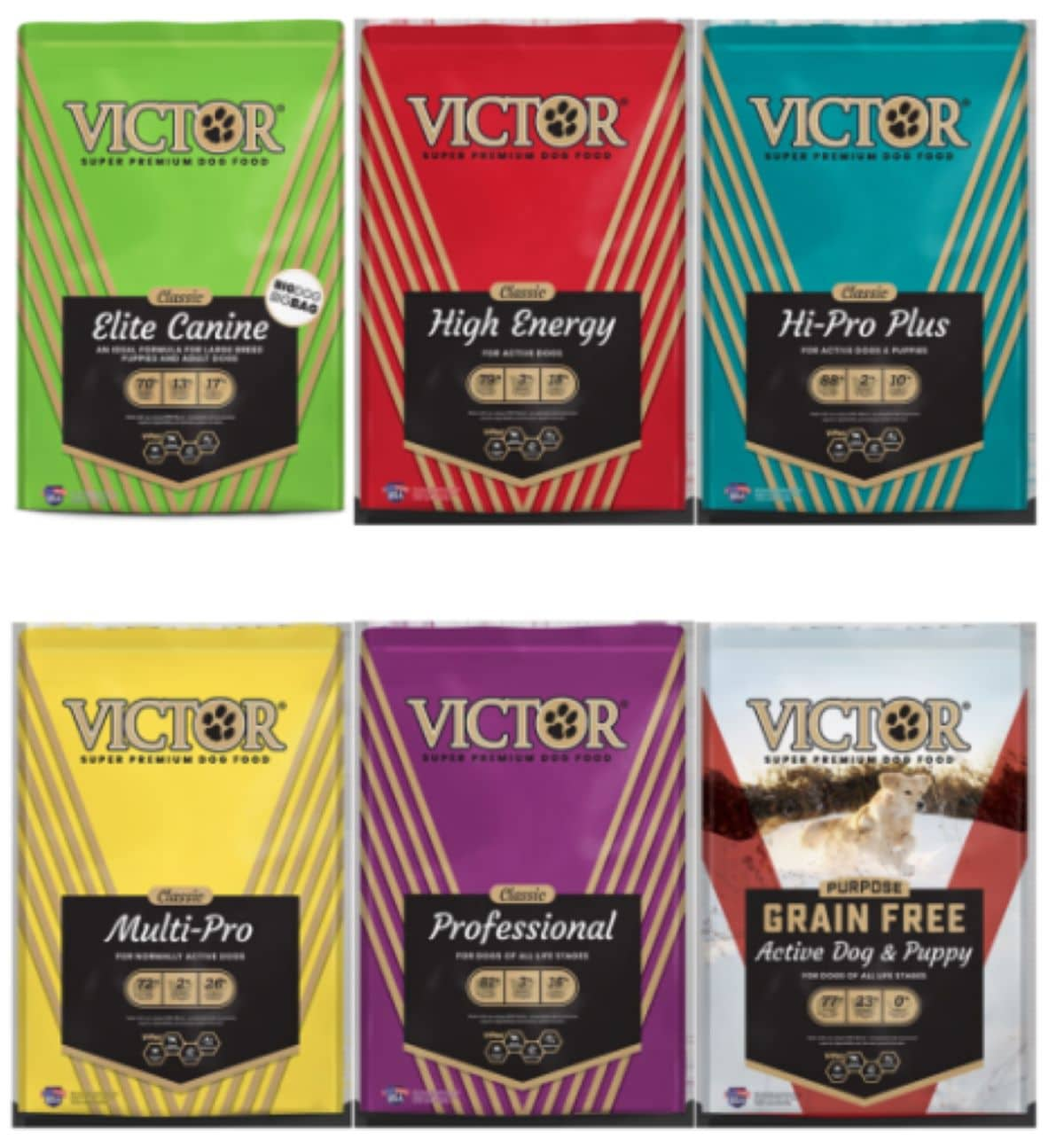
Salmonella Outbreak Linked to Dry Dog Food

CDC

Recalled pet food images.

People in this outbreak got sick from touching recalled dog food, touching things like dog bowls that contained the dog food, or touching the poop or saliva of dogs that were fed the dog food. Most of the sick people in this outbreak are infants. Take steps to handle dog food safely every day.

RASFF Alerts – Listeria monocytogenes – Cooked Unpeeled Crabs – Frozen Beef

RASFF

Listeria monocytogenes in cooked, unpeeled North Sea crabs from Germany in the Netherlands

RASFF

Listeria monocytogenes in frozen beef from Germany in Austria

Research – From field to plate: How do bacterial enteric pathogens interact with ready-to-eat fruit and vegetables, causing disease outbreaks?

Science Direct

Abstract

Ready-to-eat fruit and vegetables are a convenient source of nutrients and fibre for consumers, and are generally safe to eat, but are vulnerable to contamination with human enteric bacterial pathogens. Over the last decade, Salmonella spp., pathogenic Escherichia coli, and Listeria monocytogenes have been linked to most of the bacterial outbreaks of foodborne illness associated with fresh produce. The origins of these outbreaks have been traced to multiple sources of contamination from pre-harvest (soil, seeds, irrigation water, domestic and wild animal faecal matter) or post-harvest operations (storage, preparation and packaging). These pathogens have developed multiple processes for successful attachment, survival and colonization conferring them the ability to adapt to multiple environments. However, these processes differ across bacterial strains from the same species, and across different plant species or cultivars. In a competitive environment, additional risk factors are the plant microbiome phyllosphere and the plant responses; both factors directly modulate the survival of the pathogens on the leaf’s surface. Understanding the mechanisms involved in bacterial attachment to, colonization of, and proliferation, on fresh produce and the role of the plant in resisting bacterial contamination is therefore crucial to reducing future outbreaks.

Germany – Germs in food – food-borne infections and how to prevent them

BFR

One of the most common sources of food-borne infections is chicken meat contaminated with Salmonella or Campylobacter pathogens. How these pathogens can be reduced in the barn and further along the food chain to the consumer is one of the central topics at a symposium on zoonoses and food safety, which the Federal Institute for Risk Assessment (BfR) is organising in Berlin-Marienfelde on 16 and 17 November 2023. “The number of reported illnesses caused by foodborne infections alone in Germany amounts to around one hundred thousand per year, and the number of unreported cases is likely to be much higher,” says Professor Dr Karsten Nöckler, Head of the Biological Safety Division at the BfR. “In order to combat such infections effectively, we need to know where the germs come from, at which point in the production process the food is contaminated and, of course, how this can be prevented.”

In a joint project funded by the Federal Ministry of Food and Agriculture (BMEL), researchers are investigating whether the bacterial load of chicken meat can be reduced using thermal processes. Tests show that even a short immersion in hot water (> 70 degrees Celsius) reduces the number of Salmonella and Campylobacter by an order of magnitude. Treatments with icy air – at minus 90 degrees Celsius – also reduce the Campylobacter load. The scientists, who will present their findings at the symposium, conclude that such thermal processes can usefully supplement existing measures to reduce the microbiological load.

Other topics include the control of Vibrio spp. in aquaculture and the occurrence of infectious agents in wild animals. The scientific contributions are of particular interest against the background of the current zoonosis monitoring report, which will also be presented at the conference and will highlight current developments in the fight against foodborne infections.

Presentations by scientists from other institutions in Germany and Europe, for example on insects as food, E. coli bacteria in flour and the hygienic aspects of taking food from containers, round off the wide range of topics covered at the event.

The two-day symposium is aimed at interested parties from scientific institutions, investigation offices, monitoring authorities and industry from German-speaking countries. In addition to scientific training, it is also intended to promote networking between participants and thus co-operation between the various institutions. For this reason, the conference will be organised exclusively as a face-to-face event.

You can find the programme and a registration form here:
https://www.bfr-akademie.de/deutsch/veranstaltungen/szl2023.html

Journalists are cordially invited to attend. Please register in advance at pressestelle@bfr.bund.de

Denmark Solves E. coli Outbreak; More Sick in Norwegian outbreak

Food Safety News

The SSI, Danish Veterinary and Food Administration (Fødevarestyrelsen), and DTU Food Institute investigated the outbreak that was linked to a type of beef steak, thanks to patient interviews.

Meanwhile, in Norway, four other cases have been added to a different E. coli outbreak.

The Norwegian Institute of Public Health (FHI) reported that E. coli O26:H11 had been detected in 24 people. It is one of the country’s most severe E. coli outbreaks.

Fifteen of those infected are under the age of 13, and nine children have developed hemolytic uremic syndrome (HUS).

Research – USA – Kratom with Salmonella not a good mix

Food Poison Journal

The Centers for Disease Control and Prevention (CDC), the U.S. Food and Drug Administration (FDA), and several state partners investigated a multistate outbreak of Salmonella infections linked to kratom products.

As of May 24, 2018, 199 people infected with the outbreak strains of Salmonella were reported from 41 states. Washington state reported 16 illnesses. Illnesses started on dates ranging from January 11, 2017, to May 8, 2018. Ill people ranged in age from less than 1 to 75 years (median 38). Among ill people, 52 percent were male. Of 132 people with available information, 50 (38 percent) were hospitalized. No deaths were reported.

USA – Wedding from Hell in Idaho – STEC E.coli

Food Poison Journal

An outbreak of suspected enterotoxigenic E. coli (ETEC) was investigated by the Idaho Department of Health (the state) and the Southwest District Health Department (SWDH). The suspected outbreak was reported to the investigating agencies by August 31, 2022. The outbreak was given the state ID “2022-076.”

On August 30, 2022, the Southwest District Environmental Health Department (EH) received a phone call to notify them of a possible foodborne illness outbreak related to a wedding over the weekend. The caller was the father of the groom, who described around 15 people that he knew with diarrhea. On August 31, EH spoke with the groom and received more information. After this conversation, EH notified the epidemiology department, who again called and interviewed the groom about the event, the food, the activities on site, and others known to be ill. The information gathered from the groom over the phone is as follows:

USA – Whole cooked Pigs with Salmonella ruin family event

Food Poison Journal

In April 2023, the Utah Department of Health (UT DOH) and Salt Lake County Health Department (SLCoHD) investigated an outbreak of Salmonella related to a local market. On April 5, 2023, UT DOH was informed of an outbreak of gastrointestinal (GI) illness among a large group that purchased at least two cooked, ready-to-eat, whole pigs from Kim Thanh Marketplace, located at 3825 S Redwood Rd., West Valley City, Utah on April 2, 2023, and ate them for lunch that same day.

In total, 15 individuals associated with the family group outbreak were reported. Seven individuals sought medical care, of which three were reported to UT DOH with Salmonella through routine surveillance. At least one individual sought medical care for febrile seizures, although their stool cultures were negative for Salmonella and other enteric pathogens. All onsets occurred on April 3 and 4, 2023, except for one individual with an onset on April 10, 2023, who was likely a secondary case. Age data was available for nine individuals; the ages of cases ranged from 4 to 55 years.

USA – Nationwide Cyclospora Outbreak hits 2,272 with no source identified

Marler Blog

As of October 24, 2023, 41 jurisdictions, including 40 states and New York City, have reported a total of 2,272 laboratory-confirmed cases of cyclosporiasis.

These individuals had not traveled outside of the United States during the 14 days before they got sick. This is an increase of 315 cases since the last update on August 31, 2023.

Sick people ranged in age from 2 to 96 years, with a median age of 51, and 57% were female. The median illness onset date was June 24, 2023 (range: April 1 to August 31). Of 2,242 people with information available, 186 have been hospitalized. Zero deaths have been reported.