Category Archives: Food Illness

USA – Pacific Trellis Fruit Recalls Malichita Brand Cantaloupes Due to Possible Health Risk – Salmonella – The company has issued a correction to the previous announcement.

FDA

Los Angeles, CA, December 1, 2023…Pacific Trellis Fruit, LLC is initiating a voluntary recall of 4,872 cases of Malichita brand whole cantaloupe. The voluntary recall is due to the FDAs ongoing investigation of an outbreak involving Malichita brand cantaloupe. The cantaloupes have the potential to be contaminated with Salmonella. Salmonella is an organism which can cause serious and sometimes fatal infections in young children, frail or elderly people, and others with weakened immune systems. Healthy people may experience fever, nausea, vomiting, diarrhea (which may be bloody), and abdominal pain. In rare cases the organism can get into the bloodstream and produce more severe illnesses such as arterial infections (i.e., infected aneurysms), endocarditis and arthritis.

The products were distributed between October 18th – 26th in California, Illinois, Oklahoma, Texas, Wisconsin, and Canada and sold in various retail supermarkets. The whole cantaloupe is packed in corrugated cartons, the price look-up sticker is labeled “Malichita.”

Brand Item Description PLU Lot Code
Malichita Whole Cantaloupe 4050 21651
Malichita Whole Cantaloupe 4050 21699
Malichita Whole Cantaloupe 4050 21775
Malichita Whole Cantaloupe 4050 21787
Malichita Whole Cantaloupe 4050 21870

This is an ongoing outbreak, and several illnesses have been reported to the Centers for Disease Control and Prevention in the United States and Canada. To date, Pacific Trellis Fruit has not received any reports of illness.

Customers who have purchased these products are urged not to consume the products and should dispose of them. Consumers may contact Pacific Trellis Fruit for further information at 323-859-9600 Monday – Friday 9AM – 5PM PST. Consumers with concerns about an illness from consumption of this product should contact a health care provider.

Japan – 12 hit by food poisoning after tasting apples at east Japan orchard; STEC E. coli detected

Mainichi

MITO — A total of 12 people became ill after tasting apples at an east Japan orchard, the Ibaraki Prefectural Government announced on Nov. 29.

The prefecture concluded it was a food poisoning case after the pathogenic O157 strain of the E. coli bacteria was detected in the victim’s excrement.

Outbreak Investigation of Salmonella: Cantaloupes (November 2023) Updated 11/30/2023

FDA

Products and Stores Affected (Expanded and Updated on 11/30/2023)

Recalled whole cantaloupe from the following brands:

  • Whole fresh cantaloupes with a label on the cantaloupe that says “Malichita” or “Rudy”, “4050”, and “Product of Mexico/produit du Mexique”.
  • Retailers and wholesalers would have received recalled whole melons from Crown Jewels Produce in boxes labeled “Malichita/Z Farms” or from Sofia Produce doing business as TruFresh in boxes labeled “Malichita” or “Rudy”, or from Pacific Trellis in corrugated cartons with certain lot codes.

Recalled pre-cut cantaloupe and products containing pre-cut cantaloupes (these products are made from recalled whole cantaloupes):

  • ALDIExternal Link Disclaimer cantaloupe, cut cantaloupe, and pineapple spears in clamshell packaging with Best-by dates between October 27 and October 31 and sold in IL, IN, IA, KY, MI, and WI.
  • Vinyard cantaloupe chunks and cubes, fruit mixes, melon medleys, and fruit cups containing cantaloupe. Most have a “Vinyard” label, and some have a red label with “Fresh” sold between October 30 and November 10 in Oklahoma stores.
  • Freshness Guaranteed (sold at select WalmartExternal Link Disclaimer stores) seasonal blend, melon trio, melon mix, fruit blend, fruit bowl, seasonal fruit tray, fruit mix, and cantaloupe chunks; and RaceTrac fruit medley sold in clear square or round plastic containers. Recalled products were sold at select retail stores in IN, MI, OH, KY, NC, TN, VA, IL, TX, and LA (see recall announcement for lot codes and “best by” dates).
  • KwikTrip 6-oz mixed fruit cup, 6-oz cantaloupe cup, and 16-oz fruit tray distributed to Kwik Trip, Kwik Star, Stop-N-Go, Tobacco Outlet Plus Grocery, and Tobacco Outlet Plus convenience stores in WI, MN, IA, MI, IL, and SD.
  • Bix ProduceExternal Link Disclaimer 5.75-oz Created Fresh! cantaloupe Grab N’ Go fruit cups, Created Fresh! Grab N’ Go mixed fruit cups, and Jack & Olive mixed fruit cups sold in MN, ND, SD, and WI.
  • GHGA pre-cut products containing cantaloupe branded as Sprouts Farmers Market, Trader Joes, and unbranded products sold at Kroger. Recalled products were distributed to Kroger stores in AL and GA, Sprout’s Farmers Market stores in AL, GA, NC, and SC, and Trader Joe’s stores in AL, FL, GA, SC, and TN (see recall for lot codes and “sell-by” dates).

FDA has compiled a list of recalls being conducted by companies that received and used recalled melons to make pre-cut cantaloupe or products containing pre-cut cantaloupes. This list will be updated as the agency receives notifications of new recalls.

FDA’s investigation is ongoing. Updates to this advisory will be provided as they become available.

Symptoms of Salmonella Infection

Illness usually occurs within 12 to 72 hours after eating contaminated food and usually lasts four to seven days. Symptoms include diarrhea, fever, and abdominal cramps. Children younger than five, the elderly, and people with weakened immune systems are more likely to have severe infections.

Status

Ongoing: updates to this advisory will be provided as they become available.

Recommendation

  • Consumers, restaurants, retailers, and wholesalers should not eat, sell, or serve recalled cantaloupe or recalled products containing cantaloupe.
  • Some consumers freeze cantaloupe for later use. Consumers, restaurants, and retailers should check their freezers and throw away recalled fresh or cut cantaloupe that was frozen for later use.
  • If you cannot tell if your cantaloupe, including pre-cut cantaloupe or products containing pre-cut cantaloupe is part of the recall, do not eat or use it and throw it away.
  • Retailers and wholesalers would have received recalled whole melons from Crown Jewels Produce in boxes labeled “Malichita/Z Farms” or from Sofia Produce doing business as TruFresh in boxes labeled “Malichita” or “Rudy”, or from Pacific Trellis in corrugated cartons with certain lot codes.
  • Anyone who purchased or received recalled cantaloupes should follow FDA’s safe handling and cleaning advice and use extra vigilance in cleaning and sanitizing any surfaces and containers that may have come in contact with recalled products to reduce the risk of cross-contamination.
    • Pre-cut fruit manufacturers should ensure proper cleaning and sanitizing of food contact surfaces and evaluate the need to recall additional product due to the potential for cross-contamination in the processing facility.
  • Contact your healthcare provider if you think you may have symptoms of a Salmonella infection after eating recalled cantaloupe.

USA – GHGA, LLC, in Coordination with Sofia Produce, LLC DBA Trufresh, Voluntarily Recalls Select Fresh-Cut Fruit Products Due to Possible Salmonella Contamination

FDA

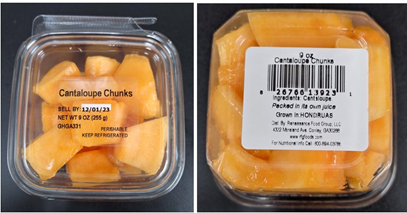
Cantaloupe Chunks, 9 oz.

CONLEY, GA – November 29, 2023 – GHGA, LLC is voluntarily recalling select fresh-cut products made from whole cantaloupe subject to a previously announced product recall initiated by Sofia Produce, LLC dba Trufresh, due to potential Salmonella contamination.

All GHGA fresh-cut fruit products associated with the recalled whole cantaloupe associated with the outbreak have expired, however consumers who have purchased these items and may have frozen them for later use are urged not to consume the products and to dispose of them immediately or return the items to their local store for a full refund.

As of November 29, there have been no illnesses reported related to GHGA fresh-cut products. According to Centers for Disease Control and Prevention (CDC), several illnesses have been reported to date in connection with the whole cantaloupe recalled by Sofia Produce, LLC dba Trufresh, however, as of November 29, no illnesses have been confirmed to be associated with GHGA products.

The fresh-cut fruit products containing recalled cantaloupe were distributed to Kroger stores in Alabama and Georgia, Sprouts stores in Alabama, Georgia, North Carolina and South Carolina, and Trader Joe’s retail stores in Alabama, Florida, Georgia, South Carolina, and Tennessee. The products are packaged in clear square or round plastic containers, marked with a “sell by” date and a lot code on the label.

Voluntarily recalled items include the specific products, lot codes, and expiration dates below. No other products are affected.

Products Table – (PDF-194KB)

Consumers who have questions or would like to report adverse reactions should contact customer service at 888.449.9386 Monday through Friday, 8 AM to 5 PM PT.

FDA Outbreak Advisory

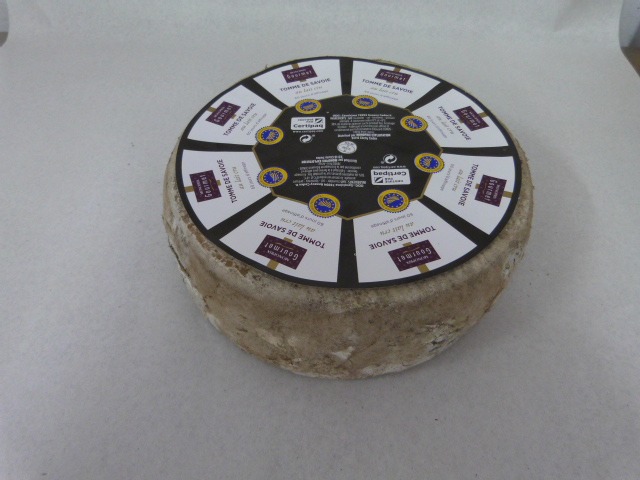
France – TOMME DE SAVOIE FARM – STEC E.coli O26

Gov France

Product category
Food
Product subcategory
Milk and dairy products
Product brand name
MONOPRIX GOURMET
Model names or references
TOMME DE SAVOIE FARM MONOPRIX GOURMET
Product identification
GTIN Batch Date
3350030176648 40031023 Use-by date 12/24/2023
3350030176648 40031023 Use-by date 12/25/2023
3350030176648 40031023 Use-by date 12/28/2023
Packaging
1.5 kg grinding wheel
Start/end date of marketing
From 10/30/2023 to 11/28/2023
Storage temperature
Product to keep in the refrigerator
Health mark
FR 74.211.060 CE
Further information
Product sold by the cut
Geographical sales area
Whole France
Distributors
Monoprix

USA- FDA – Core Outbreak Table -Investigations of Foodborne Illness Outbreaks

FDA

What’s New

  • For the outbreak of Salmonella Newport (ref # 1201), the case count has increased from 40 cases to 42 cases.
  • For the outbreak of Salmonella Sundsvall (ref #1203) linked to cantaloupe, the recall was expanded to include additional retailers and wholesalers who received the recalled melons. See the Outbreak Advisory for additional information. 
  • For the outbreak of Listeria monocytogenes (ref #989) linked to peaches, plums, and nectarines, the advisory was updated to include additional retailers impacted by this outbreak.
  • For the investigation of elevated lead levels in Cinnamon Applesauce Pouches (ref # 1198) the advisory was updated to include additional adverse event reports and advice for consumers.

Date
Posted

Ref

Pathogen
or
Cause of
Illness

Product(s)
Linked to
Illnesses

(if any)

Total
Case
Count


Status

11/22/

2023

1201

Salmonella
Newport

Not Yet
Identified

42

Active

11/22/

2023

1203

Salmonella
Sundsvall

Cantaloupe

Advisory

Active

11/15/

2023

989

Listeria
monocytogenes

Peaches, Plums,
and Nectarines

Advisory

Active

11/15/

2023

1192

E. coli
0103

Not Yet
Identified

12

Active

11/8/

2023

1198

Elevated Lead
Levels

Apple
Cinnamon
Puree

Advisory

Active

11/1/

2023

1195

E. coli
O121:H19

Not Yet
Identified

37

Active

10/4/

2023

1190

Salmonella
Thompson

Onions

Advisory

Active

India- Over 100 passengers on Bharat Gaurav train fall ill due to food poisoning

Hindustan Times

At least 100 passengers, including children and women, fell ill on board the Bharat Gaurav train, allegedly from food poisoning, officials said on Wednesday.

The railway officials informed the food wasn’t provided by the railway and the train had no pantry facility. During the journey, some passengers took food from Wadi railway station near Solapur. While some passengers also received food in the form of donations. The special train had over 1,400 passengers out of which over 100 passengers developed symptoms.

USA – Salmonella serotypes Soahanina, Sundsvall and Oranienburg linked to Cantaloupe Outbreak – number of ill expected to rise

Food Poison Journal

Additional Salmonella Soahanina, Sundsvall and Oranienburg infections are under investigation and more illnesses associated with this outbreak may be confirmed.

USA – Outbreak Investigation of Salmonella: Cantaloupes (November 2023)

FDA

Cantaloupe

Products and Stores Affected (Expanded and Updated on 11/27/2023)

Recalled whole cantaloupe from the following brands:

  • Whole fresh cantaloupes with a label on the cantaloupe that says “Malichita” or “Rudy”, “4050”, and “Product of Mexico/produit du Mexique”.
  • Retailers and wholesalers would have received recalled whole melons from Crown Jewels Produce in boxes labeled “Malachita/Z Farms” or from Sofia Produce doing business as TruFresh in boxes labeled “Malichita” or “Rudy”, or from Pacific Trellis in corrugated cartons with certain lot codes.

Recalled cut cantaloupe and products made from recalled whole cantaloupes:

  • ALDIExternal Link Disclaimer cantaloupe, cut cantaloupe, and pineapple spears in clamshell packaging with Best-by dates between October 27 and October 31.
  • Vinyard cantaloupe chunks and cubes, fruit mixes, melon medleys, and fruit cups containing cantaloupe. Most have a “Vinyard” label, and some have a red label with “Fresh” sold between October 30 and November 10 in Oklahoma stores.
  • Freshness Guaranteed seasonal blend, melon trio, melon mix, fruit blend, fruit bowl, seasonal fruit tray, fruit mix, and cantaloupe chunks; and RaceTrac fruit medley sold in clear square or round plastic containers at select retail stores in IN, MI, OH, KY, NC, TN, VA, IL, TX, LA (see recall announcement for lot codes and “best by” dates).

More information about recalled products and product images can be found in the recall links above.

FDA’s investigation is ongoing. Updates to this advisory will be provided as they become available.

Symptoms of Salmonella Infection

Illness usually occurs within 12 to 72 hours after eating contaminated food and usually lasts four to seven days. Symptoms include diarrhea, fever, and abdominal cramps. Children younger than five, the elderly, and people with weakened immune systems are more likely to have severe infections.

Status

Ongoing: updates to this advisory will be provided as they become available.

Recommendation

  • Consumers, restaurants, retailers, and wholesalers should not eat, sell, or serve recalled cantaloupe or recalled products containing cantaloupe.
  • Some consumers freeze cantaloupe for later use. Consumers, restaurants, and retailers should check their freezers and throw away recalled fresh or cut cantaloupe that was frozen for later use.
  • If you cannot tell if your cantaloupe is part of the recall, do not eat or use it and throw it away.
  • Retailers and wholesalers would have received recalled whole melons from Crown Jewels Produce in boxes labeled “Malachita/Z Farms” or from Sofia Produce doing business as TruFresh in boxes labeled “Malichita” or “Rudy”, or from Pacific Trellis in corrugated cartons with certain lot codes.
  • Follow FDA’s safe handling and cleaning advice and use extra vigilance in cleaning and sanitizing any surfaces and containers that may have come in contact with recalled products to reduce the risk of cross-contamination.
  • Contact your healthcare provider if you think you may have symptoms of a Salmonella infection after eating recalled cantaloupe.

USA – Outbreak Investigation of Listeria monocytogenes: Peaches, Plums, & Nectarines (November 2023)

FDA

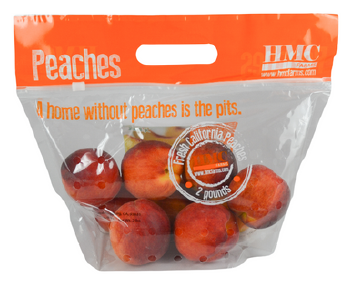
HMC Peaches

Product

Recalled conventional (non-organic) peaches, plums, and nectarines sold in retail stores from May 1, 2022 through November 15, 2022 and from May 1, 2023 through November 15, 2023. The recalled fruit was sold at retail stores nationwide in bags or as individual pieces of fruit with PLU stickers, under multiple brand names.

  • Individual pieces of fruit with PLU stickers on the fruit labeled USA-E-U, containing the following numbers:
    • Yellow peach: 4044 or 4038
    • White peach: 4401
    • Yellow nectarine: 4036 or 4378
    • White nectarine: 3035
    • Red plum: 4042
    • Black plum: 4040
  • HMC Farms: peaches, plums, or nectarines sold in HMC Farms-branded bags
  • Signature Farms: peaches or nectarines sold in Signature Farms-branded bags and labeled with 6359 printed on a white sticker on the bag.

See the recall notice for product images.

Additionally, the recalled fruit was sold to other manufacturers who may have frozen and/or relabeled the recalled fruit for resale under another brand. The firm has directly notified their customers who received recalled product and this advisory will be updated as more information becomes available.

Recalled fruit is past expiration and no longer available for sale in retail stores but could have been frozen by consumers. Fresh whole peaches, plums, and nectarines currently available for sale at retail are not included in this recall.

Stores Affected

The recalled fruit was distributed nationwide and sold at retail stores in bags or as individual pieces of fruit (see descriptions above). FDA is aware of the following retailers who received recalled products:

Additional information on retail locations will be provided when it is available.

Symptoms of Listeriosis (Listeria Infection)

Symptoms usually start within 2 weeks after eating food contaminated with Listeria, but may start as early as the same day or as late as 10 weeks after. Mild symptoms may include a fever, muscle aches, nausea, tiredness, vomiting, and diarrhea. If the more severe form of listeriosis develops, symptoms may include headache, stiff neck, confusion, loss of balance, and convulsions.

Status

Ongoing: Updates to this advisory will be provided as they become available.

Recommendation

  • Do not eat, sell, or serve recalled peaches, plums, or nectarines. The recalled fruit is no longer available for sale and any previously purchased fruit should be past shelf life.
  • If you previously purchased fresh peaches, plums, and nectarines and then froze them, you should throw them away if they are part of the recall or if you cannot tell if they are part of the recall.
  • Anyone who received or purchased recalled peaches, plums and nectarines should use extra vigilance in cleaning and sanitizing any surfaces and containers that may have come in contact with the recalled fruit to reduce the risk of cross-contamination. This includes baking or canning tools, cutting boards, knives, countertops, refrigerators, freezers, and storage bins.
  • If you have symptoms of listeriosis you should contact your health care provider to report your symptoms and receive care.

Recommendations for At-Risk Groups

  • Listeria is most likely to sicken pregnant people and newborns, adults aged 65 or older, and people with weakened immune systems. Other people can be infected with Listeria, but they rarely become seriously ill.
  • Pregnant people typically experience only fever, fatigue, and muscle aches. However, Listeria infection during pregnancy can lead to miscarriage, stillbirth, premature delivery, or life-threatening infection of the newborn.
  • Call your healthcare provider right away if you have symptoms of a Listeria infection.