Category Archives: Food Illness

Research -How a certain bacterium communicates and makes us sick

Science Daily

Researchers at Binghamton University, State University of New York have uncovered the unique way in which a type of Gram-negative bacterium delivers the toxins that make us sick. Understanding this mechanism may help design better ways to block and eventually control those toxins.

Assistant Professor Xin Yong and graduate student Ao Li from the Department of Mechanical Engineering, along with Associate Professor Jeffrey W. Schertzer from the Department of Biological Sciences, published their findings in the Journal of Biological Chemistry.

The study looked at how bacteria communicate via the transportation of small molecules. Yong and Schertzer explained that communication molecules stimulate the production of outer membrane vesicles. These small packages then bud off from the surface of the bacterium and contain highly concentrated toxins.

Originally, it was hypothesized that the communication molecule induced vesicle production by controlling gene expression, but that’s not what’s going on.

Yong and Schertzer decided to work together on a model to understand more about how the communication molecule inserts itself into the membrane of bacteria in order to physically stimulate the production of these toxin delivery vehicles.

“It’s hard to see the molecular detail at that level,” explained Schertzer. “But with Dr. Yong’s expertise, we were able to build a computational model that helped us understand what actually goes on between individual molecules.”

Yong’s model allowed them to look at the details of the molecule and understand more about how it interacted with the membrane on a very short timescale.

“Our most important finding is that the communication molecule needs to enter the membrane in a very specific way,” said Schertzer. “It folds itself like a book, then will expand once it has entered the membrane.”

Schertzer and Yong explained that the communication molecule has both a head and a tail that are known to be flexible, but they did not expect this type of change. In the future, they hope to test what would change in the interaction when the tail is removed or the head is modified.

While the study may sound fairly specific, it has some wider implications for all Gram-negative bacteria.

“Gram-negative bacteria likely all have similar types of communication molecules. We focused on the PQS [Pseudomonas Quinolone Signal] molecule of Pseudomonas aeruginosa because it was the first discovered and is the best studied,” said Yong. “Other Gram-negative species, such as E. coli, may be transferring their own communication molecules in a similar way.”

Learning more about how Gram-negative bacteria communicate with each other can help researchers build a stronger understanding of multispecies interactions and how to eventually control these types of high-risk infections.

“This study was a testament to how beneficial interdisciplinary work can be,” said Schertzer. “We had reached a limit with what could be done experimentally and needed Dr. Yong’s model to develop a rationale for how the molecule was interacting with the membrane. Most importantly, this work has generated a wealth of new questions that we are now continuing to investigate.”

Story Source:

Materials provided by Binghamton UniversityNote: Content may be edited for style and length.


Journal Reference:

  1. Ao Li, Jeffrey W. Schertzer, Xin Yong. Molecular conformation affects the interaction of the Pseudomonas quinolone signal with the bacterial outer membraneJournal of Biological Chemistry, 2019; 294 (4): 1089 DOI: 10.1074/jbc.AC118.006844
Scotland -Legionnaires’ disease in travellers returning from Goa, India

HPS

Public Health England (PHE) have reported seven cases of Legionnaires’ disease in UK travellers who visited Goa since November 2018, a small increase in cases compared to previous years.

Legionnaires’ disease is more dangerous to people with underlying medical conditions and travellers staying in poorly maintained hotels or apartments. Although the risk to travellers to Goa is considered to be low, anyone who develops an influenza-like illness with fever, cough or shortness of breath during their stay or up to two weeks after returning home, are advised to seek prompt medical advice. They should ask the healthcare professional about Legionnaire’s disease and say where they have been.

Further information and advice on travel to Goa is available to view on the Travax (for health professionals) and fitfortravel (for the general public) websites.

USA – Yet Another Cruise Ship with Norovirus ? 91 sickened on Princess Cruises Island Princess; Samples sent for Norovirus testing

Outbreak News Today Norwalk_Caspid

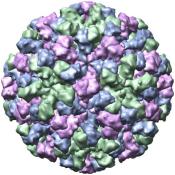
Federal health officials reported another cruise ship outbreak this week. According to officials, 91 passengers and crew onboard the Princess Cruises February 8–18, 2019 Island Princess voyage were stricken with symptoms of vomiting and diarrhea.


USA- Outbreak of Multidrug-Resistant Salmonella Infections Linked to Raw Chicken Products Final Update

CDC

Final Outbreak Information
At A Glance
  • As of February 21, 2019 this investigation is over.
  • A total of 129 people infected with the outbreak strain of Salmonella Infantis were reported from 32 states.
    • Twenty-five people were hospitalized. One death was reported from New York.
  • Epidemiologic and laboratory evidence indicated that many types of raw chicken products from a variety of sources are contaminated with Salmonella Infantis and are making people sick.
    • In interviews, ill people reported eating different types and brands of chicken products purchased from many different locations.
    • The outbreak strain was identified in samples taken from raw chicken products, raw chicken pet food, and live chickens.
  • Antibiotic resistance testing conducted by CDC on Salmonella bacteria isolated from ill people showed that the outbreak strain is resistant to multiple antibiotics. For more information read the advice to clinicians.
  • A single, common supplier of raw chicken products or of live chickens was not identified.
  • The outbreak strain of Salmonella Infantis is present in live chickens and in many types of raw chicken products, indicating it might be widespread in the chicken industry. CDC and USDA-FSIS shared this information with representatives from the chicken industry and requested that they take steps to reduce Salmonella contamination.

Norway – Nine sick in Norway from Salmonella; source unknown

Food Safety News 

Authorities in Norway are investigating a Salmonella outbreak that has affected nine people.

The Norwegian Institute of Public Health (Folkehelseinstituttet) said the patients became ill in January and early February. They are aged from 2 to 91 years old. The agency is investigating with local authorities, the Veterinary Institute (Veterinærinstituttet) and the Norwegian Food Safety Authority (Mattilsynet).

Five men and four women have been confirmed infected with Salmonella Agbeni. They live in Oslo, Akershus, Buskerud, Rogaland and Vest-Agder. Bacteria with a similar DNA profile has been detected in all nine people, which strongly suggests a common source. Officials are interviewing patients and sampling food leftovers to find the infection vehicle.

Officials from the Norwegian Institute of Public Health said such investigations can be complicated and take time with no guarantee the source of infection will be found. They added it was too early to say whether it is a limited outbreak or whether additional patients will be identified.

Australia – Source of Salmonella outbreak identified

9 News EGGS

SA Health says a raw egg butter product is to blame for more than fifty people being struck down by the illness.

Spain – Investigation opens into Michelin restaurant death and food poisonings

The Guardian

A Spanish judge has launched an investigation into the death of a woman who had eaten at a Michelin-starred restaurant now at the centre of a major food poisoning outbreak.

The 46-year-old woman, who has not been named, died in the early hours of Sunday after having a meal with her husband and son at the Riff restaurant in the eastern city of Valencia.

Regional health authorities say 30 people – including the woman, her husband and son – fell ill with food poisoning after eating at Riff between 13 and 16 February. The woman’s husband and son are recovering.

A judge in Valencia has opened an inquiry into the death and is awaiting the results of a postmortem and an analysis of samples taken from the restaurant.

The regional high court told the Europa Press news agency that no individuals were currently under investigation.

Australia – Elderly woman dies of Listeria infection as authorities warn thousands at risk

The Age

A woman has died and thousands of people are at risk of listeria infection after the bacteria was detected in food from a south-east Melbourne catering company that supplies food to hospitals, aged care homes and Meals on Wheels.

The catering service I Cook Foods has been shut down after the woman, who was aged in her 80s and from the eastern suburbs, died in Knox Private Hospital on February 4.

The woman contracted a listeria-related illness while in hospital after being admitted for an unrelated condition in late January, a health department spokesman said.

Six positive samples of listeria were found at the company’s Dandenong South kitchen during an investigation into the cause of the woman’s death over the past two weeks.

RASFF – UK – Foodborne outbreak

RASFF-Logo

RASFF –  foodborne outbreak suspected to be caused by too low acidity (due to absence of vinegar) of avocado oil mayonnaise from the United Kingdom in the UK

Scotland – Food Standards Scotland issues warning over Shiga-toxi E.coli bug

Herald Scotland

FOOD safety inspectors have warned that even trace amounts of an E. coli bacteria can post a danger to human health.

The updated guidance from Food Standards Scotland (FSS) has been published today following a joint report by the World Health Organisation and United Nations which urged vigilance in relation to Shiga Toxin-producing E. coli (STEC).

Professor Norval Strachan, Independent Chief Scientific Adviser for FSS, said: “STEC, or Shiga Toxin-producing E. coli, are a group of different types of E. coli bacteria found in the guts of animals such as cattle and sheep, which can make their way into the food chain via the animals’ faeces.