Category Archives: Food Illness

South Africa – Tiger Brands outbreak killed young mother, leaving her twin sisters to raise her daughter – Listeria monocytogenes

Food Safety News

South African Nthabiseng Zaza liked traveling and gospel music. She liked shoes, especially designer brands like Michael Kors. “She was the life of the party,” Matlhogonolo said, Nthabiseng’s 26-year-old sister.

Nthabiseng was a person who loved family above all else. She always wanted to have kids and was blessed with a daughter, Onthathile, who turns 5 this month. Matlhogonolo Chantell and her twin sister Michell Masego Zaza are raising their sister’s daughter.

Onthathile doesn’t remember much of her mother, who at the age of 35 died from listeriosis in Oct. 2018. Her death was part of a Listeria outbreak in South Africa that was traced to Tiger Brand’s polony — processed deli meat similar to baloney.

However, it wasn’t until 2020 that the family found out what had caused their Nthabiseng’s mysterious illness. They knew only that many people in the country were getting sick.

Germany – Resurgence of an international hepatitis A outbreak linked to imported frozen strawberries, Germany, 2018 to 2020

Eurosurveillance

Hepatitis A virus (HAV) causes acute inflammatory hepatic infections in humans. Transmission occurs primarily via the faecal-oral route through contaminated food or water or person-to-person spread [1]. While the disease is often asymptomatic or mild in younger children, it can cause debilitating symptoms and fulminant hepatitis in adults. After an abrupt onset with fever, malaise and abdominal discomfort, jaundice is the predominant symptom. The average incubation period is 28 to 30 days (range: 15–50) with maximum infectivity during the latter half of the incubation period, i.e. while being asymptomatic [1]. HAV retains infectivity after freezing and can persist in the environment, being able to withstand food-production processes routinely used to inactivate bacterial pathogens [2].

Direct or indirect detection of HAV infection in humans is notifiable in Germany to local public health authorities (LPHA), which transmit case reports electronically via the state level to the national public health institute (Robert Koch Institute, RKI). The case definition of hepatitis A in place for surveillance purposes in Germany is: a symptomatic disease (defined as one or more of the following: fever, abdominal discomfort, increase of serum transaminases, jaundice), plus laboratory confirmation (i.e. detection of HAV nucleic acid or HAV-specific IgM or a distinct increase of HAV-IgG concentrations). Symptomatic cases with an epidemiological link to a laboratory-confirmed hepatitis A case also fulfil the case definition. Forwarding of HAV-reactive serum or stool samples from diagnosing laboratories to the National Consultant Laboratory for HAV for sequencing is voluntary, and is intensified during outbreaks.

In 2016, the European Union/European Economic Area (EU/EEA) incidence of hepatitis A was 2.4 cases per 100,000 population; the highest incidences were in eastern EU countries, while HAV infections in other EU/EAA regions were mostly associated with infections acquired abroad [3]. Like most high-income countries, Germany is a low-incidence country with a median hepatitis A incidence of 1.02 per 100,000 inhabitants between 2010 and 2018. The median hepatitis A incidence in Berlin, Germany is slightly higher (1.79/100,000 in 2010–2018). European outbreaks of hepatitis A among men who have sex with men caused higher case numbers in Berlin and the EU/EEA in 2017 [4,5]. Recently, several hepatitis A outbreaks associated with frozen berries have been described in Europe [6,7].

This HAV subgenotype IB strain has previously caused outbreaks in Sweden (June–July 2018) and Austria (July–September 2018) [8], comprising a total of 34 reported cases. Combined epidemiological and microbiological outbreak investigations identified imported frozen strawberries produced in Poland as the vehicle. In Sweden, the HAV outbreak strain was detected in frozen strawberries and the contaminated batch was withdrawn from the Swedish market. Trace-back investigations from both Sweden and Austria identified Polish producer Y as the source for the implicated frozen strawberries.

Shortly after outbreak control in both countries, cases with the identical virus sequence started to appear in Germany in October 2018. The Federal Office of Consumer Protection and Food Safety (BVL) and all federal public health authorities were informed about this by the RKI and sequencing of samples of autochthonous hepatitis A cases was intensified.

Here we describe the results of the epidemiological investigation of an outbreak of hepatitis A in Germany presenting in two waves, one in 2018 and another in 2019.

Research – Initial reports of foodborne illness drive more public attention than food recall announcements

Journal of Food Protection

Recall announcements by the Food and Drug Administration (FDA) and Food Safety Inspection and Service (FSIS) are important communication tools. Nonetheless, previous studies found that effects of recalls on consumer demand are small. Social media analytics can provide insights into public awareness about food safety related incidents. Using the social listening data this study analyzes how the public, in social and online media space, responds to, interacts with, and references food safety recalls and/or initial announcements of foodborne illness outbreaks as reported by Centers for Disease Control and Prevention (CDC). Analysis suggests that mentions quantified in the social and online media searches conducted moved closer in-step with the CDC’s initial reports of foodborne illness outbreaks than FDA and FSIS recall announcements. Issuance of recalls may not necessarily be a popular source of food risk information in social media space when compared with reactions to the CDC’s initial illness reports. This relative popularity reflects people more often sharing/posting about illness risk regardless of whether a recall occurs. This suggests that recall announcements by FDA and FSIS may not induce wanted changes in consumers’ behavior, while initial illness reports by CDC may. Although recalls by FDA and FSIS may not generate social media posts, their primary role is to take potentially unsafe food items off grocery shelves. Online media analytics provides policy makers with implications for effective food risk communication planning; initial CDC reports drive immediate attention more than FDA and FSIS recalls.

India – At least 42 students of PTU fall sick after eating mess food; hospitalised

Hindustan Times

While the students undergoing treatment at the hospital stated that at least 80 students had consumed the food at the mess and suffered food poisoning, PTU registrar Sandeep Kazal said that 28 students were hospitalised. He added that there may be more students who got treated, but only 28 were admitted to the hospital.

Food supply inspector Harjot Singh said a team had visited the hostel mess and found that the quality of food products was good but there was no cleanliness in the mess. “We have issued a notice to the varsity to clean the mess within two days,” said Singh.

USA – Fast-Food Chain Is Linked to 40 Cases of Food Poisoning

Yahoo News

Forty people have reported illnesses after eating at an Arby’s in Springfield, Ill. since Feb. 15, the Sangamon County Department of Public Health confirmed to two local news stations, NewsChannel 20 and WAND 17.

Officials first visited the Arby’s restaurant on Feb. 23 after calls were made to the health department. They then returned on Feb. 24 as the store was closed for deep cleaning. They also visited again the next day, still finding issues, but are still unable to pinpoint the exact cause of the food poisonings.

Sweden – Yersinia (Sweden, January 2021–) – Increase in cases of yersinia infection.

Folkhalsomyndigheten#

kswfoodworld.com

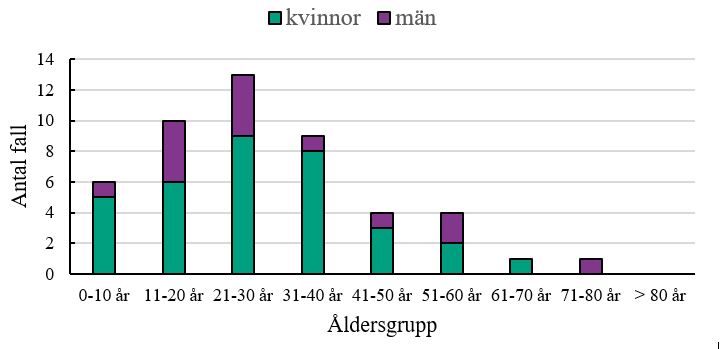
Since the second week of January, more than twice as many people have contracted yersinia infection as during the same period in the immediately preceding years. An increased number of patients has mainly been observed in the regions of Stockholm, Västra Götaland and Halland, which together account for 33 of the total of 48 disease cases reported since 11 January. Of the patients, a majority are aged 11-40 and most are women (figure). In the ongoing investigation, the Swedish Public Health Agency collaborates with the infection control units in the affected regions to try to identify the source of the infection through interviews of the cases and surveys.

As part of the outbreak investigation, the Swedish Public Health Agency also collects yersinia isolates from disease cases in the affected regions. The isolates are typed using whole genome sequencing (analysis of the genome of the bacterium) to clarify who has been affected by a common source of infection.

Figure. Distribution by age and sex of persons reported to be infected with yersinia infection 11 January – 2 February 2021.

Figure.  Distribution by age and sex of persons reported to be infected with yersinia infection 11 January – 2 February 2021.

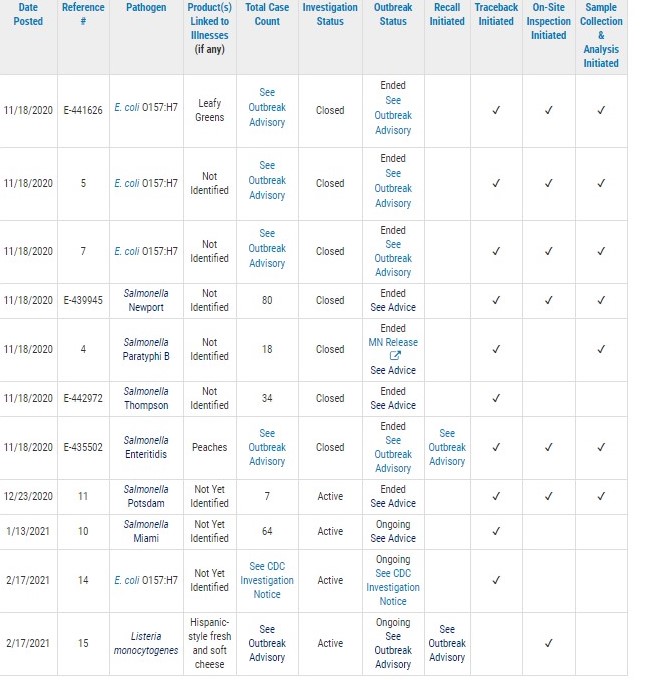
USA – Outbreak Investigation of Listeria monocytogenes – Hispanic-style Fresh and Soft Cheeses (February 2021)

FDA

The FDA, along with CDC and state and local partners, are investigating a multistate outbreak of Listeria monocytogenes infections linked to queso fresco cheeses made by El Abuelito Cheese, Inc.

As part of this outbreak investigation, the Connecticut Department of Public Health collected product samples of El Abuelito-brand Hispanic-style fresh and soft cheeses from a store where a sick person bought cheeses. On 2/19/2021, Whole Genome Sequencing (WGS) analysis conducted by the Connecticut State Laboratory determined that the Listeria monocytogenes found in the samples is a match to the outbreak strain. At this time, El Abuelito Cheese, Inc. has ceased production and distribution of all products processed or handled in the same facility as the Queso Fresco.

The FDA has initiated an on-site inspection of the facility. On 2/24/2021, the firm notified customers via letter that it was expanding the recall announced on 2/19/2021. The expanded recall includes El Abuelito, Rio Grande, and Rio Lindo brand queso frescos. It also includes El Abuelito-brand Quesillo (Oaxaca, string cheese), and Requeson (Ricotta) cheeses that are manufactured or handled in the same facility as the Queso Fresco products linked to this outbreak.

At this time, FDA is recommending that in addition to the recalled queso fresco cheeses, consumers, restaurants, and retailers should not eat, sell, or serve any El Abuelito-brand Quesillo (Oaxaca, string cheese) or Requeson (Ricotta) cheeses.

The FDA’s recommendation does not include any additional products with the El Abuelito Cheese, Inc. label because they are not manufactured or handled in the same facility; this includes El Abuelito Meat, Inc., Panela cheese, cotija cheese, mole, crema centroamericana, and crema mexicana. Updates will be provided as they become available.

Recommendation

Consumers, restaurants, and retailers should not eat, sell, or serve any recalled El Abuelito, Rio Grande, or Rio Lindo brand queso fresco cheeses. Additionally, they should not eat, sell, or serve any El Abuelito brand Quesillo (Oaxaca, string cheese) or Requeson (Ricotta) cheeses.

FDA recommends that anyone who purchased or received any El Abuelito brand Quesillo, Requeson, or recalled Queso Fresco cheeses use extra vigilance in cleaning and sanitizing any surfaces and containers that may have come in contact with these products to reduce the risk of cross-contamination. Listeria can survive in refrigerated temperatures and can easily spread to other foods and surfaces.

If you are at higher risk for severe Listeria illness (if you are pregnant, aged 65 or older, or have a weakened immune system due to certain medical conditions or treatments) do not eat any recalled El Abuelito, Rio Grande, or Rio Lindo brand Queso Fresco cheeses and do not eat any brand of quesillo or requeson cheeses until we learn more about whether other brands of cheeses may be affected.

  • Ask your retailer if any queso fresco cheese you buy is supplied by El Abuelito. If you are unable to obtain an answer, do not buy it and throw away the queso fresco cheese you have at home.
  • Call your healthcare provider right away if you have these symptoms after eating any queso fresco, quesillo, or requeson cheeses:
    • Pregnant people typically experience only fever, fatigue, and muscle aches. However, Listeria infection during pregnancy can lead to miscarriage, stillbirth, premature delivery, or life-threatening infection of the newborn.
    • People who are not pregnant may experience headache, stiff neck, confusion, loss of balance, and convulsions, in addition to fever and muscle aches.
  • Follow these five steps to clean your refrigerator, containers, and surfaces that may have touched the cheeses. Listeria can survive in the refrigerator and can easily spread to other foods and surfaces.

Product Images

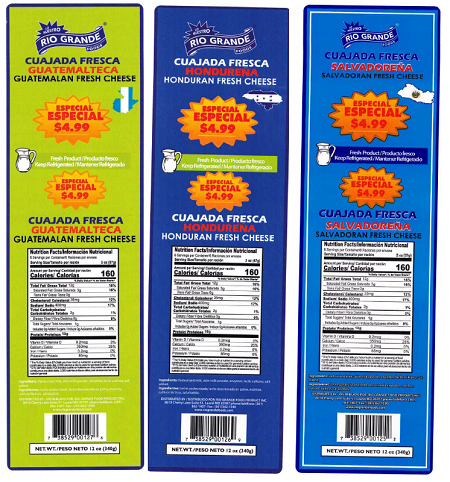
Sample Product Label from the Outbreak Investigation of Listeria monocytogenes in Hispanic-style Fresh and Soft Cheeses (February 2021) - Rio Grande
Sample Product Label from the Outbreak Investigation of Listeria monocytogenes in Hispanic-style Fresh and Soft Cheeses (February 2021) - Rio Lindo
Sample Product Label from the Outbreak Investigation of Listeria monocytogenes in Hispanic-style Fresh and Soft Cheeses (February 2021) - El Abuelito
Sample Product Label from the Outbreak Investigation of Listeria monocytogenes in Hispanic-style Fresh and Soft Cheeses (February 2021) - Chirilagua, Yorito

Recall Information

On 2/24/2021, the firm notified customers via letter that it was expanding the recall of El Abuelito, Rio Grande, and Rio Lindo brand queso frescos, which was announced on 2/19/2021, to include El Abuelito-brand Quesillo (Oaxaca, string cheese) and Requeson (Ricotta) cheeses. These additional products were manufactured or handled in the same facility as the contaminated Queso Fresco products linked to this outbreak.

At this time, FDA is recommending that in addition to the recalled queso fresco cheeses, consumers, restaurants, and retailers should not eat, sell, or serve any El Abuelito-brand Quesillo (Oaxaca, string cheese) or Requeson (Ricotta) cheeses.

The FDA’s recommendation does not include any additional products with the El Abuelito Cheese, Inc. label because they are not manufactured or handled in the same facility; this includes El Abuelito Meat, Inc., Panela cheese, cotija cheese, mole, crema centroamericana, and crema mexicana. Updates will be provided as they become available.

FDA has posted a list of retailers that may have received Hispanic-styles cheeses from the El Abuelito Cheese, Inc. facility in Paterson N.J.  It is possible that this list may not include all retailers who have received these cheeses, however, this list represents the best information currently available to the FDA.

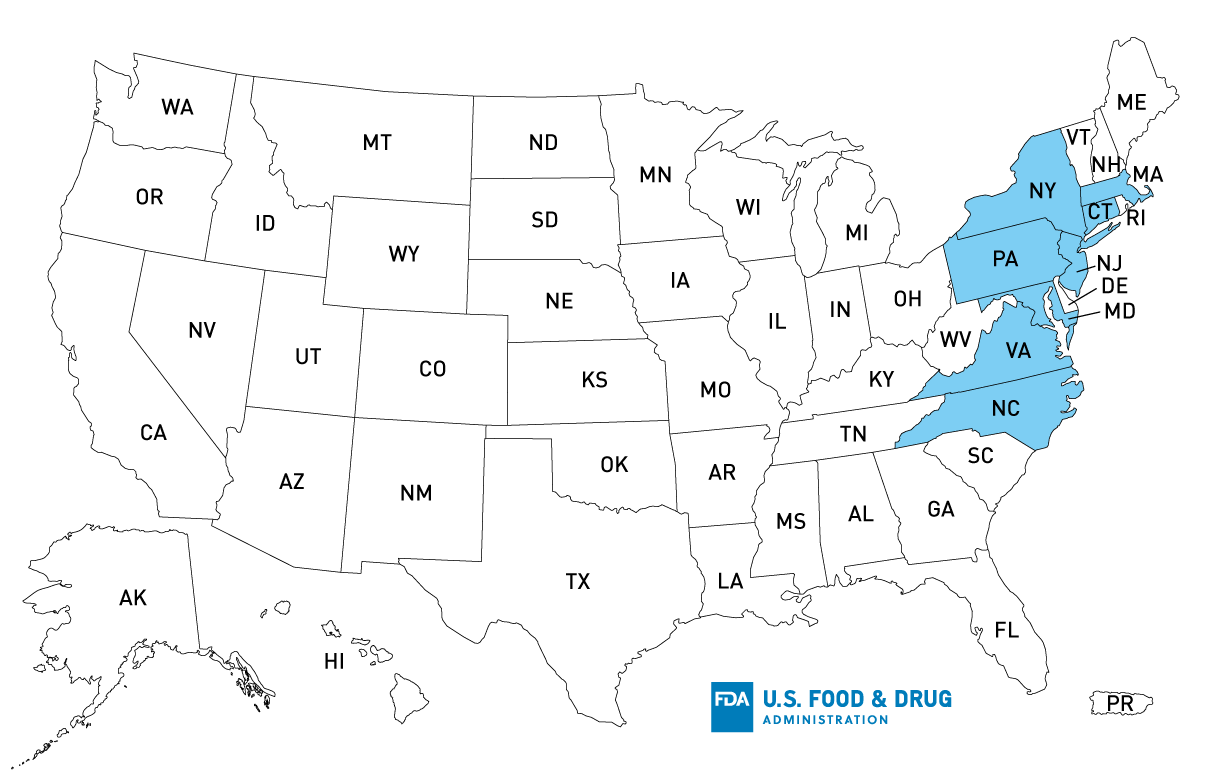
Map of U.S. Distribution of Recalled El Abuelito Queso Fresco

U.S. Distribution of Recalled El Abuelito Queso Fresco

Case Count Map Provided by CDC

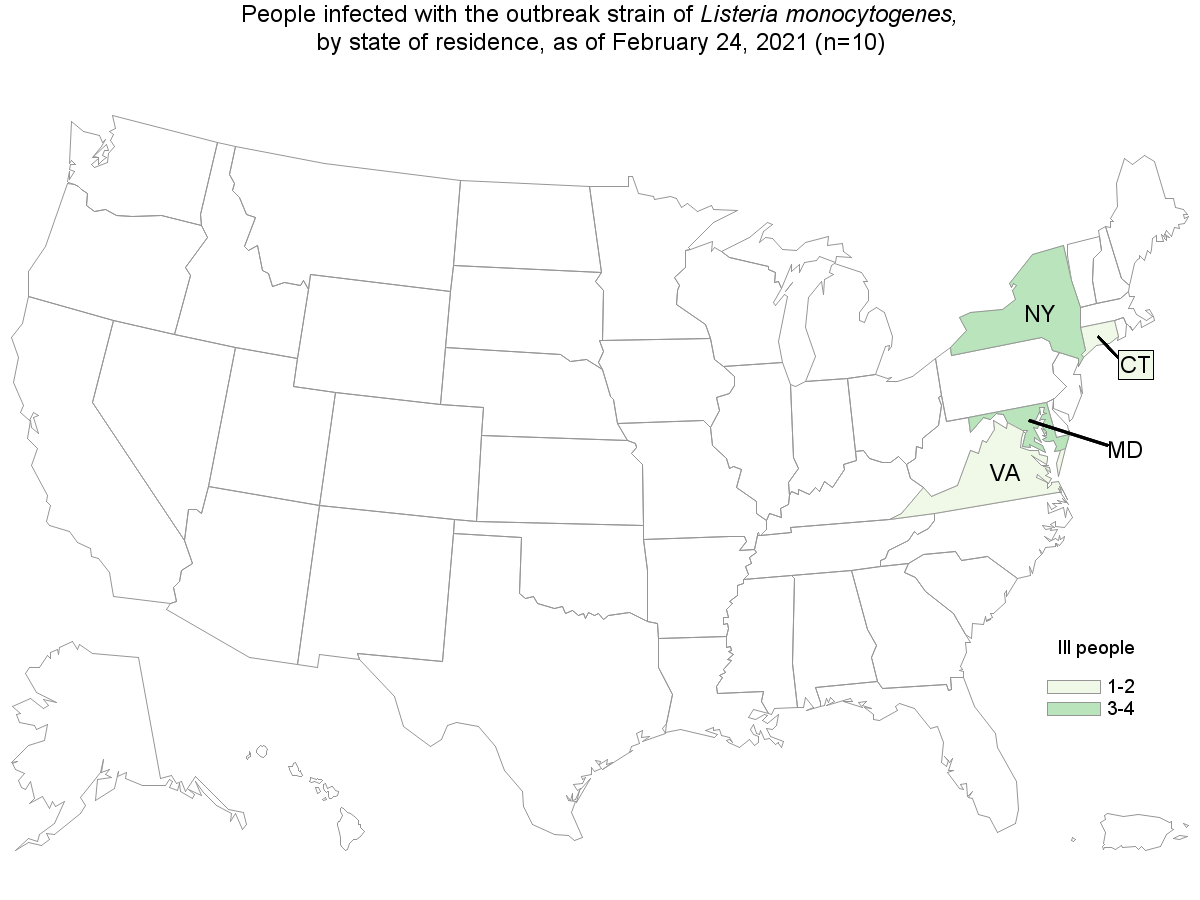
CDC Case Count Map for the Outbreak Investigation of Listeria monocytogenes in Hispanic-style Fresh and Soft Cheeses - 2/24/2021

Case Counts

Total Illnesses: 10
Hospitalizations: 9
Deaths: 0
Last Illness Date: 2/9/2021
States with Cases: CT (1), MD (4), NY (4), and VA (1)
Product Distribution*: CT, MA, MD, NC, NJ, NY, PA, VA
*States with confirmed distribution; product could have been distributed further

Research – Outbreak of ceftriaxone-resistant Salmonella enterica serotype Typhi attributed to eating chicken at hotel X, Tiruchirappalli, India, 2018

IJID Online

Background: Third-generation cephalosporin is widely used for typhoid treatment. In May 2018, India’s National Centre for Disease Control based Antimicrobial resistance surveillance network notified through Tamil Nadu State Surveillance Unit about clustering of ceftriaxone-resistant Salmonella enterica serotype Typhi cases in Tiruchirappalli city, Central Tamil Nadu. Team led by State public health department investigated to identify risk factors.

Conclusion: The cluster of ceftriaxone-resistant Salmonella Typhi was due to eating chicken gravy at hotel X in central Tamil Nadu. We recommended proper processing of chicken and continuing surveillance for ceftriaxone-resistant.

India – Uttar Pradesh: Over 40 hospitalised due to food poisoning after having meal at event in Sitapur

Times Now News

Lucknow: Over 40 people took ill after consuming food at an event in Sitapur district of Uttar Pradesh. Subsequently, they were taken to a hospital for treatment.

“Around 40-50 people are admitted to the hospital after they had a meal at an event in Mahmudabad,” an official said.

After having food at the event in Sitapur’s Mahmudabad town, the health of the people worsened, following which they were rushed to a hospital for food poisoning treatment.

USA – CORE Response Teams – Update

FDA

000