Category Archives: Food Hygiene

Research – Lab work in South Africa’s Listeria outbreak was ‘remarkable’

Food Safety News

Researchers have described how a laboratory handled increased demand during the 2017-2018 listeriosis outbreak in South Africa.

Whole genome sequencing (WGS) and epidemiological data were used to determine the source of the outbreak as ready-to-eat processed meat manufactured by Enterprise Foods.

A total of 1,060 cases were reported from January 2017 to July 2018 and 216 people died.

The largest ever reported outbreak of listeriosis included an alert in mid-June 2017, a peak in mid-November 2017, and identification of the outbreak source in mid-February 2018.

“This eight-month timeline was rather remarkable, considering the large number of cases involved and the limited capacity and resources available for foodborne disease outbreak investigations in South Africa,” according to researchers.

The study is published in the Foodborne Pathogens and Disease journal
Mexico – Mother’s Day celebration goes south after barbacoa poisons 27

Mexico News Daily

Enjoying a bite to eat at public events is proving risky: two weeks ago more than 1,000 people came down with food poisoning after eating cake at Children’s Day celebrations, while the latest incident has been blamed on bad barbacoa.

At least 27 people became ill in San Sebastián Coatlán, Oaxaca, where the municipal government hosted a Mother’s Day celebration last Friday and served barbacoa for the event.

Health official Mario Martínez Rojas said the local IMSS clinic was overrun by the number of cases and ran out of medical supplies to care for the victims of food poisoning.


USA – FDA now tests frozen berries for Norovirus and Hepatitis A

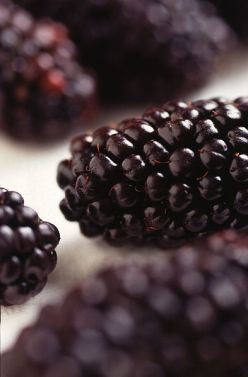
Food Dive Black_Butte_blackberry

  • The U.S. Food and Drug Administration has been sampling frozen strawberries, frozen raspberries and frozen blackberries for the presence of norovirus and hepatitis A since last November.
  • The agency noted four foodborne illness outbreaks between 1997 and 2016 were linked to frozen berries — three caused by hepatitis A and one by norovirus. The three hepatitis A outbreaks sickened 405 people and caused 53 hospitalizations, while the norovirus outbreak sickened 136, FDA said. Other illness outbreaks linked to frozen berries have occurred in Europe and elsewhere, the agency added.
  • The testing will last about 18 months, FDA said, and involves domestic samples in retail packaging from processors, distribution centers, warehouses, and retail locations. Samples of imported frozen berries will be gathered from ports of entry, importer warehouses and other storage facilities where foreign goods are cleared for entry into the U.S. The agency plans to test 2,000 samples and post quarterly results online.


USA – Norovirus possibly to blame after about 60 fall ill at event

WRAL norovirus-1080x655

Health officials on the North Carolina coast say norovirus may be what caused nearly 60 people to get sick at a recent charity event.

The Dare County Department of Health and Human Services says on its webpage that there were about 250 people at the event in Manteo on May 3. The news release from the department also says that of the people who showed symptoms, three reported seeking medical attention.

Also, the department says the investigation is inconclusive given that only one sample was taken for testing and the result was negative for any specific foodborne bacteria.

Malaysia – 36 tahfiz students down with food poisoning

NST

ALOR SETAR: A total of 36 students from the Institute of Al-Quran Darul Aman (IQDAR) here had to be rushed to Sultanah Bahiyah Hospital (HSB) for suspected food poisoning this morning.

The students, comprising 21 boys and 15 girls, had suffered from abdominal pain, diarrhoea, dizziness and vomiting.

Fifteen were sent to HSB from 9am, while the rest were treated at the hostel.

IQDAR deputy director Muhammad Yusni Yaakob said the institute noted something was amiss after many students failed to show up for classes at 8am.

“The lecturer then did a check at the student dormitory and found some students experiencing symptoms of food poisoning such as vomiting, diarrhoea and dizziness.

“They are believed to have eaten nasi Arab with mutton and chicken delivered by a restaurant at 11pm, but based on confessions from students, some only ate the food between 1am and 5am,” he said when met at IQDAR here today.

Zambia – 74 children hospitalized in Zambia for suspected food poisoning

The East African

About 74 children have been admitted to hospital in Zambia for suspected food poisoning, state radio reported. The children, aged between six and 14, had dined at a birthday party in Zambia’s second largest city of Kitwe.


“74 people mostly children from Kitwe’s Mulenga compound are admitted to the Kitwe Teaching Hospital for suspected food poisoning,” state-owned Zambia National Broadcasting Corporation (ZNBC) reported.


70 are now in stable condition while four others are receiving special attention, ZNBC said quoting the hospital’s spokesperson Phoebe Chileya.

RASFF Alerts – Salmonella – Shelled Almonds – Chicken Meat – Chilli Powder – Chilled Minced Meat -Venus Clams -Salted Chicken Breasts – Boiled Mussels – Sesame Seeds – Broilers

RASFF-Logo

RASFF – Salmonella serotype b (presence /250g) in shelled almonds from the United States in Germany

RASFF – Salmonella enterica ser. Enteritidis (presence /25g) in chilled chicken meat from chickens reared in the Czech Republic and slaughtered in Poland in Poland

RASFF – Salmonella (presence /25g) in chili powder from China in Greece

RASFF – Salmonella (present /25g) in chilled minced meat preparation from Belgium in Belgium

RASFF – Salmonella (detected /25g) in live venus clams (Chamellea gallina) from Italy in Spain

RASFF – Salmonella (presence /25g) in frozen salted chicken half breasts from Brazil in the UK

RASFF – Salmonella (present /25g) in frozen boiled mussels from Spain in Spain

RASFF – Salmonella (presence /25g) in shelled almonds from Spain, via France in Germany

RASFF – Salmonella (in 2 out of 5 samples /25g) in sesame seeds from Uganda in the Netherlands

RASFF – Salmonella enterica ser. Infantis (presence /25g) in chilled chicken broiler from Poland in Lithuania

Australia – Strain of salmonella spread across egg farms in NSW and Victoria

Weekly Times


SHARING of eggs between farms is being blamed for the spread of the rare strain of salmonella enteritidis across at least six egg farms in NSW and Victoria, with the possibility of more farms being affected.

Investigations have revealed “the affected properties have clear links in that people, eggs or equipment had been moving between them,” according to the NSW Department of Primary Industries.

Since September there have been six major recalls of eggs due to a strain of salmonella once considered “exotic” in Australia.

RASFF Alerts – Aflatoxin – Groundnut Spread with Milk Chocolate – Organic Ground Ginger – Dy Chillies -Dried Figs – Groundnuts – Organic Red Chilli Flakes – Hazlenuts and Almonds

RASFF-Logo

RASFF – aflatoxins (B1 = 3.8; Tot. = 4,7 µg/kg – ppb) in groundnut spread with milk chocolate from Ukraine in Slovakia

RASFF – aflatoxins (B1 = 7; Tot. = 15.6 µg/kg – ppb) in organic ground ginger from Nigeria in the Netherlands

RASFF – aflatoxins (B1 = 11.5 µg/kg – ppb) in dry chillies from Sri Lanka in Norway

RASFF – aflatoxins (B1 = 15; Tot. = 17 µg/kg – ppb) in groundnuts from the United States in the Netherlands

RASFF – aflatoxins (B1 = 106; Tot. = 114 µg/kg – ppb) in dried figs from Turkey in France

RASFF – aflatoxins (B1 = 10.4; Tot. = 11.3 µg/kg – ppb) in organic red chilli flakes from India in the UK

RASFF – aflatoxins (Tot. = 18.5 µg/kg – ppb) in shrivelled hazelnut kernels from Georgia in Bulgaria

RASFF – aflatoxins (B1 = >24 µg/kg – ppb) in almonds from the United States in Spain

RASFF Alert – Ochratoxin A – Raisins – Dried Grapes

RASFF-Logo

RASFF – ochratoxin A (19.8 µg/kg – ppb) in raisins from Uzbekistan, via Lithuania in the Czech Republic

RASFF – ochratoxin A (18 µg/kg – ppb) in dried grapes from Turkey in France

RASFF – ochratoxin A (30 µg/kg – ppb) in raisins from Turkey in the Netherlands

RASFF – ochratoxin A (18,79 µg/kg – ppb) in raisins from China in Poland