Category Archives: food death

Switzerland – Cheese Firm In Switzerland Investigated Over Listeria Link

AVA360

listeria

Swiss authorities are investigating if cheese from one company is linked to the deaths of 10 people with listeriosis since 2018.

The Schwyz Public Prosecutor’s Office has opened criminal proceedings in connection with Listeria in dairy products and is investigating allegations against the owner of the cheese firm.

A total of 34 cases are believed to have been infected with the same Listeria strain that was detected in brie from the dairy, according to the criminal complaint. Ten of the 34 sick people died. This resulted from analyzes commissioned by the federal government.

The ongoing investigation, with Schwyz police, includes whether the business owner is responsible for the illnesses and has violated food law.

Käserei Vogel AG, based in Steinerberg, a municipality of Schwyz, found Listeria in semi-hard cheese and at its production site in May this year. The company issued a recall, told authorities and informed its buyers to remove the products from shelves. The cheesemaker has already closed the business. More than 25 items sold across Switzerland were recalled and distribution also included Belgium and Germany.

UK – Salmonella outbreak causes hundreds of cases and several deaths in UK

New Food Magazine

A Salmonella outbreak has swept the UK, causing nearly 500 people to fall ill with the bacteria and several products to be recalled form supermarket shelves.

According to the Daily Mirror, five people are reported as having died and hundreds seriously ill after eating chicken imported from Poland.

The newspaper reports that 480 cases of Salmonella have been reported in the UK, with around 44 per cent of those affected believed to be children.

Note: There have been many RASFF Alerts concerning Salmonella in chicken products from Poland for over a year now.

Bizarre Cases of Food Poisoning on Three Different Ships

Maritime Executive

Three ships operating in different parts of the world are all reporting cases of food poisoning among their crew. At least two crew members have died while others have been transferred from their ships and hospitalized. It might be coincidental or an outbreak of the more common norovirus, a common gastrointestinal disease, but it rarely causes deaths.

Indian Ocean – Bamboo shoots blamed for fatal mass poisoning on Precious bulker

Trade Winds News

A seafarer has died and many others taken ill following a food poisoning incident on a Precious Shipping bulker.

A jar of pickled bamboo shoots is said to be the source of the incident, which occurred earlier this month on the 34,000-dwt handysize bulker Lanna Naree (built 2012) in the Indian Ocean.

The chief cook passed away and up to 13 others were reported to have become unwell before the bulker could divert to Male in the Maldives.

Four crew members who did not eat the pickle suffered no ill effects.

Hashim said all seafarers who had shown symptoms were replaced in Male as a safety precaution.

“We are now in the process of getting this pickle analysed and reporting the same to the authorities so that action can be taken to avoid any such incident in the future,” Hashim said.

USA – Victims of 2015 Listeria outbreak involving Blue Bell invited to follow Kruse case

Food Safety News

Victims of foodborne illness are often so numerous that the government wants to cast the wide internet in contacting them about felony prosecutions that often occur years later.

Federal prosecutors who plan to take former Blue Bell Creameries president Paul Kruse to a jury trial in July are telling the judge this is just such a case. They filed a motion on Friday, Feb. 12, asking for a court order authorizing the Department of Justice (DOJ) to comply with the Crime Victims’ Rights Act “by using reasonable alternative measures for notifying potential unknown victims” in the Kruse case where the defendant is charged with multiple counts of fraud and conspiracy in relation to a deadly Listeria outbreak

Uzbekistan: Botulism outbreak reported in Samarkand region, Linked to canned tomatoes

Outbreak News Today

kswfoodworld

On February 7, five people with signs of food poisoning were admitted to the infectious diseases department of the Bulungur District Medical Association in Samarkand region in southeastern Uzbekistan.

They were later diagnosed with botulism at the hospital. Despite the efforts of the doctors, one of the admitted, a 20-year-old man, died. Four more are in intensive care.

According to preliminary data, all five the day before, during lunch at the house of one of the victims, they ate canned tomatoes prepared at home.

India – 1 dead, 170 hospitalised for suspected food poisoning at Assam CM’s event

Hindustan Times

Health minister Himanta Biswa Sarma, who also attended the event, told journalists on Wednesday that he too had suffered from an upset stomach after consuming food at the event.

Over 170 persons have been hospitalised in a case of suspected food poisoning at an event attended by Assam chief minister Sarbananda Sonowal at Karbi Anglong district on Tuesday.

According to media reports, one youth died on Tuesday night after consuming packed food at the ceremonial launch of the first session of the Diphu Medical College Hospital (DMCH). District officials are yet to confirm the exact cause of the death.

UK – An outbreak of human listeriosis associated with frozen sweet corn consumption: Investigations in the UK

Science Direct

The use of Whole genome sequencing (WGS) identified a multi-country outbreak of human listeriosis associated with consumption of frozen sweet corn produced in Hungary. The purpose of this report was to summarise information on the cases occurring in the UK which were part of this outbreak and outline investigations on the presence of Listeria monocytogenes in the affected food chain.

Prior to the international recall of this product in 2018, 12 UK cases of listeriosis were identified as infected by the outbreak strain between 2015 and 18. Epidemiological and microbiological investigations confirmed these cases as belonging to the outbreak. A further case occurred in 2019 and a contaminated frozen pack from one of the implicated batches of sweet corn was recovered from the patient’s domestic freezer.

The outbreak strain was also detected in products from a sandwich manufacturer in 2018 which added frozen sweet corn directly to sandwich fillings. The sandwich manufacturer’s sweet corn was supplied by a distributor in England which obtained frozen products from the Hungarian manufacturer implicated in the outbreak. Within the distributor’s premises, 208 food and environmental samples were taken: L. monocytogenes was detected in 44% of 70 samples of frozen sweet corn and 5% of 79 other foods.

The outbreak strain was detected in the frozen sweet corn, in one other frozen food (mixed vegetables) and in the factory environment. The outbreak strain was also recovered from frozen beans on retail sale in the first four months of 2019. Five other L. monocytogenes strains together with two other Listeria species were detected in samples from the importer’s premises. One of the L. monocytogenes strains in the importer’s factory, which was distinct from the outbreak strain, was also recovered from sweet corn collected from the sandwich manufacturer, sweet corn tested in England in 2013 and 2016 and the blood of two cases of human listeriosis which occurred in England in 2014. This report shows how analysis by WGS provides evidence to understand complex food chains.

This report also highlights risks for transmission of human listeriosis from frozen sweet corn and the potential for misuse of this food as a ready-to-eat product.

USA – Hearings set on motions to vacate convictions and sentences of Parnell brothers in deadly Salmonella outbreak

Food Safety News

Brothers Stewart Parnell, 66, and Michael Parnell, 62, have, respectively, another 18 and 11 years to serve in federal prisons for their 2014 jury convictions involving Peanut Corporation of America (PCA).

But with so-called “2255” evidentiary hearings now scheduled, on April 20  for Michal and on May 25 for Stewart, the early release of both men is a possible outcome. Their trial was in relation to a deadly Salmonella outbreak traced to their peanut products.

By getting evidentiary hearings on their motions to “Vacate, Set Aside, or Correct” their sentences, the Parnells have secured something many others do not get.

United States Magistrate Judge Thomas Q. Langstaff has agreed to hear the motions in the same Albany, GA, courthouse where the Parnells were convicted and sentenced.

Research – Evolution of a killer: How African Salmonella made the leap from gut to bloodstream

Science Daily

kswfoodworld.com

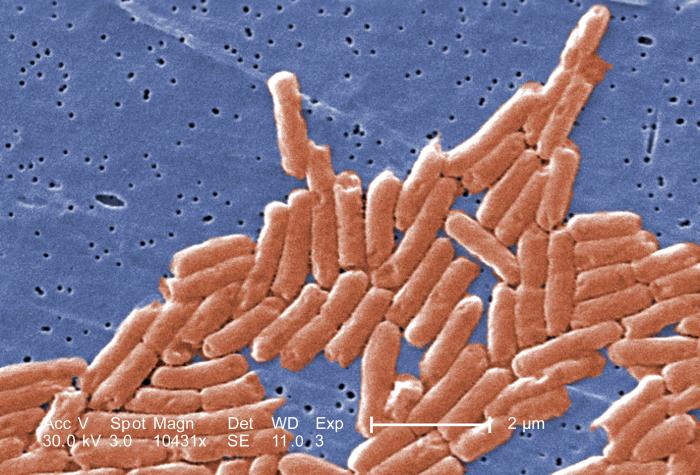
Image CDC

University of Liverpool scientists have exploited the combined power of genomics and epidemiology to understand how a type of Salmonella bacteria evolved to kill hundreds of thousands of immunocompromised people in Africa.

Bloodstream infections caused by a drug-resistant type of Salmonella Typhimurium called ST313 are a major public health concern in Africa, where the disease is endemic and causes ~50,000 deaths each year. What was missing was an understanding of the timing of the major evolutionary events that equipped African Salmonella to cause bloodstream infections in humans.

In a new paper published in Nature Microbiology, a team of researchers from the UK, France and Malawi, sampled two comprehensive collections of Salmonella isolates from African patients with bloodstream infections, spanning 1966 to 2018, to piece together the evolutionary journey of the Salmonella over 50 years of human infections in Africa, including the discovery of a new lineage of antibiotic-susceptible ST313.

The study was led by Professor Jay Hinton at the University of Liverpool, who has been researching Salmonella for more than 30 years and leads the 10,000 Salmonella Genomes Project — a worldwide effort to understand the epidemiology, transmission and virulence of invasive non-Typhoidal Salmonellosis.

Professor Hinton said: “Through a remarkable team effort we have removed some of the mystery about the evolution of African Salmonella. We hope that by learning how these pathogens became able to infect the human bloodstream we will be better prepared to tackle future bacterial epidemics.”