Category Archives: FDA

USA – Two pet food companies warned after Salmonella and Listeria found in finished products

Food Safety News

As part of its enforcement activities, the Food and Drug Administration sends warning letters to entities under its jurisdiction. Some letters are not posted for public view until weeks or months after they are sent. Business owners have 15 days to respond to FDA warning letters. Warning letters often are not issued until a company has been given months to years to correct problems.

Primal Pet Foods
Fairfield, CA

An animal food firm in California is on notice from the FDA for serious violations of the FDA’s Current Good Manufacturing Practice, Hazard Analysis and Risk-Based Preventive Controls for Food for Animals regulation, including Listeria found in the finished product. Pathogens in pet food can make people as well as pets sick.

Arrow Reliance Inc.
Tukwila, WA

An animal food firm in Washington is on notice from the FDA for not being in compliance with FDA regulations due to adulterated animal food, including finished products with Salmonella. Pathogens in pet food can make people as well as pets sick.

FDA – Outbreak Investigation of Hepatitis A Virus Infections: Frozen Strawberries (February 2023)

Hepatitis A kswfoodworld

Product

California Splendor Recall: Kirkland Signature 4-lb. bag Frozen Organic Whole Strawberries in certain states with specific lot codes.

Scenic Fruit Recall: frozen organic strawberries with the following brand names and Best By Dates distributed to specific states:

  • Simply Nature, Organic Strawberries, Best By 06/14/2024
  • Vital Choice, Organic Strawberries, BEST BY 05/20/2024
  • Kirkland Signature, Organic Strawberries, Best If Used By 10/08/2024
  • Made With, Organic Strawberries, Best Before 11/20/2024
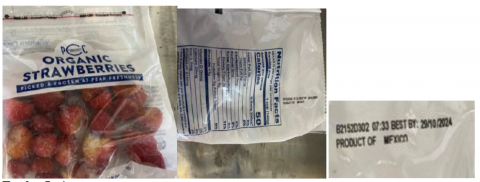
  • PCC Community Markets, Organic Strawberries, Best By 29/10/2024
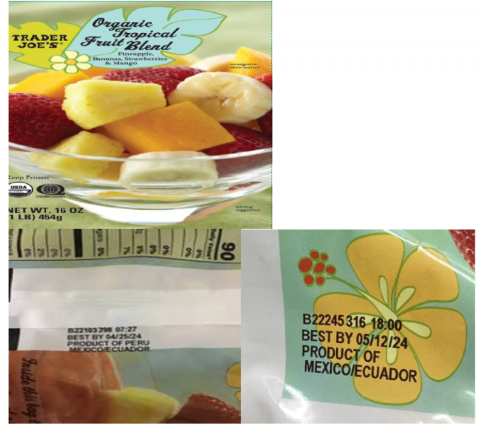
  • Trader Joe’s, Organic Tropical Fruit Blend with the following Best By dates: 04/25/24; 05/12/24; 05/23/24; 05/30/24; 06/07/24

Stores Affected

California Splendor supplied recalled product to Costco stores in Los Angeles and Hawaii, and to two San Diego business centers. Scenic Fruit supplied recalled product to Costco, Aldi, KeHE, Vital Choice Seafood, and PCC Community Markets in specific states, and to Trader Joe’s nationwide.

This is not an exhaustive list of products or stores. FDA is continuing to work with the firms to identify potential additional product information.

Symptoms of Hepatitis A

Illness usually occurs within 15 to 50 days after eating or drinking contaminated food or water. Symptoms of hepatitis A virus infection include fatigue, nausea, vomiting, abdominal pain, jaundice, dark urine, and pale stool. In some instances, particularly in children under the age of six, hepatitis A infection may be asymptomatic.

Status

Ongoing

Recommendation

  • Consumers, restaurants, and retailers should not sell, serve, or eat recalled frozen strawberries. These recalled products should be returned or thrown away.
  • If consumers purchased the recalled frozen organic strawberries and ate those berries in the last two weeks, and have not been vaccinated against hepatitis A, they should immediately consult with their healthcare professional to determine whether post exposure prophylaxis (PEP) is needed. PEP is recommended for unvaccinated people who have been exposed to hepatitis A virus in the last two weeks because vaccination can prevent a hepatitis A virus infection if given within 14 days of exposure. Those with evidence of previous hepatitis A vaccination or previous hepatitis A virus infection do not require PEP.
  • Contact your healthcare provider if you think you may have symptoms of a hepatitis A virus infection after eating these frozen organic strawberries, or if you believe that you have eaten these strawberries in the last two weeks.

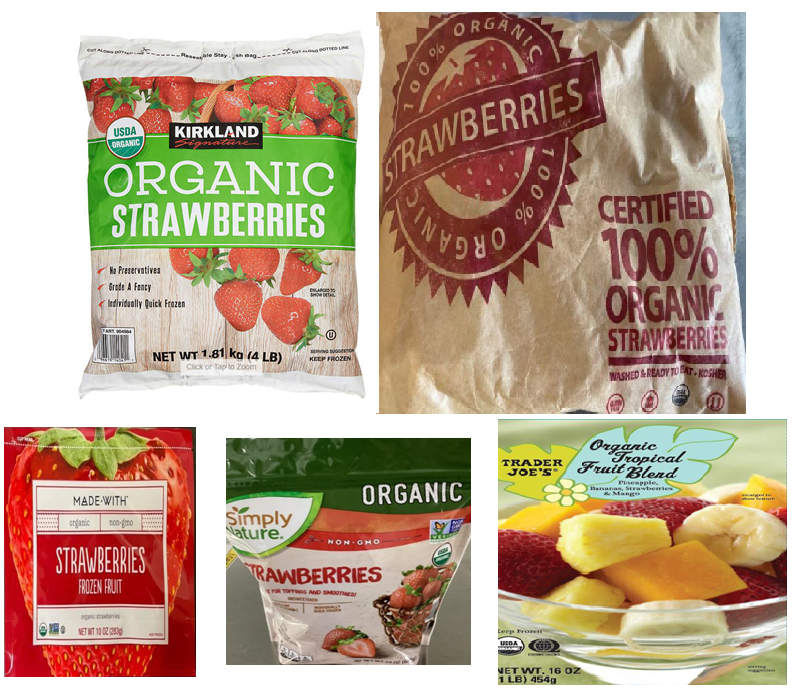
Product Images

Sample Product Images from the Outbreak Investigation of Hepatitis A Virus Infections Related to Frozen Strawberries (February 2023)

Current Update

March 17, 2023

The FDA and CDC, in collaboration with state and local partners, are investigating an outbreak of hepatitis A virus infections linked to frozen organic strawberries imported by a common supplier from certain farms located in Baja California, Mexico. The frozen organic strawberries were sold to a variety of retailers under multiple brand labels.

Based on epidemiological data collected by CDC, 5/5 (100%) people who provided information about what they ate before becoming ill reported eating frozen organic strawberries. FDA’s traceback investigation identified a common supplier of the frozen organic strawberries. Strawberries used by this supplier were imported from certain farms located in Baja California, Mexico, in 2022. Additionally, the strain of hepatitis A virus causing illnesses this year is genetically identical to the strain that caused the outbreak of hepatitis A virus infections in 2022, which was linked to fresh organic strawberries imported from Baja California, Mexico, and sold at various retailers.

USA – Scenic Fruit Company Recalls Frozen Organic Strawberries and Frozen Organic Tropical Fruit Blend Because of Possible Health Risk – Hepatitis A

FDA

Simply Nature

Made With

Kirkland Signature

PCC Community Markets

Trader Joe’s

March 16, 2023, Scenic Fruit Company of Gresham, Oregon is recalling frozen Organic Strawberries sold to Costco, Aldi, KeHE, Vital Choice Seafood, PCC Community Markets and frozen Organic Tropical Fruit Blend sold to Trader Joe’s due to an outbreak of Hepatitis A illnesses.

Hepatitis A is a contagious liver disease that results from exposure to the Hepatitis A virus, including from food. It can range from a mild illness lasting a few weeks to a serious illness lasting several months. In rare cases, particularly consumers who have a pre-existing severe illness or are immune compromised, Hepatitis A infection can progress to liver failure.

Illness occurs within 15 to 50 days of exposure and includes fatigue, abdominal pain, jaundice, abnormal liver tests, dark urine, and pale stool. Hepatitis A vaccination can prevent illness if given within two weeks of exposure to a contaminated food. Persons who may have consumed affected product should consult with their health care professional or local health department to determine if a vaccination is appropriate, and consumers with symptoms of Hepatitis A should contact their health care professionals or the local health department immediately.

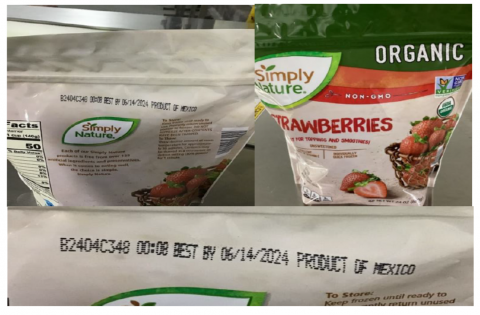
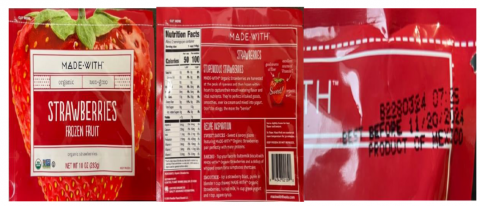
The following products are subject to this recall. The lot codes and best by dates are found on the back of each bag (see attached pictures below):

Brand Name Product Name Net Wt. UPC Best By Dates
Best If Use Dates
Best Before Date
Distributed in States
Simply Nature Organic Strawberries 24 oz. 4099100256222 6/14/2024 California, Minnesota,
Missouri, Ohio, Wisconsin.
Vital Choice Organic Strawberries 16 oz. 834297005024 5/20/2024 Washington
Kirkland Signature Organic Strawberries 4 lbs. 96619140404 10/8/2024 Alaska, Idaho, Montana,
Oregon, Utah, Washington.
Made With Organic Strawberries 10 oz. 814343021390 11/20/2024 Illinois, Maryland
PCC Community
Markets
Organic Strawberries 32 oz. 22827109469 29/10/2024 Washington
Trader Joe’s Organic Tropical Fruit
Blend Pineapple,
Bananas, Strawberries
& Mango
16 oz 00511919 04/25/24
05/12/24
05/23/24
05/30/24
06/07/24
Nationwide

Although Hepatitis A has not been detected on this product, out of an abundance of caution, consumers should stop consuming the product and return it to their local store for a refund. The company has ceased the production and distribution of the product as FDA and the company continue their investigation as to what caused the problem.

All inventories of the affected lot should be removed from sale. Consumers who have purchased the products are urged to destroy or return it to the place of purchase for a full refund. Consumers with questions may contact the company at customer.service@scenicfruit.com

USA – California Splendor, Inc. Recalls Kirkland Brand Bags of Frozen Organic Whole Strawberries Distributed by Costco in Los Angeles, Hawaii, and in Two San Diego Business Centers Because of Possible Health Risk – Hepatitis A

FDA

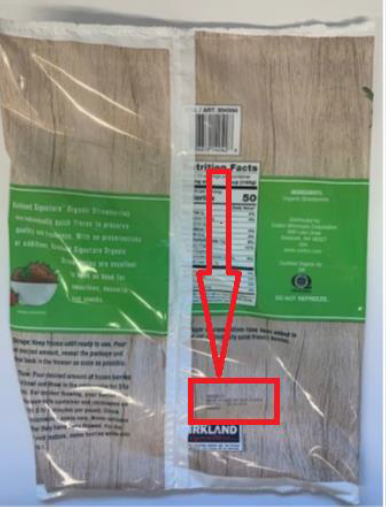
Kirkland Signature Frozen Organic Strawberries, back of bag label

California Splendor, Inc. of San Diego, California is recalling certain lots of 4-lb. bags of Kirkland Signature Frozen Organic Strawberries that were sold at Costco stores in Los Angeles, Hawaii and two San Diego business centers, due to an outbreak of Hepatitis A illnesses. Although, Hepatitis A has not been detected on this product, out of an abundance of caution, consumers should stop consuming the food and return it to their local Costco store for a refund.

Hepatitis A is a contagious liver disease that results from exposure to the Hepatitis A virus, including from food. It can range from a mild illness lasting a few weeks to a serious illness lasting several months. Illness generally occurs within 15 to 50 days of exposure and includes fatigue, abdominal pain, jaundice, abnormal liver tests, dark urine and pale stool. In rare cases, particularly consumers who have a pre-existing severe illness or are immune compromised, Hepatitis A infection can progress to liver failure.

Illness occurs within 15 to 50 days of exposure and includes fatigue, abdominal pain, jaundice, abnormal liver tests, dark urine and pale stool. Hepatitis A vaccination can prevent illness if given within two weeks of exposure to a contaminated food. Persons who may have consumed affected product should consult with their health care professional or local health department to determine if a vaccination is appropriate, and consumers with symptoms of Hepatitis A should contact their health care professionals or the local health department immediately.

The lots subject to this recall are as follows:

140962-08 142222-23 142792-54 142862-57 142912-59
142162-20 142202-21 142782-53 142852-56 142902-58
142212-22 142232-24 142842-55

The lot number can be identified on the back of the bag as shown below:

The company has ceased the production and distribution of the affected product as FDA and the company continue their investigation as to what caused the problem.

Consumers with questions may email the company at consumerinformation@calsplendor.com.


Company Contact Information

Consumers:
California Splendor, Inc.
 consumerinformation@calsplendor.com

USA – FDA -Core Investigation Table Update

FDA

Date
Posted
Ref Pathogen
or
Cause of
Illness
Product(s)
Linked to
Illnesses

(if any)
Total
Case
Count

Status
3/8/2023 1144 Salmonella Hartford Not Yet
Identified
47 Active
3/1/2023 1143 Hepatitis A Virus Not Yet
Identified
5 Active
2/15/2023 1123 Listeria
monocytogenes
Not Yet
Identified
See
CDC
Investigation
Notice
Active
11/9/2022 1127 Listeria
monocytogenes
Enoki
Mushrooms
See
Outbreak
Advisory
Active

USA – Regional Recall: Clio Snacks Voluntarily Recalls Strawberry Granola & Greek Yogurt Parfait Bars from Select Walmart Stores Because of Possible Health Risk – Listeria monocytogenes

FDA

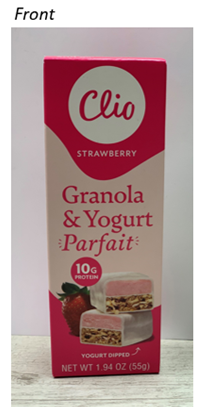
Strawberry Granola & Greek Yogurt Parfait Bar, front label, Net Wt. 1.94 oz

Clio Snacks of Piscataway, N.J. is voluntarily recalling 581 cases of its Strawberry Granola & Greek Yogurt Parfait Bar due to potential contamination with Listeria monocytogenes, an organism which can cause serious and sometimes fatal infections in young children, frail or elderly people, and others with weakened immune systems. Although healthy individuals may suffer only short-term symptoms such as high fever, severe headache, stiffness, nausea, abdominal pain and diarrhea, Listeria infection can cause miscarriages and stillbirths among pregnant women.

Product was distributed to select Walmart stores between 3/5/2023 and 3/8/2023.

The impacted product comes in a single-serving box with UPC Code 854021008152, Lot Number 048C2023 and an expiration date of 4/30/2023 stamped on the side of the box.

Strawberry Granola & Greek Yogurt Parfait Bar is the only product impacted. No other products are being recalled. No illnesses have been reported to date.

This potential limited exposure was found at a third-party manufacturer’s facility where Parfait Bars are produced. The third-party manufacturer does not manufacture any other Clio products. Clio does not manufacture Parfait bars at its own facility.

The recall was the result of a routine testing program by the company which revealed that affected Strawberry Parfait product produced by Clio’s contract manufacturer may contain Listeria monocytogenes. The third-party manufacturer has ceased production and Clio has ceased distribution of the affected product while the FDA and the company continue their investigation into what caused the problem.

Consumers who have purchased Clio Strawberry Granola & Yogurt Parfait bar with an expiration date of 4/30/2023 should not consume the product and are urged to return it to the place of purchase for a full refund or to destroy the recalled product.

Consumers with questions may contact the company at 1-908-505-2546 (Monday – Friday, 9-5pm EST).

USA – FDA wants infant formula manufacturers to step up work to prevent contamination

Food Safety News

Top FDA officials are calling on manufacturers of infant formula to clean up their act.

In a letter this week Robert M. Califf, FDA Commissioner, and Susan T. Mayne, Director of the Center for Food Safety and Applied Nutrition, addressed concerns about infant formula along the food chain, speaking to manufacturers, packers, distributors, exporters, importers and retailers.

“FDA is sharing this information with you with the expectation that you will act to mitigate potential food safety risks in powdered infant formula in accordance with FDA regulations while further striving to improve operations, especially given the critical nature of these products,” a letter from the FDA leaders states.

“. . . The FDA has reviewed conditions during recent inspections of powdered infant formula manufacturers, including routine surveillance inspections, for-cause inspections to follow up on consumer complaints and other interactions with manufacturers.”

USA – FDA Core Investigation Table Update

FDA

What’s New

  • A new outbreak of Salmonella Hartford (ref # 1144) linked to a not yet identified product has been added to the table. FDA has initiated traceback.
  • For the outbreak of hepatitis A virus (ref #1143), the case count has been adjusted from nine to five cases, following CDC’s exclusion of suspect cases from the case count. FDA has initiated sample collection and analysis.
Date
Posted
Ref Pathogen
or
Cause of
Illness
Product(s)
Linked to
Illnesses

(if any)
Total
Case
Count

Status
3/8/2023 1144 Salmonella Hartford Not Yet
Identified
31 Active
3/1/2023 1143 Hepatitis A Virus Not Yet
Identified
5 Active
2/15/2023 1123 Listeria
monocytogenes
Not Yet
Identified
See
CDC
Investigation
Notice
Active
11/9/2022 1127 Listeria
monocytogenes
Enoki
Mushrooms
See
Outbreak
Advisory
Active

USA – FDA warns Darwin’s in follow-up to sick cat complaint – Salmonella

EFOOD ALERT

The US Food and Drug Administration (FDA) has issued a stern warning to Arrow Reliance Inc. (doing business as Darwin’s Natural Pet Products), following what the agency referred to as an “inadequate” response to violations of the Food Drug and Cosmetics Act (FD&C Act) documented during an August-September 2022 inspection.

The inspection was carried out in response to a consumer complaint received by the FDA, in which the consumer reported that a Darwin’s cat food had caused illness in three kittens. The consumer provided documentation that a stool sample from one of the kittens tested positive for Salmonella.

USA – FDA Advises Restaurants, Retailers and Consumers to Avoid Recalled Wild Harvest Oysters from Harvest Area FL-3012, Cedar Key, Florida Potentially Contaminated with Salmonella

FDA

Audience

  • Restaurants and food retailers that have received shipments of wild harvest oysters from harvest area FL-3012, Cedar Key, Florida, harvested between December 16, 2022, and February 24, 2023.
  • Consumers who have recently purchased oysters from area FL-3012 sold in Alabama, Florida, and Georgia.

Product

  • Wild harvest oysters from FL-3012, Cedar Key, Florida, harvested between December 16, 2022, and February 24, 2023. The oysters were distributed to restaurants and retailers in Alabama, Florida, and Georgia It is possible that additional states received these oysters through further distribution.
  • Packaged oysters include harvest area information on the packaging.

Purpose

The FDA is advising consumers not to eat, and restaurants and food retailers not to sell, and to dispose of recalled wild harvest oysters from FL-3012, Cedar Key, Florida, harvested between December 16, 2022, and February 24, 2023, due to possible Salmonella contamination. These oysters were sold in Alabama, Florida, and Georgia. Consumers who purchased oysters after December 16, 2022, should check the packaging to see if they were wild harvest oysters from FL-3012, Cedar Key, Florida. Contaminated oysters can cause illness if eaten raw, particularly in people with compromised immune systems. Food contaminated with Salmonella may look, smell, and taste normal. Consumers of these products who are experiencing symptoms of salmonellosis should contact their healthcare provider, who should report their symptoms to their local Health Department.

Summary of Problem and Scope

The Florida Department of Health and the state health departments of Georgia and Alabama have detected a Salmonella outbreak associated with the consumption of raw oysters harvested from shellfish harvesting area FL-3012 in Cedar Key, Florida. To date, there have been 8 cases linked to this outbreak within Florida, Georgia, and Alabama. On February 24, 2023, the Florida Department of Agriculture and Consumer Services issued an emergency closure order for wild harvest oysters from harvest area FL-3012 and initiated a recallExternal Link Disclaimer of wild harvest oysters from harvest area FL-3012 in Cedar Key that were harvested from December 16, 2022, to February 24, 2023. On February 24, the State of Florida also notified the Interstate Shellfish Sanitation Conference of the closure and recall. Florida Department of Health posted an advisory bulletin on February 28. 2023.

FDA Actions

The FDA is issuing this alert advising consumers not to eat, and restaurants and food retailers not to sell, recalled wild harvest oysters from FL-3012, Cedar Key, Florida, harvested between December 16, and February 24, 2023, due to possible Salmonella contamination. The FDA will assist with and coordinate interstate notification efforts as necessary pending receipt of shellfish distribution information.

Symptoms of Salmonellosis

Most people infected with Salmonella will begin to develop symptoms 12 to 72 hours after infection. The illness, salmonellosis, usually lasts four to seven days and most people recover without treatment.

Most people with salmonellosis develop diarrhea, fever, and abdominal cramps. More severe cases of salmonellosis may include a high fever, aches, headaches, lethargy, a rash, blood in the urine or stool, and in some cases may become fatal. The U.S. Centers for Disease Control and Prevention estimated that approximately 450 persons in the United States die each year from acute salmonellosis.

Due to the range in severity of illness, people should consult their healthcare provider if they suspect that they have developed symptoms that resemble a Salmonella infection.

Recommendations for Restaurants and Retailers

Restaurants and retailers should not sell the potentially contaminated oysters. Restaurants and retailers should dispose of any potentially contaminated products by throwing them in the garbage or returning to their distributor for destruction.

Restaurants and retailers should also be aware that oysters and other filter-feeding bivalve molluscan shellfish may be a source of pathogens and should control the potential for cross-contamination of food processing equipment and the food processing environment. They should follow the steps below:

  • Wash hands with warm water and soap following the cleaning and sanitation process.
  • Retailers, restaurants, and other food service operators who have processed and packaged any potentially contaminated products need to be concerned about cross-contamination of cutting surfaces and utensils through contact with the potentially contaminated products.
  • Retailers that have sold bulk product should clean and sanitize the containers used to hold the product.
  • Regular frequent cleaning and sanitizing of food contact surfaces and utensils used in food preparation may help to minimize the likelihood of cross-contamination.