Category Archives: E.coli

Denmark – Three people died in Danish E. coli outbreak; dozens more infected

Food Safety News

Danish authorities have revealed three people died in an E. coli outbreak this past year. Imported spring onions were investigated as the source.

An update by the Statens Serum Institut (SSI) revealed that from Nov. 23 to Dec. 31, 2021, 85 people were infected with EIEC.

Enteroinvasive E. coli (EIEC) is usually associated with travel diarrhea but the patients had not been abroad.

It was previously reported that 68 people were ill in the outbreak linked to spring onions from Egypt via a Dutch supplier that were used in ready-to-eat salads.

Enteroinvasive E. coli was isolated from 36 patients and the remaining 47 were PCR positive for a gene specific to Shigella species and EIEC.

Further analysis identified two E. coli types in the outbreak: O136:H7 and O96:H19 with confirmation by whole genome sequencing.

France – Child in France dies of E.coli infection as outbreak monitored

Connexion France

Health authorities have not released more information about the child that has died, but 13 other cases in children have prompted a nationwide investigation into the possible source.

Health authorities in France are monitoring an outbreak of E.coli following the death of a child and the detection of 13 cases across the country.

Santé publique France (SPF) issued the alert after the contaminations were first noticed at the beginning of February. The authority has confirmed that one child has died, but has not released information of the date of the death, location, or the age of the child.

Among children aged 1-15, there have been:

  • 5 cases reported in Nouvelle-Aquitaine
  • 3 cases in Hauts-de-France
  • 3 cases in Ile-de-France
  • 1 case in Brittany
  • 1 case in Pays de la Loire.

All of the children were affected by haemolytic uraemic syndrome (HUS), a potentially serious disease in young children, most often caused by food.

It is usually characterised by severe diarrhoea, which can lead to acute renal failure, and usually caused by bacteria belonging to the Escherichia coli (E.coli) family.

The SPF inquiry is looking into every report of similar cases as they are reported to paediatric units, and is aiming to “identify a common source of contamination and put appropriate measures in place”.

It has “not excluded any possibility at this stage”, it said.

Research – Multidrug resistance of Escherichia coli in fish supply chain: A preliminary investigation

Wiley Online

Abstract

Ninety-five Escherichia coli isolates recovered from different supply points of freshwater fish namely fish pond (W1, n = 16), wholesale fish market (W2, n = 14), retail fish market (R1, n = 29), street fish vending unit (R2, n = 30), and modern fish vending unit (R3, n = 6) were investigated for antimicrobial-resistant profile and prevalence of antibiotic-resistant genes. Overall, multidrug-resistant (MDR) E. coli in the fish supply chain was 21% with higher MDR incidence in the downstream fish supply points. MDR was relatively higher in the tertiary fish supply points viz., retail fish market (45%), street fish vending unit (30%), and modern fish vending unit (15%) compared to the secondary fish supply point, that is, wholesale fish market (5%) and primary fish supply point, that is, fish pond (5%). All the ampicillin-resistant isolates carried ampC gene, whereas only 21% of the β-lactam resistant isolates carried blaCTX-M-gp1. The tetracycline resistance determinant, tetA (89%) was predominant in the tetracycline-resistant isolates compared to tetB and tetD (11%). The trimethoprim resistance gene, dfrA and sulfonamide-resistance gene, Sul1 were detected in 9% of the trimethoprim-resistant isolates and 9% of the sulfonamide-resistant isolates, respectively. Enterobacterial repetitive intergeneric consensus-PCR has delineated the MDR isolates from the different fish supply points into three major clusters but all the MDR isolates from the street fish vending point are grouped into a single cluster. The results indicate an increase in the proportion of MDR E. coli and the occurrence of diverse MDR profiles in the downstream points of the fish supply chain that needs to be addressed to avoid fish-food-borne antimicrobial resistance.


Ireland – EPA – Drinking Water Quality in Private Group Schemes and Small Private Supplies in 2020 – E.coli

EPA

Click to access DWQinPrivateGroupWaterSupplies-2022-02-21.pdf

Key Findings for 2020

➤The quality of drinking water in private supplies was not as good as it should be: one in 20 private water supplies were contaminated with E. coli.

➤93% of Private Group Schemes complied with the Trihalomethanes standard. However, 13 supplies are cited on EU infringement proceedings against Ireland for failing to take the measures necessary to ensure compliance.

➤Over a quarter of Small Private Supplies were not monitored by Local Authorities.

Research – Efficacy of Selected Powdered Floor Treatments Against Salmonella, E. coli, and L. monocytogenes on Polyurethane-Concrete Flooring Material Carriers

Journal of Food Protection

Food processing environment flooring can become contaminated with pathogens in many ways including foot and equipment traffic, incoming materials, and floor drain backups.  Natural antimicrobial turmeric and commercially available powdered floor treatments may reduce the levels of pathogens on flooring thereby reducing the risk of cross contamination from the floor to food contact surfaces. These chemicals were evaluated to determine their effectiveness against cocktails of Salmonella , Escherichia coli , and Listeria monocytogenes dried onto the surfaces of carriers made from polyurethane-concrete commercial flooring material.  Aqueous test solutions were prepared from the minimum treatment required per m 2 from the manufacturer’s instructions diluted in sterile water.  Potential synergy between turmeric and a percarbonate based commercial floor treatment was explored with a mixture of turmeric and sodium percarbonate, each at approximately 37g/m 2 application rate.  Each inoculated carrier was exposed to the treatment solutions or a sterile water control for 10 minutes at room temperature, neutralized with Hi-Cap neutralizing broth, the bacteria suspended, enumerated, and log 10 reductions calculated for each treatment and inoculum combination.  Mean log 10 CFU/carrier reductions with standard deviations ranged between 4.29±0.34 for the sodium percarbonate (SPC) based treatment and 0.004±0.23 for turmeric for Salmonella , 4.81±0.16 for SPC based treatment and -0.16±0.62 for turmeric for E. coli , and 4.88±0.6 for SPC based treatment and -0.16±0.15 for turmeric for L. monocytogenes .

Research – Antibacterial Properties of TMA against Escherichia coli and Effect of Temperature and Storage Duration on TMA Content, Lysozyme Activity and Content in Eggs

MDPI

Studies on trimethylamine (TMA) in egg yolk have focused on how it impacts the flavor of eggs, but there has been little focus on its other functions. We designed an in vitro antibacterial test of TMA according to TMA concentrations that covered the TMA contents typically found in egg yolk. The change in TMA content in yolk was analyzed at different storage temperatures and for different storage durations. The known antibacterial components of eggs, including the cuticle quality of the eggshell and the lysozyme activity and content in egg white, were also assessed. The total bacterial count (TBC) of different parts of eggs were detected. The results showed that the inhibitory effect of TMA on Escherichia coli (E. coli) growth increased with increasing TMA concentration, and the yolk TMA content significantly increased with storage duration (< 0.05). The cuticle quality and lysozyme content and activity significantly decreased with storage time and increasing temperature, accompanied by a significant increase in the TBC on the eggshell surface and in the egg white (< 0.05). This work reveals a new role for trace TMA in yolks because it reduces the risk of bacterial colonization, especially when the antibacterial function of eggs is gradually weakened during storage.

Australia – L’Artisan Organic Marcel 180g Cheese -E.coli

FSANZ

Product information

Mortlake Organic Dairy is conducting a recall of L’Artisan Organic Marcel 180g. The product has been available for sale at independent food retailers including IGA in VIC & QLD, independent food retailers in SA, and select Coles Local stores in VIC.

Date markings

Best Before 08MAR2022

L'Artisan Organic Marcel 180g

Problem

The recall is due to microbial (E.coli) contamination.

Food safety hazard

Food products contaminated with E.coli may cause illness if consumed.

Country of origin

Australia

What to do​

Any consumers concerned about their health should seek medical advice and should return the product to the place of purchase for a full refund.

For further information please contact:

Mortlake Organic Dairy

0432 607 010

Related links:

Research – Antagonistic Effects of Conjugated Linoleic Acids of Lactobacillus casei Against Foodborne Enterohemorrhagic Escherichia coli 

Journal of Food Protection

Probiotics in fermented foods or commercially available supplements benefit the host by providing metabolites/peptides. The production of these metabolites varies with available substrates/prebiotic present in the system and their concentration. In this study, 0.5% peanut flour (PF) was used to stimulate the growth and production of metabolites of wild-type Lactobacillus casei (LC wt ) and compare with an engineered L. casei (LC CLA ) capable of converting a higher amount of conjugated linoleic acid (CLA). The total extracellular metabolites present in the cell-free cultural supernatant (CFCS) of LC wt (without peanut), LC wt+PF (with peanut), and LC CLA were collected after 24 h and 48 h of incubation, and their antagonistic activities against enterohemorrhagic Escherichia coli (EHEC EDL933) growth and pathogenesis were evaluated. All the collected metabolites exhibited varying efficiency in restraining EDL933 growth while supplementing low concentration of CLA to the 48-h CFCS from LC wt showed augmented antagonism toward EDL933. A downregulation of key virulence genes was observed from metabolites collected at 48-h time point. These observations indicate that the presence of metabolites in CFCSs including CLA, produced by Lactobacillus , which was further identified by gas chromatography-mass spectrometry; plays a critical role. This study demonstrates the potential applicability of Lactobacillus -originated CLA in the prevention of EDL933 mediated illnesses.

RASFF Alert – STEC E.coli – Raw Milk Cheese – Bovine Meat – Frozen Lamb

RASFF

Shiga toxin-producing Escherichia coli in raw milk cheese from France in Belgium and Luxembourg

RASFF

Presence E. coli STEC in Bovine meat from Brazil in Spain

RASFF

Shiga toxin-producing Escherichia coli in frozen lamb meat from New Zealand in Italy

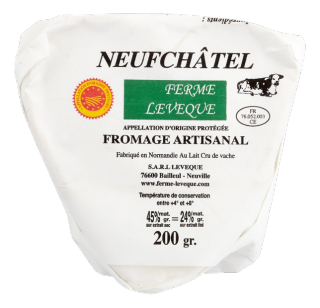
Luxembourg – Neufchâtel cheese from the Ferme Lévêque brand – STEC E.coli

SAP

Recall: Neufchâtel cheese from the Ferme Lévêque brand

Last name Neufchatel cheese
Brand Farm Leveque
Unity 200g
Article number 7960
Date of minimum durability (MDD) 2/27/2022
Sale period from 13/1/2022 to 26/1/2022 inclusive

Danger  : E. coli STEC – Escherichia coli likely to produce toxins (shigatoxins)

E. coli STEC can cause food poisoning which can occur within a week after consumption and result in gastrointestinal disorders often accompanied by cramps. These symptoms may be aggravated in young children, immunocompromised subjects and the elderly. People who have consumed these products and have these symptoms are invited to consult a doctor and report this consumption to him.

Sale in Luxembourg by: Colruyt

A sale by other operators cannot be excluded.

Source of information: Colruyt recall notification

Communicated by: Government Commission for Quality, Fraud and Food Safety .

Click to access Recall-Neuchatel-persbericht-FR-V3.pdf