Category Archives: E.coli

Europe – European surveillance shows high levels of drug resistance in zoonotic bacteria

CIDRAP

A surveillance report today from European health and food safety agencies indicates that antibiotic resistance in zoonotic bacteria from humans, food, and animals on the continent remains at high levels, with notable levels of multidrug resistance in two common causes of foodborne illness in humans.

The report is based on 2016 data provided by 28 EU member states and jointly analyzed by the European Centre for Disease Prevention and Control (ECDC) and the European Food Safety Authority (EFSA). It addresses resistance in bacterial isolates of zoonotic Salmonella and Campylobacter from humans, food, and poultry, along with resistance levels and mechanisms in indicator Escherichia coli and methicillin-resistant Staphylococcus aureus (MRSA) in animals and food.

Zoonotic bacteria are organisms that are transmissible between animals and humans, either through direct exposure or through consumption of contaminated meat. The ECDC and EFSA have been collecting and analyzing data submitted by EU countries on these bacteria to monitor for levels of antibiotic resistance since 2013.

Research -Antibiotics make E.coli grow FASTER than if the bug were left alone

Mail Online

  • E.coli bacteria growth is stimulated by antibiotics, a study claims
  • Treating the bacteria with antibiotics multiplied them up to three times larger
  • When the drugs were taken away, the changes to the E.coli were not undone
  • Experts say bacteria can quickly rearrange their DNA to stop drugs from working


RASFF Alerts – Salmonella -Dog Chew – Aflatoxin – Popcorn – Norovirus – Clams – STEC E.coli – Raw Milk

RASFF-Logo

RASFF – Salmonella spp. (presence /25g) and high count of Enterobacteriaceae (1.5*10² CFU/g) in dog chew from Thailand in Spain

RASFF – aflatoxins (B1 = 1937; Tot. = 2569 µg/kg – ppb) in popcorn from Argentina in Italy

RASFF -norovirus in frozen blanched clams (Meretrix Lyrata) from Vietnam in Spain

RASFF -shigatoxin-producing Escherichia coli (stx+ ; eae+ /25g) in raw milk from Belgium in Belgium


RASFF Alert – E.coli – Mussels – Clams -STEC in Beef

RASFF-Logo

RASFF -too high count of Escherichia coli (400 MPN/100g) in live mussels (Mytilus galloprovincialis) from Greece in Italy

RASFF -too high count of Escherichia coli (16.000 MPN/100g) in chilled clams (Tapes philippinarum) from Italy

RASFF – shigatoxin-producing Escherichia coli (STEC present in 12/15 samples) in frozen boneless beef meat from Argentina in Germany

RASFF Alerts – Listeria monocytogenes – Raw Milk Cheese – Tuna Salad- E.coli – Razor Clams – Beef – Staphylococcus – Raw Ham

Food Testing - Eurofins

RASFF -Listeria monocytogenes (510 CFU/g) in raw milk cheese from Italy in Austria

RASFF – Listeria monocytogenes in chilled spicy tuna salad from Belgium

RASFF -shigatoxin-producing Escherichia coli in boneless beef meat (Bos taurus) from Brazil in the Netherlands

RASFF -too high count of Escherichia coli (490 MPN/100g) in live razor clams from Ireland

RASFF -coagulase-positive Staphylococcus (400 000 /g) in raw ham from Spain in France

RASFF Alerts – STEC E.coli – Beef – Roquefort Cheese – Salami – Clams

RASFF-Logo

RASFF -shigatoxin-producing Escherichia coli in frozen bovine meat from Brazil in Italy

RASFF-shigatoxin-producing Escherichia coli (presence /25g) in chilled beef (Bos taurus) from Brazil in the Netherlands

RASFF-shigatoxin-producing Escherichia coli (STEC stx+; STEC eae + /25g) in chilled beef shoulder from Belgium

RASFF-shigatoxin-producing Escherichia coli (presence /25g) in Roquefort cheese from France in Belgium

RASFF-shigatoxin-producing Escherichia coli in vacuum packed sliced salami from Italy

RASFF-high count of Escherichia coli (between 490 and 2400 MPN/100g) in frozen baby clam meat (Venus spp.) from Turkey in Greece

Australia – Recall Milk – E.coli

FSANZimagesCAZ9J1WP

Scenic Rim 4 Real Milk has recalled their Unhomogenised Full Cream Milk and
Great Tasting Full Cream Milk from IGA stores and small independent supermarkets
in South East QLD only. The recall is due to E.coli contamination. Consumers
should not drink these products and should return them to the place of purchase
for a full refund. Any consumers concerned about their health should seek
medical advice.

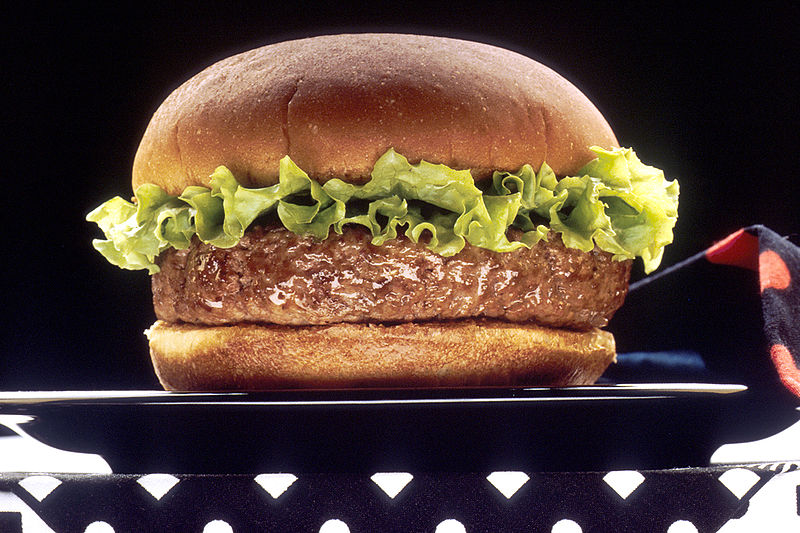
UK -Four more E.coli O157 Cases in Scotland Linked to Burgers

STV NewsBurger

Four more cases of E coli have been linked to the SSE Hydro in Glasgow, health bosses said.

The new cases bring the total number to 15 and are all linked to events at the venue on January 17, 18 and 19.

An investigation by NHS Greater Glasgow and Clyde (NHSGGC) alongside other public health bodies has indicated that burgers sold at the Hydro could have been the cause of the outbreak.

USA- Beef Products Recall – STEC E.coli

E.coli Blog

PFP Enterprises, a Fort Worth, Texas, establishment, is recalling approximately 15,865 pounds of beef products because they may be contaminated with E. coli O103, E. coli O111, E. coli O121, E. coli O145, E. coli O26 and E. coliO45, the U.S. Department of Agriculture’s Food Safety and Inspection Service (FSIS) announced today.

FSIS personnel became aware of the problem during a Food Safety Assessment when they discovered that beef trim tested presumptive positive for multiple non-O157 Shiga toxin-producing E. coli (STEC) strains through the company’s testing program. The company inadvertently did not carry the test out to confirmation, and not all affected product was held.


Research – Growth of Escherichia coli O157:H7 and Listeria monocytogenes in Packaged Fresh-Cut Romaine Mix at Fluctuating Temperatures during Commercial Transport, Retail Storage, and Display

Ingentaconnect

Temperature abuse during commercial transport and retail sale of leafy greens negatively impacts both microbial safety and product quality. Consequently, the effect of fluctuating temperatures on Escherichia coli O157:H7 and Listeria monocytogenes growth in commercially-bagged salad greens was assessed during transport, retail storage, and display. Over a 16-month period, a series of time-temperature profiles for bagged salads were obtained from five transportation routes covering four geographic regions (432 profiles), as well as during retail storage (4,867 profiles) and display (3,799 profiles). Five different time-temperature profiles collected during 2 to 3 days of transport, 1 and 3 days of retail storage, and 3 days of retail display were then duplicated in a programmable incubator to assess E. coli O157:H7 and L. monocytogenes growth in commercial bags of romaine lettuce mix. Microbial growth predictions using the Koseki-Isobe and McKellar-Delaquis models were validated by comparing the root mean square error (RMSE), bias, and the acceptable prediction zone between the laboratory growth data and model predictions. Monte Carlo simulations were performed to calculate the probability distribution of microbial growth from 8,122,127,472 scenarios during transport, cold room storage, and retail display. Using inoculated bags of retail salad, E. coli O157:H7 and L. monocytogenes populations increased a maximum of 3.1 and 3.0 log CFU/g at retail storage. Both models yielded acceptable RMSEs and biases within the acceptable prediction zone for E. coli O157:H7. Based on the simulation, both pathogens generally increased <2 log CFU/g during transport, storage, and display. However, retail storage duration can significantly impact pathogen growth. This large-scale U.S. study—the first using commercial time/temperature profiles to assess the microbial risk of leafy greens—should be useful in filling some of the data gaps in current risk assessments for leafy greens.