Category Archives: E.coli O157:H7

USA – Interstate Meat Dist. Inc., Recalls Ground Beef Products Due To Possible E. Coli O157:H7 Contamination

FSIS USDA

WASHINGTON, Jan. 6, 2022 – Interstate Meat Dist. Inc., a Clackamas, Ore., establishment, is recalling approximately 28,356 pounds of ground beef products that may be contaminated with E. coli O157:H7, the U.S. Department of Agriculture’s Food Safety and Inspection Service (FSIS) announced today.

The raw, ground beef items were produced on Dec. 20, 2021. The products subject to recall and the labels can be viewed here.

The products subject to recall bear establishment number “EST. 965” inside the USDA mark of inspection or printed next to the time stamp and use or freeze by date. These items were shipped to retail locations in Arizona, California, Nevada, Oregon, Utah, Washington and Wyoming.

The issue was reported to FSIS after a retail package of ground beef was purchased and submitted to a third-party laboratory for microbiological analysis and the sample tested positive for E. coli O157:H7.  FSIS conducted an assessment of the third-party laboratory’s accreditation and methodologies and determined the results were actionable.

Anyone concerned about an illness should contact a healthcare provider. E. coli O157:H7 is a potentially deadly bacterium that can cause dehydration, bloody diarrhea and abdominal cramps 2–8 days (3–4 days, on average) after exposure the organism. While most people recover within a week, some develop a type of kidney failure called hemolytic uremic syndrome (HUS). This condition can occur among persons of any age but is most common in children under 5-years old and older adults. It is marked by easy bruising, pallor, and decreased urine output. Persons who experience these symptoms should seek emergency medical care immediately.

FSIS is concerned that some product may be in consumers’ refrigerators or freezers. Consumers who have purchased these products are urged not to consume them. These products should be thrown away or returned to the place of purchase.

FSIS routinely conducts recall effectiveness checks to verify recalling firms notify their customers of the recall and that steps are taken to make certain that the product is no longer available to consumers. When available, the retail distribution list(s) will be posted on the FSIS website at www.fsis.usda.gov/recalls.

FSIS advises all consumers to safely prepare their raw meat products, including fresh and frozen, and only consume ground beef that has been cooked to a temperature of 160 °F. The only way to confirm that ground beef is cooked to a temperature high enough to kill harmful bacteria is to use a food thermometer that measures internal temperature, https://www.fsis.usda.gov/safetempchart.

Consumers and members of the media with questions about the recall can contact Sales Manager Mike Sinner and Quality Assurance Manager Rodolfo Mendoza, Interstate Meat Dist., Inc., at (503) 656-6168.
Click to access recall-001-2022-labels.pdf

USA – Outbreak Investigation of E. Coli O157:H7 – Spinach (November 2021) – FDA’s investigation is complete. CDC declares outbreak over.

FDA

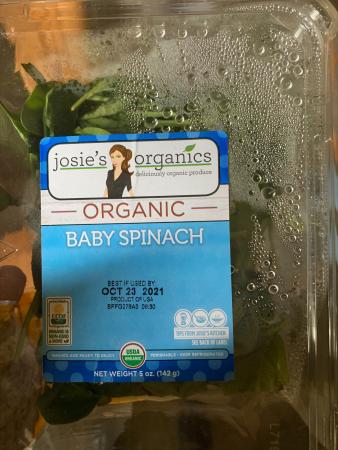
Outbreak Investigation of E. Coli O157:H7 in Spinach (November 2021): Sample Image of Josie's Organics Baby Spinach

The FDA and CDC, in collaboration with state and local partners, investigated illnesses in a multistate outbreak of E. coli O157:H7. As of January 6, 2022, CDC declared this outbreak over.

FDA traced the supply chain for this positive product sample and deployed investigators to three farms in two separate states: California and Oregon. FDA conducted inspections, including sample collection and analysis, but inspections were limited because at the time the fields were fallow and no production activities were being conducted for spinach at any of the three farms. All samples collected were reported negative and no source or direct routes of contamination to the suspected spinach were found during the inspections. Investigators did report that one location processes product and sometimes uses product from multiple growers in one production run. This type of product co-mingling is not uncommon; but continues to present challenges for traceback investigations of foodborne outbreaks.

Recommendation

CDC announced the outbreak is over. There are no recommendations for consumers, retailers, or suppliers.


Case Count Map Provided by CDC

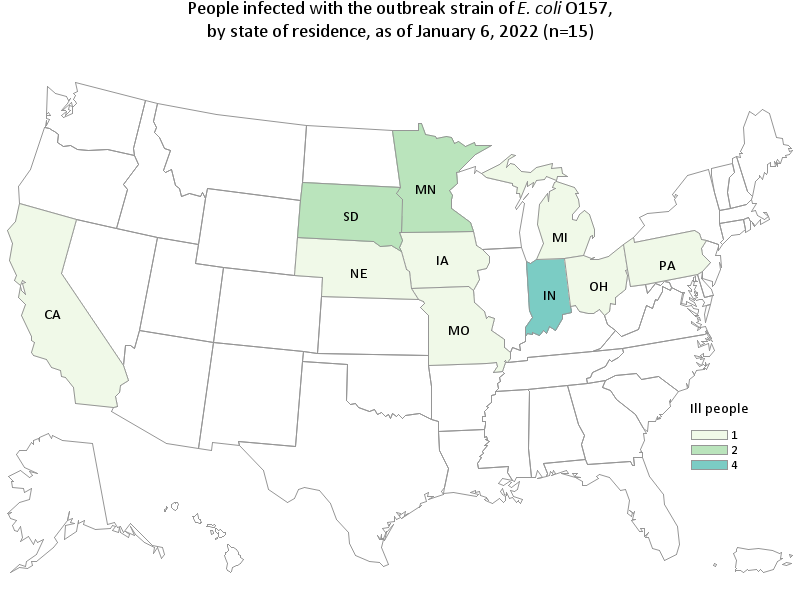
Outbreak Investigation of E. Coli O157:H7 in Spinach: Case Count Map Provided by CDC (January 6, 2022)

Case Counts

Total Illnesses: 15
Hospitalizations: 4
Deaths: 0
Last Illness Onset: November 8, 2021
States with Cases: CA (1), IA (1), IN (4), MI (1), MN (2), MO (1), NE (1), OH (1), PA (1) SD (2)

USA – Outbreak Investigation of E. coli O157:H7: Power Greens Packaged Salad (January 2022)

FDA

The FDA and CDC, in collaboration with state and local partners, are investigating illnesses in a multistate outbreak of E. coli O157:H7. According to the CDC, as of January 6, 2022, 10 people infected with the outbreak strain of E. coli O157:H7 have been reported from four states. Consumer purchase data indicate that seven people purchased Nature’s Basket Power Greens or Simple Truth Organic Power Greens at grocery stores before becoming sick. Based on those purchase dates, the latest “best if used by” date is estimated to be December 20, 2021. These two salad blends consist of organic spinach, mizuna, kale, and chard; both brands were manufactured by the same processor.

FDA has initiated a traceback investigation on the products of interest. To date, no single production code has been identified by the traceback. For the estimated production code range that may have been available for purchase to ill consumers, records collected indicate that leafy greens used in these products were sourced from Salinas and Imperial Valley, CA, and Yuma, AZ. FDA continues to evaluate the available information to determine if a single source, such as a farm or ranch, can be identified. Some challenges encountered in this traceback are those often seen in tracing back leafy greens. These include multiple consumer purchases of the same product on different days, lack of product lot codes tracked to retail stores from distribution centers, and the inability to directly link product lot codes to consumer purchase data. Additionally, the range of possible production dates falls into the harvest transition period from central and northern CA to southern CA and AZ growing regions, and as this product has multiple components, some production days of the product include ingredients co-mingled from multiple growing regions.

At this time, the available evidence does not indicate that there are implicated products currently on the market. FDA and state partners are continuing to work with firms of interest to determine if there are additional or unexpired products that could potentially be affected. This is an ongoing investigation and additional information will be provided as it becomes available.

Recommendation

Although this product is past expiration and should no longer be available for purchase, if consumers froze Nature’s Basket or Simple Truth Power Greens salad blend with a “Best if Used By” date through December 20, 2021, they should discard it.


Case Count Map Provided by CDC

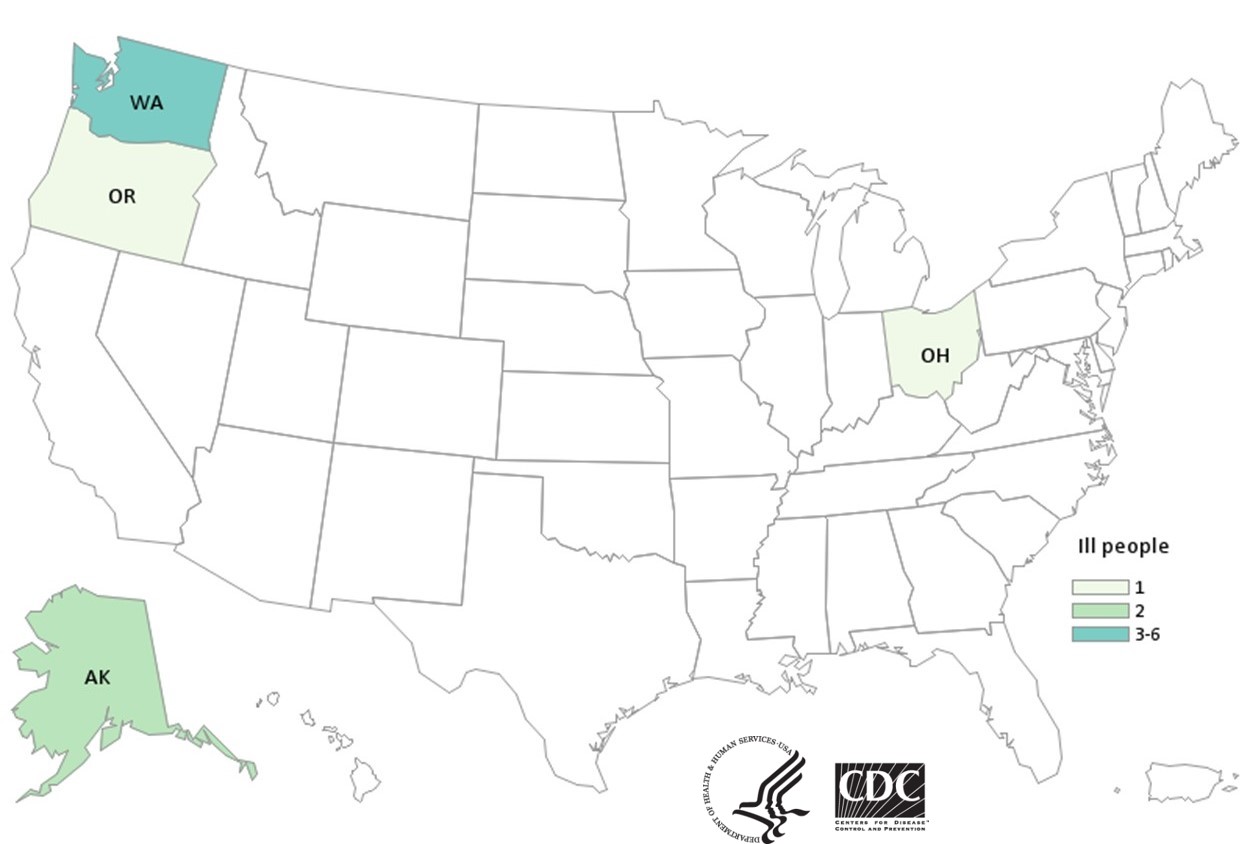
Outbreak Investigation of E. coli O157:H7: Packaged Salad - CDC Case Count Map (January 6, 2022)

Case Counts

Total Illnesses: 10
Hospitalizations: 4
Deaths: 0
Last Illness Onset: December 19, 2021
States with Cases: AK (2), OH (1), OR (1), WA (6)

USA – Dangerous E. Coli O157 Found in Ground Beef Sold at Kroger and Fred Meyer Supermarkets

Consumer Reports

Kroger-brand ground beef purchased at a Fred Meyer supermarket in Seattle and tested by Consumer Reports was found to have a deadly strain of E. coli called O157:H7. The tested package of 93 percent lean ground beef is marked with an “Establishment” (EST) number of 965, representing the plant where the meat was processed, and a “use or freeze by date” of 1/11/2022. (See the product label below.)

At this time, there is no recall of this ground beef, and no illnesses have been linked to the product. But CR’s food-safety experts warn consumers who might have purchased Kroger-branded 93 percent lean ground beef from any Kroger-owned grocery store to check their packages and to throw away the product if it contains that establishment number and “use or freeze by” date. Those stores include Fred Meyer, Harris Teeter, Ralphs, Dillons, and several other supermarkets. (See a complete list of Kroger-owned grocery stores.) Consumers also should not buy ground beef with those markings from any of those stores.

USA – FDA Core Outbreak Table Update

FDA

The FDA CORE Outbreak Table has six active food poisoning investigations this week; all but one has been identified or solved. The Salmonella Javiana outbreak, which was announced on November 24, 2021, is still not identified, and the number of people sickened in that outbreak has increased to 64.

Date
Posted
Reference
#
Pathogen
Product(s)
Linked to
Illnesses

(if any)
12/29/

2021

1052 E. coli
O157:H7
Packaged Salad
12/20/

2021

1039 Listeria
monocytogenes
Packaged Salad
12/15/

2021

1048 Listeria
monocytogenes
Packaged Salad
11/24/

2021

1044 Salmonella Javiana Not Yet
Identified
11/17/

2021

1043 E. coli
O157:H7
Spinach
9/15/

2021

1031 Salmonella
Oranienburg
Red, Yellow,
and White Onion

Research – Prevalence and patterns of fecal shedding of Shiga toxin–producing Escherichia coli by cattle at a commercial feedlot in South Africa

Wiley Online

Healthy colonized cattle are the major reservoir of Shiga toxin–producing Escherichia coli (STEC) and play a key role in the entry point of the pathogen into the beef chain. Excretion rates and the concentration of the pathogen in feces influence the epidemiology and transmission of the pathogen within herds and to humans. This study evaluated the prevalence and dynamics of fecal shedding of STEC by cattle in a commercial feedlot in Gauteng, South Africa. An initial cross-sectional survey was conducted; fecal samples were obtained from 106 randomly selected weaned beef calves on arrival at the feedlot using polymerase chain reaction (PCR) to screen by detecting stx1 and stx2 genes. Subsequently, a longitudinal study was conducted, and 15 STEC-positive and 11 STEC-negative cattle were sampled monthly and followed to slaughter. STEC O157 and non-O157 were enumerated in samples using commercial chromogenic agar. Initial prevalence of STEC shedding was 27% (29/106; 95% CI [19, 37%]). All 26 cattle shed STEC intermittently or continuously during the study period, all except one were super-shedders (≥4 log10 CFU/g) at one or more samplings, and 19 (73%) were persistent or intermittent super-shedders. Of the 38 STEC isolates recovered, 15 (39%) were serotypeable, representing 11 non-O157 serogroups, including O101, O168, O178, and O68. The most frequent virulence combination profile was stx1 + eaeA + ehxA (n = 12; 32%). This study confirms the occurrence and variability of STEC super-shedding in feedlot cattle and highlights that super-shedding is not limited to STEC O157. It also shows their public health significance.

Research – Survival of Salmonella Typhimurium and Escherichia coli O157:H7 on blueberries and impacts on berry quality during 12 weeks of frozen storage after washing with combinations of sodium dodecyl sulfate and organic acids or hydrogen peroxide

Wiley Online

Salmonella spp. and Escherichia coli are well tolerant of freezing. This study was to investigate survival of the foodborne pathogens during storage at −18 ± 2°C for 12 weeks on blueberries after washing with: 500 ppm acetic acid plus 5,000 ppm sodium dodecyl sulfate (SDS) (AA/SDS), 20 ppm peroxyacetic acid plus 5,000 ppm SDS (PPA/SDS), or 200 ppm hydrogen peroxide plus 5,000 ppm SDS (H2O2/SDS), when compared with findings from no wash, or wash with water, 80 ppm PPA or 200 ppm chlorinated water. Following a 60 s contact with one of the three new solutions, the treatments showed 3.3–3.9 log10 CFU/g reductions in Salmonella Typhimurium and E. coli O157:H7 counts. After 2 weeks of frozen storage, 3.9–4.2 log10 CFU/g reductions of Salmonella and E. coli were observed. After 12 weeks of frozen storage, Salmonella and E. coli survivors were below detection limits (0.39 log10 CFU/g) in berries washed with new solutions. The frozen storage had a significant impact (p < .05) on microbial counts of both treated and nontreated blueberries. Although none of these washings decreased the total phenolic and anthocyanins contents and apparent quality at time 0, frozen storage caused significant damage on the texture of both treated and nontreated blueberries. Interestingly, no significant decrease in the total phenolic, anthocyanins content, and apparent quality was observed during the 12-week frozen storage. The counts of total bacteria, yeasts, and molds decreased throughout storage for treated and untreated berries. This demonstrates that the three wash solutions enhance the safety of frozen berries.

USA – Alaska hit with 2 E. coli illnesses linked to Simple Truth Organic Power Greens and Nature’s Basket Organic Power Greens – E.coli O157

Food Poison Journal

As of December 29, 2021, 13 people infected with the outbreak strain of E. coli O157:H7 have been reported from six states. Illnesses started on dates ranging from November 27, 2021, to December 9, 2021.

Sick people range in age from 4 to 79 years, with a median age of 54, and 92% are female. Of 12 people with information available, four have been hospitalized and one person developed a type of kidney failure called hemolytic uremic syndrome (HUS). No deaths have been reported.

State and local public health officials are interviewing people about the foods they ate in the week before they got sick. Of 12 people interviewed, all reported eating packaged salads. Of 10 people who provided brand information, 6 ate or bought Simple Truth Organic Power Greens and 1 ate Nature’s Basket Organic Power Greens. Both Organic Power Greens salads have the same mix of leafy greens: organic spinach, mizuna, kale, and chard. Several sick people reported using these salads in smoothies.

USA – Seven sickened by Simple Truth Organic Power Greens from QFC and Fred Meyer stores in Washington – E.coli O157

Food Poison Journal

The Washington State Department of Health (DOH) confirmed today that the state is part of an E. coli outbreak affecting six states. The seven cases of E. coli O157:H7 found so far in Washington are likely linked to Simple Truth Organic Power Greens purchased at QFC and Fred Meyer stores in Washington state. Consumers with Simple Truth Organic Power Greens with best-by dates through December 20, 2021, should discard them to prevent further illnesses.

USA – FDA Core Table Update

FDA

Five outbreaks still active, two with source still unidentified.

Date
Posted
Reference
#
Pathogen
Product(s)
Linked to
Illnesses

(if any)
Total
Case Count
12/29/2021 1052 E. coli O157:H7 Not Yet Identified 11
12/20/2021 1039 Listeria
monocytogenes
Packaged Salad See Outbreak
Advisory
12/15/2021 1048 Listeria
monocytogenes
Packaged Salad See Outbreak
Advisory
11/24/2021 1044 Salmonella

Javiana

Not Yet
Identified
60
11/17/2021 1043 E. coli
O157:H7
Spinach See Outbreak
Advisory
9/15/2021 1031 Salmonella
Oranienburg
Red, Yellow,
and White Onions
See Outbreak
Advisory