Category Archives: E.coli O157:H7

USA – FDA Core Investigation Table

FDA

Date
Posted
REF Pathogen
Product(s)
Linked to
Illnesses

(if any)
Total
Case Count

Status
Outbreak
Status
2/17/

2022

1056 Cronobacter
sakazakii
Powdered
Infant
Formula
See
Advisory
Active Ongoing
See
Advisory
2/9/

2022

1040 Listeria
monocytogenes
Not Yet
Identified
14 Active Ongoing
See Advice
2/2/

2022

1054 Enteroinvasive
E. coli
O143:H26
Not Yet
Identified
16 Closed Ended
See Advice
1/10/

2022

1050 E. coli
O121:H19
Romaine 4 Closed Ended
12/29/

2021

1052 E. coli
O157:H7
Packaged
Salad
See Outbreak
Advisory
Closed Ended
See Outbreak
Advisory
12/20/

2021

1039 Listeria
monocytogenes
Packaged
Salad
See Outbreak
Advisory
Closed Ended
See Outbreak
Advisory
12/15/

2021

1048 Listeria
monocytogenes
Packaged
Salad
See Outbreak
Advisory
Active Ongoing
See Outbreak
Advisory

Research – Biocontrol Approaches against Escherichia coli O157:H7 in Foods

MDPI

Shiga-toxin-producing Escherichia coli O157:H7 is a well-known water- and food-borne zoonotic pathogen that can cause gastroenteritis in humans. It threatens the health of millions of people each year; several outbreaks of E. coli O157:H7 infections have been linked to the consumption of contaminated plant foods (e.g., lettuce, spinach, tomato, and fresh fruits) and beef-based products. To control E. coli O157:H7 in foods, several physical (e.g., irradiation, pasteurization, pulsed electric field, and high-pressure processing) and chemical (e.g., using peroxyacetic acid; chlorine dioxide; sodium hypochlorite; and organic acids, such as acetic, lactic, and citric) methods have been widely used. Although the methods are quite effective, they are not applicable to all foods and carry intrinsic disadvantages (alteration of sensory properties, toxicity, etc.). Therefore, the development of safe and effective alternative methods has gained increased attention recently. Biocontrol agents, including bacteriophages, probiotics, antagonistic bacteria, plant-derived natural compounds, bacteriocins, endolysins, and enzymes, are rapidly emerging as effective, selective, relatively safe for human consumption, and environmentally friendly alternatives. This paper summarizes advances in the application of biocontrol agents for E. coli O157:H7 control in foods. View Full-Text

Research – Antimicrobial effect of chitosan and extracellular metabolites of Pediococcus pentosaceus CM175 against Salmonella Typhimurium and Escherichia coli O157:H7

Wiley Online

Foodborne illness outbreaks caused by consuming cantaloupe melon contaminated with Salmonella spp. and Escherichia coli O157:H7 are recurrent. The objective of this work was to investigate the antimicrobial effect of the combination of chitosan (Q) and extracellular metabolites of Pediococcus pentosaceus CM175 (EmPp) on the surface of cantaloupe against E. coli O157:H7 and Salmonella Typhimurium. The minimum inhibitory and bactericide concentrations (MIC and MBC) of Q and EmPp were determined by the method of microdilution in broth and viability in plate, respectively. The antimicrobial effect derived from the combination of Q and EmPp was evaluated using the chessboard technique. The antimicrobial activity of the different treatments in cantaloupe was performed employing plate counting. The viability and membrane integrity of S. Typhimurium and E. coli O157:H7 after treatments application were observed by fluorescence microscopy. The results showed that MIC and MBC of Q against S. Typhimurium were 0.1% and 0.7%, respectively; 0.004% and 0.03% for E. coli O157:H7, respectively; for EmPp, MIC was 8.0% and MBC was 10% for both bacteria. The combination of 0.1% Q and 6.6% EmPp against S. Typhimurium and 0.01% Q and 5.0% EmPp against E. coli O157:H7 showed an additive effect. The highest reductions of S. Typhimurium and E. coli O157:H7 in cantaloupe were exerted by the combinations of 0.1% Q with 6.6% EmPp and 0.01% Q with 5.0% EmPp, respectively. These results show that combination of Q and EmPp could be an effective and promising alternative against the tested pathogens.

USA – FDA Core Investigation Table

FDA

Date
Posted
Ref
#
Pathogen
Product(s)
Linked to
Illnesses

(if any)
Total
Case Count
Investigation
Status
2/17/

2022

1056 Cronobacter
sakazakii

&
Salmonella
Newport
Powdered
Infant
Formula
Active
2/9/

2022

1040 Listeria
monocytogenes
Not Yet
Identified
14 Active
2/2/

2022

1054 Enteroinvasive
E. coli
O143:H26
Not Yet
Identified
16 Closed
1/10/

2022

1050 E. coli
O121:H19
Romaine 4 Closed
12/29/

2021

1052 E. coli
O157:H7
Packaged
Salad
12/20/

2021

1039 Listeria
monocytogenes
Packaged
Salad
Active
12/15/

2021

1048 Listeria
monocytogenes
Packaged
Salad
Active

USA – FDA Core Investigation Table Update


FDA

Date
Posted

Ref
#

Pathogen
 

Product(s)
Linked to
Illnesses

(if any)

Total
Case Count


Status

2/17/

2022

1056

Cronobacter
sakazakii

&
Salmonella
Newport

Powdered
Infant
Formula

See
Advisory

Active

2/9/

2022

1040

Listeria
monocytogenes

Not Yet
Identified

14

Active

2/2/

2022

1054

Enteroinvasive
E. coli
O143:H26

Not Yet
Identified

16

Active

1/10/

2022

1050

E. coli
O121:H19

Romaine

4

Closed

12/29/

2021

1052

E. coli
O157:H7

Packaged
Salad

See Outbreak
Advisory

Active

12/20/

2021

1039

Listeria
monocytogenes

Packaged
Salad

See Outbreak
Advisory

Active

12/15/

2021

1048

Listeria
monocytogenes

Packaged
Salad

See Outbreak
Advisory

Active

USA – FDA Core Outbreak Table Update – New Listeria monocytogenes Outbreak

FDA

Date
Posted

Ref

Pathogen
 

Product(s)
Linked to
Illnesses

(if any)

Investigation
Status

2/9/

2022

1040

Listeria
monocytogenes

Not Yet Identified

Active

2/2/

2022

1054

Enteroinvasive E. coli
O143:H26

Not Yet Identified

Active

1/10/

2022

1050

E. coli
O121:H19

Romaine

Closed

12/29/

2021

1052

E. coli
O157:H7

Packaged Salad

Active

12/20/

2021

1039

Listeria
monocytogenes

Packaged Salad

Active

12/15/

2021

1048

Listeria
monocytogenes

Packaged Salad

Active

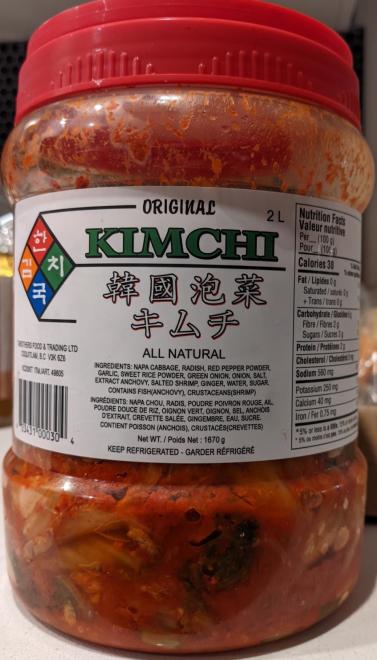
Canada – Public Health Notice: Outbreak of E. coli infections linked to Hankook (Korean characters only) brand Original Kimchi – Update –

PHAC

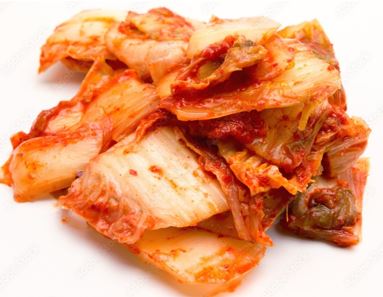
Kimchi

This notice has been updated to reflect an additional food recall warning issued on February 6 for Hankook (Korean characters only) brand Original Kimchi with a best before date of January 23, 2022.

The Public Health Agency of Canada (PHAC) is collaborating with provincial public health partners, the Canadian Food Inspection Agency (CFIA) and Health Canada to investigate an outbreak of E. coli O157 infections involving 2 provinces: Alberta and Saskatchewan.

Based on the investigation findings to date, the outbreak is linked to Hankook (Korean characters only) brand Original Kimchi. Many of the individuals who were sick reported having eaten Hankook (Korean characters only) brand Original Kimchi before their illnesses occurred.

As of February 7, there have been 14 laboratory-confirmed cases of E.coli O157 illness linked to this outbreak in the following provinces: Alberta (13) and Saskatchewan (1).

Individuals became sick between early December 2021 and early January 2022. No deaths or hospitalizations have been reported. Individuals who became ill are between 0 and 61 years of age. The majority of cases (64%) are female.

The CFIA issued food recall warnings on January 28, 2022 and February 6, 2022 for Hankook (Korean characters only) brand Original Kimchi products. The recalled products were distributed in British Columbia, Alberta, Saskatchewan, and Manitoba.

The CFIA is continuing its food safety investigation, which may lead to the recall of other products. If other products are recalled, the CFIA will notify the public through updated food recall warnings.

Canada – Hankook (Korean characters only) brand Original Kimchi recalled due to E. coli O157:H7 – Update

CFIA

Hankook (Korean characters only) - 1670 g

Product
Original Kimchi
Issue
Food » Microbial Contamination » E. Coli O157:H7
What to do

Do not consume the recalled product.

Issue

T-Brothers Food & Trading Ltd. is recalling Hankook (Korean characters only) brand Original Kimchi from the marketplace due to possible E. coli O157:H7 contamination.

The recalled product has been sold in British Columbia.

What you should do

  • If you think you became sick from consuming a recalled product, call your doctor
  • Check to see if you have the recalled product in your home
  • Do not consume the recalled product
  • Recalled products should be thrown out or returned to the location where they were purchased

Food contaminated with E. coli O157:H7 may not look or smell spoiled but can still make you sick. Symptoms can include nausea, vomiting, mild to severe abdominal cramps and watery to bloody diarrhea. In severe cases of illness, some people may have seizures or strokes, need blood transfusions and kidney dialysis or live with permanent kidney damage. In severe cases of illness, people may die.

Research – Efficacy of a Mixed Peroxyorganic Acid Antimicrobial Wash Solution against Salmonella, Escherichia coli O157:H7 or Listeria monocytogenes on Cherry Tomatoes

Journal of Food Protection

A study was conducted to evaluate a new organic produce wash composed of a combination of organic acids and hydrogen peroxide, in the form of a mixed peroxyacid solution, against foodborne pathogens.  The mixed peroxyacid, composed of lactic acid, hydrogen peroxide and one or more fruit acids, was challenged against Salmonella enterica, E. coli O157:H7, or Listeria monocytogenes in suspension or on the surface of dip-inoculated cherry tomatoes.  Cherry tomatoes were also treated with 8 ppm of free chlorine added in the form of sodium hypochlorite (NaOCL).  When tested against planktonic cells in pure culture for 120 s, Salmonella, and E. coli O157:H7 were reduced by 7.5 and 7.1 log cycles with 0.40% of the peroxyacid solution, respectively, while L. monocytogenes decreased by 5.0 log by treatment with a 0.80% solution.  When cherry tomatoes were dip-inoculated and treated with 8 ppm free chlorine, Salmonella and E. coli O157:H7 populations decreased by 2.5 and 2.6 log, respectively, which were not significantly different than reductions incurred by sterile water rinses.  A 1.0% solution of peroxyacid solution, however, reduced the same microorganisms by 3.8 and 3.4 log per tomato, respectively, which was significantly greater ( P < 0.05) than reductions achieved by the 2 min sterile water rinse.  When dip-inoculated with L. monocytogenes, and treated, populations were reduced by 3.5 log per tomato with 1.0% peroxyacid solution which was greater ( P < 0.05) than reductions achieved by 8 ppm free Cl (2.6 log) or sterile water (1.7 log).  Results demonstrate that this peroxyacid combination antimicrobial wash may be an effective organic produce wash for preventing cross-contamination during the washing of cherry tomatoes, as well as being capable of inactivating up to 3.8, 3.4, and 3.5 log  per tomato of S. enterica, E. coli O157:H7 and L. monocytogenes , respectively.

USA – FDA Core Investigation Table Update

FDA

Date
Posted
Reference
#
Pathogen
Product(s)
Linked to
Illnesses

(if any)
Investigation
Status
2/2/

2022

1054 Enteroinvasive E. coli
O143:H26
Not Yet Identified Active
1/10/

2022

1050 E. coli
O121:H19
Romaine Active
12/29/

2021

1052 E. coli
O157:H7
Packaged Salad Active
12/20/

2021

1039 Listeria
monocytogenes
Packaged Salad Active
12/15/

2021

1048 Listeria
monocytogenes
Packaged Salad Active