Archives
-
Join 347 other subscribers
KSWFoodWorld
Blog Stats
- 441,788 Views
Category Archives: Decontamination Microbial
Research – Microbial Load of Fresh Blueberries Harvested by Different Methods
Currently, more and more growers are transitioning to the use of over-the-row machine harvesters for harvesting fresh market blueberries. This study assessed the microbial load of fresh blueberries harvested by different methods. Samples (n = 336) of ‘Draper’ and ‘Liberty’ northern highbush blueberries, which were harvested using a conventional over-the-row machine harvester, a modified machine harvester prototype, ungloved but sanitized hands, and hands wearing sterile gloves were collected from a blueberry farm near Lynden, WA, in the Pacific Northwest at 9 am, 12 noon, and 3 pm on four different harvest days during the 2019 harvest season. Eight replicates of each sample were collected at each sampling point and evaluated for the populations of total aerobes (TA), total yeasts and molds (YM), and total coliforms (TC), as well as for the incidence of fecal coliforms and enterococci. The harvest method was a significant factor (p < 0.05) influencing the TA and TC counts, the harvest time was a significant factor influencing the YM counts, while the blueberry cultivar was an insignificant (p > 0.05) factor for all three indicator microorganisms. These results suggest that effective harvester cleaning methods should be developed to prevent fresh blueberry contamination by microorganisms. This research will likely benefit blueberry and other fresh fruit producers.
Posted in Coliforms, Decontamination Microbial, Food Micro Blog, Food Microbiology, Food Microbiology Blog, Food Microbiology Research, Food Microbiology Testing, microbial contamination, Microbial growth, Microbiological Risk Assessment, Microbiology, Microbiology Investigations, Microbiology Risk, Mould/Mold, Moulds, TVC, Yeasts
Research – Nanoparticle Coatings on Glass Surfaces to Prevent Pseudomonas fluorescens AR 11 Biofilm Formation
Abstract
Microbial colonization of surfaces is a sanitary and industrial issue for many applications, leading to product contamination and human infections. When microorganisms closely interact with a surface, they start to produce an exo-polysaccaridic matrix to adhere to and protect themselves from adverse environmental conditions. This type of structure is called a biofilm. The aim of our work is to investigate novel technologies able to prevent biofilm formation by surface coatings. We coated glass surfaces with melanin-ZnO2, melanin-TiO2, and TiO2 hybrid nanoparticles. The functionalization was performed using cold plasma to activate glass-substrate-coated surfaces, that were characterized by performing water and soybean oil wetting tests. A quantitative characterization of the antibiofilm properties was done using Pseudomonas fluorescens AR 11 as a model organism. Biofilm morphologies were observed using confocal laser scanning microscopy and image analysis techniques were used to obtain quantitative morphological parameters. The results highlight the efficacy of the proposed surface coating to prevent biofilm formation. Melanin-TiO2 proved to be the most efficient among the particles investigated. Our results can be a valuable support for future implementation of the technique proposed here in an extended range of applications that may include further testing on other strains and other support materials.
Research – The Role of Biofilms in the Pathogenesis of Animal Bacterial Infections
Abstract
Biofilms are bacterial aggregates embedded in a self-produced, protective matrix. The biofilm lifestyle offers resilience to external threats such as the immune system, antimicrobials, and other treatments. It is therefore not surprising that biofilms have been observed to be present in a number of bacterial infections. This review describes biofilm-associated bacterial infections in most body systems of husbandry animals, including fish, as well as in sport and companion animals. The biofilms have been observed in the auditory, cardiovascular, central nervous, digestive, integumentary, reproductive, respiratory, urinary, and visual system. A number of potential roles that biofilms can play in disease pathogenesis are also described. Biofilms can induce or regulate local inflammation. For some bacterial species, biofilms appear to facilitate intracellular invasion. Biofilms can also obstruct the healing process by acting as a physical barrier. The long-term protection of bacteria in biofilms can contribute to chronic subclinical infections, Furthermore, a biofilm already present may be used by other pathogens to avoid elimination by the immune system. This review shows the importance of acknowledging the role of biofilms in animal bacterial infections, as this influences both diagnostic procedures and treatment.
Posted in Antibacterial, Antibiotic Resistance, antifungal, antimicrobial resistance, Antimicrobials, Biofilm, Decontamination Microbial, Food Micro Blog, Food Microbiology Blog, microbial contamination, Microbial growth, Microbiological Risk Assessment, Microbiology, Microbiology Investigations, Microbiology Risk
France Research – Acute gastroenteritis: review of the 2020-2021 and 2021-2022 winter seasons
Every year, an increase in acute gastroenteritis (AGE) is observed caused mainly by the circulation of noroviruses and rotaviruses. Noroviruses are responsible for AGE in people of all ages, while rotaviruses mainly affect children under 5 years of age.
During the winter season, Public Health France monitors, with its network of partners , the epidemiological evolution of acute gastroenteritis and publishes weekly national and regional epidemiological bulletins on its website . These data are also made available as open data on Géodes .
Santé publique France is today publishing the winter monitoring report covering the 2020-2021 and 2021-2022 seasons in mainland France and recalls the simple actions to take to limit the risk of contamination.
What are the highlights of the last two seasons?
2020-2021: a season marked by a historically low level of activity
The low level of activity observed from March 2020 (end of the 2019-2020 season), in the context of the COVID-19 pandemic, continued during the 2020-2021 season. In city medicine or in hospital emergency departments, activity remained relatively stable and lower than the years prior to the COVID-19 pandemic in all metropolitan areas.
A return to activity comparable to pre-COVID seasons during winter 2021-2022
The activity levels recorded throughout the 2021-2022 season were again comparable to those observed during the pre-COVID seasons. In hospital emergencies, activity for acute gastroenteritis remained close to historical maximums, from December 2021 to April 2022. Consultations at SOS Médecins were similar to the data observed before the COVID-19 pandemic.
Posted in COVID-19, Decontamination Microbial, Food Micro Blog, Food Microbiology, Food Microbiology Blog, Food Microbiology Research, Food Microbiology Testing, gastroenteritis, microbial contamination, Microbial growth, Microbiological Risk Assessment, Microbiology, Microbiology Investigations, Microbiology Risk, Norovirus
Research – Legionella pneumophila Risk from Air–Water Cooling Units Regarding Pipe Material and Type of Water

Abstract
Legionellosis is a respiratory disease related to environmental health. There have been manifold studies of pipe materials, risk installations and legionellosis without considering the type of transferred water. The objective of this study was to determine the potential development of the causative agent Legionella pneumophila regarding air–water cooling units, legislative compliance, pipe material and type of water. Forty-four hotel units in Andalusia (Spain) were analysed with respect to compliance with Spanish health legislation for the prevention of legionellosis. The chi-square test was used to explain the relationship between material–water and legislative compliance, and a biplot of the first two factors was generated. Multiple correspondence analysis (MCA) was performed on the type of equipment, legislative compliance, pipe material and type of water, and graphs of cases were constructed by adding confidence ellipses by categories of the variables. Pipe material–type of water (p value = 0.29; p < 0.05) and legislative compliance were not associated (p value = 0.15; p < 0.05). Iron, stainless steel, and recycled and well water contributed the most to the biplot. MCA showed a global pattern in which lead, iron and polyethylene were well represented. Confidence ellipses around categories indicated significant differences among categories. Compliance with Spanish health legislation regarding the prevention and control of legionellosis linked to pipe material and type of water was not observed.
Posted in Contaminated water, Cooling Towers, Decontamination Microbial, Food Micro Blog, Food Microbiology Blog, Food Microbiology Research, Legionella, Legionnaires’ disease, microbial contamination, Microbial growth, Microbiological Risk Assessment, Microbiology, Microbiology Investigations, Microbiology Risk, Water, water microbiology, Water Safety
USA – FDA Core Outbreak Table – Update
What’s New
- A new outbreak of hepatitis A virus infections (ref # 1143) linked to a not yet identified product has been added to the table. FDA has initiated traceback.
- For the outbreak of Listeria monocytogenes (ref # 1123), FDA has initiated an onsite inspection, sample collection, and analysis. This investigation is ongoing and additional information will be provided as it become available.
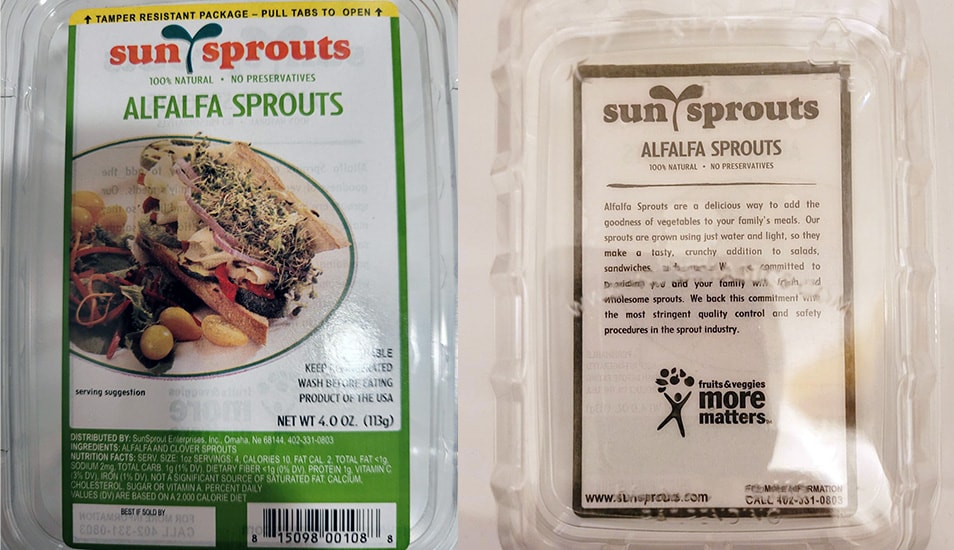
- The outbreak of Salmonella Typhimurium (ref # 1137) linked to alfalfa sprouts has ended and the FDA investigation is closed.
Posted in Decontamination Microbial, FDA, food bourne outbreak, Food Illness, Food Micro Blog, Food Microbiology, Food Microbiology Blog, Food Microbiology Research, Food Microbiology Testing, Foodborne Illness, foodborne outbreak, foodbourne outbreak, Hepatitis A, Illness, Listeria, Listeria monocytogenes, microbial contamination, Microbial growth, Microbiological Risk Assessment, Microbiology, Microbiology Investigations, Microbiology Risk, outbreak, Salmonella
USA – Persistent Strain of E. coli O157:H7 (REPEXH01) Linked to Multiple Sources
REPEXH01
REPEXH01 is a persistent strain of Shiga toxin-producing E. coli O157:H7 bacteria that has caused illnesses and outbreaks in the United States.
Illness caused by this strain was first reported to PulseNet in 2017. Illnesses caused by this strain occur year-round but are less common in winter.
In the past, the REPEXH01 strain has spread to people through contaminated food and contaminated recreational water.
This strain is relatively diverse genetically. Bacteria in this strain are within 21 allele differences of one another by whole genome sequencing, which is more diverse than typical multistate foodborne outbreaks where bacteria generally fall within 10 allele differences of one another.
| Identified outbreak sources*
*Confirmed sources were implicated by epidemiologic |
|
|---|
Posted in Bacterial Toxin, Decontamination Microbial, E.coli O157, E.coli O157:H7, Food Micro Blog, Food Microbiology, Food Microbiology Blog, Food Microbiology Research, Food Microbiology Testing, microbial contamination, Microbial growth, Microbiological Risk Assessment, Microbiology, Microbiology Investigations, Microbiology Risk, STEC, STEC E.coli, Toxin
USA – Salmonella Outbreak Linked to Alfalfa Sprouts – Outbreak is Over

Fast Facts
- Illnesses: 63
- Hospitalizations: 10
- Deaths: 0
- States: 8
- Recall: Yes
- Investigation status: Closed
Outbreak Investigation Summary
Data showed that alfalfa sprouts made people in this outbreak sick.
- Of the 50 people interviewed, 35 (70%) reported eating alfalfa sprouts.
- Eight of the people who got sick in this outbreak confirmed they had purchased Sun Sprouts brand alfalfa sprouts from their local grocery store.
On December 29, 2022, SunSprout Enterprises recalled four lots of raw alfalfa sprouts.
Posted in Decontamination Microbial, food bourne outbreak, Food Illness, Food Micro Blog, Food Microbiology, Food Microbiology Blog, Food Microbiology Research, Food Microbiology Testing, Foodborne Illness, foodborne outbreak, foodbourne outbreak, Illness, microbial contamination, Microbial growth, Microbiological Risk Assessment, Microbiology, Microbiology Investigations, Microbiology Risk, outbreak, Salmonella
USA – FDA investigates cases of Legionnaires disease on cruise ships
FDA Warning Letters
American Cruise Lines
Guilford, CT
American Cruise Lines is on notice from the Food and Drug Administration (FDA) after an inspection of their American Star and American Heritage vessels. According to the warning letter, the FDA continues to have concerns with the potential exposure of passengers and crew members to Legionella onboard American Cruise Lines’ vessels.
In Jan. 24, 2023, warning letter, the FDA described an April 30 through June 17, 2022, an inspection of American Cruise Lines’ American Star and American Heritage vessels.
The warning letter includes information about failed water tests for a sink in the galley and hand-washing sinks for wait staff. The FDA also found that disinfection was ineffective.
American Star
Presence of Legionella Onboard the Vessel
On April 30, 2022, FDA investigators collected 10 biofilm swabs and 14 bulk one-liter potable water samples from various locations on the vessel. The Maryland Department of Health laboratory recovered Legionella from:
Biofilm Swabs with 60 percent of samples positive:
American Heritage
Presence of Legionella Onboard the Vessel
On June 15, 2022, FDA investigators collected 24 biofilm swabs and 29 bulk one-liter potable water samples from various locations on their vessels. The Maryland Department of Health laboratory recovered Legionella from:
Biofilm Swabs with 8 percent of samples positive:
Posted in Decontamination Microbial, Food Micro Blog, Food Microbiology, Food Microbiology Blog, Legionella, Legionnaires’ disease, microbial contamination, Microbial growth, Microbiological Risk Assessment, Microbiology, Microbiology Investigations, Microbiology Risk, Water, water microbiology, Water Safety
The Use of Ozone Technology: An Eco–Friendly Method for the Sanitization of the Dairy Supply Chain
Abstract
The dairy field has considerable economic relevance in the agri-food system, but also has the need to develop new ‘green’ supply chain actions to ensure that sustainable products are in line with consumer requirements. In recent years, the dairy farming industry has generally improved in terms of equipment and product performance, but innovation must be linked to traditional product specifications. During cheese ripening, the storage areas and the direct contact of the cheese with the wood must be carefully managed because the proliferation of contaminating microorganisms, parasites, and insects increases significantly and product quality quickly declines, notably from a sensory level. The use of ozone (as gas or as ozonated water) can be effective for sanitizing air, water, and surfaces in contact with food, and its use can also be extended to the treatment of waste and process water. Ozone is easily generated and is eco-sustainable as it tends to disappear in a short time, leaving no residues of ozone. However, its oxidation potential can lead to the peroxidation of cheese polyunsaturated fatty acids. In this review we intend to investigate the use of ozone in the dairy sector, selecting the studies that have been most relevant over the last years.