Category Archives: Decontamination Microbial

France -Whole whipping cream – Possible Bacterial Contamination

Gov france

Identification information of the recalled product

  • Product category Feed
  • Product subcategory Milk and dairy products
  • Product brand name PASTURES
  • Model names or references Whole whipping cream – 38cl – PATURAGES
  • Identification of products
    GTIN Batch Date
    03250391426287 9332325 Use-by date 08/26/2023
  • Packaging 38cl bottle
  • Marketing start/end date From 07/28/2023 to 08/03/2023
  • Storage temperature Product to be stored in the refrigerator
  • Health mark FR.89.263.001
  • Further information The lot number and expiry date affected by this recall are indicated on the bottle cap.
  • Geographic area of ​​sale Whole France
  • Distributors Intermarché

Research – An Overview of the Use and Applications of Limosilactobacillus fermentum in Broiler Chickens

MDPI

Abstract

The implementation of government regulations on antibiotic use, along with the public’s concern for drug resistance, has strengthened interest in developing alternatives not only aimed at preserving animal production but also at reducing the effects of pathogenic infections. Probiotics, in particular, are considered microorganisms that induce health benefits in the host after consumption of adequate amounts; they have been established as a potential strategy for improving growth, especially by stimulating intestinal homeostasis. Probiotics are commonly associated with lactic acid bacteria, and Limosilactobacillus fermentum is a well-studied species recognized for its favorable characteristics, including adhesion to epithelial cells, production of antimicrobial compounds, and activation of receptors that prompt the transcription of immune-associated genes. Recently, this species has been used in animal production. Different studies have shown that the application of L. fermentum strains not only improves the intestinal ecosystem but also reduces the effects caused by potentially pathogenic microorganisms. These studies have also revealed key insights into the mechanisms behind the actions exerted by this probiotic. In this manuscript, we aim to provide a concise overview of the effects of L. fermentum administration on broiler chicken health and performance

Research – Prevalence of Listeria monocytogenes in RTE Meat Products of Quevedo (Ecuador)

MDPI

Abstract

Listeria monocytogenes is a foodborne pathogen that causes listeriosis and can be a problem in areas where meat products are sold at unregulated storage temperatures. In this work, the prevalence of L. monocytogenes was determined in the five most widely traded meat products in the province of Quevedo (Ecuador): bacon, “chorizo paisa”, grilled hamburger meat, mortadella, and salami. A total of 1000 samples of these products were analyzed in two seasons of the year (dry season/rainy season). All L. monocytogenes isolates were confirmed by PCR with primers designed for the iap gene. Furthermore, the positive samples were quantified for L. monocytogenes. Of the 1000 meat products analyzed, 163 were positive for L. monocytogenes (16.3%). The prevalence of L. monocytogenes in the two seasons in different meat products was as follows: 22.5% in mortadella, 19% in hamburger meat, 15% in bacon, 14.5% in chorizo paisa and 10.5% in salami. In addition, the concentration of L. monocytogenes in most of the positive samples was in the range of 4–6 log CFU/g or even higher. The results show the need for improvements in the hygienic measures and meat storage temperatures in Quevedo (Ecuador) to avoid risks of foodborne listeriosis.

The Silent Threats in Our Salad Bowls: Research Harnessing Plant Defenses to Combat E. coli and Salmonella Infections

Food Safety.Com

Foodborne illnesses caused by bacteria like Escherichia coli (E. coli) and Salmonella pose a grave threat to public health. Among the various sources of contamination, plant-based and salad-related illnesses have garnered significant concern over the last decade. These infections can have severe repercussions, especially for individuals with compromised immune systems, such as children and seniors. The fear of these bacteria lingers in people’s minds, and it is crucial to address these concerns. This article explores the author’s groundbreaking research shedding light on the dangers of E. coli and Salmonella, and how this work can help safeguard lives through improved food safety practices.

UK – Rare E. coli type behind deadly UK outbreak; 2 dozen sick – E.coli O183

Food Safety News

One person has died in an E. coli outbreak being investigated by health authorities in the United Kingdom.

The Food Standards Agency (FSA) and UK Health Security Agency (UKHSA) are trying to find the source of the ongoing Shiga toxin-producing E. coli (STEC) O183 outbreak with the help of other public health agencies.

There are 24 cases in the UK, with 19 in England, two each in Northern Ireland and Scotland, and one in Wales since May. For patients with available information, onset dates range from May 23 to July 2.

USA – Ozona Organics Issues Voluntary Recall of Select Liquid Probiotic Products Due to Possible Health Risk – Possible Microbial Contamination

FDA

Company Announcement

Ozona Organics, LLC of Ozona, Texas, is recalling its 4-ounce and 16-ounce bottles of Ozona Probiotics for Digestive Health (intended for human use), also labeled as GoHealthy Probiotics for Infants, Toddlers and Kids in 2-ounce bottles and GoHealthy Probiotics for Infants, Kids, Men and Women in 4-ounce bottles because they have the potential to become contaminated with microbial growth.

Ozona Organics is voluntarily recalling these products because of high water activity in the formula that provides a potential for microbial growth, which may be harmful. Although, no illnesses have been reported to date in connection with this problem.

The lots of Ozona Probiotics for Digestive Health were distributed through the company’s website, www.ozonaorganics.comExternal Link Disclaimer and www.amazon.comExternal Link Disclaimer.

The lots of GoHealthy Probiotics listed above were distributed through the company’s website http://www.gohealthy.us, http://www.amazon.com, and Walmart stores.

The Ozona Probiotics for Digestive Health products come in 4-ounce, blue glass bottles and 16-ounce, blue plastic bottles. The GoHealthy Probiotics for Infants, Toddlers and Kids come in 2-ounce, blue glass bottles. The GoHealthy Probiotics for Infants, Kids, Men and Women come in 4-ounce, blue glass bottles.

The lot numbers, manufacturing and expiration dates included are as follows and apply to both the Ozona and GoHealthy products listed above:

Lot Number Manufacturing Date Expiration Date
011122 11/1/21 11/1/23
011228 12/28/21 12/28/23
020810 8/10/22 8/10/24
021115 11/15/22 11/15/24
022023 12/15/22 12/15/24
030115 1/15/23 1/15/25
030301 3/1/23 3/1/25

Lot numbers can be found on the back panel of product labels.

Ozona Organics Dog, Cat, Equine, and Swine Probiotics (intended for animal use) are being recalled in their entirety. The distribution dates for affected product are from August 2021 through July 2023. The recalling lots were distributed through the company’s website, www.ozonaorganics.comExternal Link Disclaimer.

Ozona Organics Probiotics for Dogs and Probiotics for Cats come in 4-ounce, blue glass bottles with droppers. Ozona Organics Probiotics for Equine and Probiotics for Swine come in 1-gallon, white plastic bottles with handles.

No other Ozona Organics or Go Healthy products or batches are affected by this recall.

Consumers who have purchased the affected products are urged not to consume the products and instead dispose of them. Consumers with questions may contact Ozona Organics, LLC at (325) 203-4026 from 9:00 am – 4:00 pm CT, Monday-Friday. The safety, quality, and integrity of our products remain our number one priority. We sincerely apologize for any inconvenience this action represents to both our consumers and distributors.

We are working with the U.S. Food and Drug Administration (FDA) on this voluntary recall and will cooperate with them fully.


Company Contact Information

Consumers:
Ozona Organics, LLC
 325-203-4026

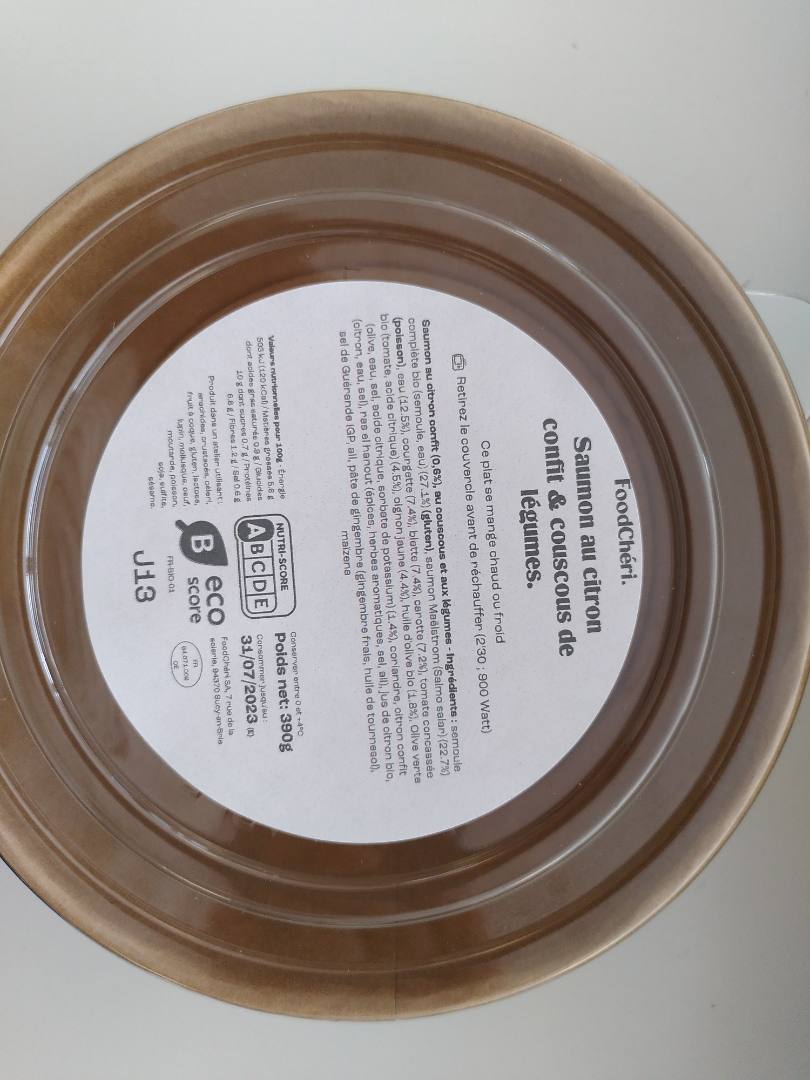
France – Salmon with candied lemon and vegetable couscous – risk of bacterial development

Gov france

Identification information of the recalled product

  • Product category Feed
  • Product subcategory Prepared meals and snacks
  • Product brand name food cheri
  • Model names or references Salmon with candied lemon (0.6%) with couscous and vegetables
  • Identification of products
    Batch Date
    07/31/2023 (E) Use-by date 07/31/2023
  • Packaging Cardboard tray 390g
  • Marketing start/end date From 07/31/2023 to 07/31/2023
  • Storage temperature Product to be stored in the refrigerator
  • Health mark FR94.071.002CE
  • Geographic area of ​​sale Whole France
  • Distributors food cheri

Canadian Food Safety Agency implements temporary measures to address U.S. romaine lettuce – E.coli O157

Food Safety News

To mitigate the risk associated with E. coli O157:H7 in romaine lettuce from the United States, the Canadian Food Inspection Agency (CFIA) has announced the implementation of temporary Safe Food for Canadians (SFC) license conditions.

The measures will be in effect from Sept. 28 to Dec. 20.

According to the CFIA, this action was taken to address the recurring outbreaks of foodborne illnesses related to E. coli O157:H7 in romaine lettuce imported from the United States. Investigations by U.S. authorities have traced the source of the outbreaks to the California Salinas Valley counties of Santa Cruz, Santa Clara, San Benito, and Monterey.

During the designated period, importers of romaine lettuce and salad mixes containing romaine lettuce from the U.S. must adhere to one of the following requirements:

  • Declare that the product does not originate from the Salinas Valley counties of California mentioned above, or
  • Submit an attestation form and Certificates of Analysis for each shipment, confirming that the romaine lettuce is free from detectable levels of E. coli O157:H7.

Research – Salmonella spp., Escherichia coli and Enterobacteriaceae Control at a Pig Abattoir: Are We Missing Lairage Time Effect, Pig Skin, and Internal Carcass Surface Contamination?

MDPI

Abstract

To provide meat safety and consumer protection, appropriate hygiene control measures at an abattoir are required. This study aimed to evaluate the influence of visual fecal contamination level (VFCL) and lairage time (LT) on pig skin (PS) and external (ECS) and internal (ICS) carcass surfaces. The presence of EnterobacteriaceaeEscherichia coli (E. coli) and Salmonella in PS, ECS, and ICS were evaluated. A total of 300 paired samples were collected from 100 pigs. Results underlined the importance of the skin (Enterobacteriaceae: 3.27 ± 0.68 log CFU/cm2E. coli: 3.15 ± 0.63 log CFU/cm2Salmonella: 21% of samples) as a direct or indirect source of carcass contamination. Although VFCL revealed no significant effect (p > 0.05), the increase of LT had a significant impact (p < 0.001) on Enterobacteriaceae and E. coli levels across all analysed surfaces, and Salmonella presence on ICS (p < 0.01), demanding attention to LT. Also, the ICS showed a higher level of these bacteria compared to ECS. These results highlight the need of food business operators to consider ICS as an alternative area to sample for Salmonella, as a criterion for process hygiene based on EC Regulation No. 2073/2005, and as a potential contamination source to be integrated in the hazard analysis critical control point (HACCP) plans.

Malta – Authorities probe reports of food poisoning following Kalkara wedding

Times of Malta

The health authorities are investigating reports of people suffering from gastroenteritis following a wedding reception in Kalkara on Thursday, with at least one person hospitalised.

The Infectious Disease Prevention and Control Unit has asked attendees at the wedding reception at Villa Bighi to fill in an online form indicating whether they had fallen ill, what kind of symptoms they had, and when.

Attendees were also asked whether they had any complaints about the food served at the event because it may have tasted bad or was not warm enough, among other reasons.