Category Archives: Cryptosporidium

UK – FSA – HPA – Cryptosporidum 2012 Outbreak

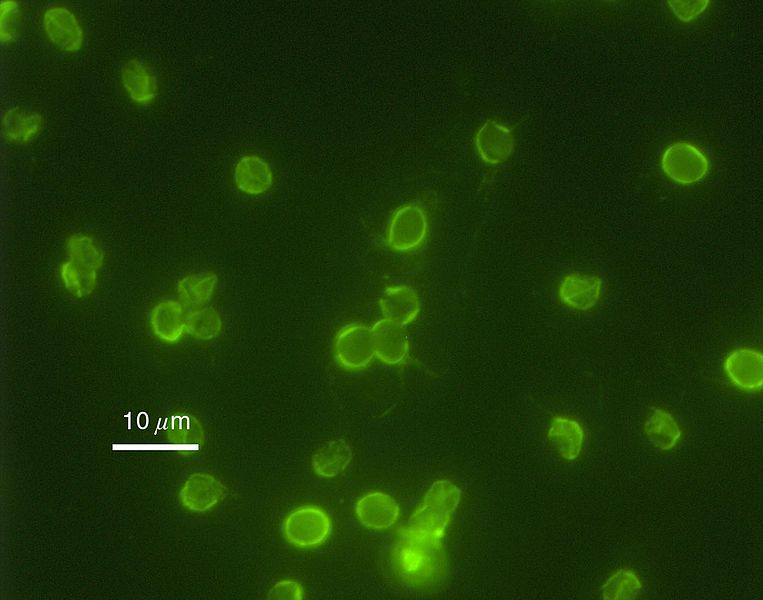
FSA763px-Cryptosporidium_parvum_01

The Health Protection Agency (HPA) today published findings of an investigation into an outbreak of Cryptosporidium infection that affected around 300 people in England and Scotland in May 2012.

The Food Standards Agency was part of the outbreak control team, led by the HPA, and gathered information on the production and distribution of salad vegetables to help identify the likely source of the outbreak.

The full HPA statement can be read via this HPA link

Australia- Gastroenteritis Linked to Swimming Pool Water

Courier Mail

Victoria’s chief health officer Dr Rosemary Lester said there has been a three-fold increase in gastro cases after hot weather sparked people seeking to cool off at public swimming pools.

She urged those who have had diarrhoea not to go into a swimming pool for at least 14 days after symptoms had stopped for fear of passing on the bug.

Dr Lester said the cryptosporidium gastro parasite could not be killed by normal levels of chlorination.

“Cryptosporidiosis is typically caused by swallowing contaminated water, household contact with a case and contact with farm animals,” she said.

Authorities are working with swimming pool owners to implement extra measures to kill the parasite.

Symptoms included watery diarrhoea, stomach cramps and vomiting, Dr Lester said.

Dr Lester urged sufferers to shower before swimming to avoid infecting others, with children and the elderly particularly at risk.

There were 155 Victorian cases of gastro caused by the cryptosporidium parasite last month, three times the February average of 53.

Canada – Research -Parasites in Retail Leafy Greens

CTV News220px-Cyclospora_cayetanensis_stained

In the first-ever large-scale study of its kind, Canadian researchers have  tested how clean pre-washed packages of leafy greens really are, and found  parasites in dozens of samples purchased in Ontario.

Looking at 544 samples of store-bought, pre-washed salads, researchers from  Health Canada and the Public Health Agency of Canada found nearly one-tenth of  the samples were contaminated with either cyclospora, cryptosporidium or giardia  — parasites that can cause intestinal illness, such as diarrhea.

“In the present study, a relatively high prevalence of all three parasites  was found in packaged, ready-to-eat leafy greens,” said the study, published  recently in the Journal of Food Protection.

To conduct the study, the research team purchased a total of 544 prewashed  salad samples between April 2009 and March 2010 — all in the Waterloo, Ont.  area. After testing the samples, the team found:

  • Nine (1.7%) of the samples tested positive for cyclospora;
  • 32 (5.7%) of the samples tested positive for cryptosporidium;
  • 10 (1.8%) of the samples tested positive for giardia.


New Zealand – Cryptosporidium Outbreak?

The New Zealand Herald763px-Cryptosporidium_parvum_01

Hawke’s Bay’s water operators are checking the region’s supplies for contamination of Cryptosporidium.

Health authorities have issued a warning following the diagnosis of 45 people over the past two months.

Medical Officer of Health Dr Nicholas Jones said the health protection team is analysing information to establish the cause of the outbreak – and expect there is more than one source.

“We’ve been in touch with the water operators and they don’t think they’ve got problems at the moment, but obviously it’s something we’re going to be looking into in more detail,” said Dr Jones.

Research New Bacterial Identification Technology

Food Poisoning Bulletin

xTAG Gastrointestinal Pathogen Panel (GPP), which recently received approval from US Food and Drug Administration (FDA), is one lab test that can do the job of many,  expertly scanning a solitary stool sample for 11 different illness-inducing organisms.

To many, that sounds an impressive feat in an of itself. But considering that 179 million Americans are stricken with gastroenteritis every year, according to the Centers for Disease Control and Prevention (CDC), it’s also one that can come in handy. Infectious gastroenteritis is caused by certain viruses, bacteria, or parasites and can be spread easily through person-to-person contact or from contaminated food, water, and surfaces. Symptoms include vomiting and diarrhea.

The  xTAG can scan for  bacteria including Campylobacter, Clostridium difficile (C. difficile) toxin A/B, Escherichia coli (E. coli) O157, Enterotoxigenic Escherichia coli (ETEC) LT/ST, Salmonella, Shigella and Shiga‐like Toxin producing E. coli (STEC) stx 1/stx 2. It can scan for viruses including Norovirus and Rotavirus A. And it can scan for parasites such as Cryptosporidium and Giardia.

HPA – Scotland Cryptosporidum Increase 2012

HPA Scotland763px-Cryptosporidium_parvum_01

By the end of the first 50 weeks of 2012, 684 cases of cryptosporidiosis had been reported to Health Protection Scotland. This was an increase of 256 (60%) over the same period in 2011.

In weeks 41-44 of 2012, 128 cases were reported. This was an increase of 84 (191%) over the same period in 2011. In weeks 45-48 of 2012, 74 cases were reported, an increase of 38 (106%) over the same period in 2011. However, in the first two weeks of the current period (weeks 49-52) of 2012, only 17 cases have been reported. In weeks 49-52 of 2011, a total of 39 cases were reported so the figure for weeks 49-52 of 2012, thus far, is unremarkable.


UK/Germany/Netherlands – Increase in Cryptosporidium Notifications in 2012

ECDC

An increase in Cryptodsporidim notifications has been observed in the UK, Netherlands and Germany since August 2012 that is likely to be real and not due to surveillance or notifcations artifacts.

The available information from investigations in the United Kingdom, the Netherlands and Germany indicates that there is not a single, common source, but rather a combination of several causes. These may include climatic drivers, such as the increased rainfall in the summer of 2012 in these countries or a widely distributed commonly consumed product. There is however no evidence for it at this stage and further investigations are ongoing.

 The overall threat for the European Union/European Economic Area (EU/EEA) is considered to be low.

 EU/EEA Member States should be alert to an increase in cases as observed in the United Kingdom, the Netherlands and Germany, particularly in relation to immunocompromised and other at-risk groups as they may present with a more severe manifestation of cryptosporidiosis.


CDC 2011 Foodborne Disease Figures

CDC

The Foodborne Diseases Active Surveillance Network (FoodNet) conducts active population-based surveillance in ten areas (Connecticut, Georgia, Maryland, Minnesota, New Mexico, Oregon, Tennessee, and selected counties in California, Colorado, and New York) for laboratory-confirmed cases of infection caused by Campylobacter, Cryptosporidium, Cyclospora, Listeria, Salmonella, Shiga toxin-producing Escherichia coli (STEC, including STEC O157 and STEC non-O157), Shigella, Vibrio, and Yersinia.

FoodNet also conducts surveillance for postdiarrheal hemolytic uremic syndrome (HUS), a complication of STEC infection characterized by renal failure and microangiopathic hemolytic anemia, through a network of pediatric nephrologists and infection-control practitioners. Hospital discharge data are reviewed to validate HUS diagnoses and verify the presence of diarrhea in the 21 days before HUS onset. This report contains preliminary postdiarrheal HUS data for 2010, rather than for 2011, because additional time is needed to review hospital records.

Cryptosporidium Cases – USA

WKTV.COM

The Oneida County Department of Health has announced that there have been six confirmed cases of Cryptosporidium and that the Oneida County Health Department is currently investigating the origin of the outbreak.

Officials are looking into the possibility of the outbreak stemming from the recent Farmfest event, but caution that no direct causal link has yet been determined.

Cryptosporidium is a microscopic parasite that causes the intestinal illness and that it is usually a self-limiting illness with watery diarrhoea as the most common symptom. Average incubation is one to 12 days.

FSA – Cryptosporidium Cases

FSA  

The Health Protection Agency (HPA) can confirm it is investigating a recent increase in cases of the gastrointestinal infection, cryptosporidiosis, across four regions in England – the North East, Yorkshire, West Midlands and East Midlands.

To date, 267 cases of cryptosporidiosis have been confirmed in the affected areas since 11 May 2012, compared to 73 cases across the four regions for the whole of May 2011.

Dr Stephen Morton, who is leading the investigation for the HPA, said: “It is usual to see an increase in cryptosporidiosis cases in the early summer, but, the increase is higher than we might expect so we are working with NHS partners, local Environmental Health Officers the Drinking Water Inspectorate and the Food Standards Agency to see if there is a common source of infection.