Category Archives: Contaminated water

Ireland – Mayo’s Clare Island Hit with Cryptosporidium in Public Water Supply

Afloat.ie

Mayo’s Clare island has been hit with a “boil water” notice after the detection of cryptosporidium in the public water supply.

The “boil water” notice takes immediate effect, Uisce Éireann (Irish Water) and Mayo Council have said.

This follows consultation with the Health Service Executive (HSE) to protect the health of approximately 160 people on the island’s public water supply scheme.

The two bodies have said they are “working to implement solutions to lift the notice as quickly and as safely as possible in consultation with the HSE”.

Research – Exploring the Link Between Legionnaires’ Disease and Pneumonia

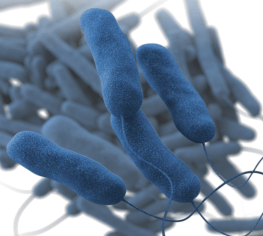
CDC legionella

Most of us have heard of Legionnaires’ disease and we are all likely to be aware of pneumonia too, but did you know there is a link between the two?

There are many illnesses and conditions that can affect the lungs. Legionnaires’ disease presents as a serious type of pneumonia. This is an inflammation of the lungs. Below, we’ll go into more detail about the link between Legionnaires’ disease and pneumonia. Both can be fatal, particularly among those who are more susceptible to this type of infection than others.

A version of this story exploring the link between Legionnaires’ disease and pneumonia appeared in Legionella Control International’s newsletter. To get it in your inbox, sign up for free at the link above

Ireland – Boil Water Notice as parasite detected in East Limerick water -Cryptosporidium

Live95 FM

crypto

Approximately 470 consumers living close to the Tipperary border have been issued a Boil Water Notice. Traces of cryptosporidium was detected in the Glengar Public Water Supply. A map of the affected area is available to view on the supply and service section of water.ie

Following consultation with the (HSE), Uisce Éireann and Tipperary County Council, all consumers affected by this notice are advised to boil their water before drinking it.

supplied by the Glengar Public Water Supply scheme.  Uisce Éireann and Tipperary County Council are issuing this Boil Water Notice with immediate effect.

The notice impacts customers in Glengar, Leugh, Knockanavar, Moher East, Moher West, Shanacloon, Gortaderry, Ballyhane East, Ballyhane West and surrounding areas.

Vulnerable customers who have registered with Uisce Éireann will receive direct communication on this Boil Water Notice and are reminded that the water is safe to consume once boiled and cooled.

Water must be boiled for Drinking;

Research – Correlation of High Seawater Temperature with Vibrio and Shewanella Infections, Denmark, 2010–2018

CDC

Abstract

During 2010–2018 in Denmark, 638 patients had Vibrio infections diagnosed and 521 patients had Shewanella infections diagnosed. Most cases occurred in years with high seawater temperatures. The substantial increase in those infections, with some causing septicemia, calls for clinical awareness and mandatory notification policies.

Vibrio and Shewanella spp. bacteria cause a variety of human infections, including wound infections, ear infections, septicemia, and gastroenteritis (1). Domestically acquired Vibrio and Shewanella infections occur only sporadically in countries in northern Europe because the coastal seawater temperature tends to be too cold to support growth and high bacterial pathogen concentration levels (2,3). However, the warming of low-salinity coastal waters of the Baltic Sea has promoted the growth of Vibrio and Shewanella spp. and consequently increased the risk of disease for humans exposed to such seawater (4). In the unusually warm summer of 1994 in Denmark, several V. vulnificus and S. algae infections were seen among patients who reported bathing in seawater (5,6). Furthermore, during 2014–2018, more than 1,055 cases of vibriosis were reported in northern Europe countries, including Denmark (7).

Considering the annual increase in infections during recent summer seasons in Denmark and the recurring heatwaves across Europe, this emerging public health threat requires more investigation to provide decision-makers with evidence for action. The aim of our nationwide study was to describe the distribution of Vibrio and Shewanella infections in Denmark during 2010–2018 and investigate a possible correlation between infections and sea surface temperature.

Research – Legionella pneumophila Risk from Air–Water Cooling Units Regarding Pipe Material and Type of Water

MDPI

Legionella A

Abstract

Legionellosis is a respiratory disease related to environmental health. There have been manifold studies of pipe materials, risk installations and legionellosis without considering the type of transferred water. The objective of this study was to determine the potential development of the causative agent Legionella pneumophila regarding air–water cooling units, legislative compliance, pipe material and type of water. Forty-four hotel units in Andalusia (Spain) were analysed with respect to compliance with Spanish health legislation for the prevention of legionellosis. The chi-square test was used to explain the relationship between material–water and legislative compliance, and a biplot of the first two factors was generated. Multiple correspondence analysis (MCA) was performed on the type of equipment, legislative compliance, pipe material and type of water, and graphs of cases were constructed by adding confidence ellipses by categories of the variables. Pipe material–type of water (p value = 0.29; p < 0.05) and legislative compliance were not associated (p value = 0.15; p < 0.05). Iron, stainless steel, and recycled and well water contributed the most to the biplot. MCA showed a global pattern in which lead, iron and polyethylene were well represented. Confidence ellipses around categories indicated significant differences among categories. Compliance with Spanish health legislation regarding the prevention and control of legionellosis linked to pipe material and type of water was not observed.

Research – Outbreak of Shigella sonnei in the EU/EEA and the United Kingdom among travellers returning from Cabo Verde

ECDC

As of 16 February 2023, 10 EU/EEA countries and the UK reported and the US reported 221 confirmed Shigella sonnei infections and 37 possible cases, all with a link to Cabo Verde.

Information on possible ways of infection or common exposure have not yet been identified but investigations are ongoing in Cabo Verde. Multiple modes of transmission are plausible, and the most likely way is through food, including via infected food handlers. However, person-to-person transmission is also possible.

The S. sonnei strain in the current outbreak indicates predicted resistance to trimethoprim and streptomycin but in some cases, multidrug resistance has also been detected.

Based on the available information, many cases are reported to have stayed in all-inclusive hotels located in the region of Santa Maria on the island of Sal. The most recent cases were reported in Sweden on 19 January 2023, suggesting an ongoing moderate risk of new infections among travellers to Cabo Verde, particularly among those staying in the region of Santa Maria on the Island of Sal.

Shigellosis is a gastrointestinal infection caused by one of four species of Shigella bacteria: Shigella sonnei, S. flexneri, S. boydii and S. dysenteriae. Humans are the primary reservoirs for Shigella.

Shigellosis is caught by oral contact with material contaminated by faeces, either through direct person-to-person contact, via contaminated food or water, or via objects which have been in contact with faeces. The necessary dose for infection is small, which increases transmissibility.

Food-related outbreaks are often caused by infected food handlers, who contaminate ready-to-eat food items like salads. Waterborne infection can occur if drinking or recreational water is contaminated with faeces from an infected person.

Handwashing with soap and water is important, especially after using the toilet and before preparing or eating food. Additional care with food and drinking water when travelling abroad is also important. There is no vaccine currently available to prevent Shigella infection.

People with shigellosis should not attend school, handle food, or provide child or patient care whilst ill. Children under the age of five, food handlers, and healthcare staff should stay at home for 48 hours after their symptoms have ceased.

ECDC encourages public health authorities in the EU/EEA to increase awareness among healthcare professionals on the possibility of Shigella infections among people that recently travelled to Cabo Verde.

Together with WHO/Europe, ECDC is in regular contact with authorities in Cabo Verde to support investigations on the sources of infection and to increase awareness among healthcare professionals in the country.

Research – Project looks for cost-effective ways to monitor Cyclospora in agricultural water

Food Safety News

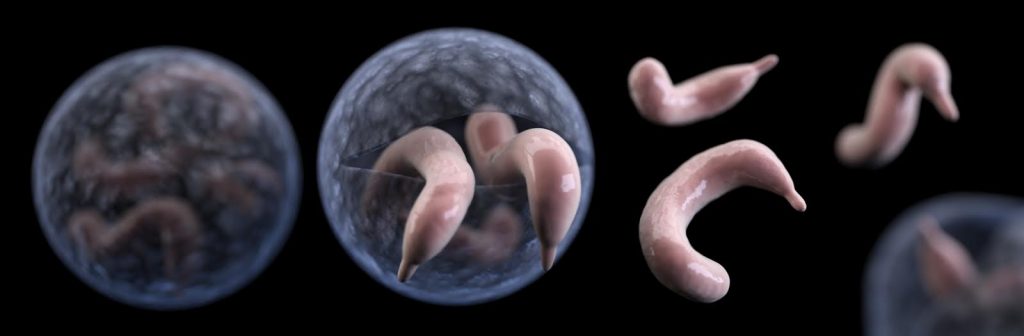
Research funded by the Center for Produce Safety is looking for a cost-effective method to detect Cyclospora in irrigation water, including a paper-based in-field water test.

The project seeks to use short strands of synthesized DNA, or aptamers, to bind to the target of interest — in this case, Cyclospora’s transmission stage.

Cyclospora cayetanensis is a protozoan parasite, that is nearly impossible to culture in the laboratory and requires complicated microscopy for detection in samples.

Lia Stanciu, Ph.D., with Purdue University, lead researcher on the project said,  “We were able to identify certain proteins on the cell membrane of Cyclospora that are unique only to Cyclospora and to which we can bind some DNA sequences.”

“We can synthesize those DNA-specific molecules. The next step would be to integrate those DNA molecules into something similar to a rapid COVID test or pregnancy test.”

USA – Legionnaire’s Disease Outbreak Linked to American Cruise Lines

Daily Hornet

The U.S. Food and Drug Administration (FDA) sent a warning letter to American Cruise Lines after 3 passengers got Legionnaire’s disease and the company failed to adequately treat the ships’ drinking water.

The first confirmed case of Legionnaire’s disease was reported in April 2021, with two more cases reported in September and October 2021.

Between April and August 2022, FDA inspectors tested the drinking water on the American Star and American Heritage and found ongoing evidence of Legionella bacteria.

Shockingly, 93% of water samples on the American Star tested positive for Legionella bacteria in April 2022, including samples taken from showerheads in the rooms for passengers and crew.

In June 2022, multiple samples of drinking water from showerheads and faucets on the American Heritage also tested positive for Legionella, according to the FDA.

Despite problems with Legionella contamination and illnesses, the FDA said that American Cruise Lines failed to take adequate stops to treat the ships’ water supply.

England – Norovirus cases increase significantly in England

Gov UK

Food Borne Illness - Norovirus -CDC Photo

National surveillance data shows laboratory reports of the virus are 66% higher than the average at this time of year. The biggest increase in laboratory confirmed norovirus has been seen in the group of those aged 65 years and over. While high numbers of cases in this age group is expected at this time of year, these levels haven’t been seen in over a decade.

In response to the increase in cases, UKHSA is reminding the public of the actions that they can take to reduce the spread of norovirus.

Norovirus is highly infectious and is easily spread through contact with someone with the infection or with contaminated surfaces. One of the best ways to prevent the spread of norovirus is by practising good hand hygiene. Most people will make a full recovery within 2 to 3 days but it is important to drink plenty of fluids to prevent dehydration, especially for the very young, elderly or those with weakened immune systems who are more at risk.

The number of outbreaks caused by norovirus have increased in hospitals, schools and care homes, with the majority of outbreaks reported in care home settings.

Dr Lesley Larkin, Surveillance Lead, Gastrointestinal Infections and Food Safety (One Health) Division at UKHSA, said:

Norovirus levels are currently the highest we have seen at this time of year in over a decade. Most reported cases are in the over 65s and we’re also seeing a rise in reported outbreaks, particularly in care home settings.

Please stay at home if you are experiencing norovirus symptoms and do not return to work (particularly if you work with vulnerable people or food) or send sick children to school or nursery until 48 hours after symptoms have cleared. If you have a loved one in a care home or hospital, please avoid visiting until 48 hours after symptoms have cleared.

Regular hand washing is really important to help stop the spread of this bug, but remember, alcohol gels do not kill off norovirus so soap and warm water is best.

NHS Medical Director, Professor Sir Stephen Powis, said:

The number of people in hospitals with norovirus has risen significantly in line with what we are seeing in the community and in care homes – it is a really unpleasant illness to catch, but for the vast majority of people it will usually pass in a couple of days, and self-treating at home is the best way to help yourself and avoid putting others at risk.

Philippines – 9 water sources in Negros Oriental town test positive for E.coli

PNA

DUMAGUETE CITY – At least nine water sources from different areas in Vallehermoso town, Negros Oriental province, tested positive for E.coli (Escherichia coli) bacteria that left five people dead, and more cases reported over the weekend.

Jennifer Remollo, the provincial officer of the Department of Health (DOH) in Negros Oriental, told the Philippine News Agency in an interview Monday that laboratory tests were done from water samples taken from these sources after the number of cases skyrocketed last week.

“As of today, our office has recorded 203 cases of acute gastroenteritis, including the five deaths that were earlier reported last week,” Remollo said.

“Consumption of E.coli contaminated water sources can be fatal due to severe dehydration from diarrhea,” she said.

Included in those that tested positive for the bacteria were mostly from deep well and spring sources in the areas of Barangay Don Espiridion Villegas; Sitio Sangi, Barangay Tabon; Sitio Patag, Barangay Puan; Sitio Tubod, Barangay Malangsa; Barangay Puan; Malapay 1, Barangay Bagawines;; Barangay Macapso; and Barangay Poblacion, Remollo said.

The DOH official said constant rains for many days in these areas may have caused the contamination of these water sources.

She said 82 of those who came down with symptoms were admitted to the hospital.

Those who died were residents of Barangay Puan.